Table of Contents >> Show >> Hide
- Why Basic Yoga Poses Belong in Your Workout
- How to Set Up a Beginner-Friendly Yoga Workout
- 8 Yoga Basic Poses for Your Workout
- A Simple 20-Minute Beginner Yoga Workout
- Common Beginner Mistakes to Avoid
- How Yoga Supports Other Workouts
- Beginner Experiences With Yoga Basic Poses for Your Workout
- Final Thoughts
- SEO Tags
If your current workout routine feels like it was designed by a caffeinated drill sergeant, yoga can be a very welcome change of personality. It builds strength without asking you to throw tires across a parking lot, improves mobility without making you feel like a folding chair, and teaches body awareness in a way many traditional workouts skip. Better yet, beginner yoga does not require a fancy studio, a spiritual rebrand, or the ability to touch your toes without negotiating first.
Basic yoga poses are the foundation of a smart, sustainable routine. They help you learn how to stand well, hinge safely, brace your core, open tight hips, move your spine with control, and breathe with purpose. That is useful whether your main goal is better flexibility, active recovery, improved posture, a calmer mind, or simply feeling less creaky when you stand up from your desk.
In this guide, you will learn the best yoga basic poses for your workout, how to do them safely, how to combine them into a simple sequence, and what beginners usually experience when yoga becomes a regular part of life. Spoiler alert: wobbling is normal, tight hamstrings are common, and Child’s Pose may become your new best friend.
Why Basic Yoga Poses Belong in Your Workout
There is a reason beginner yoga keeps showing up in fitness plans, physical therapy conversations, and “I should really take care of my body” moments. Basic poses do a lot of quiet work. They train balance, improve flexibility, build muscular endurance, reinforce posture, and create better awareness of how your body moves from one position to another.
That matters because a good workout is not only about burning energy. It is also about moving well. If you can stand with better alignment in Mountain Pose, stabilize in Warrior poses, lengthen your spine in Downward Dog, and control your hips in Bridge, you are practicing skills that carry into walking, lifting, climbing stairs, and even sitting more comfortably.
Yoga also has a built-in advantage that many other workouts forget: breathing. When you pair movement with slow, steady breaths, the practice feels less frantic and more focused. In plain English, your workout gets stronger and calmer at the same time. That is a pretty good deal for one mat and a small rectangle of floor.
How to Set Up a Beginner-Friendly Yoga Workout
What You Need
- A yoga mat or a non-slip surface
- Comfortable clothes you can move in
- A yoga block, thick book, or folded towel for support
- An optional blanket for knees or seated poses
- A little patience, because your hamstrings may file a formal complaint
Basic Safety Tips
- Warm up before deeper stretching. A few minutes of light movement helps.
- Move slowly into each shape instead of yanking yourself there.
- Breathe steadily. If your breath becomes strained, back off a little.
- Use props without embarrassment. Blocks and blankets are tools, not cheating.
- Stop if you feel sharp pain, pinching, numbness, or dizziness.
For beginners, the goal is not to “nail” the pose. The goal is to find a version of the pose that helps you feel steady, supported, and awake in your own body. A modified pose done well is more useful than a dramatic pose done badly. Yoga is not a talent show.
8 Yoga Basic Poses for Your Workout
1. Mountain Pose
Mountain Pose looks simple, which is exactly why people underestimate it. You are “just standing,” except not really. This pose teaches alignment from the ground up.
How to do it: Stand with your feet hip-width apart or together if that feels stable. Spread your toes, ground through your feet, lift through your legs, lengthen your spine, relax your shoulders, and let your arms rest naturally at your sides.
Why it matters: Mountain Pose improves posture awareness and becomes the starting point for many standing yoga movements.
Beginner tip: Imagine your head floating up while your feet root down. Tall, not tense.
2. Cat-Cow
If your spine has been stuck in “computer shrimp mode,” Cat-Cow is a wonderful reset. This flowing pair of movements gently warms the back and helps you coordinate breath with motion.
How to do it: Come onto hands and knees with wrists under shoulders and knees under hips. Inhale, lift your chest and tailbone for Cow. Exhale, round your spine and gently tuck your chin for Cat. Repeat for 5 to 8 rounds.
Why it matters: It improves spinal mobility, wakes up the core, and prepares the body for the rest of practice.
Beginner tip: Move from your spine, not just your neck. Think smooth wave, not dramatic costume performance.
3. Child’s Pose
Child’s Pose is part stretch, part breather, part emotional support posture. It is perfect between harder poses or anytime you want your nervous system to stop yelling.
How to do it: Kneel, bring your hips toward your heels, and fold your torso forward. Extend your arms in front of you or rest them alongside your body. Let your forehead rest on the mat or a block.
Why it matters: It gently stretches the back, hips, and shoulders while encouraging slower breathing.
Beginner tip: If your knees or hips feel crowded, widen your knees and place a folded blanket between your hips and heels.
4. Downward-Facing Dog
This is one of the most recognizable yoga poses, and for good reason. It strengthens and stretches at the same time, which is basically the multitasking dream.
How to do it: From hands and knees, tuck your toes and lift your hips up and back. Press through your hands, lengthen your spine, and let your heels move toward the floor without forcing them down.
Why it matters: Downward Dog works the shoulders, arms, core, back, calves, and hamstrings while reinforcing full-body alignment.
Beginner tip: Bend your knees generously if your back rounds. A long spine matters more than straight legs.
5. Warrior I
Warrior I brings strength, balance, and focus into one pose. It is also where many beginners discover that “standing still” can be surprisingly athletic.
How to do it: Step one foot forward and the other foot back. Bend the front knee, angle the back foot slightly outward, square your torso as much as comfortable, and reach your arms overhead.
Why it matters: It strengthens the legs and hips, opens the front body, and builds stamina.
Beginner tip: Widen your stance side to side for more stability. You do not need to stand on an imaginary tightrope.
6. Warrior II
Warrior II is the pose that makes you feel brave, grounded, and mildly aware that your thighs have opinions.
How to do it: From a wide stance, turn one foot forward and the back foot slightly inward. Bend the front knee over the ankle, extend your arms out at shoulder height, and gaze over your front hand.
Why it matters: It builds leg strength, hip stability, balance, and concentration.
Beginner tip: Keep your shoulders soft. Fierce legs, calm upper body.
7. Tree Pose
Tree Pose is beginner balance training in its most honest form. One day you feel rooted and majestic. The next day you wobble like a shopping cart with one bad wheel. Both are normal.
How to do it: Stand tall and shift weight into one foot. Place the other foot on your ankle or calf, or higher on the inner thigh if available. Avoid pressing directly into the knee. Bring hands together or overhead.
Why it matters: It trains balance, focus, foot strength, and postural control.
Beginner tip: Stare at one fixed point. A wall nearby is a smart accessory, not a moral failure.
8. Cobra Pose
Cobra is a gentle backbend that helps counter all the time modern humans spend folded forward over phones, laptops, steering wheels, and snacks.
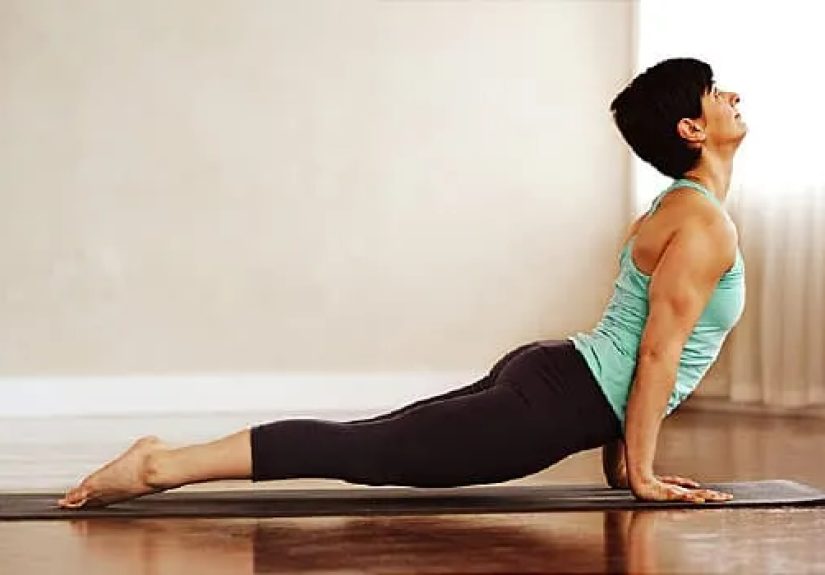
How to do it: Lie on your stomach with legs extended. Place your hands under or slightly ahead of your shoulders. Press lightly into your hands as you lift your chest, keeping elbows bent and shoulders away from your ears.
Why it matters: Cobra strengthens the back body and opens the chest.
Beginner tip: Start with a low Cobra. Bigger is not better if your lower back feels cranky.
9. Bridge Pose
Yes, you asked for basic poses and now you are getting a bonus. Bridge is too useful to leave out. It strengthens the back of the body and teaches hip extension, which many desk-bound adults desperately need.
How to do it: Lie on your back with knees bent and feet flat on the floor about hip-width apart. Press into your feet and lift your hips. Keep your neck relaxed and arms by your sides.
Why it matters: Bridge works the glutes, hamstrings, and core while opening the front of the hips and chest.
Beginner tip: Lift only as high as you can while keeping ribs and knees controlled. No need to launch into orbit.
A Simple 20-Minute Beginner Yoga Workout
If you want to turn these yoga basic poses into an actual workout, here is a simple routine you can repeat three or four times a week:
- Mountain Pose – 5 slow breaths
- Cat-Cow – 8 rounds
- Child’s Pose – 5 breaths
- Downward-Facing Dog – 5 breaths
- Warrior I – 5 breaths each side
- Warrior II – 5 breaths each side
- Tree Pose – 3 to 5 breaths each side
- Cobra Pose – 3 rounds, holding 3 breaths each
- Bridge Pose – 3 rounds, holding 5 breaths each
- Child’s Pose or Easy Seated Breathing – 1 to 2 minutes
This sequence covers posture, mobility, balance, leg strength, core support, and back-body activation. It also feels refreshingly realistic. You do not need 90 minutes, incense, or a mountain retreat. You need consistency.
Common Beginner Mistakes to Avoid
Trying to Force Flexibility
Yoga is not a contest to see how quickly you can become a human pretzel. Pushing into range of motion too aggressively often makes the body guard and tighten. Slow progress wins.
Holding Your Breath
If you are clenching your jaw and forgetting to breathe, the pose is probably too intense. Good yoga feels challenging but sustainable.
Ignoring Props
Props make poses more accessible and often more effective. A block under the hand in Warrior, a blanket under the knees, or a folded towel under the hips can transform the experience.
Comparing Yourself to Everyone
Your yoga practice should fit your body, not somebody else’s social media highlight reel. Some people are naturally mobile. Others are naturally stable. Most people are a funny mixture of both.
How Yoga Supports Other Workouts
Basic yoga poses work beautifully alongside walking, strength training, cycling, dance, and sports. If you lift weights, yoga can help mobility and recovery. If you run, it can support balance, posture, and hip strength. If you spend all day sitting, it can remind your spine that it was built for more than keyboard duty.
Yoga also fills a gap in many routines by slowing things down. Traditional workouts often focus on output: reps, miles, sets, calories, speed. Yoga adds input: breath, control, alignment, and body awareness. That combination can make your entire fitness routine feel smarter, not just harder.
Beginner Experiences With Yoga Basic Poses for Your Workout
The first time many people try beginner yoga, they expect stretching and maybe a little relaxation. What they do not expect is how much they notice. Suddenly, the body starts reporting back. Tight calves in Downward Dog. Wobbly ankles in Tree Pose. A surprising amount of effort in Warrior II. The realization is often funny and humbling: apparently, standing still with intention is actual work.
One common experience is discovering that flexibility is not the same as mobility. A person may be able to touch their toes but still struggle to keep a long spine in forward folds or feel stable in lunges. Another beginner may not get close to touching their toes yet have excellent balance and body control. Yoga has a very direct way of showing what is strong, what is stiff, and what simply needs practice.
Many beginners also notice how much their breath affects everything. On days when they rush, every pose feels tighter. On days when they slow down and breathe steadily, even familiar poses feel better. This is often the moment yoga stops feeling like random stretching and starts feeling like a skill. The breath becomes part of the workout, not just background noise.
Tree Pose creates especially memorable experiences. Almost everyone wobbles. Some laugh. Some grab the wall. Some discover that balancing on one side feels fine while the other side acts like it has never met a foot before. But after a few weeks, there is usually progress. The wobbling becomes smaller. Focus improves. The pose starts to feel less like chaos and more like concentration.
Downward Dog tends to be another eye-opener. Beginners often expect it to feel restful because advanced practitioners can make it look calm and effortless. Then they try it and realize it is an active, full-body shape. Hands press down, shoulders work, core engages, legs lengthen, and the back asks for space. With repetition, though, the pose often shifts from “Why is this so hard?” to “Oh, this actually feels amazing.”
Bridge Pose surprises people in a different way. It introduces the back of the body in a strong but manageable manner. Many beginners realize their glutes and hamstrings have been asleep at the wheel, especially if they sit a lot. After a few rounds of Bridge, they feel awake, strong, and maybe just a little betrayed by muscles they forgot existed.
Then there is Child’s Pose, which tends to become a favorite almost immediately. It feels safe, grounding, and honest. People return to it when they are tired, overwhelmed, or simply need a pause. In a weirdly beautiful way, it teaches that resting is part of the practice rather than evidence that you are doing badly.
Over time, the most meaningful experience is usually not one dramatic breakthrough. It is the quiet collection of small wins: better posture while standing in line, less stiffness after sitting, easier breathing during workouts, steadier balance, and a growing sense that your body is not an enemy or a project, but a partner. That is the real charm of yoga basic poses. They do not just change the workout. They change how the workout feels to live in.
Final Thoughts
If you want a workout that builds strength, flexibility, balance, and body awareness without demanding extreme impact, basic yoga poses are a smart place to begin. Start with the fundamentals. Learn how the shapes feel. Use props. Breathe slowly. Practice regularly. Progress in yoga often looks subtle from the outside, but it feels massive from the inside.
In other words, do not worry about looking impressive. Worry about feeling steady, strong, and comfortable in your own skin. That is where yoga works its quiet magic.