Table of Contents >> Show >> Hide
- Peripheral Neuropathy, Explained Without the Medical Jargon
- Can Yoga Help Peripheral Neuropathy?
- Benefits of Yoga for Neuropathy (Beyond “Flexibility”)
- Safety First: Non-Negotiable Tips for Neuropathy Yoga
- Yoga Exercises for Peripheral Neuropathy (Gentle, Supported, and Practical)
- 1) Seated Breath + Body Check (2 minutes)
- 2) Ankle Pumps + Circles (1–2 minutes)
- 3) Toe “Yoga” (1–2 minutes)
- 4) Seated Cat-Cow (1–2 minutes)
- 5) Chair-Supported Mountain + Weight Shifts (2 minutes)
- 6) Supported Chair Pose (Utkatasana variation) (1 minute)
- 7) Supported Tree Pose (1–2 minutes)
- 8) Calf Stretch at Wall (1–2 minutes)
- 9) Legs Up the Wall (Viparita Karani) (3–5 minutes)
- 10) Final Relaxation (2–3 minutes)
- A Sample 20-Minute Neuropathy-Friendly Routine
- Practical Tips That Make Yoga More Effective (and More Likely You’ll Actually Do It)
- When to Stop Yoga and Call a Clinician
- Real-World Experiences: What Yoga for Neuropathy Can Feel Like (About )
- Conclusion
Peripheral neuropathy can feel like your nerves are sending garbled text messagesbuzzing, burning, tingling, or going mysteriously “read but no reply.”
The good news: while yoga isn’t a magic erase button for nerve damage, a smart, gentle practice can help you move more comfortably, build balance,
and calm the stress that makes everything feel louder. The key word there is smart.
In this guide, we’ll break down what peripheral neuropathy is, what the research suggests about yoga (especially for diabetic peripheral neuropathy),
and a set of beginner-friendly, low-risk yoga exercises you can adapt at homewith practical safety tips so your practice helps instead of hassles.
Peripheral Neuropathy, Explained Without the Medical Jargon
Peripheral neuropathy means damage or dysfunction of nerves outside the brain and spinal cord. These nerves carry signals for sensation
(touch, temperature, pain), movement (muscle control), and automatic functions (like sweating or digestion). When they’re irritated or damaged, signals can
misfireleading to symptoms that range from mild annoyance to real daily disruption.
Common symptoms
- Numbness or reduced ability to feel pain/temperature (often starting in feet or hands)
- Tingling, “pins and needles,” buzzing, or electric-shock sensations
- Burning pain, especially at night
- Muscle weakness, cramping, or coordination issues
- Balance problems, especially in low light or on uneven surfaces
Why it matters for movement (and yoga)
Neuropathy can reduce protective sensation. That means you might not notice irritation, pressure, or a small injuryespecially on the feet.
It can also reduce proprioception (your body’s sense of where you are in space), which makes balance poses feel extra spicy (and not the fun kind).
A yoga plan for neuropathy should be built around stability, support, and slow progression.
Common causes (quick overview)
Neuropathy has many possible causes. Diabetes is a leading one, but other causes include nerve compression, autoimmune conditions, certain infections,
vitamin deficiencies, toxins/alcohol, and some medications (including some chemotherapy drugs). The cause matters because it shapes the overall treatment plan
and what your clinician will want to monitor.
Can Yoga Help Peripheral Neuropathy?
Yoga isn’t a replacement for medical care, but it can be a useful complement. Research is most developed for yoga in people with
diabetic peripheral neuropathy (DPN), where studies suggest yoga-based programs may improve balance and reduce symptom burden for some people.
The evidence base is still growing, and many studies are smallbut the direction is encouraging.
What the research suggests (in plain English)
-
Balance and fall risk: Because neuropathy can impair balance, interventions that train strength, proprioception, and controlled transitions
may help. Yoga postures performed slowlyespecially with supportcan function like balance training. -
Symptoms and stress: Some yoga-based programs report improvements in neuropathy symptom scores and stress measures.
Stress doesn’t “cause” neuropathy, but it can crank up pain sensitivity and make sleep worsetwo things yoga often targets. - Function and confidence: Pilot studies in adults with DPN have reported improved balance confidence and daily function after yoga programs.
Important reality check: neuropathy is not one single condition, and results vary. Think of yoga as a tool for
mobility, stability, and copingand sometimes, symptom reliefrather than a guarantee of nerve “repair.”
Benefits of Yoga for Neuropathy (Beyond “Flexibility”)
1) Better balance and safer movement patterns
A well-designed yoga practice emphasizes alignment, slow transitions, and awareness. With neuropathy, that can translate into steadier walking,
fewer stumbles, and more confidenceespecially when combined with strength work and sensible fall-prevention habits.
2) Strength where it counts
Gentle yoga can strengthen ankles, calves, hips, and corekey areas for balance. Even “easy” poses can be surprisingly effective when done with control
(and without trying to impress your ceiling fan).
3) Reduced stiffness, improved circulation habits
Movement supports joint mobility and circulation. While yoga doesn’t “push blood into nerves” like a superhero power,
regular low-impact activity can help maintain overall vascular and metabolic healthespecially relevant for diabetes-related complications.
4) Stress relief and sleep support
Breath-focused practices and relaxation poses can reduce stress arousal and help with sleepboth of which influence how intense pain feels.
If neuropathic symptoms flare at night, a short wind-down sequence can be a practical win.
Safety First: Non-Negotiable Tips for Neuropathy Yoga
Before you start: if you have new or worsening symptoms, a history of falls, active foot ulcers, severe balance issues, or significant weakness,
talk with a clinician. If you have diabetes, ask about safe activity guidelines and foot care routines.
Use support like it’s part of the pose
- Practice near a wall or sturdy chair for standing poses.
- Choose chair yoga or restorative yoga if balance feels unreliable.
- Move slowly between positionsrushing is where wobble happens.
Protect your feet
- If you have reduced sensation, consider grippy socks or supportive footwear approved by your clinician.
- Check your feet after practice for redness, blisters, or irritation (especially if you have diabetes).
- Avoid practicing on rough surfaces or doing moves that grind the toes or tops of the feet into the mat.
Avoid extremes (especially if you’re new)
- Skip advanced inversions (headstands/shoulder stands) and any pose that feels risky.
- Be cautious with hot yogaoverheating and dehydration can be a bigger risk for people with health conditions.
- Never force a stretch. Neuropathy can alter sensation, so “I don’t feel it” is not a green light to go deeper.
If you have diabetes, plan like a pro
- Ask your care team about timing exercise with meals/meds to reduce blood sugar surprises.
- Keep water nearby; choose a moderate-temperature environment.
- If you’ve had foot ulcers, follow guidance on when weight-bearing activity is appropriate.
Yoga Exercises for Peripheral Neuropathy (Gentle, Supported, and Practical)
The goal here is not “deepest stretch” or “prettiest pose.” The goal is: safe movement, better balance,
and a calmer nervous system. Do these 3–5 days per week, or build a short daily routine.
If anything increases pain sharply, causes dizziness, or feels unsafestop and modify.
1) Seated Breath + Body Check (2 minutes)
How: Sit tall in a chair, feet flat. Place one hand on your belly, one on your chest.
- Inhale through your nose for a slow count of 4.
- Exhale gently for a slow count of 6.
- Notice: jaw, shoulders, hands, feet. Soften what you can.
Why it helps: Downshifts stress response and sets a steady pace for balance work.
2) Ankle Pumps + Circles (1–2 minutes)
How: Seated, lift one foot slightly. Point and flex the ankle 10 times, then circle 10 times each direction. Switch sides.
Why it helps: Maintains ankle mobility and warms up joints used for walking and balance.
3) Toe “Yoga” (1–2 minutes)
How: Seated, spread toes wide (or try), then relax. Repeat 10 times. Then lift big toe while keeping other toes down, switch if possible.
Why it helps: Builds foot control and awarenessuseful when sensation is reduced.
4) Seated Cat-Cow (1–2 minutes)
How: Hands on knees. Inhale: lift chest, gently arch (cow). Exhale: round spine, chin slightly in (cat). Repeat 6–10 cycles.
Why it helps: Encourages spinal mobility and comfortable breathing rhythm without balance demands.
5) Chair-Supported Mountain + Weight Shifts (2 minutes)
How: Stand behind a sturdy chair, hands lightly resting on the backrest. Feet hip-width.
- Find “tall” posture: ears over shoulders, shoulders over hips.
- Shift weight slightly to the right foot for 3 seconds, then center, then left.
- Repeat 8–10 times total, slow and controlled.
Why it helps: Trains balance safely and rebuilds confidence with support.
6) Supported Chair Pose (Utkatasana variation) (1 minute)
How: Stand in front of a chair as if you’re about to sit. Hinge hips back, bend knees slightly, tap chair lightly, then stand.
- Do 6–10 slow reps.
- Keep knees tracking over toes; avoid collapsing inward.
Why it helps: Strengthens thighs and hipsimportant for stability and stairs.
7) Supported Tree Pose (1–2 minutes)
How: Stand near a wall or chair. Shift weight into one foot. Place the other foot on the ankle or calf (not the knee). Keep fingertips on support.
- Hold 10–20 seconds each side, 2 rounds.
- Option: keep toes of lifted foot on the floor like a kickstand.
Why it helps: Improves balance and ankle strategy in a controlled way.
8) Calf Stretch at Wall (1–2 minutes)
How: Hands on wall. Step one foot back, heel down, knee straight. Bend front knee slightly until you feel a calf stretch. Switch.
Why it helps: Calf tightness can affect gait and balance; gentle stretching supports walking mechanics.
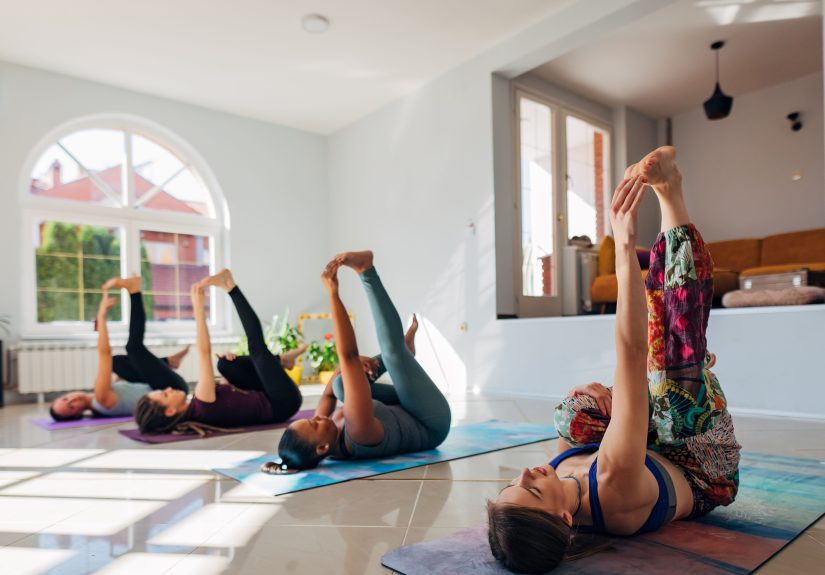
9) Legs Up the Wall (Viparita Karani) (3–5 minutes)
How: Sit sideways next to a wall, then swing legs up as you recline. Knees can be bent; place a pillow under hips if comfortable.
Why it helps: Relaxation posture that can reduce swelling feelings and promote calmgreat before bed.
10) Final Relaxation (2–3 minutes)
How: Lie down (or stay seated). Let shoulders drop. Return to slow exhale. If thoughts race, count breaths like you’re tallying sheep who do taxes.
Why it helps: Supports nervous system regulation and can reduce pain sensitivity over time.
A Sample 20-Minute Neuropathy-Friendly Routine
- Seated Breath + Body Check (2 min)
- Ankle Pumps + Circles (2 min)
- Toe Yoga (2 min)
- Seated Cat-Cow (2 min)
- Chair-Supported Mountain + Weight Shifts (3 min)
- Supported Chair Pose (2 min)
- Supported Tree Pose (3 min)
- Calf Stretch at Wall (2 min)
- Legs Up the Wall (4 min)
If standing work feels unsafe, keep the routine fully seated and focus on breath, gentle mobility, and relaxation. Consistency beats intensity.
Practical Tips That Make Yoga More Effective (and More Likely You’ll Actually Do It)
Pick the right style
- Best bets: Chair yoga, restorative yoga, gentle hatha, beginner Iyengar-style (prop-friendly and alignment-focused)
- Approach with caution: Fast vinyasa flows, power yoga, hot yogaespecially if balance is affected
Use props like they’re performance-enhancing equipment (because they are)
- Chair, wall, yoga blocks, strap, folded blankets
- For balance work, light fingertip support can still train balance while preventing falls
Track the right outcomes
- Can you stand more steadily while brushing your teeth?
- Do you feel less stiff in the morning?
- Are nighttime symptoms easier to tolerate?
- Is your confidence improving?
Neuropathy progress is often about function and comfort, not dramatic overnight transformation.
Pair yoga with the “boring” basics that matter
- Regular medical follow-up for the underlying cause
- Foot care routines (especially with diabetes)
- General activity and strength training, as tolerated
- Sleep and stress management
When to Stop Yoga and Call a Clinician
Get medical advice promptly if you notice:
- Sudden or rapidly worsening weakness, numbness, or balance problems
- New foot wounds, ulcers, signs of infection, or swelling that doesn’t improve
- Severe dizziness, fainting, chest pain, or shortness of breath during activity
- New bowel/bladder changes or numbness in the groin area
Real-World Experiences: What Yoga for Neuropathy Can Feel Like (About )
People often start yoga for neuropathy with one big hope: “Please make this sensation go away.” Totally understandableand also a setup for frustration
if the expectation is instant relief. What many discover instead is a gradual, practical shift: yoga may not delete the symptoms, but it can change how
the body moves around them.
In the first week or two, the most common “win” is not a dramatic pain dropit’s realizing how much tension has been living in the shoulders, jaw,
and breath. Neuropathy can make the body feel unpredictable, and the brain responds by bracing. When someone practices slow exhales and supported poses,
they often notice, “Oh… I’ve been holding my breath like I’m about to get jump-scared by my own feet.” That small awareness matters. Less bracing can mean
smoother movement and better sleep, which can indirectly lower how intense symptoms feel.
Standing poses are where neuropathy-friendly yoga becomes very real, very fast. Many people are surprised by how challenging a simple supported tree pose is.
That wobble isn’t failureit’s information. With reduced sensation, the feet may not deliver clear data to the brain, so the body uses other strategies:
gripping toes, locking knees, leaning forward. Over a few weeks, a careful practice often shifts those strategies. The goal becomes “steady and calm,” not
“perfectly still.” People start using a chair lightly rather than clinging for dear life. They learn to slow transitionsstanding up, turning, stepping back
the exact moments where stumbles happen in real life.
Another common experience: discovering that the feet need more respect than the average yoga class assumes. Traditional yoga is famously barefoot, but
for someone with reduced protective sensation, barefoot practice can be a gamble. Many neuropathy-focused yogis get practical: grippy socks, clean supportive
footwear if recommended, extra padding, andthis part is unglamorous but powerfulchecking the feet after practice. People often say that once they build
that habit, they feel more in control overall. It’s not just yoga; it’s a routine of self-monitoring that prevents small problems from becoming big ones.
Over a month or two, the improvements people report are often functional: walking feels a bit steadier, stairs feel less sketchy, and “I don’t trust my legs”
becomes “I can manage this if I take my time.” Pain changes vary. Some people notice fewer nighttime flare-ups after a short evening routinelegs up the wall,
slow breathing, a gentle calf stretch. Others don’t see much change in symptoms but still keep yoga because their stress is lower and their body feels less stiff.
That’s a legitimate success. Neuropathy is exhausting; anything that reduces the daily “background alarm” can improve quality of life.
And yes, there’s usually one humorous moment that turns into a personal rule: the day someone tries to “push through” a pose and realizes they can’t accurately
judge intensity in their feet. That’s when the practice becomes truly neuropathy-smart: less ambition, more precision. Progress becomes quiet, steady, and safe
the kind that actually lasts.
Conclusion
Yoga for peripheral neuropathy works best when it’s gentle, supported, and consistent. Think balance training with breathwork benefits, not a circus act.
Focus on safety (especially foot protection and fall prevention), choose stable poses, and use props unapologetically. Over time, many people find they move
with more confidence, feel less stiff, and handle symptoms with a calmer nervous system. That combinationsteadier body, steadier mindcan be a meaningful upgrade.