Table of Contents >> Show >> Hide
- Why appetizers-only works (and why guests love it)
- Step 1: Pick the vibe, the timing, and the “bite budget”
- Step 2: Build a menu that feels like a real meal
- Step 3: Choose recipes that do the work before guests arrive
- Step 4: Create a “grazing board” anchor (your party’s edible centerpiece)
- Step 5: Warm bites without kitchen chaos
- Step 6: Set up your space like a snack-friendly blueprint
- Step 7: Food safety (because a legendary party should be legendary for the right reasons)
- A sample “ultimate” appetizers-only menu (mix, match, steal proudly)
- Prep timeline that keeps you calm
- Troubleshooting: common appetizer-party problems (and quick fixes)
- Hosting experiences and lessons (the real stuff you only learn by doing)
- Conclusion: Make it a meal, keep it fun, and let the snacks do the talking
Imagine a dinner party where nobody has to commit to a giant entrée… but everyone still leaves happy, full, and
mildly obsessed with your hosting skills. Welcome to the appetizers-only dinner partya night of
small bites, big variety, and zero pressure to carve anything at the table.
Done right, an appetizers-only menu feels like a food festival in your living room: warm dips, crunchy things,
fancy little skewers, a grazing board that looks like it belongs in a magazine, and dessert bites that disappear
“mysteriously” (spoiler: your friends ate them).
Why appetizers-only works (and why guests love it)
- Variety beats perfection. If one bite is merely “good,” the next one might be “text me the recipe.”
- It’s naturally social. People graze, mingle, and snackno one is trapped at a seat waiting for a main course.
- It’s easier on the host. You can prep most items ahead, then release them in waves like delicious confetti.
- It fits everyone. You can build in vegetarian, gluten-free, and dairy-free options without making separate meals.
Step 1: Pick the vibe, the timing, and the “bite budget”
Before you choose recipes, decide what kind of night you’re throwing. A casual game night? A dress-up holiday
hang? A “we survived this week” Friday gathering? Your vibe helps you choose the right mix of finger foods.
How long will people be eating?
The longer the party, the more you’ll need. Appetizers-only works best when you plan for 2–3 hours of steady
grazing. You don’t want a “two-bite party” where guests start Googling pizza delivery after 45 minutes.
How many bites per person?
For an appetizers-only dinner party, a practical target is 12–15 pieces per person over a multi-hour
event. That sounds like a lot until you realize that one “piece” might be a deviled egg half, a mini meatball, a
small spoon of dip with a chip, or a stuffed mushroom. Variety adds up fastin the best way.
A simple math shortcut
| Guests | Pieces per person | Total pieces | Host sanity tip |
|---|---|---|---|
| 6 | 12–15 | 72–90 | Choose 6–8 dishes, not 14. |
| 10 | 12–15 | 120–150 | Lean on boards + dips to cover volume. |
| 16 | 12–15 | 192–240 | Add one “bulk” dish (sliders, meatballs, flatbread). |
Add a small cushion (about 10–20%) if your group includes teenagers, athletes, or anyone who says, “I didn’t
eat all day because I knew there would be snacks.” That person is both honest and dangerous.
Step 2: Build a menu that feels like a real meal
The biggest mistake with appetizer dinners is accidentally serving only “party nibbles” (chips + dip + more dip,
plus one lonely vegetable tray). Instead, think like a chef: you want fresh, hearty, crunchy,
creamy, and something sweet.
The “3-3-3-1” menu formula
- 3 cold bites (minimal last-minute work): shrimp-free cocktail cups, caprese skewers, hummus + crudités cups
- 3 room-temp bites (perfect for mingling): marinated olives, cheese + fruit board, herby bean salad spoons
- 3 warm bites (the “this is dinner” energy): baked brie bites, mini meatballs, stuffed mushrooms
- 1 dessert bite (because you’re not running a snack nonprofit): brownie bites, mini parfaits, cookie sandwiches
This structure keeps your spread balanced and your kitchen from turning into a one-person restaurant during the
party. You’ll also avoid the classic hosting trap: spending the night flipping something while guests have fun
without you (rude of them, honestly).
Make it inclusive without making it complicated
You don’t need to label your party “gluten-free” or “vegetarian” to include smart options. Aim for at least:
- 1–2 vegetarian proteins (roasted chickpeas, white bean dip, stuffed mushrooms, skewered halloumi-style cheese)
- 1 naturally gluten-free snack (deviled eggs, salsa + corn chips, charcuterie-style cucumbers topped with spread)
- 1 dairy-free bite (guacamole, olive tapenade, roasted vegetable platter with tahini)
And if someone has a serious allergy, keep one “safe zone” plate that never touches the main buffet. Cross-contact
is not the kind of “sharing” you want at your party.
Step 3: Choose recipes that do the work before guests arrive
The secret to an effortless hors d’oeuvres party is selecting dishes with make-ahead components. A strong
approach is to mix items that are fully prep-ahead (cold/room-temp) with just a few hot bites that need quick
baking or warming. That way, you’re hostingnot speed-running your oven.
What to prioritize
- Assembly-friendly bites: skewers, cups, crostini, roll-ups
- Big-batch crowd foods: meatballs, baked dips, sheet-pan nachos
- Store helpers: puff pastry, phyllo cups, frozen meatballs you can elevate with a homemade sauce
- “Better tomorrow” flavors: marinated items, pickled veggies, dips that improve overnight
Step 4: Create a “grazing board” anchor (your party’s edible centerpiece)
A board (or two) is the ultimate hosting hack: it covers volume, looks impressive, and keeps guests happily busy
while you handle warm items. Think beyond the standard “meat and cheese” and build layers:
Board building blocks
- Something creamy: soft cheese or a whipped feta-style dip
- Something bold: olives, pickles, pepperoncini, mustard
- Something crunchy: crackers, pita chips, toasted baguette slices
- Something fresh: grapes, berries, sliced apples (toss apples with a little lemon to prevent browning)
- Something salty: nuts, roasted seeds, crispy chickpeas
Pro tip: build the board in the fridge in stages (in containers), then assemble right before guests arrive. It’s
faster and keeps everything fresher.
Step 5: Warm bites without kitchen chaos
Warm appetizers are what make guests say, “Oh wow, this is actually dinner.” The trick is choosing warm items
that can hold safely and taste good after 20–40 minutes on a warmer (not everything can).
Pick warm appetizers that hold well
- Meatballs (slow cooker-friendly, easy to keep warm)
- Baked brie bites (quick oven time, huge payoff)
- Spinach-artichoke style dip (warm + scoopable + reliable)
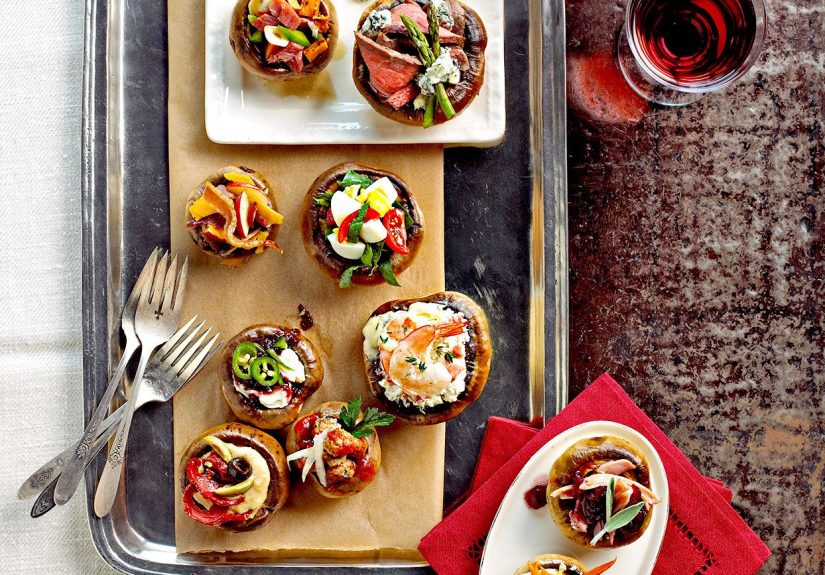
- Stuffed mushrooms (batchable, looks fancy, tastes like effort)
- Flatbread squares (slice small; keep one tray warm while one tray bakes)
Use the “two-tray rule”
For anything baked, make two smaller trays instead of one massive tray. Put one out, keep the second warm
in the oven at a low temp, and refresh the table when the first tray is halfway gone. Guests feel like food is
constantly appearing (magical), and you avoid food sitting out too long (practical).
Step 6: Set up your space like a snack-friendly blueprint
The layout matters more than people think. If your buffet table is cramped, guests will hover awkwardly like
confused penguins. Give snacks room to breathe.
The three-zone setup
- Food zone: appetizers, small plates, napkins, toothpicks, serving utensils
- Drink zone: water, sparkling drinks, mocktails, cups, ice, citrus slices
- Landing + trash zone: a clear counter/table for setting plates down, plus a visible trash bin
Make it easy to eat while standing
Appetizers-only dinners are basically a social sport. Help guests by offering:
- Small plates (and a few sturdier ones)
- Napkins everywhere (like you’re hiding them from a napkin thief)
- Toothpicks/cocktail picks for messy bites
- At least one spoon/fork option for dips or cups
Step 7: Food safety (because a legendary party should be legendary for the right reasons)
Appetizer spreads can sit out longer than a plated dinner, so food safety matters. The goal is to keep hot foods
hot, cold foods cold, and rotate portions instead of putting everything out at once.
Practical rules that keep everyone safe
- Keep cold foods cold: serve them over ice or rotate fresh portions from the fridge.
- Keep hot foods hot: use warming trays/slow cookers and check that they hold safe temperatures.
- Don’t leave perishable foods out too long: put out smaller amounts and replenish as needed.
- Use a food thermometer if you’re unsureespecially for warm dips, egg dishes, and meat.
Translation: don’t set out the entire universe of food at 6:00 PM and hope for the best at 9:00 PM. Refreshing in
waves is safer, looks nicer, and makes your party feel curated instead of “pantry emptied onto table.”
A sample “ultimate” appetizers-only menu (mix, match, steal proudly)
Here’s a balanced menu that feels like dinnerwithout requiring you to cook 12 complicated recipes. Choose about
8–10 items for a standard group and scale up from there.
Cold + fresh
- Caprese skewers (tomato, basil, mozzarella-style pearls, balsamic drizzle)
- Hummus trio (classic, roasted red pepper, herby) with crudités + pita chips
- Mini cucumber “boats” with tuna-free chickpea salad or lemony herb spread
Room temperature
- Marinated olives + nuts (do this the day before)
- Grazing board (cheese, crackers, fruit, pickles, spreads)
- Roasted veggie platter with a tangy tahini dip
Warm + hearty
- Slow-cooker meatballs (BBQ, sweet-and-savory, or tomato-basil)
- Baked brie bites in phyllo or puff pastry with jam
- Stuffed mushrooms (garlic + herbs + breadcrumbs; offer a dairy-free version if needed)
- Warm skillet dip (spinach-artichoke style) with sturdy chips
One sweet finish
- Brownie bites or mini parfait cups (yogurt-style, berries, granola)
Prep timeline that keeps you calm
2–3 days before
- Pick menu + count bites per person
- Shop pantry items (chips, crackers, picks, napkins, drinks)
- Make anything that improves overnight: dips, marinated olives, sauces
Day before
- Chop vegetables and store in airtight containers
- Pre-cook meatballs (if homemade) and refrigerate
- Assemble dessert bites (or at least bake brownies/cookies)
- Set out serving dishes and label what goes where (future-you will cheer)
Party day (2–3 hours before guests)
- Build the board components (keep cold items chilled until serving)
- Arrange cold bites (cover and refrigerate)
- Start warm items that hold well (slow cooker dips/meatballs)
- Set up zones: food, drinks, trash/landing
During the party
- Put food out in waves
- Refresh plates/napkins before they run out (guests will not tell you; they will suffer quietly)
- Keep a “backup tray” warm for baked items
- Take 10 minutes to actually enjoy the partythis is not a competitive sport
Troubleshooting: common appetizer-party problems (and quick fixes)
“Everything is beige.”
Beige foods are delicious… but add color for balance: grapes, berries, herbs, pickled veggies, a bright salsa, or
crunchy crudités. Color makes the table feel intentional (and photographs better, if your group does the “pics or it didn’t happen” thing).
“We have five dips and no scoops.”
Always overbuy dippers. Add: pita chips, sturdy crackers, pretzel thins, veggie sticks, toasted baguette slices.
Your dips deserve transportation.
“The kitchen is crowded.”
Move drinks out of the kitchen. People orbit beverages like planets. Redirect the gravitational pull.
“Warm food is cooling too fast.”
Serve smaller portions and replenish more often. Keep a second batch warm in the oven or slow cooker and rotate.
Guests will think you’re constantly cooking (you’re not; you’re strategically revealing food).
Hosting experiences and lessons (the real stuff you only learn by doing)
Every host has a moment during an appetizers-only dinner party where they realize: this is less like “serving
dinner” and more like “running a tiny, delicious airport.” People arrive in waves, they snack in waves, and they
mysteriously migrate toward whatever looks newest and crispiest. Once you accept that, everything gets easierand
way more fun.
First lesson: the board buys you time. Hosts often say the grazing board is the MVP because it starts the party
instantly. Guests see it, gather around it, and suddenly you have breathing room to warm the next tray. The board
also sets the tone: if it looks abundant, guests relax. They stop worrying about “Is this all the food?” and start
doing what you wanted them to do: snack happily and talk to each other.
Second lesson: one “hearty” item changes everything. Many appetizer spreads feel snacky until you add a warm,
filling anchormeatballs, stuffed mushrooms, a baked dip, or a flatbread cut into small squares. The moment that
hearty item hits the table, the party shifts from “cute snacks” to “this counts as dinner.” Guests won’t even ask
what the main course is (and you won’t have to pretend it’s “the vibes”).
Third lesson: serving tools disappear like socks in a dryer. You can put out three tongs and still end up watching
someone scoop salsa with a cracker that immediately snaps in half. It happens fast. The easiest fix is to place
extra serving spoons/tongs in a mug near the buffet. When a tool wanders off, you can replace it without rummaging
through drawers while guests politely pretend not to notice.
Fourth lesson: guests love “newness” more than “quantity”. People don’t always eat everything you put out at once.
They circle back when something fresh appears. That’s why releasing appetizers in waves feels excitingit creates
a natural rhythm. A tray of baked bites arriving 45 minutes into the party feels like a plot twist. A second tray
arriving later feels like a sequel that somehow improves on the original. (Snack cinema!)
Fifth lesson: not everyone eats the same way. Some guests graze slowly. Others arrive hungry and immediately
choose chaos. The best hosts plan for both by offering a mix of “grab-and-go” bites and “hang-out” snacks. Skewers,
stuffed mushrooms, and mini meatballs work for the quick eaters; boards and dips work for the grazers who nibble
while talking. When your menu supports different eating styles, your party feels effortlesseven if you quietly
did a lot of prep behind the scenes.
Sixth lesson: the best compliment is an empty plate. When guests keep returning for “just one more,” it’s tempting to
feel like you need to keep adding new dishes. But often, the most successful parties are the ones where you repeat
winners and keep the flow smooth. If one dip is clearly the star, bring out a refreshed bowl. If the baked bites
vanish instantly, that’s your cue for tray two. You’re not “boring”you’re listening to the crowd like a snack DJ.
Finally, the biggest experience-based truth: your energy is part of the menu. Guests remember how a party felt more than
the exact recipe list. When you’re present, laughing, and not stuck in the kitchen all night, people relax. So
choose a menu that lets you join your own party. Put out food that holds well. Build in shortcuts. And if something
isn’t perfect, congratulationsyou’re hosting a real gathering, not filming a cooking show.
Conclusion: Make it a meal, keep it fun, and let the snacks do the talking
Hosting the ultimate appetizers-only dinner party is all about smart variety: a strong grazing board, a few warm
“dinner-energy” bites, plenty of crunchy scoops, and a sweet finish. Plan your bite count, prep ahead, serve in
waves, and set up your space so guests can snack comfortably.
Do that, and you’ll pull off the rare hosting miracle: a party where everyone eats well, you actually have fun,
and the only drama is whether the baked brie bites ran out “too soon” (they did).