Table of Contents >> Show >> Hide
- Why Desk Decor Matters More Than You Think
- 15 Desk Decor Ideas to Create Your Own Aesthetic
- 1. Start With a Clear Color Palette
- 2. Use a Desk Mat to Anchor the Space
- 3. Add a Stylish Desk Lamp
- 4. Bring in a Small Plant
- 5. Choose Functional Organizers That Match Your Style
- 6. Decorate the Wall Above Your Desk
- 7. Use Vertical Storage to Save Space
- 8. Hide or Tame Your Cables
- 9. Add Personal Art or Photos
- 10. Layer Textures for a Richer Look
- 11. Create a Mini Inspiration Zone
- 12. Use Trays to Group Small Items
- 13. Add a Cozy Element
- 14. Upgrade Everyday Desk Tools
- 15. Leave Breathing Room
- How to Choose the Right Desk Aesthetic
- Common Desk Decor Mistakes to Avoid
- Experience-Based Tips: What Actually Works in Real Desk Setups
- Conclusion
- SEO Tags
Your desk is more than a flat surface where coffee mugs go to multiply. It is your command center, your creative launchpad, your homework headquarters, your work-from-home cockpit, and occasionally the place where one lonely paperclip begins questioning its life choices. The good news? You do not need a massive budget, a designer degree, or a marble desk imported by a team of very serious people in white gloves to make your workspace feel beautiful.
With the right desk decor ideas, you can create a space that feels organized, personal, practical, and completely yours. The key is balance. Aesthetic desk decor should not turn your workspace into a museum where moving a stapler feels illegal. It should support focus, comfort, creativity, and a little everyday joy. Whether your style is minimalist, cozy, modern, colorful, academic, cottagecore, tech-inspired, or “I just want this corner to stop looking like a receipt tornado,” the following ideas will help you build a desk aesthetic that actually works.
Why Desk Decor Matters More Than You Think
A well-decorated desk can improve the way you feel in your workspace. Visual clutter can make a small task feel heavier, while intentional design can make even a compact desk feel calm and useful. Lighting, storage, color, personal objects, and natural textures all influence how welcoming your setup feels. This is why desk-scaping has become such a popular design idea: it treats your desk like a mini room, not just a place to park your laptop.
The best desk aesthetic is not about copying a perfect photo online. It is about choosing objects that match your workflow, personality, and space. A beautiful desk that cannot hold your notebook, charger, or water bottle is not an aesthetic. It is a decorative obstacle course.
15 Desk Decor Ideas to Create Your Own Aesthetic
1. Start With a Clear Color Palette
Before buying anything, choose two or three main colors for your desk area. This instantly makes your workspace look intentional. A neutral palette with white, beige, black, and wood tones creates a clean minimalist desk aesthetic. Soft pastels can make the area feel cheerful and gentle. Earth tones such as olive, terracotta, cream, and walnut bring warmth. Dark colors like charcoal, navy, and espresso create a dramatic, focused mood.
You do not have to match every single object. In fact, please do not let a pencil color ruin your day. The goal is visual harmony, not decorating in fear. Use your color palette for major pieces such as the desk mat, lamp, storage boxes, wall art, and organizers. Small accessories can add personality without turning the desk into a confetti cannon.
2. Use a Desk Mat to Anchor the Space
A desk mat is one of the fastest ways to make your setup look polished. It creates a visual base for your keyboard, mouse, notebook, and daily tools. It also protects the desk surface from scratches, pen marks, and mysterious coffee rings that appear when nobody admits anything.
Leather-style mats feel sophisticated, felt mats add softness, clear mats keep things simple, and colorful mats can become the main design statement. Choose a size that gives your hands room to move. If you use a laptop and external mouse, a medium or large mat can make the whole setup feel more connected and less scattered.
3. Add a Stylish Desk Lamp
Lighting is both functional and decorative. A good desk lamp reduces eye strain, brightens your work zone, and adds shape to your desk aesthetic. Instead of relying only on harsh overhead lighting, use a lamp that gives warm, focused light. Adjustable lamps are especially useful because you can direct light where you need it.
For a modern aesthetic, try a slim metal lamp. For a cozy desk setup, choose a lamp with a fabric shade or warm bulb. For a vintage feel, go with brass, ceramic, or mushroom-shaped lighting. A lamp can easily become the “main character” of the desk, and unlike some main characters, it is actually helpful.
4. Bring in a Small Plant
Plants add life, color, and texture to a workspace. A small pothos, snake plant, succulent, or ZZ plant can make a desk feel fresher without demanding a full-time gardening internship. If your desk does not get much natural light, choose a low-light plant or a realistic faux plant.
The trick is scale. One small plant can look charming. Eight plants on a tiny desk can make it feel like your laptop is being slowly reclaimed by the rainforest. Place greenery near a corner, beside a monitor, or on a shelf above the desk to keep your main work surface open.
5. Choose Functional Organizers That Match Your Style
Desk organizers are not just storage; they are decor in disguise. Pen cups, trays, drawer dividers, file holders, risers, and small boxes help reduce clutter while supporting your aesthetic. Look for materials that match your style: acrylic for modern and clean, wood for warm and natural, metal for industrial, ceramic for artisanal, and woven baskets for cozy texture.
Instead of placing every item on the desk, divide supplies into categories. Keep daily tools within reach and move rarely used items into drawers or shelves. Your desk should not be a storage unit wearing a keyboard.
6. Decorate the Wall Above Your Desk
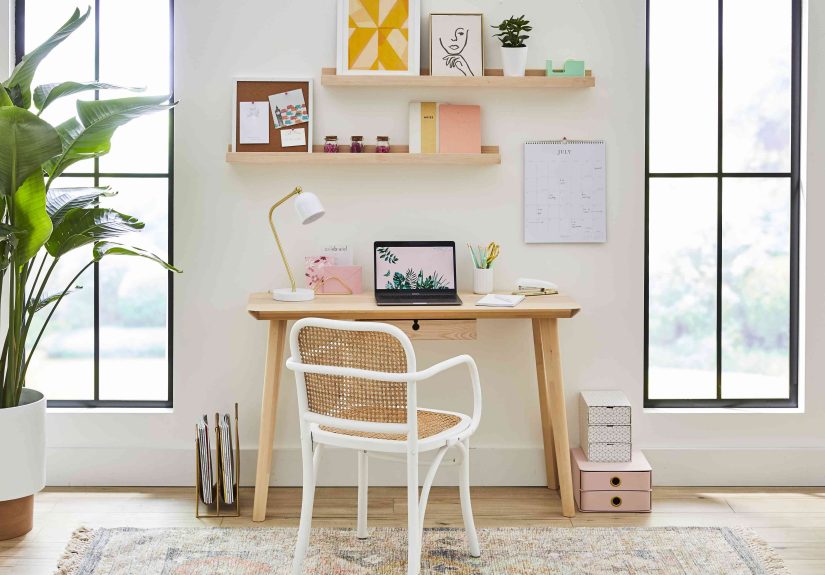
If your desk feels unfinished, look up. The wall above your workspace is prime decorating real estate. Add framed prints, a small gallery wall, a calendar, a corkboard, floating shelves, or a pegboard. Wall decor gives the desk area height and personality without stealing surface space.
For a calm look, use two or three framed pieces in similar tones. For a creative desk aesthetic, mix prints, postcards, sketches, and inspirational notes. Keep it personal but not chaotic. A wall full of reminders can be motivating, unless it starts looking like a detective board from a crime show.
7. Use Vertical Storage to Save Space
Small desks need smart storage. Vertical organizers, wall shelves, pegboards, and desktop risers help you use height instead of crowding the desktop. A monitor riser can lift your screen while creating storage underneath for notebooks, sticky notes, or a laptop.
Vertical storage is especially useful for dorm rooms, apartments, shared bedrooms, and compact home offices. It keeps the surface open, which makes your desk look larger and easier to use. When the desk feels spacious, your brain tends to breathe a little easier too.
8. Hide or Tame Your Cables
Cables are the tiny vines of modern life. Left alone, they twist, tangle, and somehow form alliances. Cable management instantly makes a desk look cleaner. Use cord clips, cable sleeves, adhesive cable channels, zip ties, or a cable box to organize chargers and wires.
Labeling cords can also save future frustration. Nobody wants to unplug the monitor while trying to charge a phone. If your desk is visible in video calls or placed in a bedroom, cable control makes the entire area feel more finished.
9. Add Personal Art or Photos
Your desk should remind you that you are a person, not a productivity robot with snacks. Add one or two personal items such as a framed photo, small art print, handmade card, favorite quote, or illustration. These details bring emotional warmth to the space.
The key is editing. A few meaningful pieces feel intentional. Too many can become visual noise. Choose items that make you smile, feel grounded, or remember why you are doing the work in the first place. A tiny framed photo can do more for your mood than another random gadget ever will.
10. Layer Textures for a Richer Look
If your desk looks flat, texture may be missing. Mix smooth, soft, matte, glossy, woven, wooden, and metallic surfaces to make the space feel more designed. For example, pair a wooden desk with a felt mat, ceramic pen holder, glass lamp, and linen pinboard. The colors can stay simple while the textures make the setup interesting.
This is especially useful for neutral desk aesthetics. Beige, white, and gray can look elegant, but without texture they may feel a little “waiting room chic.” Natural materials like wood, rattan, cork, cotton, and stone bring depth without adding clutter.
11. Create a Mini Inspiration Zone
An inspiration zone can be a small tray, corkboard, shelf, or corner where you keep motivating objects. This might include a favorite book, a quote card, a creative sketch, a small sculpture, or a color swatch. The goal is to spark ideas without covering your desk in motivational confetti.
For students, this could include goal cards, class schedules, or subject-themed prints. For creatives, it might include moodboard images, fabric samples, or reference photos. For remote workers, it could be a simple reminder of the bigger picture: travel plans, family photos, or a note that says “drink water,” because apparently we all need to be reminded to behave like houseplants.
12. Use Trays to Group Small Items
Trays are magic for desk decor because they make random objects look intentional. A candle, lip balm, paper clips, glasses, and sticky notes can look messy when scattered. Place them on a small tray, and suddenly they look curated. Same objects, better manners.
Choose a tray that fits your aesthetic. Wood feels warm, acrylic feels modern, metal feels sleek, and ceramic feels decorative. Keep only the essentials on the tray. Once the tray becomes a second junk drawer, it has lost the plot.
13. Add a Cozy Element
Comfort matters, especially if you spend long hours at your desk. Add a cozy element such as a soft chair cushion, small rug under the desk, warm lamp, fabric pinboard, or textured throw over the chair. Soft materials can make a workspace feel less cold and more inviting.
This is especially helpful in rooms with hard floors, blank walls, or metal furniture. A little softness improves the atmosphere and can even reduce echo in a home office. Think of it as giving your desk area a tiny sweater.
14. Upgrade Everyday Desk Tools
One underrated way to improve your desk aesthetic is to upgrade the items you already use. Choose a nice notebook, matching pens, a stylish stapler, a better mouse pad, or a quality pencil cup. You do not have to buy extra decor if your functional items already look good.
This approach keeps the desk practical and uncluttered. Instead of adding ten new decorative objects, replace worn or mismatched essentials with pieces that fit your theme. A beautiful workspace is often built from ordinary things chosen with care.
15. Leave Breathing Room
The final desk decor idea may be the hardest: leave empty space. Negative space helps your desk feel calm, clean, and usable. It gives your eyes a place to rest and your arms a place to actually work. Every surface does not need decoration.
After styling your desk, remove one or two items and see if the space looks better. Often, it will. Aesthetic desk decor is not about how much you can fit on a surface. It is about how well each piece supports the look, feel, and function of your workspace.
How to Choose the Right Desk Aesthetic
Your ideal desk aesthetic should match both your taste and your habits. If you love clean surfaces but constantly use notebooks, choose closed storage or a drawer organizer. If you like colorful spaces, use color in controlled areas such as art, desk mats, or accessories. If you prefer a calm setup, focus on neutrals, warm lighting, and natural materials.
Here are a few popular desk aesthetics to consider:
Minimalist Desk Aesthetic
Use a simple palette, hidden storage, one lamp, one plant, and clean lines. Keep only what you use daily on the desk.
Cozy Desk Aesthetic
Add warm lighting, soft textures, personal photos, wood tones, and a small plant. This style works well for studying, journaling, and creative work.
Modern Tech Desk Aesthetic
Focus on cable management, monitor stands, clean accessories, a large desk mat, and sleek lighting. Use black, white, gray, or metallic accents.
Creative Desk Aesthetic
Use art, color, open storage, moodboards, and flexible organizers. Keep supplies visible but grouped neatly so inspiration does not turn into chaos.
Common Desk Decor Mistakes to Avoid
The most common mistake is decorating before organizing. If your desk is already crowded, adding decor will only create prettier clutter. Start by removing items you do not use, then add storage and decorative pieces. Another mistake is choosing beauty over comfort. A chair may look amazing, but if it makes your back file a complaint, it is not the one.
Also avoid poor lighting, too many tiny objects, tangled cables, and oversized decor that blocks your work area. Your desk should support your routine, not audition for a furniture catalog while making your life harder.
Experience-Based Tips: What Actually Works in Real Desk Setups
After seeing many desk setups succeed, fail, and slowly disappear under snack wrappers, one lesson becomes clear: the best aesthetic desk is the one you can maintain on a normal Tuesday. It is easy to design a perfect workspace when everything is freshly cleaned. The real test happens after a long day, three open notebooks, two chargers, a water bottle, and a suspicious number of sticky notes.
One practical experience is to build your desk around your most repeated actions. If you write every day, your notebook and pen should have a beautiful, obvious home. If you use headphones constantly, add a hook or stand. If you drink coffee while working, leave safe space for a mug so it does not live dangerously beside your laptop. Your habits are the blueprint. Decor should follow them, not fight them.
Another useful lesson is that lighting changes everything. A plain desk with a warm lamp often feels better than an expensive desk under cold overhead light. In the evening, softer lighting can make work feel less stressful and studying feel more peaceful. A small lamp placed to the side can create depth, reduce glare, and make your setup look intentionally styled even when the rest of the room is not cooperating.
Plants are also powerful, but only when chosen realistically. If you forget watering schedules, pick a low-maintenance plant or a good faux one. There is no shame in fake greenery. A dead plant does not say “aesthetic.” It says “tiny botanical tragedy.” The goal is to add life to the space, not guilt.
Storage works best when it is easy. If you have to open three boxes and perform a small ceremony just to put away scissors, you will not do it. Use open trays for daily items and closed storage for less attractive supplies. Keep visual clutter low by grouping objects. A pen cup, tray, drawer divider, and monitor riser can transform a desk without making it feel overdesigned.
Personal decor should be meaningful but limited. A framed photo, favorite quote, or small object from a trip can make the desk feel like yours. However, too many personal pieces can distract from the work zone. Think of personal items as seasoning. A little makes the desk flavorful. Too much and suddenly your workspace tastes like a craft store exploded.
The most successful desk aesthetics also include empty space. People often forget that blank surface area is useful. It gives you room to write, sketch, sort papers, or simply rest your arms. If your desk looks beautiful but you have to move seven objects before opening a notebook, it is time to edit. A clear zone in front of you is not wasted space; it is the workspace.
Finally, your desk aesthetic should evolve. You might start with a minimalist setup and later add color. You might begin with lots of accessories and later crave simplicity. That is normal. Your desk is not a permanent sculpture. It is a working part of your daily life. Adjust it as your schedule, hobbies, classes, job, or creative goals change. The best desk decor ideas are flexible enough to grow with you.
Conclusion
Creating your own desk aesthetic is not about chasing perfection. It is about designing a workspace that feels good, supports your routine, and makes daily tasks a little more enjoyable. Start with a color palette, improve your lighting, organize what you use, add meaningful decor, and leave enough open space to work comfortably. Whether your desk is large, tiny, shared, tucked into a corner, or currently hiding under a mountain of papers, small changes can make a big difference.
The best desk decor ideas combine beauty and function. A stylish lamp, tidy cables, small plant, thoughtful organizer, and personal artwork can completely change the mood of your workspace. Build slowly, edit often, and remember: your desk does not need to look like the internet’s favorite showroom. It just needs to feel like a place where you can think, create, focus, and maybe finally find that pen you were looking for.