Table of Contents >> Show >> Hide
Some animals impress you from a distance. Eagles look dramatic. Wolves look legendary. Dolphins act like they have a publicist. Ducks, meanwhile, are out here doing excellent work with almost no ego at all. They wobble, paddle, tip upside down, chatter like tiny neighborhood gossips, and somehow make every pond, lake, marsh, and city park feel more alive. That is exactly why ducks deserve a proud place on any list of awesome things.
This is not blind duck propaganda, although the ducks would probably support it. It is a sincere appreciation of one of the most oddly charming creatures in everyday life. Ducks are funny without trying, beautiful without showing off, and surprisingly sophisticated once you stop thinking of them as “those birds near the water” and start paying attention. They are expert swimmers, efficient migrants, important wetland animals, and elite mood-improvers. In other words, ducks are not background scenery. Ducks are the event.
If you have ever watched a line of ducklings trail behind their mother like fuzzy punctuation marks, or seen a mallard land on water as if gravity politely asked permission first, you already understand the appeal. Ducks turn ordinary moments into memorable ones. They give parks personality, wetlands motion, and quiet mornings a soundtrack. For something so common in daily life, they are wildly easy to underestimate.
Why Ducks Deserve a Spot on Any List of Awesome Things
They make ordinary places feel magical
A pond without ducks is still a pond. Perfectly fine. Respectable, even. But a pond with ducks suddenly has storylines. There is tension. There is comedy. There is one duck paddling with great dignity while another seems to have forgotten where it was going halfway through the trip. Ducks create motion and personality in places that might otherwise blend into the background.
That matters more than it sounds. Most people are not climbing remote mountains every weekend or snorkeling over coral reefs on Tuesday afternoons. Most of us encounter nature in smaller ways: at a neighborhood park, along a walking trail, beside a retention pond, or through a windshield at a stoplight near a drainage canal. Ducks bring those modest spaces to life. They remind us that wonder does not always require a plane ticket.
They are funny, but not in a cheap way
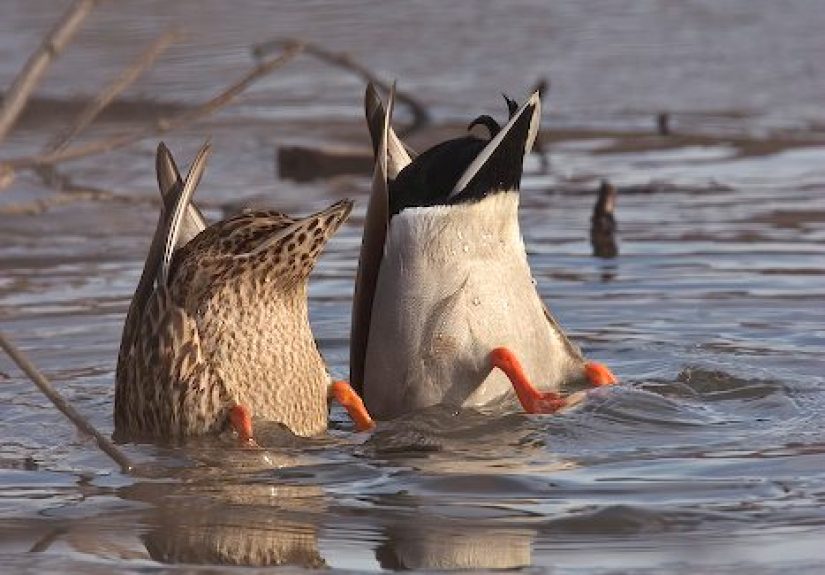
Ducks are not accidental comedians. They are physical-comedy masters. The little tail wiggle before they tip forward to feed. The determined speed-walk across grass. The sudden flap-frenzy takeoff that looks like a cross between an emergency and a dramatic exit. Ducks are funny because they are expressive. They are always doing something that looks like it should be set to jazz.
Yet the humor never cancels the beauty. A mallard drake with an iridescent green head is genuinely elegant. A wood duck looks like it was designed by someone who refused to stop adding color. A northern shoveler, with its oversized bill, looks mildly ridiculous until you realize that bill is a brilliant feeding tool. Ducks are a reminder that nature does not always separate function from flair. Sometimes it gives you both and throws in a quack for free.
They reward curiosity
The more you learn about ducks, the more impressive they become. There are dabbling ducks that feed near the surface and diving ducks that disappear underwater in pursuit of food. There are species built for marshes, species comfortable in city ponds, and species that spend part of their lives covering serious migration distances. Some ducks perch in trees. Some filter tiny food from the water. Some form seasonal bonds, while others stand out because both parents help raise the young.
In short, ducks are not one-note birds. They are a whole genre.
What Makes Ducks So Fascinating?
Dabblers, divers, and specialists
One of the easiest ways to appreciate ducks is to notice that they are not all doing the same job. Dabbling ducks, including familiar mallards, often feed by tipping forward in shallow water, tails up like tiny flags. Diving ducks, on the other hand, go underwater for food and often favor larger or deeper bodies of water. That means a quiet marsh, a suburban pond, and a coastal lagoon can all host ducks, but not necessarily the same kinds.
Even within those groups, duck design gets wonderfully specific. Northern shovelers have a broad, shovel-shaped bill built to skim and filter food from the water. Wood ducks spend more time in trees than many people expect, which makes them feel like ducks with a secret second identity. Black-bellied whistling ducks do not even fit the cartoon-duck stereotype; they perch, whistle, and look like they know something the rest of the pond does not.
They are built for water in clever ways
Ducks do not just get wet and hope for the best. Their feather structure and constant preening help maintain a water-resistant outer coat, which is one reason they can float around looking dry and unbothered while humans need three layers and a complaint. Their bodies are a combination of engineering and maintenance. Waterproofing is not a one-time feature. It is a daily routine.
That routine is part of the charm. A duck preening on a log may look like it is enjoying a quiet spa appointment, but it is doing serious feather care. Every nibble and stroke helps keep those feathers aligned and functional. So yes, the duck seems relaxed. It is also on the job.
Their sounds are better than people give them credit for
Ask someone what a duck sounds like and they will say “quack,” then move on as if the matter is settled forever. But ducks are more interesting than that. Female mallards deliver the classic quack most people recognize, while males tend to make quieter, raspier sounds. Other species whistle, grunt, squeak, growl, or produce noises that sound oddly mechanical. The duck world is less a single sound effect and more a full audio library.
That variety helps explain why duck-filled wetlands feel so alive. Even when you cannot see every bird, you can hear the place working. Water moves. Wings slap the air. Calls overlap. Something splashes. Something whistles. A duck mutters what sounds suspiciously like a negative review of your shoes. It is immersive in the best possible way.
Ducks Do More Than Look Cute
They are part of healthy wetlands
Ducks are deeply tied to wetlands, and wetlands matter to just about everybody whether they realize it or not. Wetlands help support wildlife, improve water quality, reduce flooding, and create space for recreation and observation. When ducks thrive, they often signal that those watery habitats are doing important work. In that sense, ducks are not just adorable residents. They are ambassadors for ecosystems people depend on.
This gives duck appreciation a second layer. You can admire a duck because it is charming, and you can also admire what it represents: functioning habitat, seasonal rhythms, migration pathways, and the incredible productivity of marshes, ponds, and flooded grasslands. A duck on the water is not only a pleasant sight. It is part of a bigger environmental story.
Migration turns them into athletes
It is easy to treat ducks like permanent residents of your local park because the ones you see feel familiar. But many ducks are travelers. Waterfowl migration is shaped by day length, weather, and food availability, and some ducks cover astonishing distances. Suddenly that unimpressed-looking bird floating near the reeds becomes a serious endurance athlete with a better travel schedule than most people.
And that shift in perspective is delightful. Ducks can seem comically grounded one moment and incredibly capable the next. A mallard may spend the morning paddling like a suburban regular, then reveal that its species is built for long flights, seasonal movement, and precise survival timing. Ducks are basically a combination of neighborhood character and world-class pilot.
They connect people to conservation
Because ducks are visible, familiar, and widely loved, they also help people care about conservation in practical ways. Protecting duck habitat means protecting wetlands, and protecting wetlands benefits fish, other birds, flood control, water purification, and outdoor recreation. In other words, a person may begin with “I like ducks,” and end up supporting healthier landscapes. That is a pretty excellent chain reaction.
There is something hopeful about that. Not every environmental connection starts with a grand lecture or a dramatic headline. Sometimes it starts with a kid spotting ducklings. Sometimes it starts with an adult taking a longer route around a pond because a few ducks were there yesterday and might be there again today. Affection can become attention, and attention can become stewardship.
Four Duck Types That Prove Ducks Are Never Boring
Mallards: the familiar overachievers
Mallards are probably the first ducks many people picture, and there is a reason. They are common, recognizable, adaptable, and somehow still attractive enough to stop you mid-walk. The male’s green head and the female’s practical, beautifully patterned brown plumage make them instantly readable once you learn the basics. Mallards are also a good reminder that “common” does not mean “uninteresting.” A thing can be familiar and still be fantastic.
Wood ducks: the fashion icons
If a mallard is the dependable classic, the wood duck is the peacock-adjacent artist who accidentally wandered into the waterfowl category and stayed. These ducks are famously colorful and spend more time in trees than many people expect. They look almost too ornate to be real, which is a strong brand position for any bird.
Northern shovelers: the specialists
The northern shoveler wins points for committing fully to a design choice. That large bill is not decorative nonsense. It is a highly effective tool for skimming and filtering food from the water. The result is a duck that looks a little cartoonish until you realize it is equipped for a lifestyle most other birds would fail on day one.
Black-bellied whistling ducks: the rule-breakers
These birds feel like ducks designed by someone determined to keep things interesting. They whistle. They perch. They nest in cavities. Males and females look similar, and both parents help raise the young. Every time you think ducks can be summarized in one tidy sentence, a species like this shows up to politely ruin your shortcut.
How Ducks Improve Human Life in Small, Reliable Ways
They slow you down
People do not usually sprint past ducks. Ducks interrupt urgency. You notice them, then you pause. You watch one paddle in a perfect V across the water. You watch another doze with its bill tucked in. You wait to see whether the duckling will make the jump onto the curb. Ducks create a brief pocket of attention in a day that may otherwise be all deadlines, notifications, and awkwardly aggressive calendar invites.
They make shared spaces feel shared
Parks, ponds, and urban waterways can seem like human-designed places with a decorative nature setting. Ducks flip that assumption. Once they arrive, the space clearly belongs to more than us. We become visitors too. That is healthy for the ego and excellent for perspective.
They remind us that joy can be uncomplicated
Not every good thing needs to be optimized, monetized, branded, or turned into a self-improvement strategy. Sometimes a duck is enough. Sometimes the best part of a walk is seeing a duck shake water off its back like it just heard a scandalous rumor. Ducks are useful that way. They return us to simple delight without making a big speech about it.
A Longer Reflection: The Experience of Being Around Ducks
There is a particular kind of peace that comes from watching ducks in real life, and it is hard to fake. You can read about them, look at photos, or hear someone insist that ducks are underrated, but the real conversion happens beside water. It happens on a bench that is slightly damp for mysterious reasons. It happens on a walking trail when you were supposed to be “just getting some steps in” and instead became emotionally invested in whether one determined duck can climb onto a muddy bank. It happens when the world is loud, but the pond somehow is not.
A duck experience usually starts small. Maybe you hear the sound first: a quack, a splash, a burst of wingbeats that makes you look up. Then you see them. One is drifting with the confidence of a tiny mayor. Another is preening with the focus of an artist fixing one last detail. A pair moves together so neatly that it seems choreographed. And if ducklings are involved, your schedule is over. Nothing you planned for the next ten minutes matters more than watching those fuzzy little marshmallows try to keep formation.
What makes the experience memorable is not just that ducks are cute. Plenty of animals are cute. Ducks are expressive in a way that feels close to comedy and close to wisdom at the same time. They look busy without appearing stressed. They rest without guilt. They move with purpose, then suddenly seem to forget the purpose and investigate a leaf for reasons known only to them. There is something oddly reassuring in that. Ducks seem fully occupied with being ducks, and they never apologize for it.
There is also the setting. Ducks tend to appear in places where people go to breathe a little easier: ponds in public parks, marsh boardwalks, lakes at sunrise, neighborhood paths after work. Watching ducks becomes attached to those moments when your mind unclenches. You are not staring at a screen. You are not refreshing anything. You are just there, watching water wrinkle around a moving body, listening to the low chatter of birds going about their day. It is one of the simplest forms of reset available.
And then there is the human side of it. Ducks make strangers softer. People point them out to each other. Kids laugh at them. Adults who have spent all day being serious suddenly say things like, “Look at that little guy,” with complete sincerity. A duck can turn a park full of separate people into a crowd sharing the same tiny moment. That is not nothing. In a world that often feels fragmented, ducks create instant common ground.
Maybe that is the real reason ducks belong on a list of awesome things. They are not impressive in a distant, untouchable way. They are awesome in a close, daily, repeatable way. You do not need expert knowledge to enjoy them. You do not need expensive gear. You just need to notice them. And once you do, life gets a little richer. The pond has characters. The walk has a highlight. The day has a better ending than it would have had without one good duck sighting.
So yes, ducks are awesome. Not because they demand admiration, but because they quietly earn it. They bring beauty, humor, movement, ecology, and calm into ordinary life. They are one of those rare things that get better the more you learn about them and still remain delightful when you know almost nothing at all. That is a special category of wonderful. Ducks own it.
Conclusion
Ducks are easy to overlook precisely because they are so accessible. They live where people live, rest where people walk, and show up in the middle of ordinary days without requiring a ticket or a perfect plan. But once you pay attention, ducks reveal themselves as far more than park decoration. They are skillful birds, wetland companions, seasonal travelers, comic geniuses, and tiny reminders that the natural world is still busy being remarkable right in front of us.
So the next time you see ducks, do not treat them like background noise with feathers. Give them the credit they deserve. They are one of life’s most reliable little upgrades, and they make the world feel friendlier, funnier, and more alive.