



Table of Contents >> Show >> Hide
- Why Timing Is the Secret Sauce (Not Just Temperature)
- The Roasted Veg Timing Infographic (Copy, Save, Screenshot, Tattoo Lightly)
- The 5 Rules That Make Roasted Veggies Work Every Single Time
- Timing by Vegetable Type (So You Can Mix and Match Like a Pro)
- How to Roast a Mixed Sheet Pan Without Sacrificing Anyone
- Troubleshooting: If Your Veggies Aren’t Crisp, Here’s Why
- Flavor Boosters That Don’t Fight the Clock
- Meal Prep Moves: Roast Once, Eat All Week
- Conclusion: Timing Turns “Pretty Good” Into “Wow, I Made This?”
- Extra: Real-World Roasting Experiences and Lessons (500+ Words)
Roasted vegetables are the kitchen equivalent of showing up to class on time with your homework done: impressive, dependable,
and weirdly satisfying. But if you’ve ever pulled a tray of broccoli out too early (sad and squeaky) or left carrots in too long
(sweet… but also kind of mushy), you already know the truth: roasting is mostly about timing.
This guide gives you a simple, repeatable way to roast vegetables so they land in the magical zone:
caramelized edges, tender centers, and zero “why is this still crunchy?” confusion. And yesthere’s a timing infographic
you can use like a cheat sheet (because we all deserve nice things).
Why Timing Is the Secret Sauce (Not Just Temperature)
Temperature gets all the attention, but timing is what decides whether your vegetables come out
golden and crisp-tender or steamed and sleepy. Different vegetables hold different amounts of water,
have different densities, and have different “browning potential” (aka: how fast they can go from “not yet” to “whoops, charcoal”).
The good news: you don’t need a culinary degree or a stopwatch collection. You just need a strong default roasting temp
(most home cooks love 425°F), a consistent cut size, and a timing framework you can actually remember.
The Roasted Veg Timing Infographic (Copy, Save, Screenshot, Tattoo Lightly)
Use this timing chart as your “start here” roadmap. It’s built around 425°F because it’s hot enough to brown and
caramelize without forcing you to live in fear of sudden burning.
Infographic Cheat Sheet: Roasting Times at 425°F
| Vegetable | Best Cut for Even Roasting | Time Range | Flip/Toss? | “Done” Looks Like |
|---|---|---|---|---|
| Asparagus | Whole spears (trimmed) | 10–15 min | Optional (once) | Wrinkled tips, tender-crisp stalks |
| Green beans | Whole | 12–18 min | Yes (once) | Blistered spots, still snappy |
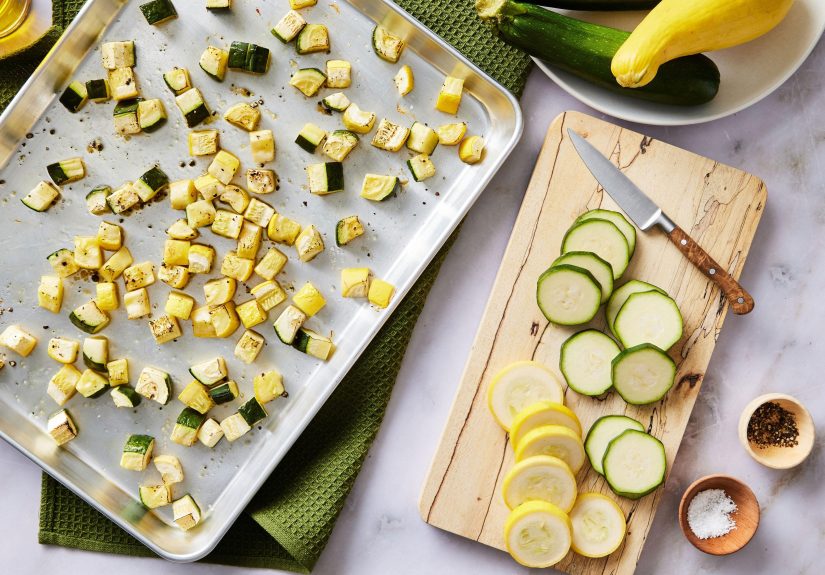
| Zucchini / summer squash | 1/2-inch thick half-moons | 12–18 min | Yes (once) | Light browning, not watery |
| Mushrooms | Halved or thick-sliced | 15–25 min | Yes (once) | Edges browned, moisture mostly cooked off |
| Broccoli | Florets + sliced stems | 15–22 min | Optional | Crispy tips, bright green to deep roasted green |
| Brussels sprouts | Halved (cut-side down) | 18–30 min | Optional | Deep brown cut side, tender leaves |
| Cauliflower | Florets (similar size) | 18–30 min | Yes (once) | Golden edges, fork-tender centers |
| Bell peppers | 1-inch squares/strips | 18–25 min | Yes (once) | Soft, blistered skin in spots |
| Onions | Wedges (root intact) | 25–35 min | Optional | Caramelized edges, sweet aroma |
| Carrots | 1/2-inch coins or batons | 25–35 min | Yes (once) | Glazed-looking edges, fork-tender |
| Sweet potatoes | 3/4-inch cubes | 25–40 min | Yes (once) | Caramelized corners, creamy inside |
| Butternut squash | 3/4-inch cubes | 25–40 min | Yes (once) | Deep golden edges, tender center |
| Potatoes | 3/4–1-inch cubes | 35–50 min | Yes (once or twice) | Crisp exterior, fluffy interior |
| Beets | 1-inch cubes (or wedges) | 45–60+ min | Optional | Knife slides in easily, edges slightly chewy |
How to Use the Infographic (So It Actually Works)
- Pick a temperature: Start with 425°F for most vegetables.
- Match your cut size: If your pieces are larger than the chart, add time; smaller, subtract time.
- Check at the early end: Ovens vary, pans vary, and vegetables sometimes show up extra watery for no reason.
- Use visual cues: Browning + tenderness beats the clock every time.
The 5 Rules That Make Roasted Veggies Work Every Single Time
1) Preheat Like You Mean It
A fully preheated oven is the difference between roasting and “warm vegetable sauna.” Give it time to reach temp.
Want an extra boost? Preheat the sheet pan toohot metal jump-starts browning when the vegetables hit the surface.
2) Cut for Consistency (Not for Artistic Expression)
Your vegetables don’t need to be identical shapes, but pieces of the same vegetable should be roughly the same size.
This keeps doneness synchronized so you’re not babysitting one tray like it’s a group project.
3) Don’t Crowd the Pan (Space = Crispness)
Vegetables release steam as they cook. If they’re packed together, they steam each other instead of browning.
Give them breathing roomsingle layer, little gaps. If you need two pans, use two pans. Your future self will thank you.
4) Oil: Enough to Coat, Not Enough to Swim
Oil helps transfer heat and encourages browning. But too much oil can make vegetables heavy and greasy (and some seasonings can burn).
Aim for a light, even coatingevery piece should look glossy, not drenched.
5) Toss Strategically (Not Constantly)
Flipping or tossing once halfway through is usually perfect. If you stir every five minutes, you keep interrupting browning.
Let the vegetables develop color first, then turn them so another side can get that roasted glow-up.
Timing by Vegetable Type (So You Can Mix and Match Like a Pro)
Fast Roasters (10–18 minutes)
Think tender, thin, or water-lean vegetables: asparagus, green beans, snap peas, sliced zucchini, some mushrooms.
These can go from “just right” to “over it” quickly, so check early and pull when they’re blistered and still lively.
Medium Roasters (18–30 minutes)
Cruciferous vegetables live here: broccoli, cauliflower, Brussels sprouts. They roast beautifully at high heat.
If you want maximum browning, place cut sides down (especially Brussels sprouts and cauliflower steaks).
Long Roasters (30–60+ minutes)
Dense roots and big starchy pieces need time: potatoes, beets, thick carrots, large chunks of squash.
The bigger the cube, the longer the wait. If you’re roasting mixed vegetables, start these first.
How to Roast a Mixed Sheet Pan Without Sacrificing Anyone
The classic problem: potatoes need forever, broccoli needs a quick cameo, and you want them to finish at the same time.
Here are three easy strategies:
- Stagger the start: Put longer-cooking vegetables in first. Add quick-cooking vegetables halfway through.
- Group by timing zones: Keep each vegetable in its own area of the pan. You can pull one group early if needed.
- Adjust cut size: Cut slow vegetables smaller and fast vegetables bigger to make their timing meet in the middle.
Troubleshooting: If Your Veggies Aren’t Crisp, Here’s Why
“They’re soft and pale.”
- Your oven may not be fully preheated.
- The pan was crowded, so the vegetables steamed.
- Pieces were too wet (pat them dry, especially after washing).
“They’re burnt outside but raw inside.”
- Pieces were too large for the time/temperature.
- You used very high heat without enough time for the center to catch up.
- Try smaller cuts or a slightly lower temp for extra-dense vegetables.
“They’re crispy… but kind of dry.”
- Too little oil, or you roasted too long.
- Try finishing with a sauce or a splash of acid (lemon, vinegar) after roasting.
Flavor Boosters That Don’t Fight the Clock
Timing is the foundation, but flavor is the standing ovation. Keep it simple and smart:
- Before roasting: salt, pepper, garlic powder, smoked paprika, cumin, dried herbs
- After roasting: fresh herbs, lemon zest, parmesan, tahini drizzle, balsamic glaze, chili crisp
Pro tip: delicate fresh herbs can scorch in the oven. Add them at the end so they taste like herbs, not like “campfire parsley.”
Meal Prep Moves: Roast Once, Eat All Week
Roasted vegetables are meal-prep royalty. Roast a couple of pans and use them like building blocks:
- Toss into grain bowls with chickpeas and a lemony dressing
- Fold into omelets, frittatas, or breakfast tacos
- Add to pasta with olive oil, garlic, and parmesan
- Blend into soups (roasted cauliflower and carrots are especially good)
- Layer into sandwiches or wraps with hummus
Conclusion: Timing Turns “Pretty Good” Into “Wow, I Made This?”
Perfect roasted vegetables aren’t a mysterythey’re a pattern. Start with a high, steady temperature, cut consistently,
space everything out, and follow the timing infographic as your baseline. Then let color and tenderness be your final judge.
Once you get your personal oven’s rhythm down, you’ll roast vegetables like it’s your side hustle.
Extra: Real-World Roasting Experiences and Lessons (500+ Words)
If you want to get truly good at roasting vegetables, the fastest teacher is real lifespecifically, real life when you’re hungry,
slightly impatient, and trying to do three other things at once. That’s exactly why a timing infographic is so useful: it makes
roasting feel less like improvisational theater and more like a plan.
One common “aha” moment for many home cooks is discovering that most roasted vegetable disasters are actually pan problems.
The vegetables weren’t doomedthey were just crowded. People will swear they roasted at 425°F, used olive oil, even sprinkled salt
with confidence… and still ended up with pale, soft vegetables. Then they try again with two sheet pans instead of one and suddenly
the broccoli gets crispy tips and the carrots caramelize like they’re showing off. The vegetables didn’t change. The spacing did.
Another real-world lesson: cut size is your hidden time dial. If you cut sweet potatoes into big, chunky cubes and expect
them to finish when your Brussels sprouts do, you’re basically asking physics to be emotionally supportive. The fix is simple:
either cut the dense veggies smaller or start them earlier. Once you start thinking in “timing zones” (fast, medium, long),
mixed pans become easylike assembling a roast-veg orchestra where everyone hits the final note together.
There’s also the very human habit of checking too often. It’s understandableyou want success! But frequent stirring can delay browning.
Many cooks report the best results when they let the vegetables roast undisturbed for the first half of the cook time. That’s when the
hot pan does its best work: moisture evaporates, sugars concentrate, and the surface finally starts to color. A single toss halfway through
usually gives you the best of both worlds: browning plus even cooking.
Then there’s the “my oven runs weird” reality. Some ovens run hot, others have hot spots, and some behave perfectly… until they don’t.
This is where the infographic becomes a starting point, not a strict contract. Many experienced cooks treat the first roast as a calibration
test: they check at the early end of the range, note what “done” looks like, and then adjust future batches by a few minutes. After a couple
tries, they stop relying on the clock and start relying on cues: deeper color, crisp edges, and a fork sliding in with just a little resistance.
Flavor experiences matter too. People often discover that roasted vegetables taste “restaurant good” when they finish with something bright:
a squeeze of lemon, a splash of vinegar, or a sauce like tahini or yogurt. That finishing touch can rescue a slightly over-roasted batch and
elevate a perfectly roasted one. And it turns a tray of vegetables into something you actually want to snack on while standing at the counter
pretending you’re “just cleaning up.”
Finally, one of the most relatable experiences is learning to roast vegetables to match your personal preference. Some people love a softer,
sweeter roast where onions melt and carrots go jammy. Others want edges that border on crunchy. The timing chart supports bothjust choose your
stopping point. Pull vegetables closer to the lower end of the range for crisp-tender, and ride the upper end for deeper caramelization.
Once you realize roasting has “levels,” you stop chasing one perfect outcome and start choosing your favorite.