Table of Contents >> Show >> Hide
- The Viral Moment: What Actually Happened?
- Why the Hotel Owner's Response Went Viral
- Was the Influencer Really Freeloading?
- The Business Lesson: Exposure Is Not a Currency Unless It Converts
- What Influencers Can Learn From the Controversy
- What Hotels and Small Businesses Can Learn
- The Bigger Debate: Influencer Culture vs. Traditional Business
- Why the Story Still Matters Today
- Specific Examples of Better Collaboration Models
- Public Relations Analysis: Genius Move or Too Much?
- Experience-Based Reflection: What This Story Teaches Creators, Hotels, and Everyone Watching
- Conclusion: The Real Meaning Behind the Viral Hotel Owner Response
There are many ways to ask for a hotel room. You can book online, call the front desk, use points, charm your way into an upgrade, or, if you are feeling especially bold, email a hotel and offer “exposure” instead of money. That last option is where the internet sharpened its popcorn bucket.
The story of a viral hotel owner’s response to a freeloading influencer became one of the most talked-about hospitality-meets-social-media moments of the last decade. It involved a young travel and lifestyle influencer, a Dublin hotel owner with a famously sharp tongue, a request for a complimentary stay, and an online audience that treated the whole thing like a courtroom drama with better memes.
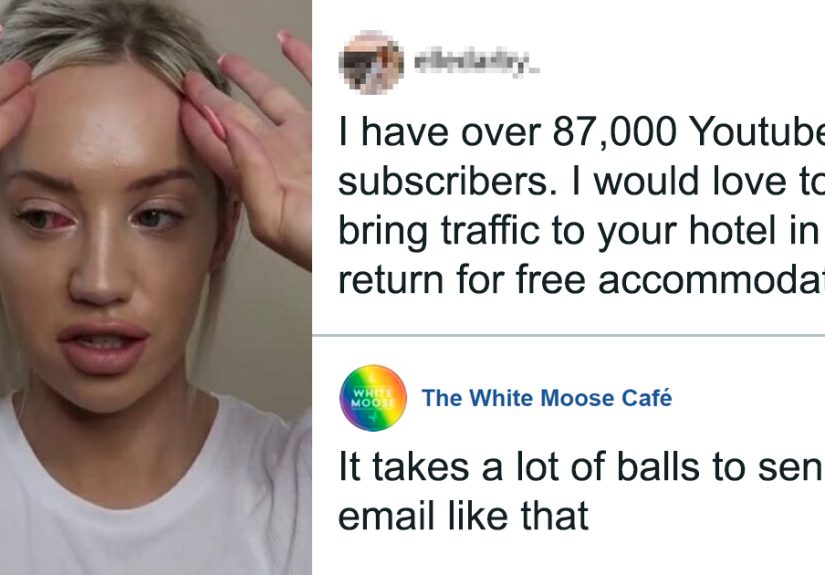
At the center of the controversy was British influencer Elle Darby, who reportedly contacted The White Moose Café and Charleville Lodge in Dublin asking for a free five-night stay in exchange for social media promotion. The hotel owner, Paul Stenson, did not simply decline. He posted a heavily redacted version of the request online and answered with a public, sarcastic refusal that quickly went viral. Within days, the story became a global discussion about influencer marketing, entitlement, small business boundaries, online shaming, and whether “exposure” can pay the electricity bill. Spoiler: the power company remains unimpressed.
The Viral Moment: What Actually Happened?
The controversy began when an influencer sent a collaboration pitch to a Dublin hotel. Her proposal was straightforward: she wanted a complimentary stay for herself and her partner around Valentine’s Day and offered to create content about the hotel for her YouTube and Instagram audience. In modern marketing language, that kind of pitch is called an influencer collaboration. In old-school business language, it can sound suspiciously like, “May I have your product for free?”
Paul Stenson, owner of The White Moose Café and Charleville Lodge, was not interested. Instead of sending a private “no, thank you,” he responded publicly through the business’s Facebook page. He mocked the idea that exposure alone should replace payment and questioned who would cover the costs of staff, cleaning, utilities, food, and other hotel operations.
The post spread quickly because it hit a nerve. Many small business owners felt seen. They had received similar requests from people promising attention, shout-outs, posts, reels, stories, or “brand love” instead of actual payment. Meanwhile, many creators argued that influencer marketing is a real business model and that polite collaboration pitches should not be treated as moral crimes.
In other words, the internet did what the internet does best: it turned a business email into a full cultural referendum.
Why the Hotel Owner’s Response Went Viral
The hotel owner’s reply became viral because it combined three powerful ingredients: conflict, humor, and a topic people already had opinions about. Influencer culture had been growing rapidly, and so had public suspicion toward creators who appeared to expect free products, free meals, free hotel rooms, or free services in exchange for content.
1. It Spoke to Small Business Frustration
Many small businesses operate on narrow margins. A hotel room is not “free” just because it is empty for a night. There are housekeeping costs, utilities, laundry, maintenance, booking management, taxes, staff wages, insurance, and the invisible but very real cost of opportunity. When an influencer asks for a free hotel stay, the business owner has to decide whether the promised visibility is likely to produce measurable bookings.
Stenson’s response landed because it translated that frustration into blunt language. He essentially asked: if the influencer receives a free stay, who pays the workers who make that stay possible? That question resonated with restaurant owners, boutique retailers, beauty salons, photographers, designers, and anyone who has ever been told that publicity should be payment enough.
2. It Challenged the Value of “Exposure”
“Exposure” is one of the most famous words in the creator economy. It can be valuable when connected to a real audience, a clear campaign goal, and measurable results. But exposure can also be vague. A large follower count does not always equal bookings, sales, trust, or revenue. A hotel does not need views; it needs guests who pay, show up, enjoy the stay, and maybe come back with friends who also pay.
The viral hotel owner response forced people to ask an uncomfortable but necessary question: when is influencer exposure worth the cost, and when is it just a shiny coupon for “free stuff, please”?
3. The Tone Was Ruthless, Funny, and Controversial
The response was not a polished corporate statement approved by six departments and one nervous legal intern. It was sharp, sarcastic, and designed to get attention. That made it extremely shareable. People who agreed with the hotel owner shared it as a victory for business common sense. People who disagreed shared it as an example of public humiliation. Either way, the post traveled.
Virality often does not care whether people are clapping or yelling. It only asks one question: are they reacting? In this case, they absolutely were.
Was the Influencer Really Freeloading?
The phrase freeloading influencer is catchy, but the reality deserves more nuance. Influencer marketing is a legitimate advertising channel. Brands pay creators because creators can build trust with niche audiences. A well-matched creator can produce photos, videos, reviews, travel guides, social proof, and search-friendly content that helps a hotel reach potential guests.
The problem is not that an influencer proposed a collaboration. Businesses receive pitches all the time. The problem, at least from the hotel owner’s perspective, was that the pitch asked for a valuable service without clearly proving the return on investment. A strong influencer proposal should include more than follower numbers. It should explain audience demographics, engagement rates, previous campaign results, deliverables, usage rights, posting schedule, disclosure practices, and how the business can track performance.
In plain English: if you ask for a free hotel stay, bring receipts. Not the fake kind from the printer. Real marketing data.
The Business Lesson: Exposure Is Not a Currency Unless It Converts
The hospitality industry is not allergic to influencer marketing. Hotels, resorts, restaurants, airlines, tourism boards, and travel brands regularly work with creators. A beautiful hotel room tour, a weekend itinerary, a “where to stay in Dublin” guide, or a romantic getaway vlog can absolutely influence travel decisions. The issue is whether the collaboration has structure.
For a hotel, a good influencer partnership should answer several practical questions. Who is the audience? Are they likely to travel to the destination? Can they afford the property? Do they trust the creator? Will the content remain searchable after the first 24 hours? Is the creator offering professional photography, short-form video, blog coverage, newsletter placement, or only a quick story that disappears faster than a complimentary mint on a pillow?
This is why the viral hotel owner’s response became more than gossip. It became a case study in how not to pitch and how not to respond if your goal is calm professionalism. Both sides gave businesses and creators something to learn from.
What Influencers Can Learn From the Controversy
Influencers are not automatically freeloaders. Many are skilled content producers, editors, community builders, photographers, copywriters, and brand strategists. But a weak pitch can make even a serious creator look unserious. The Dublin hotel controversy shows that creators need to approach businesses with clarity, respect, and proof of value.
Build a Pitch Like a Business Proposal
A good influencer pitch should not sound like, “I would love to stay for free because my followers enjoy nice things.” That is not a marketing plan; that is a wish wearing lip gloss. Instead, a creator should explain the campaign concept, target audience, expected deliverables, publishing timeline, previous results, and why the hotel is a strong fit.
For example, a stronger pitch might say: “My audience is primarily U.S. and U.K. travelers aged 25–34 who regularly engage with European weekend getaway content. My previous hotel campaign generated 1,200 link clicks and 18 tracked bookings. In exchange for a two-night stay, I can provide one YouTube travel guide, three Instagram reels, five story frames with booking links, and 20 edited images for your organic social use.”
That sounds like marketing. “Can I stay five nights for exposure?” sounds like asking the front desk to accept Monopoly money.
Respect the Right to Say No
Businesses are allowed to decline collaborations. A “no” is not an insult. It may simply mean the timing is wrong, the budget is tight, the audience is not a fit, or the property already has enough demand. Influencers who treat rejection professionally protect their reputation. The creator economy is built on relationships, and no one wants to work with someone who turns every declined pitch into a thunderstorm.
Disclose Sponsored Stays Clearly
Any influencer partnership involving free accommodation, payment, gifts, discounts, or other benefits should be clearly disclosed. Audiences deserve to know when content is sponsored or compensated. Transparency is not a boring legal detail; it is part of trust. If followers discover that a glowing hotel review came from a free stay and the creator failed to disclose it, the content can quickly smell less like fresh linen and more like trouble.
What Hotels and Small Businesses Can Learn
The hotel owner’s response was entertaining, but it also raised an important question: should businesses publicly shame bad pitches? The answer depends on the goal. If the goal is viral attention, public mockery can work. If the goal is long-term brand warmth, hospitality reputation, and professional credibility, a private decline is usually safer.
Create a Collaboration Policy
Hotels should have a clear influencer collaboration policy before the inbox gets crowded. The policy can explain what the business considers, what data creators must provide, what types of stays are available, and whether the hotel offers media rates instead of free rooms. This turns emotional decisions into professional ones.
A hotel might say: “We review creator partnerships quarterly. Please send your media kit, audience demographics, engagement rate, proposed deliverables, and examples of previous travel campaigns. Complimentary stays are limited and must include clear disclosure.” That response is polite, firm, and significantly less likely to cause an international keyboard riot.
Calculate the True Cost of a Free Stay
Before approving a free stay, a hotel should calculate the real value of the room and services. A five-night stay during a high-demand period may cost the business far more than the influencer realizes. If the hotel could sell the room to a paying guest, the collaboration must justify the lost revenue.
A low-season weekday stay may be easier to offer than a Valentine’s weekend booking. A content package with long-term value may be worth more than one temporary post. Smart hotel marketing is not anti-influencer; it is pro-math.
Respond Without Pouring Gasoline on the Lobby Carpet
Public sarcasm can produce attention, but attention is not always reputation. Some people loved Stenson’s response because it defended small businesses. Others felt the public posting went too far, especially after internet users identified the influencer. A business can be witty without being cruel. It can set boundaries without turning one email into a public spectacle.
A professional decline can still have personality: “Thank you for thinking of us. We are not offering complimentary stays at this time, but we wish you a great trip to Dublin.” It is not as viral, but it also does not require a crisis management nap afterward.
The Bigger Debate: Influencer Culture vs. Traditional Business
The viral hotel owner story became popular because it sat at the intersection of two worlds. Traditional businesses often think in invoices, staffing costs, margins, occupancy rates, and direct revenue. Influencers often think in reach, engagement, content value, audience trust, and long-term awareness.
Both sides can be right. A creator may truly provide value. A hotel may truly need payment. The conflict happens when either side assumes the other should automatically understand its economics.
Influencer marketing works best when both parties treat the arrangement as a business deal. The creator should not assume a room is free simply because content will be made. The hotel should not assume every creator is entitled or unserious. Somewhere between “give me everything for exposure” and “all influencers are banned from civilization” lies a healthier middle ground.
Why the Story Still Matters Today
Years later, the controversy still feels relevant because influencer marketing has only grown. Brands now spend serious budgets on creators. Hotels invite travel influencers for curated stays. Restaurants build campaigns around TikTok-friendly dishes. Small businesses send products to micro-influencers because niche trust can outperform generic advertising.
At the same time, audiences have become more skeptical. They want honest reviews, clear disclosures, and creators who do not behave like every café, hotel, boutique, and bakery owes them a red carpet. The best creators understand this. They know that credibility is their real currency, and credibility disappears when followers sense entitlement.
The best businesses understand something too: attention has value, but not all attention is equal. A viral post may bring followers, but will those followers become guests? Will they book rooms? Will they match the brand’s target market? Will they remember the hotel for hospitality or for drama? These are not small questions. They are the difference between marketing and noise.
Specific Examples of Better Collaboration Models
Instead of trading a full free stay for vague exposure, hotels and creators can structure collaborations in smarter ways.
Media Rate Instead of Free Stay
A hotel can offer a discounted media rate to qualified creators. This keeps the influencer invested while reducing the financial burden. It also filters out people who only want free vacations and are not serious about producing useful content.
Performance-Based Affiliate Links
A creator can receive a commission for tracked bookings. This aligns incentives: the influencer earns more when the hotel earns more. It also gives the business clear data instead of hoping that “lots of people saw my story” translates into revenue.
Content Creation Package
Some creators are excellent photographers and videographers. A hotel may offer a stay in exchange for a defined content package: room photos, short videos, vertical reels, blog content, or user-generated content the hotel can use in ads. This gives the hotel assets with value beyond the influencer’s audience.
Seasonal or Midweek Collaborations
Hotels can schedule creator stays during slower periods. A free room on a low-occupancy Tuesday may be easier to justify than a premium weekend. This approach helps fill content calendars without sacrificing high-demand revenue.
Public Relations Analysis: Genius Move or Too Much?
From a publicity standpoint, the hotel owner’s response was wildly effective. The business became known around the world. News outlets covered the controversy. Social media users debated it. The hotel gained a level of brand recognition that many properties could never buy through traditional ads.
But viral fame is a double-edged room key. Some people admired the bluntness. Others saw it as harsh and unnecessary. Hospitality brands usually sell comfort, welcome, and trust. A savage public response may thrill one audience while making another wonder whether their own complaint or awkward email could become tomorrow’s entertainment.
That is the strange thing about viral marketing: it can put your brand on the map, but you may not control what the map says. “Funny and fearless” is great. “Hostile and unpredictable” is less charming, unless your hotel theme is haunted customer service.
Experience-Based Reflection: What This Story Teaches Creators, Hotels, and Everyone Watching
Anyone who has worked with small businesses, creators, or digital marketing has probably seen a version of this situation. A creator sends a message asking for a free product, meal, service, or stay. The business owner opens the email, sighs deeply enough to disturb nearby curtains, and wonders whether exposure can be deposited at the bank. Sometimes the pitch is thoughtful and professional. Sometimes it reads like someone copied and pasted the same request to 200 businesses while eating cereal.
The biggest lesson from a viral hotel owner’s response to a freeloading influencer is that value must be explained, not assumed. Creators often underestimate how much businesses pay to keep the lights on. A hotel room looks empty, so it feels available. A restaurant table is open, so it feels harmless to request a free meal. A boutique has products on shelves, so one sample seems small. But every “small” request adds up, and every business has real costs behind the scenes.
On the other hand, business owners sometimes underestimate how much work good creators do. A strong travel creator is not simply taking selfies in a robe and calling it strategy. They may plan shots, write scripts, edit video, optimize captions, answer audience questions, track links, negotiate usage rights, and build years of audience trust. That work has value. The problem begins when either side treats the other side’s value as imaginary.
In real-world collaborations, the best experiences happen when expectations are written down. A creator should never be vague about deliverables. A business should never be vague about what is included. If a hotel offers two nights, does that include breakfast? Can the creator film in public areas? Are drone shots allowed? When will posts go live? Will the hotel get rights to reuse the content? Is the review expected to be honest, or is the brand silently hoping for a five-star love letter with throw pillows?
Another practical lesson is that private professionalism beats public humiliation most of the time. A funny public response may win a news cycle, but it can also invite harassment, pile-ons, and reputational weirdness. The internet is not a calm conference room; it is a stadium full of people holding nachos and opinions. Once a dispute becomes public, neither party fully controls it.
For influencers, the experience-based advice is simple: pitch like a professional, not like a tourist with a ring light. Include a media kit. Show relevant audience data. Offer specific deliverables. Explain why your followers would care about that hotel, not just why you want to stay there. Be gracious if the answer is no. A polite rejection today can become a paid partnership later if you handle it well.
For hotels and small businesses, the advice is equally clear: create a standard response before emotions enter the chat. A collaboration policy saves time and prevents overreaction. It also helps identify creators who are genuinely valuable. Not every influencer request is freeloading. Not every free stay is a smart investment. The trick is knowing the difference before the comments section starts making decisions for you.
Finally, for the audience watching from the sidelines, this story is a reminder that viral moments often flatten people into characters: the entitled influencer, the savage hotel owner, the cheering crowd. Real life is messier. A collaboration pitch can be normal. A business boundary can be reasonable. A public response can be funny and still excessive. Two things can be true at once, even on the internet, where nuance usually gets checked at the door like oversized luggage.
Conclusion: The Real Meaning Behind the Viral Hotel Owner Response
The viral hotel owner’s response to a freeloading influencer remains memorable because it exposed a tension that still shapes modern marketing. Influencers can create real value, but they must prove it with professionalism, data, and respect. Businesses can benefit from creator partnerships, but they should evaluate them with clear goals, fair boundaries, and a practical understanding of costs.
The best takeaway is not “influencers are bad” or “business owners are rude.” The smarter lesson is this: attention is not automatically payment, and free products are not automatically marketing. A successful collaboration needs mutual value, transparency, measurable outcomes, and basic manners. Revolutionary stuff, really. Somewhere, a hotel invoice just shed a tear.
In the end, the story worked because it was funny, uncomfortable, and painfully recognizable. It gave small business owners a voice, gave creators a warning, and gave the internet another dramatic snack. But beneath the sarcasm was a useful message: if you want a business to invest in your influence, show them why that influence is worth investing in.