Table of Contents >> Show >> Hide
- The Short Answer: No, Formal Dining Rooms Are Not Out of Style
- Why Formal Dining Rooms Started Falling Out of Favor
- Why Designers Say the Dining Room Is Still Relevant
- What a Stylish Dining Room Looks Like Now
- So, When Does a Formal Dining Room Make Sense?
- When It Might Not Be the Right Choice
- How to Update a Formal Dining Room Without Making It Feel Dated
- The Real Trend: Flexible Elegance
- Final Verdict
- Extended Perspective: What Living With a Dining Room Actually Feels Like
- Conclusion
For years, the formal dining room has been treated like that fancy china set everyone inherits and nobody quite knows what to do with. Is it elegant? Yes. Is it useful every day? Maybe. Is it secretly storing unopened mail and a vase from 2017? Also yes.
So, are formal dining rooms out of style? Not exactly. Designers increasingly say the real story is more nuanced: the stiff, barely-used dining room is fading, but the well-designed, intentional dining room is very much alive. In many homes, it is even making a comeback, just with softer edges, better lighting, comfier chairs, and a much less uptight attitude.
That shift matters for homeowners, renters, remodelers, and anyone staring at a “formal” dining room wondering whether to keep it, update it, or turn it into a home office with identity issues. The answer depends on how you live, how your home is laid out, and whether you actually want a room dedicated to gathering. Spoiler: many people still do.
The Short Answer: No, Formal Dining Rooms Are Not Out of Style
What is out of style is the old version of the room: overly precious, overly matched, and used only when relatives visit or a holiday requires four side dishes and one passive-aggressive conversation. Designers today are moving away from “formal” as a synonym for “untouchable.” Instead, they are redefining the room as purposeful, layered, and more welcoming.
In other words, the formal dining room did not disappear. It got a personality adjustment.
Modern dining rooms are less about rules and more about intention. They may still include a separate table, statement lighting, and a defined footprint, but they are now expected to work harder. They host dinner parties, yes, but they might also handle homework, weekend brunch, birthday cake, laptop hours, and Tuesday-night takeout that is plated just enough to feel civilized.
Why Formal Dining Rooms Started Falling Out of Favor
If formal dining rooms feel less dominant than they once did, there is a reason. American homes have changed, and so have daily routines. Open floor plans, larger kitchens, and eat-in islands became wildly popular because they made family life easier. When everyone is cooking, chatting, snacking, charging a phone, and asking where the scissors went, the kitchen naturally becomes command central.
That lifestyle shift pushed many homeowners to prefer larger, more connected kitchens over separate dining rooms. Builders and remodelers responded by prioritizing social kitchens, open sightlines, flexible zones, and extra storage. From a practical standpoint, that makes sense. A room used twice a year has a hard time winning square footage against a kitchen you use every single day.
There is also the issue of perception. Many people hear “formal dining room” and picture heavy furniture, matching sets, giant chandeliers, dramatic drapes, and the vague fear of spilling gravy on something expensive. That image can make the room feel outdated before anyone even sits down.
Why Designers Say the Dining Room Is Still Relevant
Here is where the story gets interesting. Even as open-concept living remains popular, designers are seeing renewed appreciation for rooms with clear purpose. After years of one giant everything-space, many homeowners are craving zones that feel distinct. Not sealed-off boxes, necessarily, but spaces with identity.
A dining room offers exactly that. It creates a destination inside the home. It tells people to slow down, sit down, and maybe put the phone down for a minute. That emotional value is hard to quantify, but it is real. A dedicated dining area can make gathering feel more special, even if the meal is pizza and not a roast chicken worthy of applause.
Designers also point out that separate dining rooms fit certain homes beautifully. In traditional, colonial, craftsman, and classically planned houses, a dedicated dining room often feels architecturally appropriate. Removing or ignoring it can make the layout feel awkward, like wearing sneakers with a tuxedo. Technically possible. Spiritually confusing.
What a Stylish Dining Room Looks Like Now
1. Defined, but not stuffy
One of the biggest shifts in dining room design is the return of definition without excessive formality. Designers are embracing rooms that feel enclosed enough to be intimate, yet still connected to the rest of the home. That can mean cased openings, partial separation, different flooring, a change in ceiling treatment, or simply stronger visual boundaries.
The goal is not to make the room feel closed off from life. It is to make it feel like a place with purpose. A dining room should feel intentional, not accidental.
2. Comfortable seating beats rigid matching sets
Today’s dining rooms look less like a furniture showroom and more like a collected interior. Matching table-and-chair sets are giving way to mixed materials, upholstered seating, host chairs with personality, benches, and banquettes. Comfort matters because people linger longer when the chairs do not feel like punishment.
That collected look also helps the room feel less formal in the old-fashioned sense. A beautiful wood table paired with softer chairs, vintage accents, and layered textures feels current, approachable, and far more inviting than a perfectly coordinated set that looks like it came with a warning label.
3. Bold choices are back
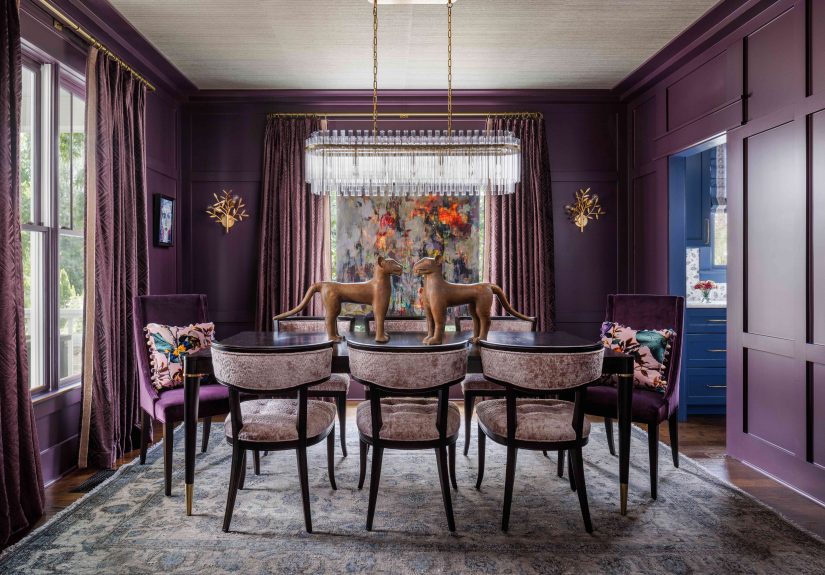
Because dining rooms are more contained than open-plan great rooms, designers often use them as places to take risks. Rich paint colors, wallpaper, moody ceilings, sculptural stone tables, and dramatic lighting all work especially well here. A separate dining room can carry a little more drama because it does not have to visually negotiate with your sofa, television, and air fryer.
In fact, this is part of the dining room’s appeal. It can be one of the most memorable spaces in the house. Not because it is formal for formality’s sake, but because it offers a chance to create atmosphere.
4. Function matters as much as beauty
Designers increasingly want dining rooms to earn their keep. That means storage for serving pieces, better traffic flow, layered lighting, washable rugs, and layouts that work for both ordinary dinners and larger gatherings. The prettiest room in the house loses some sparkle if everyone has to perform a chair ballet just to sit down.
Built-ins, sideboards, hutches, and banquettes are especially popular because they blend style with utility. They make entertaining easier and daily use more realistic. In a smaller home, a banquette can be a game changer, saving space while adding warmth and personality.
So, When Does a Formal Dining Room Make Sense?
A dedicated dining room still makes a lot of sense if you entertain often, love hosting holidays, have a traditional home layout, or simply want a room that encourages gathering away from the kitchen chaos. It also works well for people who value rituals: family dinners, Sunday meals, birthday traditions, and moments that feel better when they happen somewhere intentionally set apart.
It can also be a strong design asset. A well-styled dining room adds perceived polish to a home. Even buyers who do not plan to use it formally often appreciate the flexibility. One person sees dinner parties. Another sees a homework zone by day and a hosting space by night. Another sees the ideal place for a puzzle that can remain gloriously unfinished.
When It Might Not Be the Right Choice
Of course, not every home needs one. If square footage is tight, a separate dining room may feel wasteful compared with a larger kitchen, a mudroom, or an office. In many contemporary homes, an open dining area near the kitchen is simply more practical. That does not mean the dining function disappears. It just changes form.
And if your so-called formal dining room has become a storage museum for random chairs, unopened packages, and seasonal decorations, it may be time for honesty. A room should reflect how you live now, not how a 1998 floor plan imagined you might live someday.
How to Update a Formal Dining Room Without Making It Feel Dated
Lose the “special occasion only” energy
The fastest way to modernize a dining room is to make it usable. Bring in comfortable seating, practical lighting, and a table surface that can survive real life. If everyone is afraid to enter the room with a glass of water, the room has become a stage set, not a living space.
Mix, do not overmatch
Avoid the too-perfect look. Mixing chairs, finishes, and eras makes the room feel current and lived in. A little tension is good in design. Think tailored blazer with jeans, not head-to-toe catalog page.
Light it like you mean it
Good dining rooms use layered lighting, not just one lonely chandelier doing all the emotional labor. Add dimmers, sconces, lamps, or accent lighting so the room can shift from bright breakfast to moody dinner party without drama of the bad kind.
Skip the heavy-handed formality
Oversized ornate chandeliers, bulky matching furniture, fussy drapery, and wall-to-wall carpeting can make the room feel trapped in another decade. The new mood is softer, easier, and more relaxed. You can still have elegance. You just do not need the room to behave like it is waiting for royalty.
The Real Trend: Flexible Elegance
If there is one phrase that sums up where dining rooms are headed, it is flexible elegance. Homeowners still want beauty. They still want moments that feel elevated. They still want a table big enough for Thanksgiving and chairs comfortable enough for a second slice of pie. But they also want the room to feel relevant on an ordinary Wednesday.
That is why the best dining rooms today are neither fully formal nor aggressively casual. They sit in the sweet spot between the two. They are polished but approachable, defined but not rigid, stylish but genuinely useful.
Final Verdict
Formal dining rooms are not out of style. The outdated version of them is.
Designers are not burying the dining room; they are editing it. They are replacing stiffness with comfort, showroom furniture with collected pieces, and once-a-year use with everyday relevance. In some homes, that means a true separate room. In others, it means a dining area with stronger identity and better function. Either way, the desire to gather around a table has not gone anywhere.
So if you have a formal dining room, do not panic and turn it into a treadmill annex just yet. Give it a better chair, a little personality, and permission to be used on days that do not involve a holiday ham. That is how the room stops feeling old-fashioned and starts feeling timeless.
Extended Perspective: What Living With a Dining Room Actually Feels Like
In real life, the value of a dining room often shows up in small moments rather than grand events. It is the place where the table gets set for a birthday breakfast before anyone else wakes up. It is where homework spreads out after school and somehow turns into a family catch-up session. It is where a weeknight dinner feels a little less rushed because the television is not in the same room trying to steal everyone’s attention.
That is why so many people who once thought the dining room was unnecessary change their minds after living with a good one. A defined room can create a shift in mood. Even when the meal is simple, sitting down in a space designed for gathering can make home feel more intentional. It slows the pace just enough to make ordinary routines feel more memorable.
There is also a practical side that designers understand well. A dining room can become the best entertaining support system in the house. Serving dishes have a home. Guests know where to gather. The host is not trying to balance appetizers on a kitchen counter already occupied by groceries, flowers, and one mysterious charger that fits nothing. During holidays, the extra room can feel like a lifesaver.
At the same time, the experience only works when the room is designed for real use. If the chairs are uncomfortable, people drift away. If the rug is too small, the room feels awkward every time someone scoots back. If the lighting is harsh, dinner feels like an interrogation. The modern dining room succeeds because it respects both feeling and function.
Many households also like having one room that can stay a little calmer than the rest. Kitchens are busy. Living rooms are noisy. Bedrooms are private. A dining room can sit in the middle as shared territory: social, useful, and a bit more grounded. That balance gives it lasting value, especially in homes where everyone wants to be together but not necessarily on top of one another.
Even in smaller homes, the “dining room experience” can still exist without a grand, separate room. A banquette, a defined nook, a round pedestal table under a great light fixture, or a dining corner with art and storage can deliver the same emotional effect. The point is not square footage. The point is whether the space invites people to gather and stay awhile.
Ultimately, that is why the dining room conversation is not really about style alone. It is about how people want to live. Some want wide-open layouts where cooking, chatting, and eating happen in one shared zone. Others want a bit more ceremony and separation. Most want some combination of both. The best homes respond to those habits honestly.
So no, the dining room is not obsolete. It just needs a job description that matches modern life. When it does, it becomes one of the most rewarding spaces in the home: not too formal, not too casual, and not just a room you walk past on the way to the kitchen. A good dining room earns its place by being lived in, not merely admired.
Conclusion
The debate over whether formal dining rooms are out of style misses the bigger point. The room is not disappearing so much as evolving. Today’s best dining rooms are designed for hosting, everyday meals, comfort, personality, and flexibility. Keep the room if it serves your life. Rethink it if it does not. But do not assume that “formal” has to mean outdated. In 2026 and beyond, the smartest dining rooms are the ones that feel beautiful, useful, and welcoming all at once.