Table of Contents >> Show >> Hide
- Can You Put Flats in the Washing Machine?
- Which Flats Are Usually Safe to Machine Wash?
- Which Flats Should Never Go in the Washing Machine?
- How to Check Whether Your Flats Are Washable
- How to Wash Flats in the Washing Machine Safely
- How to Dry Flats Without Ruining Them
- How to Hand Wash Flats by Material
- How Often Should You Wash Flats?
- Common Mistakes That Ruin Flats
- How to Keep Flats Fresh Between Washes
- Real-Life Experiences: What Actually Happens When You Wash Flats
- Conclusion
Flats are the quiet heroes of the shoe rack. They slip on fast, go with almost everything, and somehow end up surviving office floors, grocery runs, rainy sidewalks, coffee spills, and that one mysterious sticky spot near the parking lot. So when they start looking tiredor smelling like they have their own personalityit is natural to wonder: Can you put flats in the washing machine?
The honest answer is: sometimes. Some flats can handle a gentle machine wash beautifully, especially washable knit, canvas, polyester, nylon, or certain fabric flats. Others, including leather flats, suede flats, satin flats, embellished flats, and many structured designer pairs, should stay far away from the washer unless you enjoy expensive surprises. The trick is not just washing flats; it is knowing what your flats are made of, how they are constructed, and how much risk you are willing to take.
This guide explains how to wash flats safely, when to hand clean them instead, how to dry them without warping, and how to keep them fresh between cleanings. Your washing machine may be powerful, but it is not a magic shoe spa. Let’s use it wisely.
Can You Put Flats in the Washing Machine?
You can put some flats in the washing machine if they are made from durable, washable materials and the care label allows it. Machine-washable flats are often made from knit fabric, canvas, mesh, recycled plastic yarn, polyester, or other flexible synthetic textiles. Many modern washable shoe brands specifically design flats to go through a cold, gentle cycle.
However, not all flats are built for water, detergent, and spinning. Flats often rely on glue, thin soles, delicate linings, decorative bows, cushioned insoles, and shaped toe boxes. A washer can loosen adhesive, bend the structure, fade color, damage trim, or leave the shoes misshapen. The safest rule is simple: if the brand says they are machine washable, you can machine wash them. If the label is silent, proceed carefully. If the material is leather, suede, velvet, silk, satin, or embellished, hand clean instead.
Which Flats Are Usually Safe to Machine Wash?
Machine washing works best for casual flats that are flexible, unstructured, and made from washable textiles. These shoes do not mind a little water and movement as much as delicate materials do.
Washable Knit Flats
Knit flats are among the best candidates for machine washing, especially if the manufacturer markets them as washable. Many knit flats are designed to be cleaned in cold water and air dried. Remove the insoles first, wash the shoes and insoles separately if recommended, and avoid heat completely.
Canvas Flats
Canvas flats can often be washed, but hand washing is still gentler. If the shoes are inexpensive, sturdy, and not heavily structured, a cold gentle cycle may work. White canvas flats may need pre-treatment for stains before washing, while dark canvas flats should be checked for color bleeding.
Fabric and Mesh Flats
Polyester, nylon, and mesh flats can sometimes handle machine washing. These materials are common in casual shoes because they are lightweight and quick to dry. Still, you should remove loose dirt first, use a mesh laundry bag, and wash with towels to reduce banging inside the drum.
Which Flats Should Never Go in the Washing Machine?
Some flats should be cleaned by hand every time. The washer may be convenient, but convenience is not worth turning your favorite shoes into tiny fabric tacos.
Leather Flats
Leather does not like being soaked. Too much water can dry it out, stiffen it, stain it, or cause cracking over time. Clean leather flats with a damp cloth, mild soap or leather cleaner, and a light touch. After cleaning, let them air dry away from direct heat and consider applying a leather conditioner if appropriate.
Suede Flats
Suede and washing machines are not friends. Suede is sensitive to water and can develop marks, texture changes, and stiffness when soaked. Use a suede brush, suede eraser, or a small amount of white vinegar or rubbing alcohol on a cloth for targeted stains. Always let suede dry naturally and brush it afterward to restore the nap.
Satin, Silk, Velvet, or Embellished Flats
Dressy flats with bows, beads, rhinestones, embroidery, metallic finishes, or delicate fabric should be spot cleaned or taken to a professional cleaner. The washer can snag threads, dull finishes, loosen decorations, and damage glue. These shoes are not “laundry day” shoes; they are “please treat me like I have a trust fund” shoes.
Designer or Structured Flats
Even if a designer flat looks simple, it may have delicate internal construction. If the shoes are expensive, sentimental, or hard to replace, do not experiment with the washing machine. Hand cleaning is slower, but it is far less dramatic.
How to Check Whether Your Flats Are Washable
Before washing flats, look for a care label inside the shoe, on the box, or on the brand’s website. Search for phrases such as “machine washable,” “cold wash,” “air dry,” or “spot clean only.” If the care instructions say “spot clean,” “do not wash,” or “professional clean,” skip the washer.
Next, inspect the shoe construction. Are the soles glued on? Are there decorative pieces? Is the insole removable? Does the toe box hold a firm shape? Are there leather or suede panels? If you answer yes to several of these questions, hand washing is usually safer.
How to Wash Flats in the Washing Machine Safely
If your flats are washable, use the gentlest possible method. The goal is to clean the shoes, not send them on a carnival ride.
Step 1: Remove Loose Dirt
Before putting flats in the washer, brush off dry mud, dust, and debris. Use a soft brush, old toothbrush, or dry cloth. Pay attention to the soles and seams, where dirt likes to hide like it pays rent.
Step 2: Remove Insoles and Laces
If your flats have removable insoles, take them out. Insoles trap sweat and odor, so they often need cleaning too. Wash them by hand unless the manufacturer says they can go in the washer. If your flats have laces, ribbons, or ties, remove them and place them in a small mesh bag.
Step 3: Pre-Treat Stains
Use a small amount of mild liquid detergent or gentle soap on stained fabric areas. Rub lightly with a soft brush or cloth. Avoid bleach unless the shoe care instructions specifically allow it. Bleach can yellow rubber, fade fabric, and weaken fibers.
Step 4: Use a Mesh Laundry Bag
Place the flats in a mesh laundry bag or pillowcase. This protects both the shoes and the washing machine. It also reduces the aggressive tumbling that can bend soles or scuff fabric.
Step 5: Add Towels for Balance
Wash the bagged flats with a few old towels. Towels cushion the load and prevent the shoes from thumping around the drum. Use old towels only, especially with light-colored flats, because new towels may bleed dye.
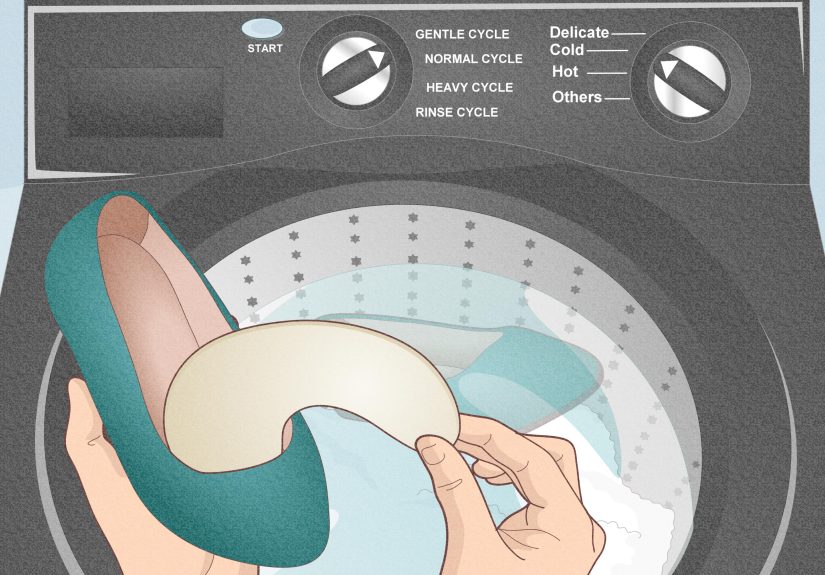
Step 6: Choose Cold Water and a Gentle Cycle
Use cold water, mild liquid detergent, and the gentle or delicate cycle. Cold water helps reduce shrinking, fading, and adhesive stress. A slow spin is better than a high-speed spin because it puts less strain on the shoe structure.
Step 7: Skip Fabric Softener and Harsh Additives
Fabric softener can leave residue, and harsh cleaners can damage shoe materials. Use a modest amount of detergent. More soap does not mean cleaner shoes; it often means residue that attracts more dirt later.
How to Dry Flats Without Ruining Them
Drying is where many flats lose their shape. Never throw flats in a hot dryer unless the manufacturer clearly says it is safe. Heat can shrink fabric, warp soles, crack foam, and loosen glue. Air drying is the safest method.
After washing, reshape the flats gently with your hands. Stuff them with white paper towels, clean cloths, or plain packing paper to help maintain the shape. Avoid newspaper on light-colored shoes because ink may transfer. Place the flats in a well-ventilated area away from direct sunlight, heaters, and hair dryers. Let them dry completely before wearing them again.
Depending on the material and humidity, flats may need 24 to 48 hours to dry. Wearing damp flats is uncomfortable and can encourage odor. Patience is not glamorous, but neither is walking around in swamp shoes.
How to Hand Wash Flats by Material
When in doubt, hand washing is the safer choice. It gives you more control and reduces stress on the shoe.
How to Clean Fabric Flats
Mix a small amount of mild detergent or dish soap with cool water. Dip a cloth or soft brush into the solution and gently scrub the fabric. Wipe away soap with a clean damp cloth. Blot with a towel and air dry.
How to Clean Leather Flats
Wipe away dust with a dry cloth. Use a slightly damp cloth with a tiny amount of mild soap or leather cleaner. Do not soak the leather. Wipe again with a clean damp cloth, then dry with a towel. Let the flats air dry and condition the leather if needed.
How to Clean Suede Flats
Let mud or wet spots dry first. Brush the suede in one direction with a suede brush. For marks, use a suede eraser or clean pencil eraser. For stubborn stains, dab lightly with white vinegar or rubbing alcohol on a cloth, then let dry and brush again. Never soak suede flats.
How to Clean Insoles
Remove insoles and scrub them gently with mild soap and cool water. Rinse lightly without saturating foam. Blot with a towel and let them air dry fully before placing them back inside the flats. For odor, sprinkle baking soda inside the shoes overnight, then shake it out thoroughly.
How Often Should You Wash Flats?
Most flats do not need frequent deep washing. Over-washing can wear down fabric, weaken glue, and shorten the life of the shoe. For everyday flats, spot clean as needed and deep clean only when they are visibly dirty or noticeably smelly.
If you wear flats without socks, clean the insoles more often because sweat and body oils build up faster. Rotating between pairs also helps each pair dry out between wears. Your shoes need rest days too. Apparently, even flats believe in work-life balance.
Common Mistakes That Ruin Flats
The fastest way to ruin flats is to treat every pair the same. A washable knit flat and a suede ballet flat may look similar from across the room, but they need completely different care.
Avoid washing leather or suede flats in the machine. Do not use hot water. Do not use a high-spin cycle. Do not dry flats with direct heat. Do not pour detergent directly onto the shoes. Do not scrub delicate fabric aggressively. And please, do not put embellished flats in the washer and hope the rhinestones “have strong values.” They probably do not.
How to Keep Flats Fresh Between Washes
Good maintenance reduces how often you need to wash flats. After wearing them, let them air out before storing them. Use odor-fighting inserts, cedar shoe trees, or small sachets if needed. Wipe soles regularly, especially if you walk through mud, grass, or city sidewalks.
For fabric flats, spot clean small stains quickly before they set. For leather flats, wipe them after wear and condition occasionally. For suede flats, brush them regularly and use a suede protector spray if recommended by the manufacturer. Prevention is much easier than rescue cleaning.
Real-Life Experiences: What Actually Happens When You Wash Flats
Experience has a way of teaching shoe-care lessons with dramatic flair. The first thing many people discover is that washable flats really can come out looking refreshed, but only when they are washed gently. Knit flats, for example, often respond well to a cold delicate cycle. The fabric looks cleaner, the footbed smells better, and the shoes feel less like they have been living a secret second life under a desk.
One practical lesson is that removing the insoles matters more than people expect. Insoles collect the most odor, especially in flats worn without socks. Washing the outer shoe while ignoring the insole is like cleaning the kitchen but leaving the trash can full. The shoe may look better, but the smell will still RSVP yes. Hand washing insoles separately allows them to dry more thoroughly and keeps foam from getting beaten up in the washer.
Another common experience: air drying takes longer than expected. Flats may feel dry on the outside while the inside is still damp. If you put them on too soon, they can feel clammy and develop odor again quickly. Stuffing them with clean white paper towels helps absorb moisture and preserve shape, but the paper should be changed if it becomes very wet. A fan nearby can help, as long as there is no heat blasting directly on the shoes.
People also learn that mesh bags are not optional if you care about the shape of your flats. Shoes tossed loose into the washer can slap against the drum, twist, and come out with bent edges or scuffed toes. A mesh bag, plus a few towels, makes the wash much gentler. It also makes the process quieter, which is helpful unless you enjoy the sound of your laundry room auditioning for a percussion band.
The biggest cautionary tale involves leather and suede flats. Many people have tried washing them “just once” and regretted it. Leather may dry stiff or lose its smooth finish. Suede may become patchy, rough, or watermarked. Even if the shoes survive one wash, the structure may weaken over time. For expensive flats, hand cleaning is almost always the smarter move.
White flats bring their own adventure. They look fresh and stylish until one sidewalk puddle decides to become part of their personality. For white canvas or fabric flats, pre-treating stains before washing makes a big difference. For white leather flats, a gentle cloth and leather-safe cleaner usually works better than soaking. For white suede flats, patience and a proper suede brush are essential.
Another useful habit is creating a small shoe-cleaning kit: a soft brush, mild detergent, microfiber cloths, baking soda, a suede brush, a mesh laundry bag, and white paper towels. With these basics, most flats can be cleaned before they reach “emergency laundry situation” status. Cleaning small stains early is much easier than fighting mystery grime three months later.
The final experience-based rule is simple: when you love the flats, go gentle. If they are cheap fabric flats used for errands, a careful machine wash may be worth it. If they are your favorite leather ballet flats, your wedding guest shoes, your work staples, or the pair that somehow makes every outfit look intentional, hand clean them. Washing flats is not just about removing dirt; it is about preserving comfort, shape, color, and all the little details that made you buy them in the first place.
Conclusion
So, can you put flats in the washing machine? Yes, but only if the flats are made from washable materials and the care instructions support it. Knit, canvas, mesh, polyester, and some fabric flats may do well in a cold gentle cycle with a mesh bag, mild detergent, and air drying. Leather, suede, satin, velvet, embellished, structured, or designer flats should be hand cleaned instead.
The best way to wash flats without ruining them is to identify the material first, remove insoles and laces, pre-treat stains, wash gently, avoid heat, and let the shoes air dry completely. A little patience keeps your flats clean, comfortable, and wearable for much longer. Your shoes work hard. Give them a bath when they need itbut do not send them into battle unprepared.