Table of Contents >> Show >> Hide
- Why Feng Shui Works So Well in the Living Room
- Start With Flow: Declutter First, Decorate Second
- Place the Sofa Like It Knows What It Is Doing
- Arrange Seating for Conversation and Connection
- Balance the Five Elements Without Going Overboard
- Use Color With Intention, Not Panic
- Let In Light, Fresh Air, and Something Alive
- Be Smart About Mirrors and Art
- Watch for the Small Things That Quietly Throw Off the Room
- How to Use Feng Shui in Small or Open-Plan Living Rooms
- Real-Life Experiences: What These Feng Shui Living Room Tips Feel Like at Home
- Final Thoughts
Your living room does a lot of emotional heavy lifting. It hosts movie nights, awkward small talk, snack plate feasts, afternoon naps, and the occasional dramatic search for the remote. So if the space feels chaotic, cramped, or weirdly exhausting, feng shui living room tips can offer a surprisingly practical reset. At its core, feng shui is about creating a room that supports the way you want to feel and live. That means better flow, better furniture placement, better light, and fewer design decisions that make your home feel like it is quietly judging you.
A balanced feng shui living room is not about turning your space into a stage set full of lucky frogs and mysterious bamboo flutes. It is about using layout, color, texture, and intention to create a room that feels welcoming, grounded, and alive. In modern design terms, a lot of feng shui advice overlaps with what good decorators already know: clear pathways feel better, natural light helps, clutter drains attention, and seating should make people want to stay awhile instead of flee toward the kitchen.
If you want your living room to feel calmer, cozier, and more connected, these feng shui living room tips to create balance can help. Whether you live in a tiny apartment, a suburban family home, or an open-plan condo where the sofa and dining table are in a long-term situationship, the principles can be adapted to fit real life.
Why Feng Shui Works So Well in the Living Room
The living room is one of the most social spaces in a home, which makes it especially important in feng shui. This is where energy gathers, conversations happen, and daily routines overlap. A room with good balance tends to feel open without being empty, styled without being stiff, and comfortable without sliding into cluttered chaos.
Feng shui focuses on the movement of energy, often called chi or qi, through a space. In practical terms, that usually means asking simple questions. Can you move through the room easily? Does the layout feel supportive? Is there a visual focal point? Do the objects in the room make you feel good, or do they remind you that you still have not fixed that broken lamp from last winter? When you answer those questions honestly, your decorating choices get a lot smarter.
Start With Flow: Declutter First, Decorate Second
Clear clutter with ruthless kindness
The fastest way to improve a feng shui living room is to get rid of what is blocking it. Clutter does not just eat square footage. It also creates visual noise, interrupts movement, and makes a room feel unsettled. That does not mean your living room has to look sterile or minimalist. It just means everything should have a reason to be there.
Start with the obvious offenders: piles of mail, dead batteries, random charging cords, old magazines, and furniture that acts like a hallway bouncer. Then look at the less obvious energy drains, like decor you never liked, gifts you feel guilty displaying, and anything broken, stained, chipped, or permanently “waiting to be dealt with.” Feng shui favors a room that feels cared for, not crowded.
Keep pathways open
One of the most repeated feng shui rules is to maintain easy traffic flow. In a living room, that means you should not have to sidestep a sharp coffee table corner, squeeze between chairs, or perform a graceful little pivot every time you walk to the window. Clear pathways make the room feel calmer and more usable.
If your layout is tight, choose furniture with slimmer profiles, pull oversized pieces away, and consider a round or oval coffee table instead of one with harsh corners. The room should invite movement, not challenge it to a duel.
Place the Sofa Like It Knows What It Is Doing
Use the commanding position
In feng shui, the commanding position is a big deal. In the living room, that usually means the main sofa or seating area should be placed so you can see the entrance without being directly in line with it. This creates a subtle sense of ease because the people in the room can orient themselves naturally. No one likes feeling ambushed by a surprise entrance, even if it is just your dog returning triumphantly with a sock.
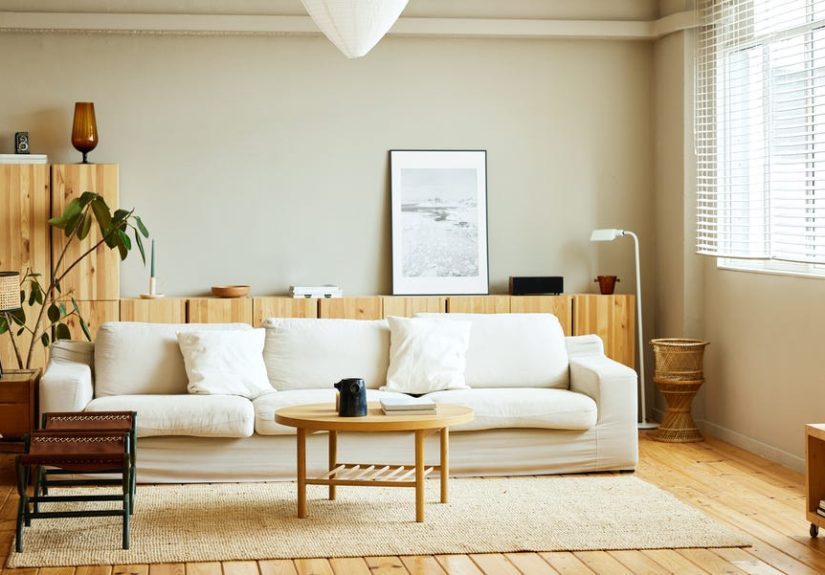
Ideally, the sofa should also have support behind it, such as a solid wall. That backing creates a feeling of stability and protection. If your sofa floats in the room because of an open-plan layout, do not panic. You can create support with a console table, a bench, a low cabinet, or even a well-placed pair of lamps behind it. The goal is to make the seating area feel anchored rather than adrift.
Avoid putting the sofa in a defensive crouch
If the back of your sofa faces the doorway and there is no way around it, soften the effect with intention. Add a console table behind the sofa, style it simply, and use it to visually complete the arrangement. You can also hang a mirror strategically so someone seated there can catch a glimpse of the entry. In feng shui, it is less about perfection and more about creating a room that feels supported.
Arrange Seating for Conversation and Connection
A balanced living room should encourage people to gather. That means the seating arrangement matters just as much as the sofa itself. Chairs and sofas should feel connected, not scattered around the room like they are avoiding eye contact. Aim for a U-shaped or gently circular conversation zone when possible. This supports social energy and makes the room feel warm and inclusive.
Every seat should feel intentional. If one chair is stranded in a far corner facing absolutely nothing but existential dread, it is not helping the room. Bring seating closer together, define the area with a rug, and give every piece a relationship to the others. Even a small living room can do this well with a loveseat, one accent chair, and a petite coffee table.
Symmetry can help, but do not force it. Two matching chairs can feel beautifully balanced, yet a room can also feel harmonious with a mix of shapes and textures if the arrangement still reads as cohesive. Feng shui likes order, but it does not require every corner to look like a hotel lobby.
Balance the Five Elements Without Going Overboard
One of the classic principles in feng shui is balancing the five elements: wood, fire, earth, metal, and water. You do not need to turn your living room into an elemental science fair to make this work. The idea is simply to include materials, colors, or shapes that create a sense of completeness.
What the five elements can look like in a living room
- Wood: plants, wooden furniture, green accents, botanical art, natural fibers
- Fire: candles, warm lighting, red or coral accents, a fireplace, triangular shapes used sparingly
- Earth: ceramics, stone, square shapes, beige, tan, ocher, terracotta, and other grounding tones
- Metal: white, gray, metallic finishes, round shapes, sculptural decor, trays, and frames
- Water: black or deep blue accents, wavy shapes, reflective surfaces, glass, and artwork that suggests calm movement
You do not need equal amounts of each. In fact, too much of any one element can make a room feel off. A living room with too much fire energy can feel overstimulating. Too much water can feel chilly or emotionally distant. Too much metal can feel stark. The sweet spot is a thoughtful mix.
A simple example might look like this: a wood coffee table, a soft cream rug for earth, a brass floor lamp for metal, leafy plants for wood, blue pillows for water, and a few candleholders for fire. That is balance, not overcomplication.
Use Color With Intention, Not Panic
Color is one of the easiest ways to shift the mood of a living room, and feng shui treats it as a tool rather than a trend. For a balanced living room, start with colors that feel nourishing and livable. Earth tones, warm whites, soft greens, muted blues, and gentle grays often work beautifully because they create calm without flattening the room.
Good feng shui colors for a living room
Earthy neutrals such as beige, warm taupe, sand, and clay help create a grounded atmosphere. These are especially useful if your living room is the main gathering spot and you want it to feel cozy and stable.
Greens connect to wood energy and can suggest growth, renewal, and vitality. They work well in both traditional and modern spaces, especially when repeated in plants, textiles, and art.
Blues can bring calm and a sense of ease, but they tend to work best when balanced with warmer elements so the room does not tip into “beautiful but emotionally unavailable.”
Warm accents like rust, terracotta, coral, or even a careful touch of red can energize the room and keep it from feeling flat. The keyword here is careful. A little warmth goes a long way.
If you already have a colorful living room, do not assume you need to repaint everything. Feng shui can be adjusted with textiles, art, pillows, lampshades, throws, and even books. The goal is to support the room’s function, not start a surprise renovation at 9 p.m.
Let In Light, Fresh Air, and Something Alive
Natural light is a major ally in feng shui. A bright room usually feels more expansive, more uplifting, and more welcoming. Open the curtains, clean the windows, and do not block light sources with bulky furniture. If the room gets harsh afternoon sun, use sheers or light-filtering window treatments instead of shutting the place down like a vampire estate.
Layered lighting matters too. A balanced living room should not rely on one overhead fixture doing all the emotional labor. Use a combination of floor lamps, table lamps, wall lighting, and candles or candle-like bulbs to create flexibility. Bright for reading. Soft for relaxing. Warm for conversation. Less “interrogation room,” more “yes, you may absolutely sit here with tea.”
Plants are another easy way to refresh the energy of a room. Healthy, well-maintained greenery adds life, softness, and movement. Rounder or fuller leaf shapes often feel calmer than aggressive, spiky varieties. But the key word is healthy. A thriving plant supports the room. A crispy brown survivor clinging to one final leaf is not exactly broadcasting abundance.
Be Smart About Mirrors and Art
Mirrors should reflect something worth seeing
In feng shui, mirrors amplify what they reflect. That means placement matters. A mirror that bounces around natural light or reflects a lovely view can make a living room feel larger and brighter. A mirror that reflects clutter, a pile of shoes, or the back of a chaotic storage shelf is basically a visual megaphone for the wrong things.
As a general rule, use mirrors to expand beauty, light, or connection. Round mirrors are often favored because they feel softer and more harmonious. If possible, avoid hanging a mirror where it directly reflects the front door in a way that feels abrupt.
Choose art that supports the mood you want
Artwork influences how a room feels, often more than people realize. In a feng shui living room, aim for art that feels uplifting, meaningful, comforting, or expansive. Landscapes, abstracts with gentle movement, personal photos that genuinely make you happy, and pieces with warm emotional resonance all work well.
If a piece is dark, jarring, or tied to a bad memory, it may be stylish, but it is not helping the room feel balanced. Your living room walls do not need to lecture you. They should support the life happening below them.
Watch for the Small Things That Quietly Throw Off the Room
Sometimes balance is less about what you add and more about what you stop tolerating. A few common feng shui living room mistakes can make a space feel unsettled fast.
- Broken lamps, wobbly tables, stuck windows, and dead batteries in remotes
- Dying plants or dried arrangements that look more tragic than intentional
- Too many sharp corners aimed into the seating area
- Electronics dominating the room without any softness to balance them
- Decor with no purpose, no meaning, and no visual breathing room
- Furniture scaled so large that the room feels like it is losing an arm wrestle
Fixing these issues does not sound glamorous, but it can dramatically change the feel of a room. Feng shui often rewards maintenance just as much as styling.
How to Use Feng Shui in Small or Open-Plan Living Rooms
If your living room is tiny, the answer is not to cram in less soul. It is to create clearer intention. Choose fewer, better pieces. Let one item be the focal point, such as a beautiful sofa, a favorite artwork, or a fireplace wall. Use a rug to define the seating area and keep the visual boundaries clear.
In an open-plan room, feng shui works especially well when you create subtle zones. A rug can define the conversation area. A sofa table can provide support. A floor lamp can anchor a corner. A pair of chairs can signal that this part of the room is for talking, not just passing through on the way to the fridge. The room should have structure, even if there are no actual walls doing the job.
Real-Life Experiences: What These Feng Shui Living Room Tips Feel Like at Home
One of the most interesting things about feng shui is that the changes often feel bigger than they look. A family might not repaint the walls, buy all new furniture, or suddenly live in some magazine-perfect cloud of enlightenment. They might simply move the sofa, clear the entry path, swap out a harsh overhead bulb, and remove the stack of random stuff living under the side table. Yet the room starts to feel calmer almost immediately. That is often the real experience: not magic, but relief.
In a small apartment, the most noticeable shift usually comes from circulation. When the coffee table is too big, the chair is shoved into a corner, and the plant stand is parked in a walkway, the whole room can feel tense. Once the layout is edited and the path from the entry to the seating area opens up, the space feels easier to inhabit. People often describe it as the room “finally breathing.” That sounds dramatic, but it is surprisingly accurate. Even a tiny living room can feel generous when nothing is blocking its rhythm.
Open-plan homes have their own version of imbalance. Without defined zones, the living room can feel like it is trying to be a lounge, office, dining room, playroom, and charging station all at once. In real-life use, feng shui helps by giving each area a job. A rug under the sofa and chairs creates a clear conversation zone. A console behind the sofa gives the seating area support. A lamp near one chair turns that spot into a reading nook instead of a furniture afterthought. Once those boundaries are in place, the room feels less like one giant undecided rectangle and more like a home with rhythm.
Another common experience has to do with mood. People often assume feng shui is mostly about layout, but decor choices carry emotional weight too. Replacing dark or chaotic artwork with something meaningful can change the tone of the room more than expected. So can removing objects tied to old stress. A living room that once felt visually fine but emotionally flat can start to feel more personal, lighter, and more peaceful. Not because every item is “perfect,” but because the room finally reflects the life people actually want to live in it.
Lighting also tends to produce an immediate, memorable difference. In many homes, the living room is technically usable at night, but not pleasant. One overhead bulb blasts the room with all the subtlety of a convenience store. Add two table lamps, a warm floor lamp, and softer window treatments, and the whole space becomes more welcoming. Families linger longer. Guests settle in faster. The room starts doing what a living room is supposed to do: help people gather, exhale, and stay awhile.
Perhaps the most relatable experience is what happens when people stop treating broken or neglected items as background noise. The leaning lamp gets fixed. The dead plant gets replaced. The sticky drawer finally gets repaired. The too-large ottoman that everybody trips over gets moved on. These are not glamorous upgrades, but they create a surprising sense of order. The room starts to feel supportive instead of mildly irritating. And honestly, that might be one of the most useful feng shui lessons of all. Balance is not always about adding more beauty. Sometimes it is about removing the low-grade friction that keeps a room from feeling good in the first place.
Final Thoughts
The best feng shui living room tips to create balance are the ones that make your space feel more open, more grounded, and more like a place where real life can happen well. Start with what is practical: clear the clutter, improve the flow, support the seating, bring in light, and choose decor that feels meaningful. Then layer in the softer details, like color, texture, plants, and art that reflect the atmosphere you want.
You do not need to follow every rule rigidly to get results. Feng shui works best when it helps you notice how a room feels and then design with purpose. A balanced living room should welcome people in, support connection, and make everyday life feel a little easier. That is not just good feng shui. That is good living.