Table of Contents >> Show >> Hide
If you have ever looked at a nautical rope light and thought, “This is either going to make my room look effortlessly coastal or like a seafood restaurant with trust issues,” welcome aboard. Rope lighting and rope-detailed fixtures have a funny reputation. When done well, they add texture, warmth, and an easy breezy coastal mood. When done badly, they scream anchor motif, souvenir shop, and “I once bought a decorative lighthouse and never emotionally recovered.”
The good news is that nautical rope lighting can absolutely work in a modern home. In fact, it is one of the easiest ways to bring in coastal character without repainting your walls seafoam blue or hanging a ship wheel where a normal mirror should be. The trick is understanding the high/low approach: where to splurge, where to save, and how to get the relaxed maritime look without tipping into costume territory.
Whether you are styling a beach house, a lake cottage, a casual powder room, or just a landlocked living room that could use more personality, this guide breaks down how to choose, place, and live with a nautical rope light in a way that feels polished, practical, and maybe even a little smug in the best possible way.
Why Nautical Rope Lighting Still Works
Nautical rope lighting survives every trend cycle because it does something many trendy fixtures fail to do: it adds both form and texture. Rope is tactile. It softens hard finishes like tile, painted cabinetry, polished nickel, black metal, and glass. That makes it especially useful in rooms that need warmth but not visual clutter.
It also speaks the language of coastal design without shouting it through a megaphone. A rope-wrapped lamp base, a pendant with knotted suspension, or a chandelier that mixes natural rope with metal can hint at the sea in a refined way. That is why designers keep returning to it. Rope feels organic, relaxed, and handcrafted. It brings in movement, imperfection, and a quiet sense of story.
And unlike novelty décor, rope details are surprisingly flexible. They can lean rustic, modern, farmhouse, cottage, transitional, or contemporary coastal depending on the fixture shape and finish. Pair rope with matte black metal and the look turns crisp and architectural. Pair it with aged brass and milk glass and it feels warmer and more classic. Pair it with bleached wood and woven textures, and suddenly your room looks like it takes long walks on the beach and owns linen pants.
What “High/Low” Means for a Nautical Rope Light
In decorating, high/low does not just mean expensive versus cheap. It means using your budget strategically so the room feels layered, intentional, and not suspiciously assembled in one very determined online shopping session.
The High Version
A high-end nautical rope light usually earns its price in one or more of these areas: better materials, better proportions, better finish work, better electrical hardware, or stronger craftsmanship. This is where you tend to see hand-wrapped rope, custom knotting, artisan glass, substantial canopy hardware, marine-grade or corrosion-resistant components, and dimmable compatibility that actually behaves itself.
Higher-end fixtures also tend to have better scale. That matters more than people think. A splurge fixture usually feels more balanced in the room because the diameter, drop length, and overall visual weight are designed with architecture in mind. The rope detail looks integrated rather than glued on as an afterthought. In other words, it reads like design, not like a crafty impulse after two iced coffees.
If you are going to invest, do it in the room’s focal point: the dining room chandelier, the entry pendant, the statement light over the kitchen table, or the covered porch fixture that everyone notices at sunset.
The Low Version
The low version is not the sad version. It is the smart version. Budget-friendly nautical rope lighting works beautifully when the shape is simple and the rope detail is used with restraint. Think single pendants, rope-accented table lamps, mini pendants over a bar, or a plug-in fixture for a reading corner.
Save-money pieces are especially effective when they are not asked to carry the whole room. A modest rope lamp beside a crisp white sofa? Charming. A small rope pendant in a powder room with beadboard and a round mirror? Excellent. Three different rope fixtures in the same room plus anchors plus coral plus striped everything? That is how a vibe becomes a cry for help.
The best low-cost choices keep the silhouette clean. Look for glass shades, classic domes, lantern-inspired forms, or simple exposed-bulb pendants with tasteful rope detailing. Skip anything overly distressed, overly themed, or aggressively “captain’s quarters.”
Where a Nautical Rope Light Looks Best
Entryways
An entryway is one of the strongest spots for a nautical rope light because it sets the tone immediately. One rope-accented pendant or lantern says, “This home is relaxed and thoughtful.” It also adds texture to a space that often has hard flooring, bare walls, and not much softness.
If your ceiling is high, a rope-detail pendant with some vertical presence can help fill the volume gracefully. If your entry is compact, keep the fixture smaller and cleaner in profile so it does not bully the room before guests have even found a place to put their keys.
Dining Areas
This is prime high/low territory. A larger rope chandelier or pendant over a dining table can look stunning because it mixes structure with softness. For a more elevated look, choose a fixture with rope as one material among several rather than the entire personality of the piece. Rope plus metal, rope plus glass, or rope plus wood is usually more sophisticated than rope plus more rope plus additional rope for emotional support.
Proportion matters here. The fixture should feel substantial enough to anchor the table without overwhelming conversation or blocking sight lines.
Kitchen Islands
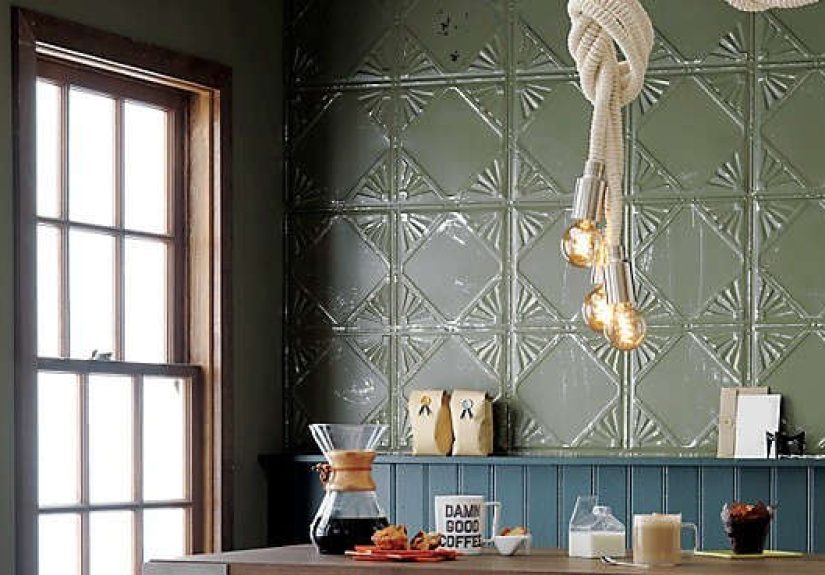
Mini rope pendants can work beautifully over an island, especially in kitchens that already have some natural texture through stools, baskets, or wood accents. In a sleek kitchen, they prevent the room from feeling sterile. In a cottage kitchen, they reinforce the relaxed tone.
This is one place where restraint really pays off. If the backsplash, hardware, and stools are already doing a lot, keep the pendants simple. Let the rope detail be the wink, not the monologue.
Bathrooms and Powder Rooms
A rope pendant or rope-accented sconce can look terrific in a coastal bathroom, especially when paired with white tile, pale oak, brushed metal, or a porthole-style mirror. Powder rooms are especially forgiving because you can be a little bolder in a small space.
Just do not forget the practical side. Moisture matters. So do fixture ratings and safe placement. A beautiful light that is wrong for the environment is not charming; it is an expensive lesson with wiring.
Covered Porches and Outdoor Spaces
Nautical rope lighting feels right at home outdoors, but outdoor lighting is where romance has to marry common sense. For a covered porch, a damp-rated fixture may work. For spaces fully exposed to rain and weather, go wet-rated. In coastal climates, corrosion resistance matters too. Salt air is not sentimental.
Here, a high-end fixture can be worth the splurge because outdoor conditions are harder on finishes, hardware, and rope-like materials than indoor use.
How to Choose the Right One
Get the Scale Right
The easiest way to ruin a good fixture is to choose the wrong size. A dining light that is too small looks timid. One that is too large looks like it is trying to host the meal itself.
As a general rule, a chandelier or pendant over a dining table should be around one-half to two-thirds the width of the table. Over a kitchen island, pendants should feel evenly spaced and visually balanced, with enough room at the ends so they do not look crowded. In open areas, maintain comfortable clearance so no one needs to develop a reflexive ducking habit.
Height matters too. Over a table or counter, lower is often better for intimacy and focus, but not so low that the fixture interrupts sight lines or becomes forehead folklore. In walk-through zones, make sure there is ample clearance underneath.
Pick the Right Material Story
Not all rope details are created equal. Some fixtures use real natural fiber. Others use synthetic materials designed for durability. Some look beautifully tactile. Others look like they were made from a very determined extension cord.
For a refined look, pay attention to the relationship between rope and the rest of the fixture. Natural rope pairs well with aged brass, bronze, matte black, weathered wood, white glass, and clear seeded glass. If the rope is chunky, keep the rest of the palette simple. If the rope detail is fine and subtle, you can afford a more sculptural shade or dramatic silhouette.
Think About Light Quality
A nautical rope light should not just look good in daylight. It needs to cast flattering light at night, when it is actually on and performing the job it was hired to do.
Warm light usually flatters rope, wood, and coastal palettes best. Dimmable bulbs are ideal because they let the fixture move from task lighting to mood lighting without drama. Clear glass shades create sparkle but show the bulb, so bulb choice matters. Opaque or frosted glass gives you a softer, more forgiving glow.
How to Style It Without Going Overboard
The smartest way to style a nautical rope light is to let it be one coastal note in a bigger composition of natural materials. Pair it with linen, cane, oak, painted wood, white walls, soft blues, sandy neutrals, unlacquered brass, or matte black. Bring in texture through baskets, ceramics, woven shades, or a jute rug. Suddenly the rope detail looks intentional.
What you do not need is a room where every object appears to have been purchased at the same imaginary harbor gift shop. One rope fixture is often enough. Two can work if they are in separate zones. Beyond that, your room starts auditioning for a themed bed-and-breakfast.
Coastal style is strongest when it feels edited. Think breezy, not busy. Collected, not costume. Salt air, not souvenir aisle.
Common Mistakes to Avoid
Choosing a fixture that is all concept and no function. If it does not light the space properly, it is décor wearing a fake mustache.
Ignoring ratings and placement. Bathrooms, porches, and exposed outdoor spaces have real safety requirements.
Buying a rope fixture that fights the rest of the room. If your home is ultra-modern and sharp-lined, go for a cleaner rope accent rather than something bulky and rustic.
Overdoing the theme. Rope is texture. It does not need backup dancers in the form of anchors, buoys, and decorative netting.
Forgetting maintenance. Textured materials can collect dust more easily than smooth metal or glass. If you hate cleaning fiddly surfaces, choose a simpler silhouette.
What It’s Actually Like to Live With a Nautical Rope Light
Here is the part glossy shopping guides often skip: a nautical rope light changes the feeling of a room more than you expect. In photos, it reads as a detail. In real life, it becomes a mood-setter. The texture catches daylight differently over the course of the day, and at night it softens the room in a way polished metal often cannot. Even a simple rope pendant can make a kitchen corner feel more relaxed, more layered, and somehow less like the place where bills get opened.
One of the nicest surprises is how forgiving rope can be. In homes with a lot of hard surfaces, it helps everything feel less sharp. White tile looks warmer. Black hardware looks less severe. Painted cabinetry feels more casual. A room that was technically “finished” can suddenly feel lived-in. That is the magic of natural texture: it adds soul without necessarily adding clutter.
There are practical realities, of course. Rope details attract dust more than slick metal or glass, especially if the weave is chunky. If the fixture hangs low enough to inspect up close, you will notice when it needs a gentle cleaning. In busy kitchens, grease and dust can team up like tiny villains, so a rope fixture near a range is not always the easiest maintenance choice. Over an island or breakfast nook, though, it is usually much easier to manage.
Another real-world lesson is that the bulb matters more than people think. A harsh, overly cool bulb can make a beautiful rope fixture look oddly flat and lifeless. A warm dimmable bulb, on the other hand, brings out depth and shadow in the fibers and makes the whole piece feel richer. This is one of those small upgrades that delivers wildly outsized results.
There is also the emotional side. Rope lighting tends to make a room feel more relaxed. That sounds fluffy until you live with it. A rope-accented lamp in a reading chair corner feels inviting in a way a generic lamp never quite does. A rope chandelier over a dining table adds enough softness that casual weeknight dinners feel a bit less rushed. It is subtle, but noticeable. The room feels less formal and more human.
For people who love coastal style but fear looking overly themed, a nautical rope light can be the perfect compromise. It gives you the wink of maritime influence without requiring a full set of beach-house clichés. Guests often notice it, but they usually respond to it as texture first and theme second. That is exactly where you want to land.
The high/low lesson becomes very clear once you live with one. Spend more when the fixture has to perform hard, anchor the room, or survive moisture and exposure. Save money when the piece is an accent, especially in secondary spaces. In day-to-day life, that balance feels smart rather than stingy. You get the atmosphere where it matters most and avoid overspending where a simpler piece can do the job beautifully.
And perhaps the best thing about a nautical rope light is that it tends to age well when the rest of the room is thoughtfully designed. Unlike some trends that feel dated the minute a new catalog drops, rope has enough history and enough material honesty to stick around. It can evolve with your space. Swap in darker hardware, lighter walls, cleaner furniture, or a more modern rug, and the rope detail often still works. That kind of staying power is rare. It means your light is not just trendy. It is useful, expressive, and surprisingly versatile.
Final Verdict
A nautical rope light is one of those details that can either elevate a room or sink it. The difference comes down to editing. Choose a fixture with good scale, honest materials, and the right rating for the space. Use it to add texture, not to carry an entire theme. Splurge where durability, craftsmanship, or visual impact matter. Save where the rope detail is simply adding character to a smaller moment.
Done right, this look feels coastal, calm, and collected. Done wrong, it starts whispering “gift shop by the pier.” Aim for the first one. Your room will thank you, and your future self will not have to explain the decorative fishing net.