Table of Contents >> Show >> Hide
- The Big Idea: Put 5-Axis CNC Machining On A Desktop
- They Built Before They Bragged
- They Controlled Demand Instead Of Chasing Every Dollar
- They Served A Specific Market, Not Everyone With A Garage
- They Improved The Product Instead Of Freezing It In Version One
- They Treated Calibration As A Brand Promise
- They Benefited From The Maker MovementBut Did Not Depend On Hype Alone
- The Rebrand To Penta Machine Company Signaled A Bigger Ambition
- Why Pocket NC’s Survival Strategy Worked
- Lessons For Hardware Startups
- Experience-Based Reflections: What Pocket NC Teaches About Building A Durable Product Business
- Conclusion: Pocket NC Thrived Because It Made Ambition Practical
Most hardware startups learn the hard way that metal is less forgiving than software. A bad app update can be patched before lunch. A bad CNC machine? That comes back in a box, dents your cash flow, bruises your reputation, and makes everyone in the shop stare quietly at the floor. That is why the Pocket NC story is so interesting. It was not just another shiny crowdfunding dream with a dramatic video, a heroic soundtrack, and a founder saying “revolutionize” seventeen times before the two-minute mark.
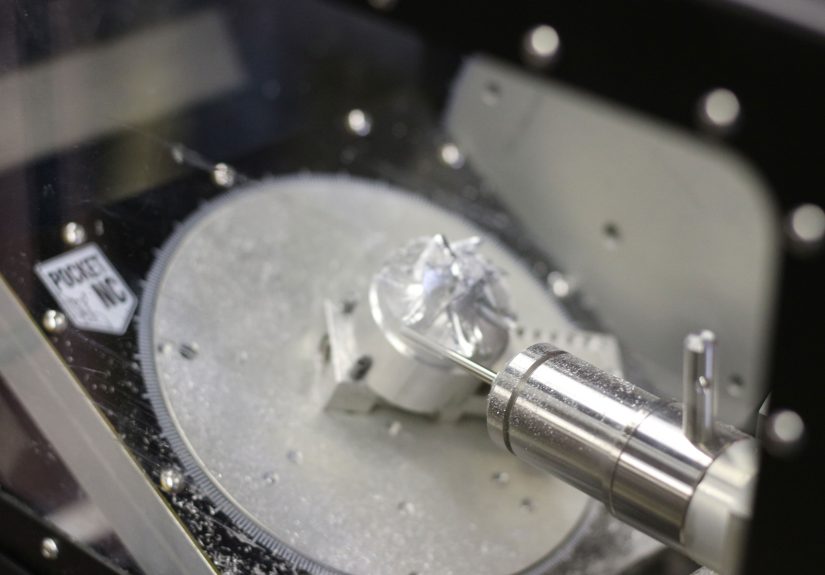
Pocket NC survived and thrived because it solved a real manufacturing problem with a real machine, then backed that promise with engineering discipline. The company, now operating under the broader Penta Machine Company brand, built its reputation around a desktop 5-axis CNC mill that made advanced machining more approachable for engineers, educators, prototypers, small manufacturers, and ambitious makers. In a world full of “desktop” tools that sometimes feel more like toys wearing safety glasses, Pocket NC aimed for something more serious: compact size, real 5-axis movement, standard G-code support, practical materials, and a workflow that could fit into a lab, classroom, office, or small shop.
So how did Pocket NC survive when so many hardware campaigns collapsed under the weight of their own promises? The short answer: they respected the machine, respected the customer, and respected production math. The longer answer is betterand much more useful for entrepreneurs, engineers, and anyone who has ever looked at a complicated product and thought, “How hard could it be?” Famous last words, friend.
The Big Idea: Put 5-Axis CNC Machining On A Desktop
To understand Pocket NC’s success, you first need to understand why the idea felt so bold. Traditional 5-axis CNC machines are typically expensive, heavy, industrial systems used in advanced manufacturing environments. They can cut complex shapes by moving a cutting tool and workpiece along multiple axes, allowing access to angles that ordinary 3-axis machines cannot easily reach. That matters for aerospace components, medical prototypes, jewelry molds, small mechanical parts, education, research, and highly detailed product development.
Pocket NC took that advanced capability and asked a beautifully dangerous question: what if a 5-axis CNC mill could sit on a workbench? Not a warehouse floor. Not a factory bay. A desktop. That concept instantly appealed to the same people who loved the rise of desktop 3D printing but wanted stronger, more accurate parts made from real engineering materials such as aluminum, machinable wax, acetal, softer steels, and even titanium-grade applications depending on the model and use case.
The genius of Pocket NC was not merely miniaturization. Plenty of companies make things smaller. The hard part is making something smaller while keeping it useful, repeatable, and credible. A desktop CNC machine that cannot hold tolerances is just an expensive noise generator. Pocket NC had to convince skeptical machinists, engineers, educators, and makers that this was not a novelty machine. It had to be a real tool.
They Built Before They Bragged
One of the strongest reasons Pocket NC survived is that the team did not launch with only sketches and optimism. They worked through prototypes, iterated the mechanical design, and tested the concept before asking customers to believe in it. This matters because crowdfunding history is littered with projects that looked fantastic in renderings and terrifying in reality.
Pocket NC’s founders, Matt and Michelle Hertel, brought complementary strengths to the table: machining knowledge, engineering thinking, practical problem-solving, and a willingness to spend years refining the machine. That combination gave the company a major advantage. They were not simply outsourcing an idea and hoping a factory could figure it out. They understood the guts of the product. They knew why rigidity mattered, why spindle behavior mattered, why workholding mattered, why calibration mattered, and why assembly time could quietly eat a company alive.
Before scaling, they studied the production process in detail. They built machines, measured assembly steps, timed operations, reviewed wiring, testing, machining, and calibration, then used that information to improve the design. That sounds less glamorous than a viral launch video, but it is exactly the kind of boring discipline that keeps a hardware company from becoming a cautionary tale.
They Controlled Demand Instead Of Chasing Every Dollar
Many startups fail because they confuse demand with capacity. Selling 10,000 units sounds amazing until you realize you can only build 300 without setting your hair on fire. Pocket NC avoided one of the classic crowdfunding traps by limiting how many machines it promised during its early campaign. That decision probably cost them short-term revenue, but it protected long-term trust.
The campaign drew major attention because the product was exciting: a desktop 5-axis CNC mill at a fraction of traditional industrial costs. But instead of endlessly adding more units as demand grew, the team stayed close to its manufacturing plan. That restraint was a survival move. It told backers, “We would rather deliver fewer machines than sell a fantasy.” In hardware, that is not modesty. That is wisdom wearing steel-toed boots.
Customers do not remember that you could have sold more during launch week. They remember whether you delivered what you promised. By setting limits, Pocket NC preserved credibility, managed workload, and gave itself a realistic chance to ship. That is one of the biggest reasons the company moved from crowdfunding buzz into an actual manufacturing business.
They Served A Specific Market, Not Everyone With A Garage
Another reason Pocket NC thrived is that it did not need to be the perfect CNC machine for every person. It occupied a smart niche: compact 5-axis CNC machining for education, prototyping, research, small-scale production, and advanced maker use. That is a much sharper market position than simply saying, “This machine is for everyone.”
The Pocket NC value proposition makes the most sense when the user needs small, complex parts and wants to avoid the cost, space, and setup burden of a full industrial machine. Universities can teach 5-axis concepts without dedicating an entire industrial lab to one machine. Startups can prototype parts without waiting weeks for outside machining. Designers can test geometry earlier. Makers can experiment with more advanced subtractive manufacturing. Small businesses can produce specialized low-volume components without immediately investing in a large machining center.
That clear positioning helped Pocket NC avoid a common startup mistake: trying to satisfy beginners, experts, schools, factories, hobbyists, and bargain hunters all at once. A desktop 5-axis CNC machine still has a learning curve. Users need to understand CAD, CAM, tooling, speeds and feeds, fixturing, material behavior, simulation, and safe operation. Pocket NC did not eliminate machining skill. It made advanced machining more accessible, which is a very different and more believable promise.
They Improved The Product Instead Of Freezing It In Version One
Surviving launch is one thing. Thriving requires evolution. Pocket NC continued improving its machine lineup, software, calibration process, spindle options, usability, and customer experience. The V2-10 improved on earlier machines with better rigidity, mounting options, and a more user-friendly interface. Later models, including higher-speed spindle options such as the V2-50 family, expanded use cases for small tooling and harder materials.
This kind of product evolution matters because early hardware companies often become trapped by their first design. They either overpromise future upgrades or spend all their energy fixing mistakes from version one. Pocket NC appears to have taken a healthier path: learn from real users, refine the machine, improve the workflow, and keep the product line focused on practical applications.
Software was another important piece of the puzzle. Advanced 5-axis machining is intimidating, especially for students and first-time users. Pocket NC’s simulator and Kinetic Control software helped reduce friction by giving users a way to preview programs, understand motion, and approach the machine with more confidence. That does not magically turn a beginner into a master machinist, but it lowers the “I am about to destroy this tool and possibly my self-esteem” factor.
They Treated Calibration As A Brand Promise
In CNC machining, accuracy is not a marketing adjective. It is earned through design, assembly, inspection, calibration, and repeatable process control. Pocket NC’s continued focus on calibration helped turn a compact desktop machine into something users could take seriously.
Each machine has to be more than assembled; it has to be verified. Rotary axes, spindle alignment, linear movement, tool offsets, and test cuts all affect whether the final part matches the digital design. Pocket NC’s public emphasis on calibration shows an important business lesson: in a technical market, trust is built through process transparency. Customers want to know that the machine was not merely boxed and blessed. They want evidence that it was measured, tested, and prepared to perform.
This is especially important for education and prototyping. A university lab does not want a machine that behaves differently every Tuesday. A startup does not want to wonder whether a failed prototype is caused by the design, the toolpath, the material, or the machine itself. By investing in calibration and quality control, Pocket NC strengthened its reputation as a serious tool for serious learning and experimentation.
They Benefited From The Maker MovementBut Did Not Depend On Hype Alone
Pocket NC arrived during a period when desktop fabrication tools were changing expectations. 3D printers had made digital manufacturing feel personal and approachable. Makerspaces were growing. Engineering students were learning faster through hands-on tools. Small hardware teams wanted to prototype without massive capital expenses. Pocket NC entered that environment with a product that felt like the next logical step: not just printing plastic, but cutting useful parts from stronger materials.
The maker movement helped create attention, but attention alone does not build a durable company. Pocket NC survived because it converted excitement into a working product, then into a product line, then into a broader brand under Penta Machine Company. That transition is important. Many companies get applause at events. Far fewer build repeatable operations, ship machines, support customers, and keep improving years later.
In other words, Pocket NC used the maker community as a launchpad, not a life-support machine. The company’s appeal expanded beyond “cool gadget” territory into education, labs, specialized prototyping, and small-part manufacturing. That broader usefulness gave the business more staying power.
The Rebrand To Penta Machine Company Signaled A Bigger Ambition
The move from Pocket NC Company to Penta Machine Company was more than a name change. It signaled that the business had outgrown a single-product identity. “Penta” reflects the five-axis foundation of the company’s technology, while giving the brand room to expand its machine lineup, software, accessories, and future manufacturing solutions.
This is a classic growth-stage move. Early on, a startup benefits from a memorable product name. Later, if the company succeeds, that same name can become too narrow. By keeping Pocket NC as a product line under a broader company identity, Penta Machine Company preserved the equity of the original machine while opening space for new offerings.
That matters for SEO, branding, customer trust, and long-term business development. Customers who know Pocket NC can still find the machine. New customers can discover Penta as a CNC manufacturing brand. The company can talk about 5-axis technology, workflow, education, small-part production, and software without being boxed into one early campaign story forever.
Why Pocket NC’s Survival Strategy Worked
1. The Product Solved A Real Pain Point
Pocket NC made 5-axis CNC machining more accessible to people who could not justify a full industrial machine. That includes schools, labs, startups, product designers, and small shops. The machine was not cheap in the casual hobby sense, but it was dramatically more approachable than traditional industrial 5-axis systems.
2. The Team Understood Manufacturing Reality
The founders did not treat production like an afterthought. They studied build time, limited early volume, and adjusted the design based on what it actually took to manufacture. That operational awareness gave the company a fighting chance.
3. They Built Trust Through Delivery
In hardware, trust is not built by slogans. It is built when customers receive machines that work, get support when needed, and see continued product development. Pocket NC’s ability to move beyond launch into long-term production gave it credibility.
4. They Kept Improving The Ecosystem
The machine itself mattered, but so did software, simulation, documentation, calibration, accessories, and education. Pocket NC thrived because it treated the user experience as a system, not just a box with motors.
5. They Chose A Strong Niche
The company did not try to replace every CNC machine. It focused on compact 5-axis capability for small parts, learning, prototyping, and specialized manufacturing. That focus made its message easier to understand and its product easier to evaluate.
Lessons For Hardware Startups
The Pocket NC story offers a useful blueprint for hardware founders. First, prove the product before scaling the promise. Second, calculate production capacity honestly. Third, do not let crowdfunding excitement bully you into overselling. Fourth, support customers after the sale. Fifth, keep improving the product based on real use, not just internal wish lists.
The story also shows why “small” does not mean “simple.” Pocket NC’s compact size is part of its appeal, but making a small 5-axis CNC mill reliable is a serious engineering challenge. Smaller machines still need rigidity, accurate motion, smart controls, safe workflows, proper calibration, and useful software. Miniaturization does not erase complexity; it concentrates it. Like packing a marching band into an elevator, everything has to be arranged carefully or someone is going to lose a trombone.
Experience-Based Reflections: What Pocket NC Teaches About Building A Durable Product Business
One of the most valuable experiences related to the Pocket NC story is the reminder that customers can forgive limits more easily than broken promises. A founder may be tempted to say yes to every order, every feature request, every material, every use case, and every delivery timeline. That feels customer-friendly in the moment, but it can destroy the business later. Pocket NC’s early restraint shows that saying “not yet” can be a growth strategy. When a company limits volume to match production capacity, it protects quality, morale, and reputation.
Another practical lesson is that technical products need educational ecosystems. A desktop 5-axis CNC mill is powerful, but it is not a toaster. People need to learn CAD/CAM workflows, toolpath strategy, tool selection, workholding, material setup, simulation, and machine operation. When a company invests in simulators, documentation, user interfaces, training resources, and support, it increases the chance that customers will succeed. Customer success is not a soft metric in hardware. It directly affects returns, reviews, referrals, and repeat purchases.
There is also an important lesson about community feedback. Pocket NC gained attention from makers, engineers, media outlets, educators, and early adopters. But feedback only matters if the company can filter it. Not every request should become a feature. Not every complaint means the product strategy is wrong. The best companies listen carefully, then improve deliberately. Pocket NC’s product evolution suggests a pattern of learning from users while staying anchored to its core purpose: approachable 5-axis machining for small, complex parts.
From a business perspective, the company’s journey also shows the power of niche credibility. Pocket NC did not need to become the cheapest CNC machine, the largest CNC machine, or the easiest machine for every beginner. It needed to become credible in a valuable corner of the market. That is often the smarter path for technical startups. A focused niche helps a company explain its value, attract the right customers, and avoid competing only on price.
Finally, Pocket NC teaches that survival is often a chain of unglamorous decisions. Measure the build process. Improve the fixture. Rewrite the documentation. Test the calibration. Answer the support ticket. Update the software. Refine the spindle. Ship when ready. These actions rarely make dramatic headlines, but they create the foundation for trust. In manufacturing, the boring work is usually the moat. Pocket NC survived and thrived because it respected that truth.
Conclusion: Pocket NC Thrived Because It Made Ambition Practical
Pocket NC’s success was not an accident. It combined a bold product idea with cautious production planning, real engineering, controlled demand, customer education, continuous improvement, and a clear niche. The company made 5-axis CNC machining feel less distant without pretending that advanced manufacturing was effortless. That balanceambitious but honestis what separated Pocket NC from the many hardware dreams that never made it past the campaign page.
Today, the Pocket NC story remains useful because it is not just about CNC machines. It is about how a small company can survive a difficult market by doing the fundamentals well. Build the product before you brag. Know your costs. Respect your capacity. Help customers succeed. Improve the machine. Protect trust like it is the most expensive component in the bill of materialsbecause it probably is.
Note: This article is written for web publishing and synthesizes publicly available information about Pocket NC, Penta Machine Company, desktop 5-axis CNC machining, product development, crowdfunding discipline, and small-scale manufacturing strategy.