Table of Contents >> Show >> Hide
- First, Make Sure They’re Actually Fungus Gnats
- Why Fungus Gnats Love Your Plants (And Your Watering Can)
- Know Your Enemy: The Life Cycle (So You Can Break It)
- The Most Effective Plan: Attack Adults + Larvae + Conditions
- Step 1: Fix the Moisture Problem (The Non-Negotiable)
- Step 2: Trap the Adults (So They Stop Laying Eggs)
- Step 3: Use BTI (Mosquito Bits/Dunks) as a Soil Drench
- Step 4: Bring in Beneficial Nematodes (A Tiny Soil SWAT Team)
- Step 5: Physical Barriers (Helpful, Not Magical)
- Step 6: Repot (When the Situation Is “Okay, Enough”)
- Step 7: Don’t Forget the “Not a Plant” Sources
- What About Hydrogen Peroxide, Neem, Cinnamon, and Other “Internet Classics”?
- A Simple 14-Day Fungus Gnat Game Plan
- Prevention: How to Keep Fungus Gnats from Coming Back
- FAQ
- of Real-World Experiences (Because Fungus Gnats Love a Plot Twist)
Fungus gnats are the tiny, annoying houseguests of the plant world. They show up uninvited, hover in your face like they pay rent,
and somehow multiply the second you turn your back to admire your monstera. The good news? You can absolutely evict themwithout
launching a full-scale chemical war in your living room.
This guide walks you through what actually works (and what’s mostly internet folklore), with a simple plan you can follow whether
you’re dealing with a few floaty freeloaders or a full-on gnat convention. We’ll focus on eliminating the larvae in the soil
(the real problem), reducing adults (the visible problem), and preventing the next generation (the “please, not again” problem).
First, Make Sure They’re Actually Fungus Gnats
“Tiny fly in my houseplant” can mean a few different pests. Fungus gnats are usually:
- Small (about the size of a sesame seed, give or take)
- Dark (gray to black)
- Weak fliers (they do that awkward hover-bump-hover routine)
- Most active near the soil surface, especially right after watering
Fruit flies usually hang around produce, drains, and trash; fungus gnats orbit pots and damp soil. If you see the bugs “running” on
the soil or popping up when you water, that’s a big fungus gnat clue.
A Quick At-Home Check: The Potato Test
Want to confirm larvae in the soil? Press a raw potato slice (or chunk) lightly onto the potting mix. Check the underside a day
later. If you see tiny, translucent larvae with dark heads hanging out under the potato like it’s a food truck, you’ve found the
source.
Why Fungus Gnats Love Your Plants (And Your Watering Can)
Fungus gnats aren’t after your plant leaves. They’re after the moist, organic, fungus-friendly environment in the
potting mix. Adult gnats lay eggs in damp soil. Larvae hatch and feed on fungi, decaying organic matter, algae, and sometimes
tender rootsespecially in seedlings or stressed plants.
Common “welcome mats” for fungus gnats include:
- Overwatering or soil that stays wet for long periods
- Dense, peat-heavy mixes that hold moisture like a sponge
- Drainage issues (pots without holes, saucers that stay wet)
- Decaying plant matter (dead leaves, dropped petals, old mulch)
- New plants or new potting mix brought in without quarantine
Know Your Enemy: The Life Cycle (So You Can Break It)
Fungus gnats move fast. In cozy indoor conditions, their life cycle can feel like a sped-up sitcom:
adults lay eggs, larvae feed in soil, pupae develop, and new adults emerge. The adults are what you see,
but the larvae are what keep the problem going.
Translation: killing a few adults is satisfying, but if the soil stays a nursery, the show gets renewed for another season.
Your goal is to make the soil surface a terrible place to raise a family.
The Most Effective Plan: Attack Adults + Larvae + Conditions
For best results, combine methods. Think of it like cleaning a glitter spill:
one pass won’t do it, but the right combo gets you back to sanity.
Step 1: Fix the Moisture Problem (The Non-Negotiable)
If you do nothing else, do this: let the top layer of soil dry out between waterings.
Fungus gnat eggs and larvae struggle when the surface isn’t consistently damp.
- For many houseplants, let the top 1–2 inches dry before watering again.
- Empty saucers so the pot doesn’t sit in water.
- If your plant can handle it, switch temporarily to a “slightly drier” watering rhythm.
Pro move: Try bottom watering for a while. Add water to a tray, let the pot wick moisture up for 20–30 minutes,
then discard what’s left. This keeps the top surface drierexactly where gnats want to lay eggs.
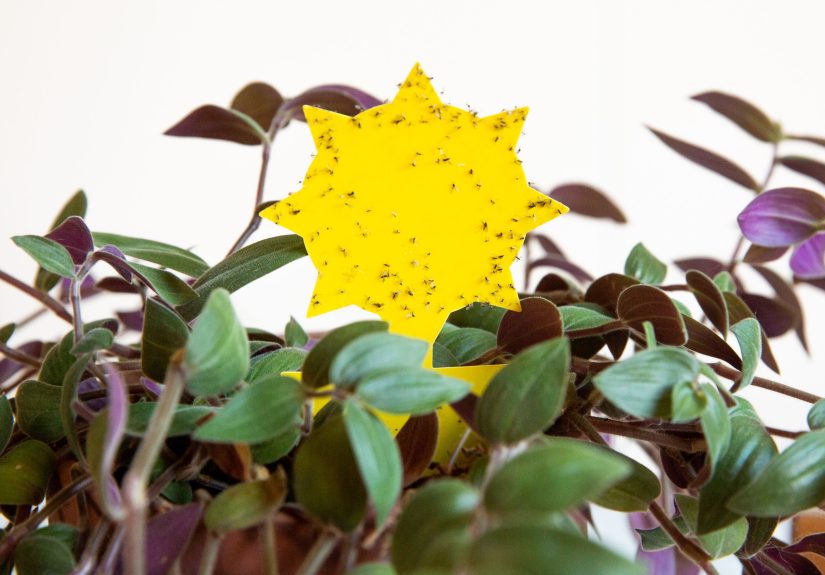
Step 2: Trap the Adults (So They Stop Laying Eggs)
Yellow sticky traps aren’t glamorous, but neither are fungus gnats. Place traps:
- Just above the soil surface, or
- Near the plant canopy where adults fly
Traps help you reduce egg-laying and monitor whether your plan is working. If trap counts drop week to week,
you’re winning.
Step 3: Use BTI (Mosquito Bits/Dunks) as a Soil Drench
If you want the most popular “why didn’t I do this sooner” option, meet BTI
(Bacillus thuringiensis israelensis). It’s a naturally occurring bacterium used to target certain fly larvae, including fungus gnats,
when applied to the growing medium as a drench.
How to use it (general approachfollow your product label):
- Soak BTI product in water to make a “tea.”
- Water the plant with that solution, fully wetting the potting mix.
- Repeat on a schedule (often weekly) for a few rounds to catch new hatchlings.
BTI works best when you’re consistent. Pair it with drying the soil surface and sticky traps,
and you’re squeezing the population from multiple angles.
Step 4: Bring in Beneficial Nematodes (A Tiny Soil SWAT Team)
If you’re dealing with a stubborn infestationor you just enjoy the idea of microscopic allies
consider beneficial nematodes, especially Steinernema feltiae. These are microscopic worms that seek out
fungus gnat larvae in the soil. They’re typically applied as a soil drench.
Tips for success:
- Use fresh product and store it as directed (they’re alive).
- Apply to moist potting mix (not bone dry).
- Keep soil slightly damp for a short period afterward so they can move around and hunt.
If BTI is your steady, reliable “weekly cleanup,” nematodes are the specialist team that shows up with night-vision goggles.
Step 5: Physical Barriers (Helpful, Not Magical)
A dry soil surface is the best “barrier,” but you can add a physical layer to make egg-laying harder:
- Coarse sand, fine gravel, or decorative stones as a thin top layer
- Replace the top inch of soil with fresh mix (after removing debris)
Important: barriers work best when the underlying mix isn’t staying wet. If the pot remains soggy, you’ve basically built a
fancy lid over a gnat nursery. Stylish. Unhelpful.
Step 6: Repot (When the Situation Is “Okay, Enough”)
Repotting is the fastest reset buttonespecially if:
- You have severe infestation (traps fill quickly day after day)
- The soil stays wet for ages or smells “off”
- The plant is struggling and you suspect root issues
Repotting best practices:
- Use a clean pot (wash with soap and water).
- Remove as much old mix as you reasonably can without shredding roots.
- Trim mushy or dead roots if you see them.
- Choose a fresh, well-draining mix appropriate for that plant.
And yes, you can combine repotting with BTI or nematodes afterward for extra insurance.
Step 7: Don’t Forget the “Not a Plant” Sources
Sometimes the gnats are not coming from your pothos at all. They can breed in:
- Wet drip trays and standing water
- Overly damp sink drains (especially with organic buildup)
- Propagation jars with decaying plant bits
- Open bags of potting mix stored in humid areas
If gnats persist no matter what you do to plants, isolate the source: cover a suspect pot or drain with fine mesh or cheesecloth
overnight and check for trapped adults the next day. Then treat the actual culprit instead of punishing every innocent fern.
What About Hydrogen Peroxide, Neem, Cinnamon, and Other “Internet Classics”?
Let’s sort the “maybe” from the “meh.”
Hydrogen Peroxide Soil Drench
A diluted 3% hydrogen peroxide drench is often suggested to kill larvae on contact. Some gardeners swear by it, and some plants
tolerate it fine. But it can also stress sensitive roots, and it doesn’t fix the moisture conditions that allowed gnats to thrive.
If you try it, test on one plant first and don’t treat it like a forever routine.
Neem Oil
Neem is better for certain leaf-feeding pests than for soil-dwelling larvae. It may help a little depending on formulation and use,
but it’s rarely the quickest, most reliable fungus gnat solution compared to BTI or nematodes.
Cinnamon and “Anti-Fungus” Sprinkles
Cinnamon smells nice and can discourage some surface fungal growth, but it’s not a complete gnat strategy.
If it makes you feel better, go for itjust don’t let it replace the real fix: drying soil + larva control.
Diatomaceous Earth (DE)
DE can harm insects by drying them out, but it works best when it stays dry. On damp potting mix, it clumps and loses punch.
If your soil is dry enough for DE to be effective… you may already be solving the problem by keeping the soil dry.
Vinegar Traps
Vinegar traps can catch some adult gnats, but fungus gnats aren’t as obsessed with vinegar as fruit flies are.
Sticky traps tend to be more consistent for monitoring and catching them where they live.
A Simple 14-Day Fungus Gnat Game Plan
If you like a checklist (and your plants like a future), follow this two-week plan:
Days 1–3: Stop the Nursery
- Let the top 1–2 inches of soil dry out (as your plant allows).
- Empty saucers, remove dead leaves, clean up debris.
- Place yellow sticky traps in affected pots.
Days 4–7: Hit the Larvae
- Apply BTI drench per label (or apply beneficial nematodes if you choose that route).
- Keep monitoring sticky traps to see adult counts drop.
Week 2: Repeat and Reassess
- Repeat BTI per label schedule (commonly weekly).
- Continue slightly drier watering habits.
- If traps are still packed daily, consider repotting the worst offenders.
Expect improvement in days, not minutes. You’re interrupting a life cycle, not deleting a file.
Prevention: How to Keep Fungus Gnats from Coming Back
- Quarantine new plants for a couple of weeks and monitor with a sticky trap.
- Store potting mix sealed in a dry areadon’t leave an open bag in a humid corner.
- Use well-draining mixes that match your plant type (especially for indoor conditions).
- Avoid chronic wetness: fix drainage, empty saucers, and don’t let “moist” become “swamp.”
- Keep surfaces clean: remove fallen leaves and old flowers before they rot into gnat snacks.
FAQ
Are fungus gnats harmful to humans or pets?
Fungus gnats are mainly an annoyance. They don’t bite like mosquitoes. The bigger issue is plant healthlarvae can bother roots,
especially in seedlings or stressed plants.
Why do I still see gnats after treatment?
Adults can keep emerging for a bit, and some may be coming from another source (another pot, a tray, a drain, or even an open bag of soil).
Keep traps up and stay consistent with larva control for at least a couple of weeks.
Which works better: BTI or nematodes?
Both can work. BTI is simple, widely available, and great for repeated drenching. Nematodes can be extremely effective, especially when applied
correctly, but they’re more “alive-and-needy” (storage, timing, moisture). Many plant people use BTI first, then add nematodes if the infestation
is persistent or widespread.
Do I have to throw the plant away?
Usually, no. But if a plant is heavily infested, declining, and the soil is staying wet no matter what, it may be easier to repotor, in some cases,
start fresh. (No shame. Even plant experts occasionally choose peace.)
of Real-World Experiences (Because Fungus Gnats Love a Plot Twist)
Here’s the part nobody tells you: fungus gnats don’t just “happen.” They build little empires in the exact places that feel totally reasonable
to a caring plant parentlike moist soil, self-watering setups, and that one pot that “always seems thirsty.” Over time, I’ve noticed most gnat
stories fall into a few familiar sitcom episodes.
Episode 1: The Overwatered Hero Plant. This is usually a pothos, peace lily, or basil that looks dramatic when it’s thirstyso you
water it lovingly… and then again… and then once more because the top still “feels a little dry.” Meanwhile, the bottom half of the pot is basically
a spa resort for larvae. The fix here wasn’t fancy: I stopped watering on vibes and started watering on dryness. A finger test plus a simple
schedule reset (and dumping the saucer water every time) cut the gnat population noticeably within a week. Sticky traps gave me proof, which felt
deeply satisfying in a “science fair but make it houseplants” way.
Episode 2: The “New Soil, New Problems” Surprise. One of the most frustrating experiences is repotting to “help” a plant and then
noticing gnats a few days later. It’s not that potting mix is badit’s that organic mixes can hold moisture, and open bags stored in humid areas can
become a cozy habitat. I learned to seal potting mix tightly and store it somewhere dry. If I’m bringing in a new bag, I keep it closed and away from
my plant shelf. This one change prevented repeat infestations more than any single product ever did.
Episode 3: The Propagation Station Betrayal. Jars of water with plant cuttings look adorable… until a leaf starts decomposing under the
waterline. Then you’re basically running a small compost smoothie bar. I’ve seen gnats hover around propagation setups when there’s rotting material or
algae buildup. The fix was simple: rinse jars weekly, remove any mushy stems fast, and refresh water before it gets cloudy. Suddenly the “mystery gnats”
near the window made a lot more sense.
Episode 4: The One-Two Punch That Finally Worked. If I had to pick the most reliable combo for a real infestation, it’s this:
drying the top layer of soil (as the plant allows) + yellow sticky traps + a BTI drench repeated consistently. The traps handle the adults you see,
the BTI targets larvae you don’t see, and improved watering keeps the environment from rebounding. When the infestation was extra stubborn,
adding beneficial nematodes felt like sending in reinforcementsand it worked best when the soil was moist enough for them to move, but not so wet that
it stayed soggy for days.
The biggest lesson: fungus gnat control is less about a miracle cure and more about changing the conditions while you interrupt the life cycle.
Once you do that, the gnats don’t “mysteriously disappear.” They run out of options. And honestly? Watching them lose is part of the healing.