Table of Contents >> Show >> Hide
- What Is Quickwood, and Why Do People Use It for Veneer Repairs?
- When Quickwood Is the Right Fix
- When Quickwood Is Not the Right Fix
- Tools and Materials You Will Need
- Step 1: Inspect the Damage Before You Touch Anything
- Step 2: Clean and Square Up the Repair Area
- Step 3: Mix the Quickwood Thoroughly
- Step 4: Press It Firmly into the Missing Veneer Area
- Step 5: Shape the Patch Before It Fully Hardens
- Step 6: Sand the Patch Flush, Gently
- Step 7: Recreate the Grain and Color
- Step 8: Match the Sheen, Not Just the Shade
- Best Places to Use Quickwood on Veneer Furniture
- When a Real Veneer Patch Will Look Better
- Common Mistakes to Avoid
- Example: Repairing a Chipped Veneer Corner on a Dresser
- What the Repair Experience Is Really Like
- Final Thoughts
Veneer damage has a special talent for looking worse than it really is. One tiny chip on the edge of a tabletop can make an otherwise handsome piece of furniture look like it lost a fight with a shopping cart. The good news is that many small veneer problems are repairable, and you do not always need to replace the whole veneer sheet to get a clean, convincing result. If the damage is a chip, void, corner loss, or a small missing section, Quickwood can be a practical fix that saves time, saves money, and saves you from dramatic speeches about “buying a whole new dresser.”
This guide walks through how to patch veneer with Quickwood in a way that looks neat, lasts well, and blends into the surrounding wood. It also explains when not to use Quickwood, because that matters just as much as knowing when to reach for it. A filler is a hero in the right situation and a comedian in the wrong one.
What Is Quickwood, and Why Do People Use It for Veneer Repairs?
Quickwood, often known by DIYers as a fast-setting epoxy wood repair putty, is popular because it is easy to shape, cures hard, sands well, and can be stained or painted after it sets. That makes it useful for repairing chipped edges, missing corners, gouges, and small areas where veneer is gone and you need to rebuild the surface before finishing it.
For veneer repair, that matters because veneer is thin. Very thin. Annoyingly thin. Once a section is missing, you usually cannot just “sand it out” without making the problem worse. Quickwood gives you a way to rebuild a shallow area so the surface becomes level again. After that, you can blend the color and fake the grain well enough that the repair stops shouting for attention every time someone walks by.
When Quickwood Is the Right Fix
Quickwood is a strong choice when the veneer damage is:
- a small chip on an edge or corner
- a nick or gouge where the veneer is missing but the surrounding area is stable
- a small void in a tabletop, cabinet side, or drawer front
- a broken corner where you need to rebuild shape before coloring
- a cosmetic repair on furniture that will be stained, toned, glazed, or painted afterward
It is especially handy when you do not have matching veneer on hand or when the missing area is too irregular to patch quickly with a wood veneer insert.
When Quickwood Is Not the Right Fix
Now for the important reality check. If the veneer is loose, blistered, bubbled, or lifting, your first move is usually adhesive and clamping, not filler. In that case, the goal is to reattach the veneer to the substrate. Likewise, if a large section of veneer is missing in a highly visible area, a real veneer patch usually looks better than any filler ever will.
So think of it this way:
- Loose veneer: glue it back down
- Large missing veneer: patch with matching veneer
- Small missing veneer or chipped edge: Quickwood is often perfect
That simple rule will save you from making a repair that is solid but obvious.
Tools and Materials You Will Need
- Quickwood epoxy putty
- utility knife or sharp razor blade
- small putty knife or plastic spreader
- 220-grit and 320-grit sandpaper
- masking tape
- clean rag
- denatured alcohol or appropriate surface cleaner for prep
- wood stain, touch-up marker, glaze, or artist pencils for color blending
- clear topcoat if the piece needs protection
If you are working on a delicate piece, add patience to the list. It is not sold in tubes, but it is still required.
Step 1: Inspect the Damage Before You Touch Anything
Before mixing anything, inspect the veneer carefully. Press around the damaged spot. If the surrounding veneer feels loose, hollow, or springy, stop and address that first. A patch will not look good for long if the area around it is failing.
Also pay attention to the finish. Is the piece stained? Toned? Painted? Does it have a glossy lacquer look, or a soft satin sheen? Quickwood will solve the missing-material problem, but the final appearance depends on how well you match the surrounding color and sheen.
Step 2: Clean and Square Up the Repair Area
Remove dirt, wax, oils, and flaky finish from the damaged spot. Then trim away any ragged veneer fibers with a sharp blade. You do not need to turn every repair into a perfect rectangle, but you do want clean, stable edges. Quickwood sticks and shapes better when it is not fighting fuzzy debris and splintered veneer.
If the damage is on an edge, apply masking tape around the repair to protect the surrounding finish. This also helps you keep the patch neat and limits how much sanding you need later.
Step 3: Mix the Quickwood Thoroughly
Cut off only the amount you need. Then knead it until the color is completely uniform. Do not rush this part. If the putty is streaky, it is not fully mixed, and that can lead to soft spots or a weak cure.
Because Quickwood sets fairly quickly, work in small batches. A tiny veneer chip does not need a golf-ball-sized lump of epoxy putty. That is not efficient. That is performance art.
Step 4: Press It Firmly into the Missing Veneer Area
Push the putty into the damaged spot so it keys into the void. This matters most on edges and corners, where repairs can pop loose if the material is only sitting on the surface. Pack it in, then overfill the repair slightly. A proud patch is easier to sand flush than a low patch is to fix later.
Shape it while it is still workable. On a flat field, aim for a smooth mound just above the veneer surface. On a broken corner, rebuild the profile just a hair oversized so you can refine it after cure.
Step 5: Shape the Patch Before It Fully Hardens
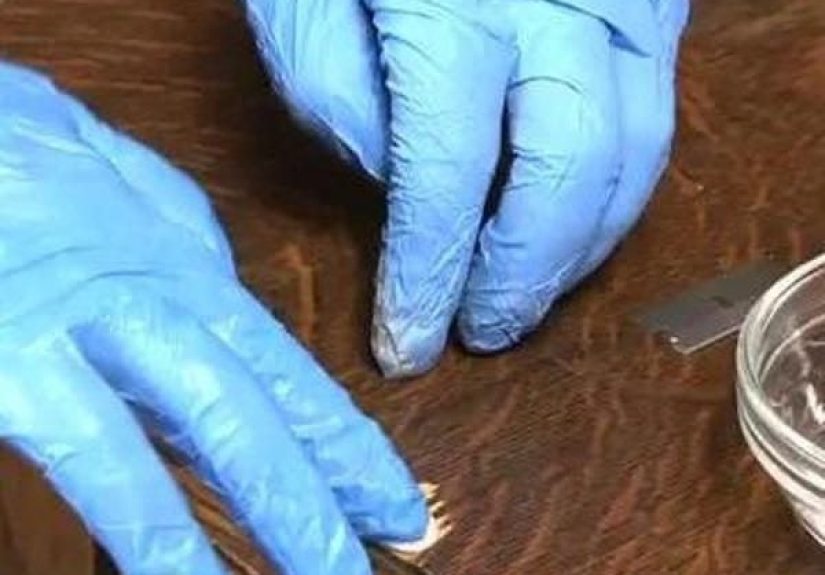
One of the smartest tricks with Quickwood is to do as much shaping as possible before it turns rock hard. Use a putty knife, razor blade, or even a dampened gloved finger if needed to mimic the surrounding contour. You are not trying to create a perfect finish-ready surface yet. You are trying to reduce how much aggressive sanding you will need later.
This is especially important on veneer, because over-sanding the surrounding area can burn through the face layer. That is how a small repair becomes a larger life lesson.
Step 6: Sand the Patch Flush, Gently
Once cured, sand the patch level with the veneer using light pressure. Start with a fine grit, usually around 220, and move to 320 if needed. Keep your sanding block small and controlled. Do not wander across the whole surface like you are refinishing a gym floor.
The goal is to level the patch without thinning the adjacent veneer. If the repair is on an edge, fold the sandpaper over a flat stick or block so you keep the line crisp. If you rounded the edge accidentally, do not panic, but know that sharp profiles usually look more professional.
Step 7: Recreate the Grain and Color
This is where good repairs become sneaky repairs. Quickwood dries to a tan wood-like color, but it does not magically grow oak grain or walnut figure. That part is your job.
How to Blend the Color
Start lighter than you think you need. It is easier to darken a patch than to rescue one that turned into a tiny espresso bean. Use stain markers, touch-up pencils, diluted stain, artist colors, or glazing techniques to build color gradually. Many wood tones can be matched by layering brown, red, yellow, green, and black influences instead of relying on one blunt color.
How to Fake the Grain
Study the surrounding veneer. Is the grain straight? Cathedral-shaped? Calm and subtle? Busy and dramatic? Use a fine-tip pencil, a sharp artist brush, or a graining marker to draw in thin lines that follow the existing pattern. Keep them slightly irregular. Real wood grain is not printed by a robot, and if your lines look too uniform, the patch will stand out.
On oak or open-grained woods, you may need stronger grain lines and a slightly more varied color. On maple or birch, the repair usually needs a softer, quieter blend. Match the personality of the wood, not just the general color.
Step 8: Match the Sheen, Not Just the Shade
Many DIY repairs look wrong even when the color is close because the sheen is off. A matte patch on a glossy tabletop will flash under the light. A glossy patch on a satin cabinet will do the same. Once your color work is dry, apply a compatible finish that matches the surrounding sheen as closely as possible.
This might be wipe-on polyurethane, lacquer touch-up, shellac, or another clear coat appropriate to the original finish. Test first if you can. Furniture finishes are like hairstyles: one wrong choice and everybody notices.
Best Places to Use Quickwood on Veneer Furniture
- tabletop corners with small losses
- drawer edges with veneer chips
- cabinet door corners
- small veneer voids on side panels
- areas that will be toned or painted after repair
These are the sweet spots where Quickwood can give a fast, durable repair without requiring you to source matching veneer and perform a more advanced patch.
When a Real Veneer Patch Will Look Better
If the missing area is large, in the center of a highly visible tabletop, or surrounded by beautiful figured wood, a real veneer patch often wins. A carefully cut veneer insert can follow the wood species, grain direction, and figure far better than filler. It takes more time, but the visual result is usually superior.
That is not bad news. It is just the woodworking version of knowing whether you need concealer or surgery. Quickwood is fantastic, but it is not a magic forest in a tube.
Common Mistakes to Avoid
Using filler on loose veneer
If the veneer is lifting, glue it down first. Filler will not fix failed adhesion underneath.
Over-sanding the surrounding veneer
Thin veneer can sand through faster than people expect. Stay localized and use a light touch.
Making the patch too dark too soon
Build color slowly. You can always add more depth later.
Ignoring the edge profile
On corners and edges, shape matters as much as color. A correctly shaped repair disappears faster.
Skipping the topcoat
Even a good color match can fail visually if the sheen and protection do not match the rest of the piece.
Example: Repairing a Chipped Veneer Corner on a Dresser
Imagine a walnut-veneered dresser with a dime-sized chunk missing from the front corner. The veneer around it is tight, the substrate is sound, and the break is too small to justify cutting in a new veneer patch. This is Quickwood territory.
You would clean the corner, trim away any loose fibers, mask around the area, knead a small amount of Quickwood, and rebuild the missing corner slightly proud. After cure, you would sand it flush, shape the corner line to match the other side, tint the patch with layered brown and red tones, add a few darker grain accents, and then topcoat to match the dresser’s satin finish. Done carefully, the repair would be noticeable only to someone who already knows where to stare.
What the Repair Experience Is Really Like
People often imagine veneer repair as a dramatic, high-pressure event where one wrong move sends the furniture directly into the “curbside donation” category. In reality, patching veneer with Quickwood usually feels much more manageable than expected. The first emotional milestone is realizing that the damage looks bigger than it is. A chip that feels catastrophic when you first notice it often turns out to be a repair the size of a postage stamp.
The second common experience is learning that preparation matters more than bravado. Most beginners want to jump straight to the patching step because that feels like progress. But the moments that actually determine success are quieter: trimming loose veneer cleanly, checking whether the surrounding area is stable, and deciding whether the repair needs filler or glue. Those decisions do not look glamorous, but they prevent the classic DIY mistake of fixing the wrong problem very confidently.
Another real-world lesson is that the patch itself is only half the job. Many people are delighted after the putty cures because the missing section is gone, only to discover that the repair still sticks out like a bandage because the color is off. This is the stage where patience wins. The best-looking repairs are often built in layers: a little stain, then a wipe, then a pencil line, then a little more blending, then a pause to look from three feet away. Up close, you notice tiny details. From normal viewing distance, you notice whether the repair blends into the furniture’s overall rhythm.
There is also a funny psychological moment during sanding. You start out cautious, then feel overconfident for ten seconds, then immediately remember that veneer is thin and humility is wise. Most experienced DIYers develop a healthy respect for “just one more pass” with sandpaper. That phrase has ended many peaceful afternoons.
Edge repairs bring their own experience. Rebuilding a chipped corner can feel surprisingly satisfying because the shape tells you quickly whether you are getting close. Once the line is crisp again, the furniture suddenly looks cared for instead of battered. That visual shift is one of the most rewarding parts of the process. The piece stops looking broken and starts looking restorable.
Finally, there is the little victory no one talks about enough: after the topcoat dries and the sheen matches, the repair usually disappears more than you thought it would. Not perfectly. Not magically. But enough that your eye no longer leaps to the damage every time you enter the room. That is often the true goal. A good Quickwood veneer repair does not need to fool a museum conservator from six inches away. It needs to make the furniture look whole, attractive, and worth keeping in real life.
Final Thoughts
If you are dealing with a small chip, nick, or missing corner, patching veneer with Quickwood can be an excellent repair strategy. It is fast, durable, workable, and practical for many furniture touch-ups. The real secret is not just applying the filler. It is knowing when the repair should be a filler, when it should be glue, and when it should be a true veneer patch.
Use Quickwood for the right kind of damage, shape it carefully, sand with restraint, and spend extra time on color and grain blending. That is the difference between a repair that merely covers damage and one that quietly restores the piece. And when done well, it is deeply satisfying. The furniture keeps its dignity, and you get to act casual when someone says, “Wait, where was the damage?”