Table of Contents >> Show >> Hide
- Introduction: When “Different” Becomes Distressing
- How to Recognize Schizotypal Personality Disorder: 13 Steps
- 1. Look for a long-term pattern, not a one-time odd moment
- 2. Notice intense discomfort with close relationships
- 3. Watch for unusual beliefs or “magical thinking”
- 4. Pay attention to ideas of reference
- 5. Listen for odd, vague, or overly elaborate speech
- 6. Observe unusual perception experiences
- 7. Notice suspiciousness or paranoid thoughts
- 8. Recognize social anxiety that does not improve with familiarity
- 9. Look for eccentric behavior or appearance
- 10. Notice limited or socially unusual emotional expression
- 11. Consider how daily functioning is affected
- 12. Do not confuse STPD with schizophrenia, autism, or simple eccentricity
- 13. Encourage professional assessment with kindness
- Common Signs at a Glance
- When to Seek Help Immediately
- Experience-Based Examples: What Recognition Can Look Like in Real Life
- Conclusion: Recognize the Pattern, Respect the Person
- SEO Tags
Note: This article is for education only. Schizotypal personality disorder can only be diagnosed by a qualified mental health professional. If someone is in immediate danger, experiencing suicidal thoughts, or losing touch with reality in a frightening way, seek emergency help right away.
Introduction: When “Different” Becomes Distressing
Everyone has quirks. Some people collect vintage lunch boxes, talk to their plants, or believe their cat understands tax law. Quirky is not the same as a mental health condition. Schizotypal personality disorder, often shortened to STPD, is different because the pattern is long-lasting, affects relationships, and may cause real distress or problems at school, work, family life, and daily functioning.
Schizotypal personality disorder is part of the Cluster A group of personality disorders, which are often associated with odd, eccentric, or unusual ways of thinking and behaving. People with STPD may feel extremely uncomfortable in close relationships, misread social situations, hold unusual beliefs, speak in vague or overly elaborate ways, or seem suspicious even when others are not threatening them.
The goal of this guide is not to help you label someone from across the room like a mental-health detective with a magnifying glass. The goal is to help you recognize patterns that may deserve compassionate attention and professional evaluation. Here are 13 practical steps for understanding the signs of schizotypal personality disorder without jumping to conclusions.
How to Recognize Schizotypal Personality Disorder: 13 Steps
1. Look for a long-term pattern, not a one-time odd moment
Schizotypal personality disorder is not diagnosed because someone said something strange at a party, wore an unusual outfit, or had a bad social week. Personality disorders involve enduring patterns of inner experience and behavior. In plain English: the signs tend to show up across time, across situations, and across relationships.
For example, a person may consistently struggle to form close friendships, repeatedly believe neutral events are personally meaningful, and often seem socially uncomfortable even with familiar people. A single awkward conversation is human. A persistent pattern that interferes with life may be a sign to take seriously.
2. Notice intense discomfort with close relationships
One of the central signs of schizotypal personality disorder is difficulty with close relationships. A person may have few close friends outside immediate family, avoid intimacy, or seem confused about how relationships develop. This is not always because they dislike people. Often, they may want connection but feel overwhelmed, suspicious, or out of place.
They might interpret friendliness as fake, criticism as betrayal, or casual distance as proof that others secretly dislike them. Over time, these interpretations can make relationships feel like a confusing board game where everyone else got the instructions and they received a grocery receipt.
3. Watch for unusual beliefs or “magical thinking”
Magical thinking can be a key feature of schizotypal personality disorder. This may include unusually strong beliefs in telepathy, special powers, hidden messages, curses, signs, or supernatural control. The important point is not whether someone enjoys astrology, horror movies, or spiritual traditions. Culture, religion, and personal values matter.
The concern grows when beliefs are rigid, isolating, frightening, or strongly influence behavior in unhealthy ways. For example, someone may refuse to leave home because they believe a random number on a receipt is a warning from the universe. The belief becomes more than a harmless preference; it starts directing daily life.
4. Pay attention to ideas of reference
Ideas of reference happen when a person believes ordinary events are specifically connected to them. A radio song may feel like a private message. A stranger laughing across the room may seem to be laughing about them. A television commercial may appear to contain a personal warning.
Many people occasionally feel self-conscious. The difference is intensity and frequency. With schizotypal personality disorder, these interpretations may happen often and create anxiety, avoidance, or conflict. The person may not have a fixed delusion in the way seen in schizophrenia, but their interpretations can still feel very real and upsetting.
5. Listen for odd, vague, or overly elaborate speech
Speech in schizotypal personality disorder may sound unusual. A person might speak in a vague, metaphor-heavy, overly detailed, tangential, or oddly formal way. They may drift from one topic to another in a way that is hard to follow, yet still remain mostly understandable.
For instance, when asked how their weekend went, they might answer with a winding story about traffic lights, cosmic timing, and why Tuesday has “a suspicious texture.” The issue is not creativity. Creative language can be wonderful. The concern is whether communication repeatedly makes social connection difficult or causes misunderstandings.
6. Observe unusual perception experiences
Some people with schizotypal personality disorder report unusual perceptual experiences. They might sense a presence nearby, hear their name faintly when no one is there, see shadows as figures, or feel that ordinary sounds carry special meaning. These experiences are usually less intense, less persistent, and less disabling than the hallucinations associated with psychotic disorders, but they can still be disturbing.
If these experiences become frequent, frightening, or command-like, professional help is especially important. A clinician can evaluate whether the symptoms fit STPD, another mental health condition, substance effects, sleep problems, trauma, or a medical issue.
7. Notice suspiciousness or paranoid thoughts
Suspiciousness is common in schizotypal personality disorder. A person may frequently doubt other people’s motives, worry that friends are disloyal, or assume harmless comments are secretly hostile. This can make social situations exhausting.
For example, if a coworker says, “Nice jacket,” the person may wonder, “Was that sarcasm? Are they mocking me? Did everyone plan this?” The mental load can be enormous. This is one reason many people with STPD withdraw: isolation may feel safer than constantly scanning for hidden threats.
8. Recognize social anxiety that does not improve with familiarity
Social anxiety is not unique to schizotypal personality disorder. Many people feel nervous meeting new people, speaking in groups, or attending events. In STPD, the anxiety often remains even after repeated exposure to the same people or settings. The anxiety is often tied to suspiciousness rather than only fear of embarrassment.
A person with ordinary social anxiety may slowly relax after getting to know a group. A person with schizotypal traits may remain tense because they still distrust others or believe others are watching them in a special way. This difference can help professionals separate STPD from social anxiety disorder.
9. Look for eccentric behavior or appearance
People with schizotypal personality disorder may dress, behave, or present themselves in ways others perceive as odd or eccentric. This might include unusual clothing combinations, peculiar gestures, intense staring, minimal eye contact, or behaviors that seem out of sync with the setting.
Of course, fashion freedom is not a symptom. A purple velvet cape at brunch may simply mean someone has confidence and excellent dramatic timing. The clinical question is whether eccentric behavior is part of a broader pattern involving distorted thinking, social difficulty, and distress.
10. Notice limited or socially unusual emotional expression
Schizotypal personality disorder may involve restricted, flat, or socially unexpected emotional expression. Someone may appear emotionally distant, respond with little facial expression, laugh at unusual times, or seem confused by emotional cues from others.
This can create misunderstandings. Friends may assume the person is cold or uninterested when the real issue is difficulty reading and expressing emotion. Compassion matters here. The behavior may be confusing, but it is not automatically rude, manipulative, or intentional.
11. Consider how daily functioning is affected
A key part of recognizing schizotypal personality disorder is looking at impact. Are these patterns causing loneliness, job problems, family conflict, academic struggles, or ongoing distress? A person may be able to work or study, but still feel deeply isolated or misunderstood.
Some people seek help for depression, anxiety, substance use, or relationship problems before anyone recognizes schizotypal traits. That is common. The visible issue may be “I cannot keep friends” or “I feel anxious everywhere,” while the deeper pattern involves suspiciousness, unusual beliefs, and distorted interpretations of social life.
12. Do not confuse STPD with schizophrenia, autism, or simple eccentricity
Schizotypal personality disorder can overlap with other conditions, which is why professional evaluation matters. Schizophrenia typically involves more severe or persistent psychotic symptoms, such as delusions, hallucinations, and disorganized thinking that significantly disconnect a person from reality. STPD may include unusual perceptions and beliefs, but usually not the same level of sustained psychosis.
Autism spectrum disorder can also involve social differences, unusual communication, sensory sensitivities, and intense interests. However, autism is a neurodevelopmental condition and does not necessarily involve suspiciousness, magical thinking, or ideas of reference. Likewise, a person can be eccentric, spiritual, introverted, artistic, or socially awkward without having any disorder at all.
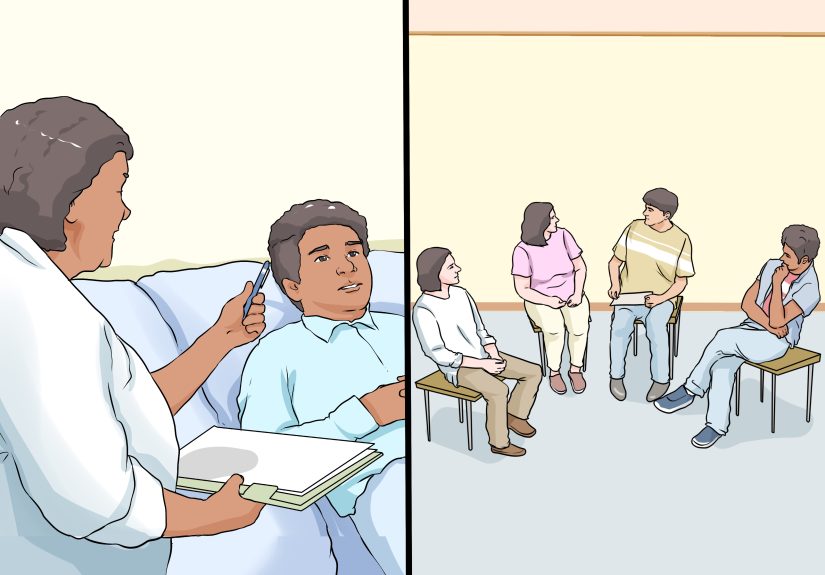
13. Encourage professional assessment with kindness
If you recognize several signs of schizotypal personality disorder in yourself or someone else, the next step is not to announce a diagnosis over dinner. Please do not turn Thanksgiving into a courtroom drama. Instead, focus on support: “I’ve noticed you seem really anxious around people and it seems painful. Would you consider talking with a therapist?”
A mental health professional may use interviews, history, symptom patterns, and screening tools to understand what is happening. Treatment may include psychotherapy, social skills support, cognitive behavioral approaches, help with anxiety or depression, and sometimes medication for specific symptoms. Improvement is possible, especially when support is steady, respectful, and realistic.
Common Signs at a Glance
- Few close relationships outside immediate family
- Strong discomfort in social situations
- Suspiciousness or paranoid thinking
- Odd beliefs, magical thinking, or unusual interpretations
- Ideas of reference, such as feeling neutral events are personal messages
- Unusual speech, appearance, or behavior
- Restricted, flat, or socially unexpected emotional expression
- Unusual perceptual experiences, such as sensing a presence or hearing one’s name
When to Seek Help Immediately
Seek urgent help if a person talks about suicide, self-harm, harming others, being commanded by voices, feeling completely unsafe, or acting in a way that could lead to immediate danger. In the United States, calling or texting 988 connects people with the Suicide & Crisis Lifeline. Emergency services may be needed if there is immediate risk.
Even when there is no emergency, professional support is helpful when unusual beliefs, social anxiety, suspiciousness, or isolation are making life smaller and more painful. Early support can reduce distress and help a person build better coping skills.
Experience-Based Examples: What Recognition Can Look Like in Real Life
The following examples are realistic composites, not stories about specific individuals. They show how schizotypal personality disorder may appear in everyday life and why compassion is more useful than judgment.
Imagine a college student named Aaron. He is intelligent, creative, and capable of doing strong academic work, but group projects make him miserable. When classmates whisper before class, he assumes they are discussing him. If a professor uses a phrase Aaron heard earlier that morning, he believes it may be a coded sign that the day is dangerous. He wants friends but rarely accepts invitations because he feels watched. His roommate says, “Just relax,” which is about as useful as telling a smoke alarm to “use indoor voices.” Aaron may not need criticism; he may need a mental health evaluation and support for anxiety, suspiciousness, and unusual interpretations.
Now picture Maya, who works in a small office. She dresses in a distinctive way, speaks poetically, and often talks about energy fields around coworkers. Her style alone is not a problem. The challenge is that she becomes distressed when she believes coworkers’ lunch choices are secret signals about whether they approve of her. She avoids meetings, sends long confusing emails, and feels betrayed when colleagues do not understand her meaning. Her supervisor sees performance issues, but underneath those issues may be social fear and distorted perception. A supportive workplace response would focus on clear communication, boundaries, and encouraging professional helpnot gossiping about her being “weird.”
Consider another example: a parent notices their adult son rarely leaves home, has no close friends, and becomes anxious when relatives visit. He believes neighbors can sense his thoughts through the walls. He does not appear fully psychotic, but his beliefs are strong enough to change his behavior. The parent feels torn between challenging the belief and keeping peace. In this situation, arguing aggressively may make the son more defensive. A better first step might be calm concern: “You seem stressed and unsafe at home lately. I care about you, and I think talking with a professional could help you feel less trapped.”
Recognition is not about mocking oddness. It is about noticing suffering. Many people with schizotypal traits are lonely, anxious, and misunderstood. They may not realize their behavior seems unusual, or they may realize it and feel ashamed. Either way, respectful support can make a difference. The most helpful response is steady, non-dramatic, and practical: listen without feeding frightening beliefs, encourage professional care, keep communication simple, and remember that a person is more than a diagnosis.
Conclusion: Recognize the Pattern, Respect the Person
Learning how to recognize schizotypal personality disorder means looking beyond surface-level eccentricity. The real clues are persistent social discomfort, few close relationships, unusual beliefs, suspiciousness, odd communication, ideas of reference, and distress or impairment in daily life. A person with STPD is not simply “strange.” They may be navigating a world that feels confusing, threatening, and full of hidden meanings.
The most responsible approach is compassionate curiosity. Notice patterns, avoid amateur diagnosis, and encourage evaluation by a licensed mental health professional. With the right support, people can improve coping skills, reduce anxiety, build safer relationships, and create a more stable daily life. In other words, recognition is not the finish line. It is the first open door.