Table of Contents >> Show >> Hide
- When the Tank Runs Dry, the Furnace Does Not Just “Forgive and Forget”
- Why an Oil Furnace Stops After Running Out of Oil
- Before You Touch Anything: Safety First
- Step 1: Confirm You Actually Have Heating Oil
- Step 2: Check the Thermostat
- Step 3: Check Power and Emergency Switches
- Step 4: Check the Oil Supply Valve
- Step 5: Locate the Reset Button
- What If the Furnace Starts, Then Shuts Down Again?
- Why Bleeding the Oil Line May Be Needed
- Common Reasons the Furnace Still Will Not Restart
- When to Call a Professional Immediately
- How to Prevent Running Out of Oil Again
- Real-World Experiences: What Homeowners Learn the Hard Way
- Conclusion
Note: Restarting an oil furnace after the tank runs dry can be simple in some cases, but it can also involve fuel, electricity, ignition controls, and safety lockouts. This guide focuses on safe homeowner-level checks. If the furnace does not restart after one normal reset attempt, or if you smell fuel, hear unusual noises, see smoke, or feel unsure, stop and call a licensed HVAC technician.
When the Tank Runs Dry, the Furnace Does Not Just “Forgive and Forget”
Running out of heating oil is one of those household surprises that usually arrives at the worst possible time: cold night, chilly floors, and a thermostat that looks innocent while doing absolutely nothing. If your oil furnace stopped working after the tank ran empty, the problem is often not that the furnace is broken forever. More commonly, the burner tried to ignite without enough fuel, shut itself down for safety, and may now need a proper restart.
The key word is proper. An oil furnace is not like a stubborn laptop where you can mash the power button until it behaves. Pressing the reset button again and again can push unburned oil into the combustion chamber, creating a messy and potentially dangerous situation. The smarter approach is to confirm that you have oil, check basic power and thermostat settings, try one safe reset, and know when the job has moved from “homeowner troubleshooting” to “call the professional with tools, training, and a very practical van.”
This guide explains how to restart a furnace after running out of oil, why the system may lock out, what you can safely check, and what warning signs mean you should step away from the furnace and get help.
Why an Oil Furnace Stops After Running Out of Oil
An oil furnace needs three basic things to make heat: fuel, ignition, and airflow. The thermostat calls for heat, the burner starts, the fuel pump moves heating oil, the ignition system lights it, and the furnace transfers heat through warm air ducts or a hydronic system, depending on your setup.
When the oil tank runs empty, the fuel pump may pull air instead of oil. That air can interrupt fuel flow and prevent ignition. Many modern oil burners use safety controls that watch for flame. If the burner does not establish flame within a short period, the control shuts the system down. This is called a lockout. Lockout is not the furnace being dramatic. It is the furnace saying, “Something is wrong, and I refuse to keep spraying fuel into a chamber without fire.” Honestly, that is the kind of boundary we should all respect.
Before You Touch Anything: Safety First
Before trying to restart your furnace, make sure the area around the unit is safe. Do not attempt any restart if you smell strong fuel oil, see leaks, notice smoke, hear banging, or find soot around the furnace or venting. These are signs that the system needs professional service before another ignition attempt.
Also, do not open sealed burner components, remove safety controls, adjust fuel pressure, take apart the ignition system, or loosen fuel lines unless you are trained to do so. Bleeding an oil line is a common service procedure after a tank runs dry, but it involves fuel handling and burner operation. For most homeowners, the safest recommendation is to let an HVAC technician perform it.
Step 1: Confirm You Actually Have Heating Oil
The first step sounds obvious, but it saves embarrassment. Confirm that oil has been delivered and that the tank gauge shows a usable level. Some tanks have float-style gauges that can stick, so if the gauge looks suspiciously optimistic, do not treat it like a sworn affidavit. If you recently ordered oil, check that the delivery was completed and not delayed by weather, payment issues, access problems, or the delivery driver being unable to reach the fill pipe.
It is also smart to wait a short period after delivery before restarting the system. When an empty or nearly empty tank is filled, sediment at the bottom of the tank can be stirred up. That sediment can clog filters or nozzles, especially in older tanks. If the furnace refuses to restart after delivery, a clogged filter, air in the line, or a dirty nozzle may be the real reason.
Step 2: Check the Thermostat
Set the thermostat to “Heat” and raise the temperature several degrees above the current room temperature. If the thermostat uses batteries, replace them or confirm they still work. A thermostat with weak batteries can create a no-heat situation that looks like a furnace problem but is really just a tiny plastic box having a bad day.
If you have a programmable or smart thermostat, check the schedule, mode, Wi-Fi status, and any energy-saving setting that could be preventing a heat call. Make sure it is not set to “Off,” “Cool,” “Eco,” or a vacation mode. The furnace cannot read your mind. It only reads the thermostat.
Step 3: Check Power and Emergency Switches
Oil furnaces burn oil, but they still need electricity. The burner motor, ignition system, controls, circulator pump, and blower all depend on power. Check your electrical panel for a tripped breaker. Then look for the furnace service switch, usually mounted on or near the unit. Many homes also have an emergency shutoff switch near the basement stairs or outside the furnace room. It may look like a regular light switch, often with a red plate.
Make sure these switches are on. A surprisingly common no-heat mystery begins with someone brushing against the emergency switch while carrying laundry, storage boxes, or a heroic amount of holiday decorations.
Step 4: Check the Oil Supply Valve
Some oil systems have a shutoff valve near the tank or near the burner. If a valve was closed during service, delivery, or inspection, the burner may not receive fuel. Do not force stuck valves or disassemble anything. Simply confirm that accessible valves appear to be in the open position. If you are not sure what you are looking at, take a photo and call your oil company or HVAC technician for guidance.
Step 5: Locate the Reset Button
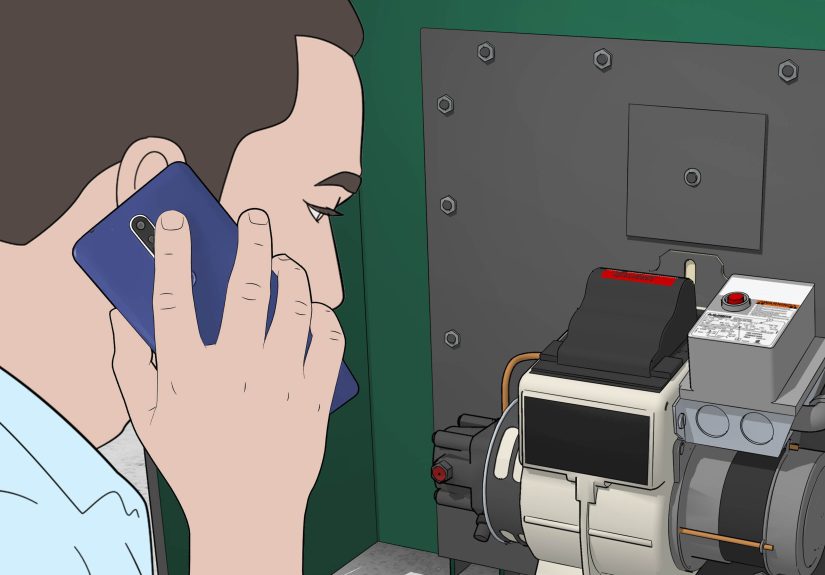
Many oil burners have a red reset button on the primary control box at or near the burner. This button exists because the system may shut itself down when it fails to ignite properly. After confirming that you have oil, power, thermostat demand, and no obvious danger signs, you may try one normal reset.
Press the reset button once. Do not press it repeatedly. Do not hold it down for a long time unless the furnace manual specifically instructs you to do so and you understand the procedure. After pressing it once, listen. You may hear the burner motor start, followed by ignition. If the furnace starts and continues running smoothly, watch it for several minutes. Normal operation should sound steady, not violent, smoky, or explosive.
What If the Furnace Starts, Then Shuts Down Again?
If the furnace starts but shuts off again quickly, stop pressing the reset button. A second or third button press may feel tempting, especially when your house feels like a walk-in refrigerator, but it can make the situation worse. The system may have air in the oil line, a clogged filter, a blocked nozzle, a weak ignition transformer, a dirty flame sensor, a failing fuel pump, or another issue that requires service.
At this point, the safest next step is to call a qualified oil burner technician. Explain that you ran out of oil, received a delivery, checked the thermostat and power, pressed the reset button once, and the unit still will not stay running. That short summary helps the technician diagnose the likely cause faster.
Why Bleeding the Oil Line May Be Needed
When a tank runs dry, air can enter the fuel line. Air does not burn like heating oil, which is rude but scientifically consistent. If enough air is trapped in the line, the burner may not receive a steady flow of fuel. A technician may need to bleed or prime the oil line to remove air and restore fuel flow.
Although many online guides describe bleeding an oil furnace as a do-it-yourself task, it is not the best beginner project. It can involve opening a bleed port, operating the burner, catching fuel, closing the port at the right time, and avoiding spills, fumes, and unsafe ignition attempts. If the system has a two-pipe setup, an overhead oil line, an older burner, or a tank with sludge, the process can become more complicated. In short: yes, bleeding may solve the problem, but no, it is not something every homeowner should casually do while wearing slippers and holding a coffee mug.
Common Reasons the Furnace Still Will Not Restart
Air in the Fuel Line
This is one of the most common problems after running out of oil. The burner may try to start but fail because oil is not reaching the nozzle in a steady stream.
Clogged Oil Filter
When a tank gets very low, sediment can be pulled toward the fuel line. The oil filter may clog, reducing or blocking fuel flow.
Dirty or Blocked Nozzle
The nozzle sprays oil in a precise pattern for ignition. Sediment or sludge can interfere with that pattern and cause poor ignition or lockout.
Dirty Flame Sensor or Cad Cell
Many oil burners use a flame-sensing device to confirm ignition. If it is dirty, misaligned, or failing, the burner may shut down even if flame is present.
Weak Ignition
If the ignition system is weak, damaged, or out of adjustment, the furnace may not light reliably after the fuel supply is restored.
Closed Valve or Fuel Line Restriction
A closed valve, kinked line, clogged strainer, or failing fuel pump can prevent oil from reaching the burner.
When to Call a Professional Immediately
Call a licensed HVAC technician or your heating oil service company immediately if you notice any strong oil smell, smoke, soot, rumbling, repeated lockouts, fuel leaks, strange burner sounds, or visible damage. You should also call if the reset button trips again after one attempt, if the furnace has not been serviced recently, or if you are not comfortable identifying the correct controls.
Professional service is not just about getting the heat back on. It is also about making sure the combustion process is clean, safe, and efficient. A technician can test fuel flow, replace filters, inspect the nozzle, check electrodes, test the cad cell, verify draft, and confirm that the furnace is burning properly. That is much better than guessing while standing in a cold basement, negotiating with a metal box.
How to Prevent Running Out of Oil Again
The easiest furnace restart is the one you never need. To avoid running out of heating oil, check your tank gauge regularly during cold weather. Many homeowners create a habit of ordering fuel when the tank reaches one-quarter full. This gives you a buffer in case of storms, delivery delays, high demand, or unusually cold nights.
Automatic delivery is another useful option. Heating oil companies often estimate your usage based on weather patterns and past consumption. Some also offer tank monitors that track fuel level and alert you before the tank gets too low. If you have a vacation home, rental property, or busy schedule, a monitor can save you from discovering the problem only after the indoor temperature has dropped into “wear gloves to make breakfast” territory.
Annual furnace maintenance is just as important. A tune-up before heating season can catch dirty filters, worn nozzles, weak ignition parts, poor combustion, and venting issues. It can also improve efficiency, which means your oil lasts longer and your furnace does not have to work as hard.
Real-World Experiences: What Homeowners Learn the Hard Way
Most people who have run out of heating oil once become much more serious about checking the tank. It is one of those homeownership lessons that sticks because the consequences are immediate. The house cools down, the family gets cranky, and suddenly everyone develops strong opinions about socks.
One common experience is the “I got oil delivered, so why is there still no heat?” moment. Homeowners often assume that adding oil should instantly fix everything. Sometimes it does. But if the furnace pulled air into the line before delivery, the burner may still fail to ignite. In other cases, the last bit of oil in the tank may have carried sludge toward the filter, causing a restriction. The delivery solves the empty tank problem, but not necessarily the fuel flow problem.
Another common lesson is that the reset button is not a magic button. Many people press it once, hear the burner start, feel hopeful, then press it again when the system shuts down. The danger is that repeated attempts can send unburned oil into the combustion chamber. A professional may then need to clean up the excess oil before safely restarting the system. That turns a simple service call into a more complicated and expensive one. The reset button should be treated like a polite doorbell, not an arcade game.
Homeowners also learn that old tanks deserve respect. If a tank is aging, low fuel levels can stir up sediment more easily. After a run-out, the furnace may need a filter change, nozzle replacement, or burner cleaning. This is why regular maintenance matters. A well-maintained system is more forgiving, while a neglected system tends to wait for the coldest night of the year to reveal its personality flaws.
There is also the scheduling lesson. During freezing weather, oil companies and HVAC technicians may be busy. If you wait until the tank is empty, you are competing with everyone else who also waited until the tank was empty. Ordering at one-quarter full gives you breathing room. Better yet, automatic delivery or a tank monitor can turn fuel management from a recurring panic into a background task.
Finally, many homeowners discover that knowing the basics makes service calls easier. If you can tell the technician, “The tank ran dry, oil was delivered today, the thermostat is calling for heat, the emergency switch is on, and I pressed reset once,” you have already provided useful diagnostic information. You do not need to be an HVAC expert. You just need to describe what happened clearly and avoid making the problem worse before help arrives.
Conclusion
Restarting a furnace after running out of oil starts with calm, careful troubleshooting. Confirm that oil has been delivered, check the thermostat, verify power, make sure emergency switches are on, and press the burner reset button only once if there are no warning signs. If the furnace does not start and keep running normally, stop and call a qualified HVAC technician.
The most important takeaway is simple: running out of oil can introduce air into the fuel line or stir up sediment that clogs furnace components. A safe restart is not about forcing the system to run. It is about restoring proper fuel flow, ignition, and combustion. Handle the basic checks yourself, but leave fuel-line bleeding, burner adjustments, and repeated lockouts to a professional.