Table of Contents >> Show >> Hide
- Why Wooden Ornaments Are a Perfect Lathe Project
- What You Need Before You Start
- Safety First, Because the Ornament Should SpinNot You
- Choosing the Right Ornament Style
- How to Turn a Simple Wooden Christmas Ornament on a Lathe
- Best Design Tips for Better-Looking Ornaments
- Common Mistakes to Avoid
- Ideas for Finishing and Personalizing
- Shop-Tested Experiences: What You Really Learn After Turning a Bunch of Ornaments
- Conclusion
There are two kinds of people at Christmas: the ones who buy ornaments in bulk from a big-box store, and the ones who look at a scrap of maple and think, “You know what this needs? A dramatic tiny finial.” If you’re in camp two, welcome home.
Learning how to turn simple wooden Christmas ornaments on a lathe is one of the most satisfying holiday woodworking projects around. They are small, fast, giftable, and surprisingly classy for something that begins life as an offcut rolling around your shop floor. Better yet, turned ornaments are excellent practice pieces. You get to work on spindle turning, clean curves, proportions, sanding discipline, and finishingall without committing to a giant project that takes three weekends and a mild identity crisis.
This guide walks you through the full process of making simple lathe Christmas ornaments, from choosing wood and tools to shaping, sanding, finishing, and hanging them on the tree without creating a wooden missile. Whether you want to make elegant icicles, mini trees, bulb shapes, or classic drops, the same basic principles apply.
Why Wooden Ornaments Are a Perfect Lathe Project
Simple wooden ornaments hit the woodworking sweet spot. They are affordable, quick to batch out, and useful for beginners who want real practice instead of random dowel-shaped confusion. A small ornament blank can become a great-looking decoration in a single shop session, which makes this project ideal for holiday gifts, craft fairs, or filling your own tree with something more meaningful than glitter-covered plastic mystery fruit.
They also reward creativity. You can change the profile, mix wood species, add beads or coves, paint details, burn lines, or keep the design ultra-minimal and let the grain do the talking. One ornament can look rustic and farmhouse-friendly; another can look sleek and Scandinavian. It all depends on the profile, the wood, and whether you stop sanding before or after you begin questioning your life choices.
What You Need Before You Start
Basic Tools
For most simple ornaments, you do not need a fancy museum-grade setup. A small or midi lathe works beautifully. Start with a few dependable tools rather than buying every shiny thing in the turning aisle. A spindle roughing gouge, spindle gouge, skew chisel, and parting tool can handle a lot of ornament work. If you want to make hollow bulb ornaments later, a small scraper or hollowing tool becomes useful.
Materials
Scrap wood is your friend here. Dense, fine-grained species such as maple, cherry, and other close-grained hardwoods are especially nice for delicate details because they hold crisp lines better than soft, fuzzy woods. That said, simple solid ornaments can also look great in walnut, ash, or even well-behaved softwood if you keep the design chunky and avoid super-thin finials.
Other supplies include sandpaper, a finish of your choice, a small drill bit for a hanging hole, and ribbon, wire, or ornament hooks for display. If you plan to batch-produce these, keep a small parts tray nearby. Tiny turned pieces have a magical ability to disappear the second you put them down.
Safety First, Because the Ornament Should SpinNot You
Before you turn anything festive, dial in your lathe safety. Small projects are still real projects, and a small workpiece can still cause big trouble if your setup is sloppy.
Wear a face shield or at least approved eye protection, avoid loose clothing and jewelry, and tie back long hair. Keep the tool rest close to the work and set it properly before starting the lathe. Double-check that your blank is secure, the rest is locked down, and the lathe speed is appropriate for the size and balance of the blank. Start slower if the piece is rough or out of round, then increase speed as it becomes balanced.
Dust matters, too. Wood dust is not just “shop glitter.” Fine dust can irritate your eyes, skin, and lungs, so ventilation and dust collection are worth using, especially during sanding. A clean ornament is nice. A functioning respiratory system is nicer.
Choosing the Right Ornament Style
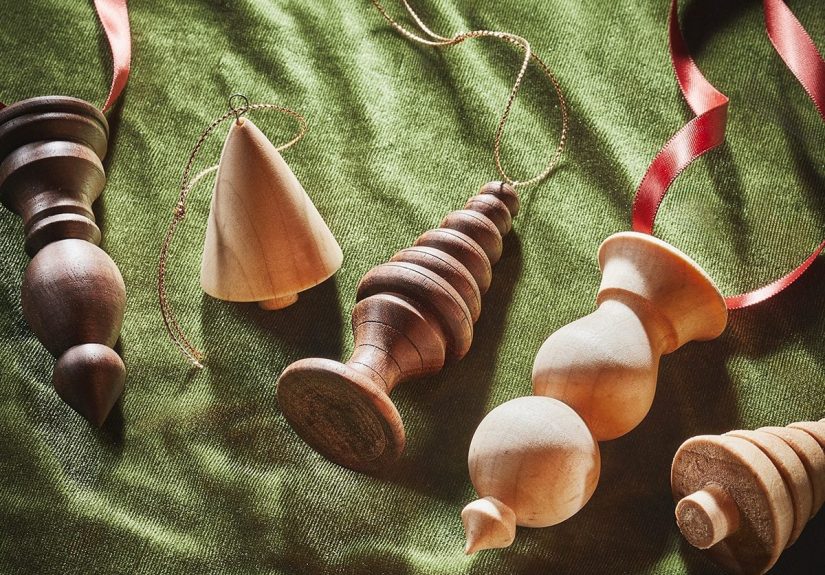
If this is your first time turning Christmas ornaments on a lathe, begin with solid shapes rather than hollow ones. Hollow ornaments are beautiful, but they require more tool control and a lighter touch. Start with one of these beginner-friendly styles:
1. Icicle Ornament
This is the simplest place to start. It is long, elegant, and mostly spindle work. You can practice beads, coves, tapers, and tiny details without worrying about hollowing.
2. Mini Christmas Tree
A turned tree is great for beginners because the shape is forgiving. If one tier ends up slightly uneven, congratulationsyou just made it look “handcrafted.”
3. Teardrop or Bulb Shape
This classic ornament silhouette feels traditional and lets you explore proportions. Keep it solid for your first few attempts, then move on to hollow versions once your tool control improves.
How to Turn a Simple Wooden Christmas Ornament on a Lathe
Step 1: Prepare Your Blank
Cut your blank to size based on the ornament you want. For simple solid ornaments, a blank around 1 1/2 to 2 inches square and 3 to 5 inches long gives you plenty of room to work. Mark the centers on both ends if turning between centers. If you are using a chuck, leave enough material for a small tenon.
Check the grain and any visible defects before mounting. Skip cracked or badly checked pieces, especially for delicate finials or thin ornament necks. Christmas spirit is lovely; exploding blanks are not.
Step 2: Mount the Blank Securely
For a straightforward spindle ornament, mount the blank between centers and bring up the tailstock for support. If you prefer using a chuck, form a tenon and keep the tailstock engaged as long as possible while roughing and shaping. On small work, extra support is rarely a bad idea.
Position the tool rest close to the blank, slightly below center when appropriate for your tool and cut. Spin the piece by hand before turning the lathe on to make sure nothing hits the rest.
Step 3: Rough It to Round
Use a spindle roughing gouge to bring the blank to round. Start with controlled cuts and let the tool do the work. This is where the blank stops looking like leftover firewood and starts looking like a future ornament.
Do not rush this stage. A well-rounded blank gives you cleaner layout lines, smoother cuts, and fewer surprises later. If the ornament will include a delicate tip or narrow neck, leave those areas thick for now. Thin details should come late in the process, not early, unless you enjoy hearing tiny snapping noises.
Step 4: Mark the Design
Once the blank is round, stop the lathe and lightly mark your key reference points with a pencil. Lay out the top, body, decorative beads, taper, and waste areas. Good layout lines save time and help maintain symmetry, especially when turning multiples.
If you are making a mini tree, mark the trunk, base, and tier locations. For an icicle, mark the shoulder, center detail zones, and final taper. For a teardrop ornament, define where the widest point should sit before you start carving away your confidence.
Step 5: Shape the Main Profile
Now the fun begins. Use a spindle gouge or skew to establish the overall form. Focus on smooth flowing transitions rather than lots of fussy details. The prettiest ornaments usually have strong, clean silhouettes. In other words, nail the shape first. Fancy bead work can come later.
For an icicle, work from the supported end toward the headstock and leave the thinnest section until the end. For a mini tree, cut gentle step-down angles to create tiers, then refine each one so they look intentional rather than like a pine tree that had a rough semester. For a bulb or drop shape, create the largest curve first, then blend the neck and tip.
Step 6: Add Details Carefully
Once the main shape looks right, add beads, coves, V-cuts, or small fillets. This is where simple ornaments become elegant ornaments. Be conservative. Small projects do not need twenty-seven details to feel finished. One or two crisp features are often more effective than a design that looks like it lost an argument with a geometry textbook.
If you are using a skew, take light cuts and keep the bevel engaged. If you are newer to skew work, this is a good project to practice on because the stock is small and the cuts are short. If the skew still terrifies you, you are in excellent company.
Step 7: Sand Without Destroying the Shape
Turn the lathe speed down for sanding. Start at an appropriate grit for the tool marks you have leftoften 120 or 150and work upward through finer grits. Do not press hard. Aggressive sanding rounds over crisp details and makes delicate shapes look soft and tired.
Sand with the lathe running, then stop the lathe and sand with the grain by hand between grit changes. That extra step improves the final surface and keeps circular scratch patterns from showing up under finish like a bad holiday surprise.
Step 8: Apply Finish
A simple friction polish, wipe-on oil, shellac, wax, or light film finish can all work well for ornaments. Choose a finish based on the look you want. Oil brings warmth and grain depth. Shellac gives a lovely glow. A light film finish offers more durability. Painted accents or milk paint can also make simple ornaments feel playful and vintage.
Keep the finish light. These ornaments hang better when they are not overly heavy or gummy. Let the wood be the star unless your style leans toward bright holiday color, in which case go ahead and make that cherry ornament look like it belongs in a glamorous 1963 department store window.
Step 9: Part Off and Drill for Hanging
Once the ornament is finished, part it off carefully. Support the piece with your hand as you finish the cut, or leave a small nub and trim it later by hand. Clean up the parted area with sandpaper or a carving knife.
Drill a small pilot hole in the top for a screw eye, wire loop, or ribbon. If the design includes a turned top bead, keep the hole centered so the ornament hangs straight. An elegant ornament that hangs sideways like it is judging the room can still be charming, but centered is better.
Best Design Tips for Better-Looking Ornaments
Keep the Proportions Graceful
Good ornaments have balanced proportions. A heavy top with a tiny bottom often looks awkward. A long, delicate icicle feels more refined when the taper is smooth and the shoulder is subtle. If something looks off, it usually is. Trust your eye and refine the profile before sanding.
Use Contrasting Woods
If you move into multi-part ornaments, contrasting woods add instant visual interest. A walnut cap on a maple body or a cherry finial on a lighter bulb shape can make a small piece feel much more sophisticated.
Make Them Light
Tree branches appreciate restraint. Even for solid ornaments, avoid bulky proportions. Grace and lightness usually win over brute-force chunkiness.
Turn in Batches
If you are making gifts, batch the process. Rough all blanks first, then shape all profiles, then sand, then finish. You will work faster, stay more consistent, and spend less time changing setups.
Common Mistakes to Avoid
Turning details too early: Leave thin finials and narrow necks until late in the process so they stay strong while you shape the rest.
Using dull tools: Small ornaments magnify every tear-out and catch. Sharp tools make cleaner details and safer cuts.
Sanding too aggressively: Over-sanding can erase the crisp lines that make turned ornaments look intentional.
Ignoring grain and defects: A tiny crack in a small blank can ruin the whole piece the moment you thin it down.
Starting too complicated: Your first ornament does not need to be a hollow globe with a captive ring and twelve design motifs. Start simple. Fancy can wait.
Ideas for Finishing and Personalizing
Once you have the basic process down, it becomes dangerously easy to keep going. You can burn decorative lines, add metallic paint to grooves, use milk paint on mini trees, or tie on ribbon for a softer look. Personalized sets also make excellent gifts. Turn one ornament per family member in a different wood species, add names or dates with a fine-tip paint pen, and suddenly you look wildly organized and emotionally thoughtful.
Another smart idea is to create a yearly ornament tradition. Turn one new design each Christmas and date the bottom. Over time, the tree becomes a gallery of your improving skillsand your changing tolerance for sanding tiny details in December.
Shop-Tested Experiences: What You Really Learn After Turning a Bunch of Ornaments
If you spend any real time making wooden Christmas ornaments on a lathe, you learn a few things that never quite show up in the glamorous project photos. First, small projects are not automatically easy projects. In fact, they can be sneakily demanding. A bowl gives you room to recover. A two-inch ornament does not. One clumsy cut and suddenly your elegant finial becomes a patriotic toothpick. That is why patience matters more than bravado on small turnings.
You also learn that ornament turning is a master class in restraint. The first few pieces often suffer from “I know one more detail would make this better” syndrome. Then one more bead becomes two more coves, then a sharper taper, then a tiny point that looks amazing for three seconds before it snaps off. Somewhere along the way, most turners discover that the best ornaments usually have a clean profile, a few crisp details, and enough negative space for the eye to rest. In other words, elegance beats over-decoration almost every time.
Another experience that tends to repeat itself is how much wood species changes the mood of the project. Maple behaves politely and shows details well. Cherry feels warm and festive without trying too hard. Walnut makes even a very plain ornament look expensive, like it should come wrapped in tissue paper and a smug little gift tag. Then there are the wild-card scrapsspalted bits, mystery offcuts, odd grain patternsthat sometimes produce the ornaments everyone loves most. Small projects are wonderful for experimenting because you can take risks without sacrificing much material.
There is also a practical lesson in workflow. Turning one ornament is fun. Turning ten ornaments teaches you efficiency. You start preparing blanks ahead of time, keeping sandpaper within reach, drilling hanging holes in batches, and choosing finishes that do not require a three-day spiritual retreat between coats. The process gets smoother, and the results get more consistent. By the time you finish a batch, you realize you have quietly built better shop habits along with a pile of decorations.
And then there is the emotional side, which sneaks up on people. Wooden ornaments are small enough to make casually, but they rarely stay casual once they leave your shop. Someone hangs that little tree or icicle on their Christmas tree, pulls it out again next year, and remembers who made it. That is a lot of mileage from a scrap block and an hour at the lathe. These projects feel good because they combine craft, utility, memory, and just enough holiday sentiment to be charming without becoming syrupy.
Maybe that is the real reason woodturners keep making ornaments. Yes, they are good skill builders. Yes, they are affordable. Yes, they are a great excuse to use up scraps. But they are also a rare kind of project: small enough to finish, nice enough to gift, and personal enough to last. Once you turn a few and see them hanging on a tree with lights bouncing off the grain, it becomes very hard to stop. Consider yourself warned.
Conclusion
Turning simple wooden Christmas ornaments on a lathe is one of the easiest ways to combine holiday spirit with real woodworking skill. You can start with basic tools, simple profiles, and scrap wood, then build toward more detailed and ambitious designs as your confidence grows. Focus on safe setup, clean shapes, sharp tools, and light finishing, and you will end up with ornaments that look thoughtful, handmade, and genuinely beautiful.
Best of all, these ornaments do more than decorate a tree. They tell a story about the hands that made them. And that is a lot more memorable than another plastic snowflake that arrived in a box of twelve.