Table of Contents >> Show >> Hide
- What Is the Bulthaup Workbench?
- The Design Philosophy: Kitchen as Workshop
- Why the Bulthaup Workbench Stands Out
- Materials and Craftsmanship
- Bulthaup Workbench vs. Traditional Kitchen Island
- Who Is the Bulthaup Workbench Best For?
- Potential Drawbacks to Consider
- How to Style a Kitchen Around a Bulthaup Workbench
- Real-World Experience: Living With a Bulthaup Workbench-Inspired Kitchen
- Final Thoughts
Some kitchens whisper. Some kitchens shout. And then there is the Bulthaup Workbench, which calmly rolls up its sleeves, sharpens the metaphorical knife, and says, “Let’s get dinner handled like professionals.” In a world full of oversized kitchen islands, decorative open shelves, and drawers that somehow become museums of rubber bands, the Bulthaup Workbench takes a radically different approach: it treats the kitchen as a place of movement, craft, and purpose.
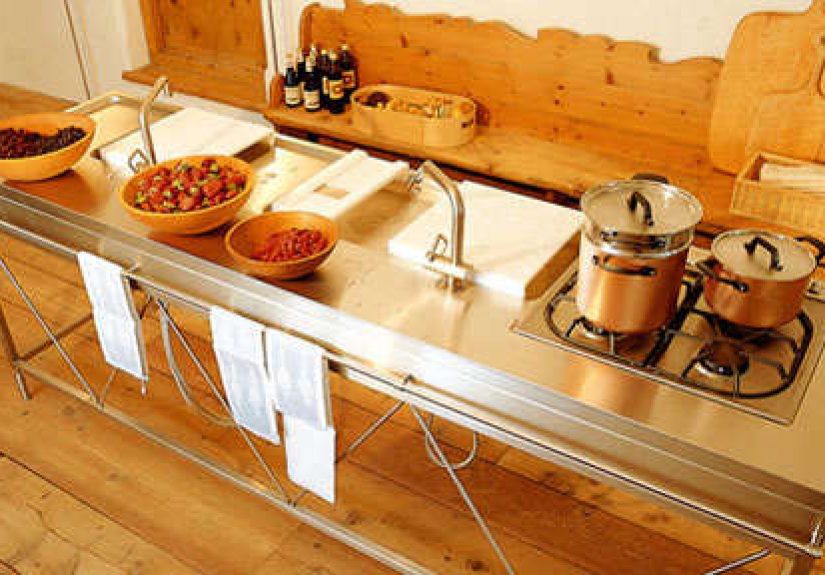
The Bulthaup Workbench is most closely associated with the bulthaup b2 kitchen concept, a modular kitchen system that reduces the room to its essential working parts: a workbench, a tool cabinet, and an appliance cabinet. Instead of hiding everything behind miles of built-in cabinetry, the design brings the core kitchen functions into a freestanding, flexible station. Washing, cutting, preparing, cooking, and serving all happen in one beautifully disciplined zone.
For homeowners who love minimalism but still cook actual foodnot just admire lemons in a ceramic bowlthe Bulthaup Workbench offers a compelling idea. It is not simply a luxury kitchen island. It is a kitchen workstation built around ergonomics, workflow, premium materials, and the philosophy that good design should make everyday life feel smoother.
What Is the Bulthaup Workbench?
The Bulthaup Workbench is a freestanding kitchen worktable designed to combine the most important kitchen activities into a single element. Depending on the configuration, it can include a cooktop, sink, preparation surface, chopping area, water point, storage solutions, and integrated functional details. Think of it as the difference between a standard desk and a serious architect’s drafting table: both have surfaces, but one clearly came prepared for real work.
Bulthaup, the German kitchen brand known for high-end architectural kitchen systems, has long focused on precision, simplicity, and the relationship between cooking and living. The workbench continues that tradition by moving away from the ordinary wall-bound kitchen layout. Instead of treating the kitchen as a fixed row of cabinets, it creates a flexible “kitchen workshop” where tools, ingredients, heat, water, and work surfaces are organized logically.
The Design Philosophy: Kitchen as Workshop
The word “workbench” is not decorative branding. It is the whole idea. In a traditional workshop, tools are visible, reachable, and arranged according to use. A craftsperson does not want to cross the room every time they need a measuring tool. The Bulthaup Workbench borrows that thinking and brings it into the kitchen.
This is why the b2 concept is so appealing to design lovers. It strips the kitchen back to three sculptural elements: the workbench for active preparation and cooking, the tool cabinet for utensils and tableware, and the appliance cabinet for larger equipment. The result is a kitchen that feels less like a storage warehouse and more like a refined culinary studio.
Of course, “refined culinary studio” sounds glamorous until you remember someone still has to wash the pan. That is where the workbench becomes practical. By placing washing, prepping, and cooking close together, it reduces unnecessary steps. The kitchen becomes easier to use, especially for people who cook often and appreciate a logical workflow.
Why the Bulthaup Workbench Stands Out
1. It Prioritizes Movement
Many kitchens look impressive in photographs but feel awkward during real cooking. The sink is too far from the cooktop. The cutting board has no landing zone. The trash is in the wrong place. The Bulthaup Workbench solves this by organizing the main kitchen actions around one central station.
Because it is freestanding, the workbench can be positioned in the room to support natural movement. This is especially valuable in open-plan homes, lofts, and modern apartments where the kitchen blends into the living space. The cook can face guests, watch the room, and avoid turning dinner prep into a lonely wall-staring contest.
2. It Offers Modular Flexibility
One of the strongest features of the Bulthaup Workbench is modularity. The workbench can be configured with different functional modules, including water points, cooktops, work surfaces, and sinks in various sizes. This means the design is not a one-size-fits-all showpiece. It can be tailored to the way a household actually cooks.
A passionate baker might prioritize a generous stone surface for rolling dough. A weeknight chef might want an efficient sink, induction cooktop, and prep area arranged in a tight triangle. A minimalist entertainer might choose a sleek configuration that disappears visually into the room when not in use. The workbench adapts, which is useful because people rarely cook the same way forever.
3. It Looks Minimal Without Feeling Empty
Minimalist kitchens sometimes make people nervous. They can look stunning but slightly suspicious, as if the homeowner has never spilled tomato sauce in their life. The Bulthaup Workbench avoids that sterile feeling by being clearly functional. Its beauty comes from use, proportion, and material qualitynot decorative excess.
The design is clean, but not cold. It has the quiet confidence of a well-made tool. Every line has a reason. Every surface has a job. This is minimalism with muscle, not minimalism that faints at the sight of a soup pot.
Materials and Craftsmanship
A major reason the Bulthaup Workbench feels different from a typical kitchen island is its attention to materials. Bulthaup kitchens are associated with high-quality surfaces, precise construction, and architectural detailing. Stainless steel, wood, stone, and engineered surfaces may all appear depending on the configuration and broader kitchen plan.
The material choices matter because the workbench is not just viewed; it is touched constantly. A good work surface must handle chopping, moisture, heat, cleaning, and daily wear. It should feel stable under the hand and forgiving enough for real cooking. In this sense, the Bulthaup Workbench behaves more like professional equipment than decorative furniture.
Wood brings warmth and tactility. Stainless steel offers durability and a professional tone. Stone can provide a cool, solid surface for baking and preparation. The best configurations balance these qualities so the kitchen feels both beautiful and hardworking.
Bulthaup Workbench vs. Traditional Kitchen Island
At first glance, the Bulthaup Workbench may look like a luxury kitchen island. But the differences are important. A traditional island often provides counter space, storage, and sometimes seating. The Bulthaup Workbench is more specialized. It is designed as a functional center for the actual cooking process.
A standard island might become the family drop zone for keys, homework, unopened mail, and one mysterious charger nobody claims. The Bulthaup Workbench is less tolerant of clutter because its purpose is clearer. It asks the room to behave. Politely, of coursebut firmly.
The workbench also feels more independent. Rather than being a heavy built-in block, it can read as a piece of kitchen architecture. This makes it especially appealing in homes where flexibility, openness, and visual lightness are priorities.
Who Is the Bulthaup Workbench Best For?
Serious Home Cooks
If cooking is part of your daily rhythm, the workbench offers real advantages. It keeps essential tasks close together, improves visibility, and encourages a more organized process. People who enjoy preparing meals from scratch will appreciate how quickly the station becomes intuitive.
Design-Focused Homeowners
The Bulthaup Workbench is also ideal for people who see the kitchen as part of the home’s architecture. It does not rely on trendy decoration. Its appeal comes from structure, proportion, and purpose. That gives it long-term visual staying power.
Open-Plan Living Spaces
In open homes, kitchens must work hard without visually overwhelming the room. The workbench helps by creating a defined kitchen zone while preserving openness. It can function as a bridge between cooking, dining, and living areas.
People Who Love Order
This design rewards tidy habits. Because the concept is so stripped back, clutter has fewer places to hide. That can be refreshingor mildly terrifyingdepending on your relationship with countertop objects. If your kitchen currently contains three pepper grinders and a battery you “might need later,” the Bulthaup philosophy may inspire a personal reset.
Potential Drawbacks to Consider
No kitchen design is perfect for everyone, and the Bulthaup Workbench is no exception. First, it is a premium product, so budget matters. Bulthaup kitchens are typically positioned in the high-end market, and customization, installation, appliances, and materials can significantly affect final cost.
Second, the disciplined design may not suit households that prefer abundant closed storage directly under every counter. The broader b2 system addresses storage through complementary cabinets, but the workbench itself is about active function rather than hiding everything.
Third, the minimalist layout requires planning. Placement of plumbing, electrical connections, ventilation, lighting, and traffic flow must be carefully considered. This is not the kind of kitchen feature you casually drop into a room like a new bar stool. Professional planning is essential.
How to Style a Kitchen Around a Bulthaup Workbench
The best way to style a Bulthaup Workbench is to resist over-styling it. Let the form breathe. Use natural materials, restrained lighting, and functional accessories. A beautiful cutting board, a small bowl of seasonal produce, or a carefully chosen stool can be enough.
Lighting is especially important. Pendant lights can define the workbench area, but they should not block sightlines or interfere with cooking. Linear lighting or discreet architectural fixtures can also work beautifully, especially in minimalist interiors.
For flooring, durable natural materials such as wood, stone, or large-format tile can complement the workbench’s architectural character. The goal is to make the space feel calm, intentional, and livablenot like a showroom where everyone is afraid to make toast.
Real-World Experience: Living With a Bulthaup Workbench-Inspired Kitchen
The experience of using a Bulthaup Workbench, or even designing a kitchen inspired by its principles, changes how you think about cooking. The biggest shift is psychological. Instead of entering the kitchen and asking, “Where did I put everything?” you begin with a clear sense of zones. Water is here. Heat is there. Prep happens in the center. Tools are close. Waste has a logical place. Suddenly, cooking feels less like a scavenger hunt and more like a calm sequence.
One of the most noticeable benefits is the reduction of wasted movement. In an ordinary kitchen, making a simple dinner can involve endless tiny trips: refrigerator to sink, sink to counter, counter to stove, stove back to drawer, drawer to trash, and then a dramatic pause while looking for the spatula that was absolutely here one minute ago. A workbench-centered layout shortens those steps. It encourages mise en place, the professional habit of preparing ingredients before cooking. Even if you are only making scrambled eggs, you feel oddly competent. The eggs may not applaud, but they know.
Another experience is the social quality of the design. Because the workbench can face outward, the cook is not isolated. This matters more than people expect. In many homes, cooking happens while conversations continue around the island or dining table. A freestanding workstation lets the cook participate instead of turning their back on everyone. It makes food preparation visible, which can be a lovely thing. Guests see the process. Children can watch and learn. Partners can help without colliding every four seconds.
The Bulthaup Workbench also teaches restraint. With less visual noise, every object earns its place. You become more selective about tools. The drawer full of novelty gadgets starts to look less charming. Do you really need a banana slicer? Probably not. A good knife, a reliable board, a proper pan, and a clean surface begin to feel luxurious in a different way. The luxury is not excess; it is clarity.
Cleaning is another practical lesson. A well-planned workbench makes cleanup feel faster because mess is concentrated near the sink, prep area, and waste zone. There is less spreading out across multiple counters. After dinner, you wipe one main station, return tools to their places, and the kitchen regains its composure. It is the design equivalent of taking a deep breath.
That said, living with this kind of kitchen requires honesty. If your household loves leaving cereal boxes, mail, backpacks, and half-finished art projects on every flat surface, the workbench will expose those habits immediately. It is not judgmental, exactly. It simply has excellent posture. The best results come when the household agrees that the workbench is a working surface, not a storage field for random life debris.
For homeowners considering the Bulthaup Workbench, the most useful experience-based advice is simple: design around how you truly cook, not how you imagine yourself cooking in a slow-motion lifestyle commercial. If you bake weekly, prioritize surface material and space. If you cook fast meals after work, prioritize easy cleaning and efficient appliance placement. If you entertain often, consider sightlines, seating, and serving flow. The beauty of the workbench is that it can support real routines when planned thoughtfully.
In everyday life, the Bulthaup Workbench proves that great kitchen design is not about having more. It is about having what matters exactly where it should be. That is a surprisingly rare pleasureand once you experience it, the average cluttered kitchen island starts to look like a very expensive horizontal junk drawer.
Final Thoughts
The Bulthaup Workbench is more than a beautiful kitchen feature. It is a design argument: the kitchen should be functional, flexible, disciplined, and deeply connected to the act of cooking. By concentrating essential tasks into a freestanding workstation, it gives the modern kitchen a sense of purpose that many oversized islands lack.
For the right home, the Bulthaup Workbench can transform the kitchen into a workshop, gathering place, and architectural centerpiece all at once. It is elegant without being flashy, practical without being ordinary, and minimalist without forgetting that dinner still needs to happen. In other words, it is the rare luxury kitchen idea that earns its keep.
Note: This article is written as original web-ready content based on real product and kitchen design information, with no unnecessary source-code references or citation artifacts included.