Table of Contents >> Show >> Hide
- What Is a Mood Board, Exactly?
- Why Making Mood Boards Matters
- What to Include on a Mood Board
- How to Make a Mood Board Step by Step
- Common Mistakes to Avoid When Making Mood Boards
- Mood Boards for Different Types of Projects
- How to Present a Mood Board So People Actually Understand It
- Experiences Related to Making Mood Boards
- Conclusion
Some people make spreadsheets. Some people make impulse purchases. And some lucky, visually inclined souls make mood boards before they do either. If you have ever stared at a blank room, a branding project, a wedding plan, or a creative brief and thought, “I know the vibe I want, but I cannot explain it without waving my hands like a confused art director,” then making mood boards is your best friend.
A good mood board turns a fuzzy feeling into something you can actually see. It gathers images, colors, textures, typography, materials, and visual references into one place so your idea stops floating around like a soap bubble and starts acting like a plan. That is why mood boards show up everywhere: interior design, fashion, branding, product design, photography, events, and even personal projects where you just want your home office to say “creative genius” instead of “I lost a battle with cable management.”
This guide breaks down how to make mood boards that are beautiful, useful, and sharp enough to guide real decisions. We will cover what they are, why they matter, how to build one step by step, mistakes to avoid, and how different industries use them. By the end, you should be able to create a mood board that does more than sit there looking pretty. It should help you choose, edit, explain, and move forward.
What Is a Mood Board, Exactly?
A mood board is a visual collection of elements that communicates the tone, style, and emotional direction of a project. It can be physical or digital. It can be a neat grid, a layered collage, or a more freeform arrangement that feels slightly chaotic but in an intentional, stylish way. The goal is not perfection. The goal is clarity.
When you are making mood boards, you are not trying to finish the design on the spot. You are trying to define the world the design lives in. That world might be airy and coastal, bold and modern, soft and romantic, edgy and editorial, or warm and earthy. A mood board captures that direction before you spend money, time, or energy building the wrong thing.
Think of it as the visual version of saying, “No, not that kind of modern.” One picture of walnut wood, creamy linen, and rounded silhouettes can explain more than five paragraphs of awkward adjectives ever could.
Why Making Mood Boards Matters
The biggest benefit of making mood boards is that they help you think more clearly. Creative ideas often arrive in a messy pile. You may like ten colors, six furniture styles, four logos, and three fonts, all at once. A mood board forces those ideas to sit together and either behave or reveal that they absolutely do not belong in the same room.
Mood boards also save time. It is much easier to swap out a photo on a board than repaint a room, redesign a website, or order a sofa that looked “chic” online but turns out to be the size of a hungry whale in your apartment. By narrowing the visual direction early, you make later decisions faster and smarter.
They are also excellent communication tools. If you work with clients, teammates, family members, or a partner who says things like “I want it simple, but also dramatic, but also cozy, but also not too much,” a mood board helps everyone react to the same visual language. Instead of arguing in abstract terms, you can point to specific references and say, “More like this, less like that.” Miraculously, progress happens.
Another reason mood boards matter is confidence. Once you identify recurring patterns, your choices get easier. You stop being distracted by every pretty thing on the internet and start choosing what fits your concept. That is a powerful shift. Inspiration becomes direction.
What to Include on a Mood Board
When making mood boards, the magic is not in stuffing them with dozens of random images. The magic is in choosing the right mix of visual cues. Most strong mood boards include some combination of the following:
Images
Photos are usually the backbone of a mood board. These can include rooms, outfits, products, architecture, landscapes, editorial shots, packaging, artwork, or anything else that reflects the tone you want.
Color Palette
Color does a huge amount of emotional work. Warm neutrals feel different from saturated jewel tones. Muted greens create a very different energy than crisp black and white. A clear palette helps your board feel intentional instead of accidental.
Textures and Materials
Texture gives a mood board depth. Linen, velvet, marble, brass, rattan, concrete, worn leather, glossy lacquer, matte paper, raw woodthese details often communicate style more effectively than words.
Typography
For branding, editorial, web, or event design, typography matters. A graceful serif says something very different from a geometric sans serif. Fonts help define whether the mood is polished, playful, vintage, luxurious, or clean.
Keywords or Short Notes
A few carefully chosen words can sharpen the message. Think: “soft structure,” “quiet luxury,” “fresh and youthful,” “collected, not cluttered,” or “minimal but warm.” Short notes keep the board focused without turning it into a term paper.
Objects, Swatches, or Samples
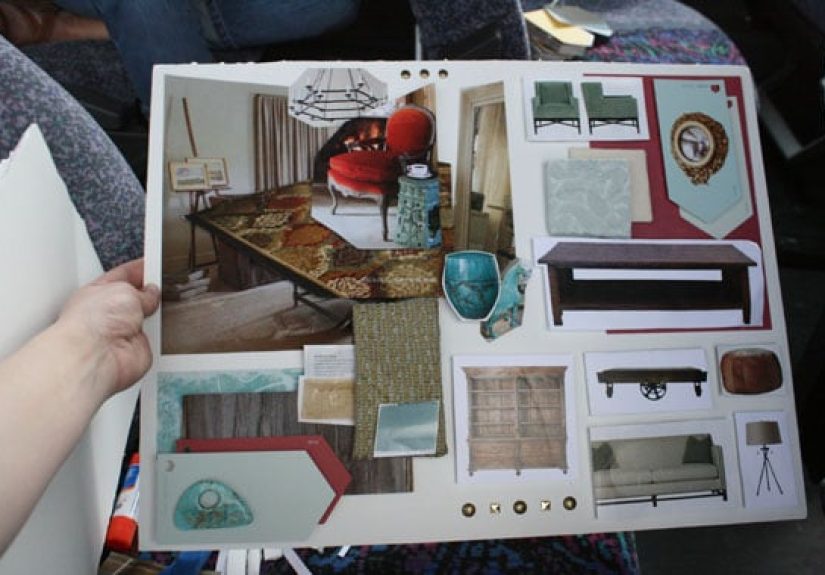
Physical mood boards can include paint chips, fabric swatches, tile samples, ribbon, printed photos, magazine clippings, and product tear sheets. If the final project lives in the real world, real materials can be incredibly helpful.
How to Make a Mood Board Step by Step
1. Start With a Clear Goal
Before collecting anything, decide what the mood board needs to accomplish. Are you planning a room makeover? Building a brand identity? Styling a photo shoot? Designing a wedding? Your goal shapes what you collect and how specific the board should be.
Ask yourself: What is this for? Who needs to understand it? What decision should it help me make? If the answer is “all of the above,” you need a stronger goal.
2. Gather Inspiration Broadly
Now collect references without judging them too quickly. Pull images that make you pause. Save palettes, textures, products, layouts, and little details that feel right. At this stage, volume is okay. You are exploring.
But do not just collect pretty images. Collect relevant ones. If you are making a branding mood board for a skincare company, a gorgeous photo of a dark, moody cocktail bar may be stunning and completely unhelpful. Gorgeous nonsense is still nonsense.
3. Look for Patterns
This is where making mood boards gets serious. Spread out what you gathered and ask what repeats. Are you drawn to curved forms? Warm woods? Dusty blue? Editorial photography? High contrast? Repetition reveals taste. Taste reveals direction.
Once you see the patterns, start trimming. Cut anything that does not support the main story. Editing is what turns a pile of inspiration into a mood board.
4. Organize by Hierarchy
Arrange the strongest visuals first. Let hero images lead. Support them with smaller references, color swatches, type choices, and materials. A board should feel balanced and readable, not like your browser tabs had a nervous breakdown.
You can organize by category, by color flow, by emotional impact, or by practical use. There is no single correct layout, but there should be a clear visual logic.
5. Add Light Commentary
A few labels or notes can make a mood board more useful, especially when sharing it with others. Mention why certain references are included. Call out the palette. Label a material. Explain whether a photo represents color, composition, lighting, or general atmosphere.
This is especially important in digital teams, where you want feedback on the right thing. Otherwise someone will comment on the chair when you only meant to show the color temperature. Tragic, but common.
6. Share and Refine
A mood board is not a sacred object dropped from the heavens. It is a working tool. Share it, gather feedback, and refine it. If several people respond to the board in the way you hoped, you are on the right track. If everyone sees something different, your board may need tightening.
Common Mistakes to Avoid When Making Mood Boards
Using Too Many Images
More is not more. Too many images dilute the concept. A board with twenty strong references is usually more effective than one with eighty mildly attractive ones.
Mixing Incompatible Styles
Eclectic can be brilliant. Random is just random. If your board swings wildly between industrial loft, cottagecore, futuristic minimalism, and Parisian glamour, you may not have a mood yet. You have a playlist on shuffle.
Ignoring Practical Context
A beautiful idea still has to live somewhere. A room mood board should consider scale, layout, lighting, and budget. A brand mood board should reflect audience, positioning, and usability. A fashion board should connect to season, fabric, and silhouette. Dream, yes. Float away entirely, no.
Forgetting the Emotional Point
Style is not just visual. It is emotional. If your board does not make you feel something specific, it may be full of references but empty of direction.
Mood Boards for Different Types of Projects
Interior Design Mood Boards
These often include furniture references, finishes, paint colors, fabric swatches, lighting ideas, and room imagery. The best ones balance inspiration with practical details, so you can actually shop, plan, and execute.
Branding Mood Boards
These focus on visual identity: logo style, color palette, typography, photography direction, iconography, packaging, and overall brand feeling. A branding mood board should help answer, “How should this brand look and feel before we lock anything in?”
Fashion Mood Boards
These might include silhouettes, runway references, fabrics, styling ideas, beauty looks, and color direction. They are often more expressive and trend-sensitive, but they still need a clear thread running through them.
Event or Wedding Mood Boards
Here, you might include florals, stationery, table settings, venue references, lighting inspiration, attire, and seasonal color stories. These boards are incredibly helpful because events involve many moving parts that need to feel cohesive.
Digital Product and UX Mood Boards
For websites and apps, mood boards can help align visual tone before full design begins. They may include interface patterns, typography hierarchies, image styles, motion references, color systems, and examples of the emotional experience you want users to have.
How to Present a Mood Board So People Actually Understand It
Presentation matters. If you are showing your mood board to clients, teammates, or collaborators, walk them through it with intention. Start with the overall concept. Explain the emotional direction. Then move through the key ingredients: color, materials, imagery, typography, and standout references.
Be clear about what is fixed and what is exploratory. Sometimes a person sees one lamp on a board and assumes you have legally married that lamp. Avoid confusion by saying whether an item is a literal choice, a loose reference, or just there for the vibe.
It also helps to frame feedback. Ask questions like: Does this feel aligned with the audience? Does this direction feel too polished, too casual, too muted, too busy? Which three images feel most “right”? Specific questions lead to useful responses. Open-ended questions lead to “Hmm, interesting,” which helps nobody.
Experiences Related to Making Mood Boards
One of the funniest things about making mood boards is how quickly they expose your habits. You may think you love bold color, for example, and then halfway through a board realize you have quietly saved twenty-seven beige rooms, four oatmeal sweaters, and a lamp that looks like it was handcrafted by a minimalist monk. The board sees through your lies.
In real life, mood boards often become the bridge between instinct and action. A homeowner may start with the vague goal of wanting a bedroom that feels “relaxing.” That sounds simple, but relaxing means different things to different people. For one person, it means pale linen, warm wood, and filtered sunlight. For another, it means cocooning dark walls, velvet drapes, and dramatic lighting. Once those images sit next to each other on a board, the real preference becomes obvious. That is the beauty of the process: it reveals what words alone tend to blur.
Branding projects have a similar turning point. A small business owner might say they want the brand to feel premium, friendly, and modern. That is nice. It is also broad enough to describe half the internet. But once they begin making mood boards and comparing type styles, packaging references, photography treatments, and color palettes, the fuzzy adjectives sharpen. Suddenly “premium” is not slick black-and-gold luxury. It is soft neutrals, tactile packaging, honest product photography, and clean typography with warmth. The board creates that “oh, now I get it” moment.
Mood boards also save people from expensive mistakes. Someone redecorating a living room may fall in love with a sculptural chair, a patterned rug, a marble coffee table, and a curvy lamp, only to discover through the board that every piece is shouting at once. Individually, each item is lovely. Together, they are hosting a design argument. The board lets you spot that tension early, before boxes arrive and regret moves in rent-free.
There is also something unexpectedly personal about the process. The images people choose tend to reflect memory, identity, aspiration, and comfort. A board for a first apartment may include references that feel grown-up and polished because the creator wants a space that marks a new chapter. A wedding mood board may lean on family colors, heirloom textures, or seasonal details that carry emotional meaning. A rebrand may quietly reveal whether a founder wants to look bolder, softer, cooler, or more trustworthy. In that way, making mood boards is not just about style. It is often about self-definition.
And then there is the editing phase, where character development happens. At first, people pin everything. Later, they learn restraint. They begin to ask better questions: What belongs here? What repeats? What is the real theme? That shift is valuable far beyond design. It teaches discernment. It teaches that a strong concept is often less about adding and more about choosing. That is why experienced creatives return to mood boards again and again. They are not childish collages or fluffy pre-work. They are decision-making tools with surprisingly sharp teeth.
Conclusion
Making mood boards is one of the smartest ways to turn inspiration into direction. A strong mood board helps you define your style, organize your thoughts, communicate visually, and make better choices before the expensive or time-consuming part begins. Whether you are planning a room, shaping a brand, styling a campaign, or designing a digital product, the process helps you see your idea more clearly and share it more effectively.
The best mood boards are not overloaded, vague, or purely decorative. They are edited, intentional, and emotionally clear. They show patterns. They narrow options. They create alignment. Most importantly, they help you trust your own eye. So gather your references, edit without mercy, and build a board that says exactly what you mean. Your future self, your wallet, and probably your paint samples will thank you.