Table of Contents >> Show >> Hide
- Before You Start: Know What Kind of Radiator You Have
- Tools and Materials You May Need
- Step 1: Turn Off the Heating System and Let Everything Cool
- Step 2: Protect the Floor and Wall
- Step 3: Close the Radiator Valves
- Step 4: Drain the Radiator Carefully
- Step 5: Disconnect the Radiator From the Pipes
- Step 6: Lift the Radiator Off the Wall Brackets
- Step 7: Cap or Protect the Open Valves
- How to Remove a Steam Radiator From the Wall
- How to Take an Electric Radiator Off the Wall
- Temporary Removal vs. Permanent Removal
- How to Reinstall the Radiator
- Common Mistakes to Avoid
- When You Should Call a Professional
- Real-World Experience: What Radiator Removal Is Actually Like
- Conclusion
- SEO Tags
Taking a radiator off the wall can feel like the kind of job that starts with “I’ll just paint behind it” and ends with towels, panic, and a suspicious puddle slowly expanding across the floor. The good news: removing a radiator is often manageable when you understand what type you have, shut everything down properly, and respect the fact that radiators are basically heavy metal boxes full of hot water, steam, or electricity. In other words, not furniture with attitude.
This guide walks you through simple ways to take a radiator off the wall for painting, decorating, cleaning, replacement, or renovation. It focuses on common home radiators in the United States, including hot-water radiators, steam radiators, panel radiators, cast-iron radiators, baseboard units, and electric wall-mounted heaters. You will learn how to prepare, what tools to gather, what steps to follow, and when to stop pretending you are a licensed plumber and call one.
Important safety note: This article is for general educational purposes. If your radiator is connected to a boiler, steam system, hardwired electrical circuit, old painted surfaces, or pipes you cannot identify, hire a qualified plumber, HVAC technician, or electrician. A radiator can be simple, but a wrong move can cause leaks, burns, property damage, or a very awkward conversation with your insurance company.
Before You Start: Know What Kind of Radiator You Have
The first step in learning how to take a radiator off the wall is identifying the system. Not all radiators disconnect the same way, and treating a steam radiator like a hot-water radiator is a fast route to confusion.
Hot-Water Radiators
A hot-water radiator is part of a hydronic heating system. A boiler heats water, and that hot water circulates through pipes into radiators or baseboard units. These radiators often have two pipe connections: one for supply and one for return. Many also have a bleed valve near the top to release trapped air.
If your radiator has two valves, one on each side, it may be possible to isolate the radiator without draining the entire heating system. That is the dream scenario: less water, less mess, fewer towels sacrificed to the home-improvement gods.
Steam Radiators
Steam radiators are common in older homes and apartment buildings, especially in colder regions. A one-pipe steam radiator usually has one large supply valve near the floor and a small air vent on the opposite side. A two-pipe steam radiator has separate supply and return connections.
Steam systems can be trickier because the valves may be old, stuck, or not designed to be used as perfect shutoffs after decades of service. If the radiator is heavy cast iron, rusty, or connected to ancient fittings, bring in a pro before trying to muscle it loose.
Electric Wall Radiators
An electric radiator or wall heater may plug into an outlet or be hardwired into a circuit. Plug-in models are usually straightforward to remove from brackets. Hardwired units require shutting off the breaker, confirming the power is off with a proper voltage tester, and safely terminating or removing wiring. If you are not comfortable working with electricity, this is electrician territory.
Tools and Materials You May Need
Before turning the first valve, gather your tools. A radiator removal project becomes much less stressful when you are not running around the house looking for a bucket while water is already auditioning for a role in your flooring.
- Adjustable wrench or radiator spanner
- Pipe wrench for older fittings
- Radiator key or flat-head screwdriver for bleed valves
- Bucket, shallow tray, or roasting pan you will never use for turkey again
- Old towels or absorbent pads
- Plastic sheet or drop cloth
- Work gloves
- Helper, lifting straps, or appliance dolly for heavy radiators
- Temporary radiator caps or plugs
- Painter’s tape and marker for labeling valves
- Penetrating oil for stubborn nuts
- Voltage tester for electric radiators
Step 1: Turn Off the Heating System and Let Everything Cool
Never remove a radiator while the system is running or hot. Turn off the thermostat, boiler, or heating circuit and give the system time to cool completely. Hot water and steam can burn skin quickly, and even a small release from a pressurized system can be dangerous.
For hot-water systems, wait until the radiator is cool to the touch from top to bottom. For steam systems, wait even longer. Steam radiators may remain hot after the boiler shuts down, and old metal holds heat surprisingly well. Cast iron has the emotional range of a brick, but it remembers heat like an elephant.
Step 2: Protect the Floor and Wall
Place a drop cloth or plastic sheet under the radiator, then layer towels around the valves. Use a shallow pan or bucket beneath the pipe connections. Even when you isolate a radiator perfectly, some water remains inside the unit and piping. If the water is dark or rusty, do not be shocked. Heating system water often looks like it came from a pirate ship bilge.
If the wall behind the radiator is painted and your home was built before 1978, consider lead paint safety. Disturbing old paint can create hazardous dust. Avoid aggressive scraping or sanding unless the surface has been tested or you are following proper lead-safe renovation practices.
Step 3: Close the Radiator Valves
For a hot-water radiator, close the control valve on one side by turning it clockwise. If the other side has a lockshield valve, remove the plastic cap and count the number of turns it takes to close it fully. Write that number down. This helps you return the valve to its original position later so the system stays reasonably balanced.
If your radiator has a thermostatic radiator valve, turn it to the lowest setting or off position. However, do not rely blindly on an old thermostatic valve as your only protection against leaks. Some valves may not fully seal, especially if they have not been touched since the last time someone thought shag carpet was a good idea.
Step 4: Drain the Radiator Carefully
Place your bucket or shallow tray under the union nut where the valve connects to the radiator. Slowly loosen the nut with an adjustable wrench. Do not remove it all at once. Crack it open just enough to let water trickle into the container.
Next, open the bleed valve at the top of the radiator. This lets air enter and helps the water drain more smoothly. If water rushes out too fast, tighten the union nut slightly and regain control. Patience is cheaper than replacing swollen baseboards.
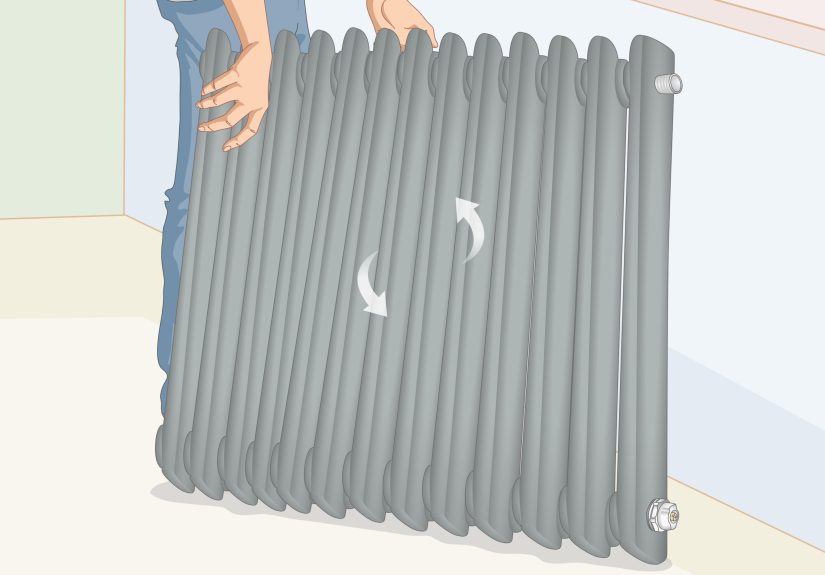
When the flow slows, gently tilt the radiator toward the draining side to remove trapped water. For panel radiators, this may be manageable with one person, but a helper is still wise. For cast-iron radiators, assume it is heavier than it looks. Then assume your assumption is still too optimistic.
Step 5: Disconnect the Radiator From the Pipes
Once the radiator is drained, loosen the union nuts on both sides. Keep the bucket and towels in place because leftover water may still escape. If the nuts are stuck, apply penetrating oil and wait. Avoid forcing old fittings too aggressively. Twisting a pipe inside a wall or floor can turn a simple decorating job into a plumbing repair with a dramatic soundtrack.
Use one wrench to hold the valve body steady and another to turn the union nut. This “backup wrench” technique reduces stress on the pipe. If a fitting refuses to move, stop and call a plumber. Stubborn radiator unions often require experience, the right tools, and the humility to know when metal has won the argument.
Step 6: Lift the Radiator Off the Wall Brackets
Most wall-mounted radiators sit on brackets. After the pipe connections are free, lift the radiator straight up and away from the wall. Panel radiators may come off with a firm upward motion. Cast-iron radiators may sit on feet rather than wall brackets, but they can still be secured or positioned close to the wall.
Use gloves and keep your back straight. Lift with your legs, not with the confidence of someone who has never met a chiropractor. If the radiator is large, use two people or a dolly. Place the radiator upright on cardboard, wood blocks, or a protective surface to avoid damaging flooring.
Step 7: Cap or Protect the Open Valves
If the radiator will be off temporarily while you paint or wallpaper, cap the valve openings if possible. This helps prevent drips and keeps debris out of the system. Do not turn the heating system back on while the radiator is disconnected unless a professional has properly capped and isolated the lines.
If the radiator is being removed permanently, the pipes should be capped correctly, and the heating system may need to be drained, refilled, purged of air, and balanced. Permanent removal is more than a cosmetic task because it can affect heat distribution throughout the house.
How to Remove a Steam Radiator From the Wall
Steam radiators deserve their own warning label. They can be simple in theory, but old steam valves and unions are often stubborn. Start by turning off the boiler and allowing the system to cool completely. Close the supply valve fully, but remember that old steam valves may not seal perfectly.
Place towels and a tray under the union connection. Loosen the union nut between the valve and radiator. If the radiator is a one-pipe steam model, there may be only one main connection. After the union is loose, gently shift the radiator away from the valve. Keep it upright because old steam radiators can contain dirty condensate.
If the radiator will be reinstalled, avoid damaging the union faces. These mating surfaces must align properly to seal. Do not use tape or pipe dope on the union face itself; the seal comes from the metal-to-metal connection. If the union leaks after reinstallation, it may need cleaning, alignment, or replacement.
Call a professional if the valve is frozen, the union is rounded, the floor pipe moves when you apply pressure, or the radiator is too heavy to control safely. Steam heat is wonderful when it works, but it is not the place to practice heroic wrenching.
How to Take an Electric Radiator Off the Wall
For a plug-in electric radiator, turn it off, unplug it, let it cool, and lift it from the wall brackets according to the manufacturer’s instructions. Keep the cord clear and inspect the wall for heat marks or loose anchors.
For a hardwired electric wall radiator, turn off the breaker first. Then confirm the power is off with a non-contact voltage tester or multimeter. Remove the cover, disconnect the wires only if you know how to do so safely, cap the wires in an approved electrical box, and follow local code. If that sentence made your palms sweat, hire an electrician. Electricity is very efficient at punishing overconfidence.
Temporary Removal vs. Permanent Removal
Temporary removal is common when painting, wallpapering, cleaning, repairing plaster, or refinishing floors. In this case, the goal is to isolate, drain, remove, protect the valves, complete the work, and reinstall the same radiator.
Permanent removal is different. Removing a radiator forever can reduce the heating capacity of the room and change the balance of the entire system. A plumber may need to cap pipes below the floor, remove abandoned piping, adjust boiler pressure, bleed air from other radiators, or rebalance flow. In some homes, removing one radiator can make another room noisy, cold, or slow to heat.
How to Reinstall the Radiator
To reinstall a hot-water radiator, lift it back onto the brackets and reconnect the union nuts by hand first. Hand-threading helps prevent cross-threading. Tighten the nuts with a wrench, but do not overtighten. Open the valves slowly. If you counted the lockshield turns earlier, reopen it to the same position.
Open the bleed valve until air escapes and water begins to appear, then close it. Check the boiler pressure if your system has a pressure gauge. Many residential hydronic systems need to be refilled or topped up after draining a radiator. Watch the joints for leaks while the system is cold and again after it heats up.
For steam radiators, reconnect the union carefully and make sure the radiator pitches slightly toward the supply valve on a one-pipe system. This helps condensate drain back toward the boiler. A radiator that slopes the wrong way may bang, hiss, or heat poorly.
Common Mistakes to Avoid
Removing the Radiator While It Is Hot
This is the classic mistake. Hot water and steam can cause serious burns. Always shut the system down and wait until the radiator is completely cool.
Forgetting to Count Lockshield Valve Turns
The lockshield valve helps balance hot-water flow. If you close it without counting turns, you may have trouble restoring the original heat balance later.
Using Too Much Force on Old Pipes
Old fittings may be brittle or corroded. If a pipe moves when you pull on a wrench, stop. Damaging a pipe below the floor can mean opening walls, ceilings, or floors.
Trying to Carry a Cast-Iron Radiator Alone
Cast iron radiators are extremely heavy. Even small ones can be awkward. Use help, plan the path, and protect stairs and floors.
Turning the Heat Back On Too Soon
Do not restart the system with open radiator valves or disconnected pipes. Make sure every connection is secure, valves are properly set, and the system has been checked for leaks.
When You Should Call a Professional
Call a plumber, HVAC technician, or electrician if you see active leaks, cannot identify the radiator type, have a steam system, live in a multi-unit building, cannot fully shut the valves, suspect lead paint or asbestos, or need permanent pipe removal. You should also call a pro if the radiator is connected to old galvanized, black iron, or copper piping that looks fragile.
In apartments and condos, do not remove a radiator without permission. Many buildings use shared heating systems. What looks like “your” radiator may be part of a larger system serving multiple units. Removing it without approval could affect neighbors, building pressure, or your security deposit, which is never as enthusiastic about DIY as you are.
Real-World Experience: What Radiator Removal Is Actually Like
On paper, taking a radiator off the wall sounds beautifully simple: close valves, drain water, loosen nuts, lift radiator, celebrate. In real life, the job has a few personality quirks. The first is weight. Many homeowners underestimate how heavy a radiator can be, especially older cast-iron models. A radiator that looks “not too bad” while attached to the wall may suddenly feel like a compact car once it is free. The best experience-based advice is to arrange help before you need it. Do not wait until you are bent over, holding one end of a radiator, whispering motivational quotes to yourself.
The second real-world lesson is that water hides everywhere. Even after draining, a radiator can hold leftover water in pockets along the bottom. When you tilt it, that water will appear, usually at the exact moment your bucket is two inches to the left. Use more towels than you think you need. Put down plastic under the towels if you have hardwood floors. Heating system water may be rusty or black, and it can stain carpet, unfinished wood, and grout. If you are removing the radiator for painting, clean the wall and floor area after the radiator is out because dust tends to collect behind it for years.
The third lesson is patience with fittings. Old radiator nuts often loosen slowly. Penetrating oil, steady pressure, and the backup-wrench method are better than brute force. When people damage radiator pipes, it is usually because they try to win quickly. Plumbing rewards calm hands. If a valve or union nut starts to deform, stop. A plumber can often remove a stuck fitting in minutes because they know where to apply pressure and when to use heat, replacement parts, or specialty tools.
The fourth lesson is to photograph everything. Before closing valves, take pictures. Before disconnecting pipes, take pictures. Before lifting the radiator off the brackets, take pictures. These photos make reinstallation easier, especially if the brackets, spacers, valve positions, or pipe angles are unusual. Labeling parts with painter’s tape can also save time. A small note like “left valve, three turns open” can make you feel like a genius later.
The fifth lesson is that wall repairs behind a radiator are usually more involved than expected. Once the radiator is gone, you may find cracked plaster, old wallpaper, peeling paint, missing baseboard sections, or dust that appears to have historical significance. Budget extra time for patching, sanding, priming, and painting. Use heat-resistant paint near radiators and allow finishes to cure before reinstalling the unit.
Finally, reinstall slowly and test carefully. Open valves gradually and watch every joint. Keep towels in place during the first warm-up cycle. A connection that looks dry when cold may weep slightly when hot. Tighten small leaks carefully, but do not overtighten. The best radiator removal experience ends with a warm room, a clean wall, no leaks, and the quiet satisfaction of knowing you did not flood anything important.
Conclusion
Taking a radiator off the wall is a practical DIY project when the radiator is modern, isolated by working valves, cool, and light enough to handle safely. The basic process is simple: turn off the heat, protect the floor, close the valves, drain the radiator, disconnect the unions, lift the radiator from its brackets, and cap or protect the open connections. The details, however, matter a lot.
Hot-water radiators are often the easiest to remove temporarily. Steam radiators require more caution because old valves and unions may not behave politely. Electric radiators are simple only when they plug in; hardwired units should be handled with proper electrical safety or by an electrician. Permanent radiator removal should usually involve a professional because it can affect the entire heating system.
The smartest approach is to move slowly, take photos, use towels generously, avoid forcing old fittings, and ask for help with heavy units. A radiator may not be complicated, but it is connected to heat, water, pressure, electricity, or all of the above. Treat it with respect, and you can paint, repair, remodel, or replace it without turning a simple home project into a neighborhood legend.