Table of Contents >> Show >> Hide
- What Makes a Low-Sugar Snack Actually Filling?
- The 7 Best Low-Sugar Snacks to Keep You Satisfied Between Meals
- 1. Plain Greek Yogurt With Berries and Chia Seeds
- 2. Apple or Pear Slices With Natural Peanut or Almond Butter
- 3. Crunchy Vegetables With Hummus
- 4. Cottage Cheese With Berries, Tomato, or Cucumber
- 5. A Small Handful of Nuts and Seeds
- 6. Roasted Chickpeas or Edamame
- 7. Air-Popped Popcorn, Especially When Paired With Protein
- How to Choose Better Low-Sugar Snacks at the Store
- Common Mistakes People Make With Low-Sugar Snacking
- Final Thoughts
- Bonus: Real-Life Experiences With Low-Sugar Snacking
If your snacks keep ghosting you 30 minutes later, the problem probably is not your hunger. It is the snack. A granola bar that tastes like dessert, a handful of crackers, or a “healthy” smoothie loaded with sweeteners can give you a quick burst of energy and then leave you raiding the pantry like it personally offended you.
Dietitians tend to agree on one simple rule: the best low-sugar snacks are not just low in sugar. They are also satisfying. That usually means they contain a smart mix of protein, fiber, and healthy fats so you feel full, your energy stays steady, and your snack does not turn into an accidental pre-dinner appetizer marathon.
There is also an important distinction here: low-sugar does not mean “never eat fruit” or “fear carbohydrates like they are horror-movie villains.” Naturally occurring sugars in foods like fruit and plain dairy come packaged with nutrients. The bigger issue is usually added sugar, especially when it shows up in snack foods that look innocent but act like candy in business casual.
Below are seven dietitian-approved low-sugar snacks that actually keep you satisfied between meals, plus tips for choosing better snacks at home, at work, and on the go.
What Makes a Low-Sugar Snack Actually Filling?
A good low-sugar snack usually checks at least two of these boxes:
- Protein to slow digestion and help you stay full
- Fiber to add bulk and steady energy
- Healthy fats to increase satisfaction and flavor
- Minimal added sugar so you avoid an energy spike-and-crash cycle
- Real food texture like crunch, creaminess, or chew, because satisfaction is not just nutrition, it is also psychology
That is why dietitians often recommend combinations like yogurt and berries, vegetables and hummus, or fruit with nut butter. These pairings are easy, balanced, and much less likely to leave you hungry again before your next Zoom call has even ended.
The 7 Best Low-Sugar Snacks to Keep You Satisfied Between Meals
1. Plain Greek Yogurt With Berries and Chia Seeds
This is one of the most reliable low-sugar snacks because it brings together protein, probiotics, fiber, and natural sweetness without needing a sugar bomb on top. Plain Greek yogurt is much lower in added sugar than flavored versions, and berries add flavor, fiber, and a little natural sweetness without turning your snack into dessert cosplay.
Chia seeds take it up a notch by adding fiber and healthy fats, which helps this snack feel substantial. It is creamy, cool, and surprisingly filling for something that takes less than two minutes to assemble.
Try it this way: Mix plain Greek yogurt with blueberries or raspberries, add a teaspoon of chia seeds, and sprinkle cinnamon on top. If plain yogurt tastes too tart at first, give your taste buds a week. They will adjust, and suddenly sweetened yogurt will taste like a dairy-based cupcake.
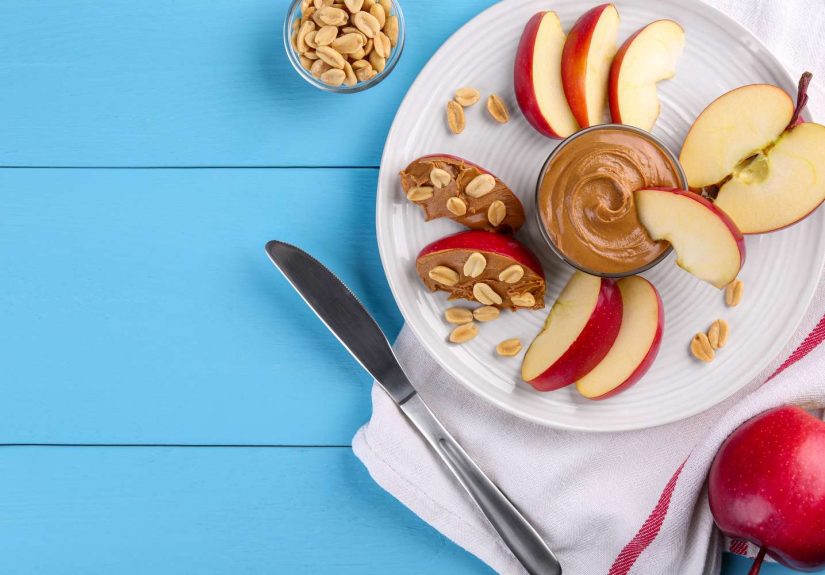
2. Apple or Pear Slices With Natural Peanut or Almond Butter
Fruit gets blamed for way too many crimes it did not commit. An apple or pear is not the problem. In fact, when paired with nut butter, fruit becomes one of the best low-sugar snacks around.
The fruit provides fiber and crunch, while the nut butter adds healthy fats and a little protein. That combination helps you stay fuller longer than eating fruit or crackers alone. Pears and apples are especially good choices because they are portable, affordable, and sturdy enough to survive the bottom of a tote bag.
Try it this way: Slice one small apple or pear and serve it with 1 to 2 tablespoons of peanut or almond butter made with simple ingredients. Look for versions without added sugar if possible. Your snack should taste like food, not frosting with ambition.
3. Crunchy Vegetables With Hummus
If you need a savory, crunchy snack that does not come from a crinkly chip bag, vegetables with hummus are hard to beat. Raw veggies like carrots, cucumbers, bell peppers, celery, and snap peas offer fiber, water, and volume, which helps you feel full without a ton of calories or sugar.
Hummus adds plant protein, fiber, and healthy fats, making the whole snack much more satisfying than vegetables alone. It also solves the very real problem that some people do not want to eat plain carrot sticks unless there is a dip involved. That is fair. We are civilized.
Try it this way: Pair sliced cucumbers, red peppers, and baby carrots with 2 to 4 tablespoons of hummus. Single-serve hummus packs can make this easier for workdays or travel.
4. Cottage Cheese With Berries, Tomato, or Cucumber
Cottage cheese has quietly staged a comeback, and honestly, good for it. It is high in protein, naturally low in sugar, and versatile enough to go sweet or savory depending on your mood.
If you want something fresh and lightly sweet, pair it with berries. If you want a savory snack, top it with cucumber, cherry tomatoes, black pepper, or everything bagel seasoning. Either way, the protein helps keep hunger in check, and the add-ins provide fiber, texture, and flavor.
Try it this way: Spoon plain cottage cheese into a bowl and top with strawberries and cinnamon, or go savory with chopped cucumber and a pinch of cracked pepper. Choose plain varieties and watch out for pre-mixed fruit versions, which can sneak in more added sugar than you would expect.
5. A Small Handful of Nuts and Seeds
Sometimes the best snack is the least dramatic one. Nuts and seeds are rich in healthy fats, protein, and fiber, and they are one of the easiest low-sugar options to keep in a bag, desk drawer, or glove compartment.
Almonds, pistachios, walnuts, pumpkin seeds, and sunflower seeds all work well. They are especially useful when you need something shelf-stable and filling. The crunch also helps with satisfaction, which is one reason nuts often feel more substantial than a soft, ultra-processed snack bar with a long ingredient list and trust issues.
Try it this way: Portion out a small handful of mixed nuts and seeds into reusable containers so you are not standing in the kitchen accidentally turning “a few almonds” into a full side quest.
6. Roasted Chickpeas or Edamame
If you like a snack with serious chew and crunch, roasted chickpeas or edamame deserve a spot in your rotation. Both offer a satisfying mix of plant protein and fiber, which makes them ideal for the afternoon slump when your brain wants cookies but your body needs something more useful.
Edamame is especially great if you want a higher-protein option with almost no prep. Roasted chickpeas are perfect when you want something crunchy and salty. Both can be seasoned in all kinds of ways, from garlic and paprika to chili-lime.
Try it this way: Keep frozen edamame at home for quick steaming, or buy dry-roasted edamame or chickpeas for grab-and-go convenience. Choose lightly salted varieties when you can, especially if your overall sodium intake tends to run high.
7. Air-Popped Popcorn, Especially When Paired With Protein
Popcorn gets overlooked because it is associated with butter-soaked movie theater tubs the size of a bathtub. But plain or lightly seasoned air-popped popcorn is a whole grain, naturally low in sugar, and surprisingly satisfying because of its volume and fiber.
It is especially useful when you want a snack that feels generous. Three cups of popcorn looks like a real snack, not a sad little portion. For even better staying power, pair it with a cheese stick, a few nuts, or roasted edamame. That way, you get the crunch you want and the protein your stomach keeps filing formal complaints about.
Try it this way: Make air-popped popcorn and season it with a little olive oil spray, black pepper, cinnamon, nutritional yeast, or grated Parmesan. Skip the caramel glaze. That takes us in a very different direction.
How to Choose Better Low-Sugar Snacks at the Store
You do not need a nutrition degree to shop smarter. A few simple habits can help you pick snacks that are actually satisfying:
- Check the added sugars line on the Nutrition Facts label
- Look for protein and fiber, especially if the snack is mostly carbs
- Choose plain versions of yogurt, oatmeal, or cottage cheese when possible
- Favor short ingredient lists with foods you recognize
- Watch portions on calorie-dense snacks like nuts and seed mixes
- Do not let “organic,” “gluten-free,” or “natural” trick you into assuming a snack is low in sugar
One useful trick is to think in pairs. If a snack is mostly carbohydrate, add protein or fat. If it is mostly protein, add produce for fiber and volume. Balanced snacks beat random snacks almost every time.
Common Mistakes People Make With Low-Sugar Snacking
Mistake #1: Choosing “sugar-free” snacks that are still not satisfying. A snack can be low in sugar and still leave you hungry if it lacks protein, fiber, or fat.
Mistake #2: Avoiding fruit altogether. Whole fruit is not the same as candy. Fruit brings vitamins, water, and fiber, which is a completely different nutritional package.
Mistake #3: Drinking your snack. Sweet coffee drinks, juices, and many bottled smoothies can pack in sugar without much staying power. When you do drink a snack, make sure it has real protein and fiber.
Mistake #4: Relying only on “health” snack bars. Some are fine, but many are just candy bars with better publicists.
Mistake #5: Waiting until you are ravenous. Once you hit full emergency-snack mode, convenience usually wins over nutrition. Planning ahead matters more than people think.
Final Thoughts
The best low-sugar snacks are the ones that help you feel calm, focused, and satisfied between meals, not the ones that leave you hungry, cranky, and staring at the office vending machine like it owes you money. In general, dietitians recommend snacks built from real foods that combine protein, fiber, and healthy fats while keeping added sugars in check.
If you want a smart place to start, stock these seven winners: Greek yogurt with berries, fruit with nut butter, veggies with hummus, cottage cheese, nuts and seeds, roasted chickpeas or edamame, and air-popped popcorn. Rotate them based on your schedule, cravings, and what you will actually eat. Because the healthiest snack in the world does not help much if it sits untouched in the fridge next to a lemon from three months ago.
Bonus: Real-Life Experiences With Low-Sugar Snacking
One of the biggest surprises people report when they switch to low-sugar snacks is how much more stable their afternoons feel. Instead of getting a quick rush from a sweet granola bar or a pastry and then crashing hard at 3 p.m., they notice fewer energy dips and less random grazing. The change is not always dramatic on day one, but over a week or two, it becomes easier to tell the difference between real hunger and the kind of snack craving that shows up when breakfast was mostly sugar.
Take the typical office routine. Someone grabs a sweet coffee and a muffin in the morning, gets hungry again by late morning, then reaches for another packaged snack before lunch. It is a cycle. But when that same person swaps in plain Greek yogurt with berries or an apple with peanut butter, the experience is often completely different. They feel fuller longer, their concentration improves, and they are less likely to start hunting for chocolate because a spreadsheet hurt their feelings.
Parents often notice another benefit: low-sugar snacks are easier to repeat consistently. A bowl of berries and cottage cheese, a small container of hummus with veggie sticks, or a baggie of pistachios can become part of a routine. That routine matters. When snack choices are predictable and balanced, there is less last-minute decision-making, and fewer situations where the easiest option is a sugary snack cracker or a cookie the size of a steering wheel.
People who work out or stay active during the day also tend to appreciate these snacks because they do not feel too heavy. Roasted edamame, fruit with nut butter, or popcorn paired with a little protein can bridge the gap between meals without making someone feel sluggish. The goal is not to eat as little as possible. It is to eat something that supports your energy instead of hijacking it.
Another common experience is that taste buds change. At first, plain yogurt may seem a little sharp, and unsweetened nut butter might feel boring compared with sweet snack spreads. But once people reduce their intake of heavily sweetened snack foods, many start to notice the natural sweetness in berries, apples, or even carrots. That does not mean cravings disappear forever. It just means your baseline changes, and foods that once seemed “not sweet enough” suddenly taste just right.
Low-sugar snacking also tends to help with portion awareness. A balanced snack usually feels complete, so people are less likely to keep nibbling. Compare that with snack foods that are engineered to be light, crispy, sweet, and almost suspiciously easy to overeat. A portion of nuts, yogurt, hummus, or cottage cheese asks you to actually sit down and eat. That tiny pause can make a big difference.
In real life, the best experience usually comes from convenience. The people who succeed most with low-sugar snacks are rarely making gourmet snack boards every afternoon. They are washing berries ahead of time, portioning nuts into containers, keeping hummus in the fridge, and buying plain yogurt on purpose. In other words, they make the better choice the easier choice. That is not flashy, but it works.