Table of Contents >> Show >> Hide
- Before You Start: Know When a No-Wash Fix Is Not Enough
- 1. Air Clothes Out in Moving Air
- 2. Use Sunlight Strategically
- 3. Freshen Clothes with a Garment Steamer
- 4. Use a Steamy Bathroom When You Do Not Have a Steamer
- 5. Mist Lightly with a Diluted White Vinegar Spray
- 6. Sprinkle Baking Soda on Odor Zones
- 7. Use a Fabric Refresher or Odor-Eliminating Spray
- 8. Use the Dryer’s Air-Fluff or Steam-Refresh Setting
- 9. Spot-Clean the Real Odor Source
- 10. Let Clothes Rest Overnight with an Odor Absorber
- What Works Best for Different Types of Clothes?
- Mistakes to Avoid When Freshening Clothes Without Washing
- Final Thoughts
- Experience-Based Tips: What These No-Wash Methods Are Like in Real Life
- SEO Tags
Sometimes your clothes are not exactly dirty, but they are definitely no longer winning any freshness awards. Maybe your favorite sweater smells faintly like last night’s restaurant. Maybe your blazer picked up a little subway funk. Maybe your jeans are in that awkward middle ground where they still look great, but they smell like they’ve been through a long day of existing.
The good news is that not every garment needs a full spin through the washer the second it loses that fresh-laundry glow. In fact, washing too often can wear down fibers, fade colors, and shorten the life of perfectly good clothes. The trick is knowing how to deodorize clothes without washing them in a way that actually removes odor instead of just throwing perfume at the problem and hoping for the best.
This guide covers 10 practical, fabric-friendly ways to freshen clothes between washes. Some methods are almost laughably simple. Others feel a little fancy. All of them are useful when laundry day is not in the cards.
Before You Start: Know When a No-Wash Fix Is Not Enough
Let’s set the record straight before we start spraying, steaming, and channeling our inner garment whisperer. These methods work best for light odors on clothes that are only lightly worn. If something has visible dirt, grease, heavy sweat, mildew, or biological stains, it needs proper laundering or professional cleaning. Freshening is smart. Pretending a gym shirt is somehow “basically clean” is comedy.
Also, always check the care label first and spot-test anything you spray on a hidden area. Delicate fabrics, structured garments, suede, silk, wool, and anything labeled dry-clean only deserve a little caution and a lot less enthusiasm.
1. Air Clothes Out in Moving Air
The simplest trick is often the best one. Hang the garment in a place with good airflow and let time do some of the work. Outdoor air is ideal, but a breezy room, a fan, or an open window can help too.
Why it works
Odor molecules cling to fabric, especially when clothes are crumpled in a hamper or stuffed into a closet. Giving garments space and airflow helps release trapped smells instead of letting them marinate like leftovers.
Best for
Jeans, sweaters, jackets, blouses, dresses, and anything that smells a little stale rather than deeply funky.
Pro tip
Use a sturdy hanger and leave room around the item. If it is bunched up between five other shirts like commuters on a Monday morning, airflow cannot do much.
2. Use Sunlight Strategically
Fresh air is good. Fresh air plus sunlight can be even better. A short session outdoors can help lift stale odors and make fabrics smell noticeably fresher.
Why it works
Sun and open air help reduce musty smells and refresh fabric naturally. It is one of those old-school methods that stuck around because, annoyingly, grandmothers were right about some things.
Best for
Cotton shirts, towels, casual basics, and sturdy fabrics that tolerate a little sunlight without drama.
Watch out
Do not leave dark colors, silk, wool, or delicate fabrics baking outside for hours. Think “quick refresh,” not “garment slow-roast.”
3. Freshen Clothes with a Garment Steamer
If you own a garment steamer, congratulations: you have one of the best tools for making clothes smell better without washing them. Steam helps relax fibers, release odor, and smooth wrinkles at the same time. That is multitasking worthy of applause.
Why it works
Moist heat helps loosen odor particles from fabric. It is especially helpful for clothes that are not dirty enough to wash but have picked up everyday smells from cooking, commuting, or being worn in warm weather.
Best for
Blouses, dresses, workwear, linen, cotton, and lightly worn layers.
Pro tip
Let the garment dry fully before you put it back in the closet. Trapping residual moisture is how “freshened” turns into “mildly swampy.”
4. Use a Steamy Bathroom When You Do Not Have a Steamer
No steamer? No problem. Hang the item in the bathroom while you take a hot shower. It is not as powerful as a real steamer, but it is surprisingly decent in a pinch.
Why it works
The warm steam helps loosen light odors and refresh fibers without the abrasion of washing.
Best for
Travel clothes, hotel-room emergencies, business shirts, and lightly worn garments that just need a reset.
Watch out
This is a refresh method, not a miracle. If your shirt smells like it ran a marathon and then celebrated with garlic fries, bathroom steam alone is not going to save the day.
5. Mist Lightly with a Diluted White Vinegar Spray
White vinegar is one of the most useful odor-neutralizing tools in the home, and yes, it can help with clothes too. A light mist of diluted distilled white vinegar can take the edge off stale or sour smells.
How to use it
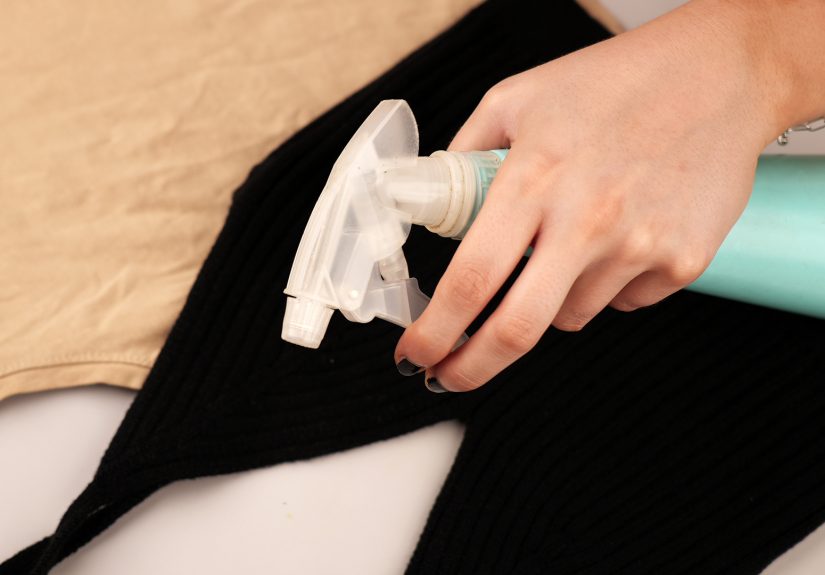
Mix a simple solution of water and white vinegar in a spray bottle, then mist the garment lightly from a safe distance. The goal is a fine spritz, not “I accidentally dressed my shirt as a salad.” Let it air-dry completely before wearing.
Why it works
Vinegar helps neutralize odors rather than simply masking them with fragrance.
Best for
T-shirts, casual tops, washable fabrics, and odor-prone underarm areas.
Important note
Do not mix vinegar and baking soda in the same spray bottle and expect chemistry to write you a thank-you note. Use them separately.
6. Sprinkle Baking Soda on Odor Zones
If a garment smells in specific places, baking soda can help absorb odor without soaking the whole item. It is especially useful on underarms, collars, and other hotspots.
How to use it
Lay the garment flat, sprinkle a small amount of baking soda over the smelly area, and let it sit for several hours or overnight. Then shake it out or brush it off gently.
Why it works
Baking soda is famous for absorbing odor, and for once that reputation is deserved.
Best for
Sweat-prone shirts, casual cotton pieces, and clothes that smell musty from storage.
Watch out
Test first on dark or delicate fabrics, and do not grind it aggressively into fine fibers.
7. Use a Fabric Refresher or Odor-Eliminating Spray
Sometimes convenience wins. A fabric refresher spray is one of the easiest ways to freshen clothes between washes, especially when you need something fast before heading out the door.
Why it works
A good fabric spray can help reduce light odor and leave a cleaner smell behind. The key phrase here is light odor. Think “worn to lunch,” not “survived a three-hour spin class.”
Best for
Blazers, jeans, sweaters, jackets, and clothes that only need a mild refresh.
Pro tip
Mist lightly and let the item dry before wearing. Over-spraying can leave residue or an overpowering scent cloud that enters the room before you do.
8. Use the Dryer’s Air-Fluff or Steam-Refresh Setting
If your dryer has an air-fluff or steam-refresh cycle, this is its time to shine. These short cycles can freshen lightly worn garments quickly.
Why it works
A brief refresh cycle helps lift odor and smooth wrinkles without putting clothes through a full wash. It is a handy option when you need a shirt, dress, or pair of pants to stop smelling like yesterday.
Best for
Everyday clothing, wrinkle-prone items, and garments you need in a hurry.
Watch out
Always follow the care label. Heat is not invited to every party. Use low-impact settings when possible, and do not toss in anything delicate just because you are feeling optimistic.
9. Spot-Clean the Real Odor Source
Sometimes the smell is not all over the garment. It is concentrated in one annoying spot: the collar, cuffs, underarms, waistband, or that mystery area you refuse to discuss. In those cases, targeted spot cleaning is smarter than treating the whole item.
How to do it
Use a damp cloth to blot the problem area gently. For washable fabrics, a tiny amount of mild soap can help lift residue that is trapping odor. Then blot with clean water and let the area dry completely.
Why it works
Odor often comes from skin oils, sweat residue, or product buildup in specific areas. Remove the buildup and the smell usually improves too.
Best for
Jeans, collars, underarms, cuffs, and lightly worn clothes with one obvious trouble zone.
10. Let Clothes Rest Overnight with an Odor Absorber
If a garment smells stale from storage, travel, or a cramped closet, give it a quiet overnight reset. Hang it in a breathable garment bag or place it near an odor absorber like baking soda or charcoal-based closet fresheners.
Why it works
This method is less about dramatic rescue and more about gradual improvement. It helps pull down that dusty, boxed-up smell that old closets and overstuffed suitcases love to leave behind.
Best for
Seasonal clothes, scarves, coats, sweaters, and pieces that smell like they spent six months hiding from humanity.
Pro tip
Make sure the garment is fully dry before storing it again. Moisture plus darkness plus zero airflow is how odors become long-term tenants.
What Works Best for Different Types of Clothes?
If you want the short version, here it is: not every method works equally well on every fabric.
For jeans: airing out, sunlight, spot cleaning, and fabric spray work well.
For blazers and jackets: steaming and airing out are usually your best friends.
For sweaters: airflow, short outdoor refreshes, and very light steaming are safer than heavy spraying.
For activewear: fabric refresher spray may buy time, but performance fabrics tend to trap odor, so washing is often the real answer.
For delicate or dry-clean-only items: use the gentlest options first and avoid saturating the fabric.
Mistakes to Avoid When Freshening Clothes Without Washing
People usually get into trouble by using too much product, too much moisture, or too much confidence. Avoid these common mistakes:
Do not soak clothes just because they smell a little stale. Do not use strong fragrances to cover odor instead of removing it. Do not put damp clothes back into a drawer or closet. And do not assume every social-media laundry hack deserves your trust. Some of them belong in the same category as “just cut your own bangs” and “text your ex for closure.”
Final Thoughts
If you are trying to deodorize clothes without washing them, the goal is not to cheat hygiene. The goal is to refresh lightly worn garments in a smarter way. That means less unnecessary washing, longer-lasting clothes, and fewer moments where you realize your shirt smells like old coffee and regret.
The best method depends on the fabric, the source of the smell, and how much time you have. Airflow and sunlight are great for a natural reset. Steam works beautifully for everyday wear. Baking soda and vinegar help neutralize odor. Fabric sprays and dryer refresh cycles are useful when you need speed. And spot cleaning solves more problems than people think.
In other words, you do not always need a full laundry cycle. Sometimes you just need a better strategy.
Experience-Based Tips: What These No-Wash Methods Are Like in Real Life
In real life, deodorizing clothes without washing them is less about one magic trick and more about reading the situation correctly. A shirt you wore for two hours in an air-conditioned office is not the same as a shirt you wore on a humid day while carrying groceries, chasing a bus, and pretending you were not sweating. The first one can probably be rescued with airflow or steam. The second one is making plans with the washing machine whether it likes it or not.
One of the most common experiences people have is realizing that odor gets trapped in specific zones, not the whole garment. A pair of jeans may smell fine except at the waistband. A blouse may be perfectly wearable except under the arms. A sweater may have that faint closet smell even though it looks spotless. Once you notice that pattern, freshening clothes becomes much easier because you stop treating every item like a full-scale emergency.
Another real-world lesson is that timing matters. Clothes smell worse when they are tossed in a heap after wearing. If you take off a shirt and immediately drape it over a chair, hanger, or drying rack, it has a chance to breathe. If you ball it up on the floor, you are basically sending an engraved invitation to odor. This is especially true for workout gear, socks, and anything worn in warm weather.
Travel is where these tricks really earn their keep. In hotels, apartments, dorms, and road-trip situations, you may not have access to laundry when you want it. Hanging clothes in the bathroom during a hot shower, airing them near a window, or giving them a light spray can stretch a wardrobe in a surprisingly effective way. It will not create that straight-from-the-laundry-room freshness, but it can absolutely turn “not wearable” into “totally fine for dinner.”
People also learn quickly that different fabrics behave very differently. Cotton tends to forgive you. Linen loves a good steam session. Wool often does well with airing out. Performance fabrics, on the other hand, can hold onto body odor like they are collecting trophies. If you have ever refreshed an athletic shirt three times and still caught a whiff of something suspicious, you are not imagining it. Some fabrics simply need a proper wash sooner than others.
And then there is the scent issue. A lot of people discover that masking odor is not the same thing as removing it. A gallon of floral spray on top of stale fabric just creates “garden party with hidden problems.” The better results usually come from neutralizing odors first, then adding only a light clean scent if you want one.
The most useful mindset is this: these methods are maintenance, not miracles. They work beautifully for clothes that are lightly worn, mildly stale, or caught in that annoying in-between stage. They are not a substitute for actual laundering when clothes are dirty. But when used thoughtfully, they can save time, reduce wear on your clothes, and keep your closet from turning into a museum of questionable smells.