Table of Contents >> Show >> Hide
- How to Use This List (Without Overhauling Your Entire Life)
- 1) National Park Service (NPS) Educator Portal: Your Master Switchboard
- 2) Teaching with Historic Places (TwHP): Primary Sources With a Zip Code
- 3) Junior Ranger (Including Junior Ranger Online): Badges That Secretly Teach Standards
- 4) Every Kid Outdoors: The Field Trip Power-Up for Fourth Grade
- 5) Teacher Ranger Teacher (TRT): Professional Development With Actual Dirt Under Your Fingernails
- 6) Park Distance Learning & Virtual Programs: Rangers on Your Smartboard
- 7) Traveling Trunks & Loaner Kits: Museums-in-a-Box for Your Classroom
- 8) National Park Foundation (NPF) “Parks at Home” & “Back to School”: Curated, Classroom-Friendly Collections
- 9) The Official NPS App + NPGallery + Soundscapes: Digital Field Notes for the Modern Classroom
- 10) Citizen Science & BioBlitz (Often via iNaturalist): Turn Your Students Into Real Researchers
- Wrapping It Up: Your “One-Unit” National Parks Formula
- of Classroom-Style Experiences (Because Real Teaching Is Messy)
National parks are basically the world’s best “interactive textbook”except the pop-up pictures are real mountains,
the glossary is a ranger, and the vocabulary words sometimes bite (looking at you, mosquitoes).
Whether you’re teaching kindergarteners who think “ecosystem” is a new Pokémon or high schoolers who can debate
public policy like tiny lawyers, parks are a shortcut to curiosity.
The trick is getting park-quality learning without needing a charter bus, a permission-slip miracle, and three emergency
inhalers. That’s where this list comes in: ten teacher-friendly, classroom-ready resourcesmostly freethat help you
build lessons, virtual experiences, projects, and field trips rooted in America’s national parks.
How to Use This List (Without Overhauling Your Entire Life)
- Pick one “anchor resource” (like the NPS Educator Portal or Teaching with Historic Places).
- Add one “wow factor” (a virtual program, a soundscape, a Junior Ranger badge moment).
- Finish with one “student output” (a poster, mini documentary, data chart, argument essay, or slideshow).
You’ll end up with place-based learning that feels bigger than your classroom wallseven if your “walls” are currently
covered in half-dried glue and a motivational poster that’s hanging on by vibes alone.
1) National Park Service (NPS) Educator Portal: Your Master Switchboard
What it is
The NPS Teachers hub is the easiest way to find park-created classroom materials in one place. Think lesson plans,
student activities, field trip guidance, distance learning options, and teacher reference materialsorganized so you can
filter instead of scrolling into the next geological era.
Best for
- Grades K–12, any subject
- Teachers who want free resources that already align to learning goals
Try this tomorrow
Choose a topic you’re already teaching (erosion, civic responsibility, migration, indigenous history, waterways),
then search the portal for a lesson plan and a student activity. Pair them into a two-day mini-unit and end with an exit
ticket: “What does this place teach us that a textbook can’t?”
2) Teaching with Historic Places (TwHP): Primary Sources With a Zip Code
What it is
Teaching with Historic Places is an NPS program that turns historic sites into classroom investigations. Students learn
from maps, photographs, readings, and other primary sourcesthen connect what they found to broader themes in U.S.
history, civics, geography, and social studies.
Why teachers love it
- Built-in document analysis (hello, evidence-based writing)
- Place-based context that makes history feel like a story, not a spreadsheet
- Ready-to-use lessons you can print or run digitally
Classroom example
Run a “History Detective” lab: assign small groups different primary sources from the lesson (map, photo, reading),
then have them argue what changed over time at that placeand why. End with a one-paragraph claim backed by two pieces
of evidence. Bonus points for a group that debates politely like civilized humans.
3) Junior Ranger (Including Junior Ranger Online): Badges That Secretly Teach Standards
What it is
The Junior Ranger program is a classic for a reason: it turns learning into a mission. Many parks offer activity booklets,
and the online versions let students participate from home or school. The content spans nature, history, stewardship,
and cultural heritagewrapped in a format kids actually want to finish.
Best for
- Grades K–8 (and honestly, plenty of older students enjoy the “I earned this” feeling)
- SEL + science + social studies crossovers
Try this tomorrow
Create a “Classroom Ranger Ceremony.” Students complete a short set of activities (observation notes, mini research,
stewardship pledge), then take an oath to protect natural and cultural resources. It sounds cheesy until your toughest
student takes it seriouslyand then it’s suddenly not cheesy at all.
4) Every Kid Outdoors: The Field Trip Power-Up for Fourth Grade
What it is
Every Kid Outdoors helps 4th graders (and their families) access federal lands and waters with a free pass. It’s designed
to build the habit of outdoor learning earlyand it’s also a practical solution to the “admission fees vs. school budget”
problem. There are educator-oriented materials and planning supports as well.
Best for
- Grade 4 (including homeschool equivalents)
- Teachers planning a park trip or encouraging family learning adventures
How to use it well
Make it a three-part learning arc: before the visit (build background knowledge), during
(guided observation tasks), and after (reflection + a product like a brochure or travel podcast).
If you can’t visit, students can still complete the activity and plan an “itinerary of learning.”
5) Teacher Ranger Teacher (TRT): Professional Development With Actual Dirt Under Your Fingernails
What it is
TRT is an extended professional development opportunity where educators work with NPS sites to deepen content knowledge
and create classroom connections. Many programs focus on linking parks with schools serving underserved student populations.
You come back with stronger subject knowledge, real stories, and lesson ideas that are hard to fake (because you don’t have to).
Best for
- K–12 teachers who want authentic place-based learning
- Educators building long-term partnerships with a park
Even if you don’t join TRT
Steal the structure: pick a park topic, connect with park education staff, and build a small “teacher-research” project
you can share with students (photos, notes, interview questions, mini field journal).
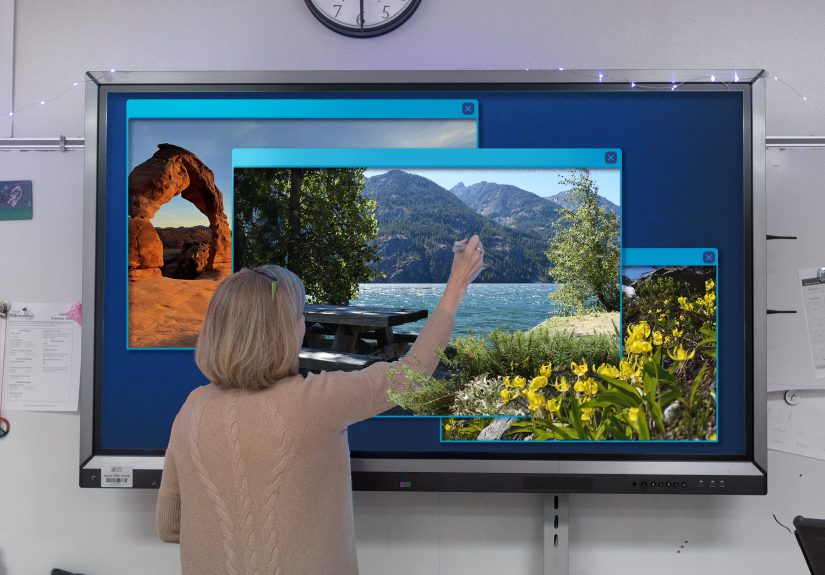
6) Park Distance Learning & Virtual Programs: Rangers on Your Smartboard
What it is
Many parks run live, interactive distance learning programssome are Q&A-based, others are structured lessons with
visuals, artifacts, and student participation. These programs make science and history feel like a conversation instead
of a worksheet.
Best for
- Grades 2–12
- Teachers who want a “field trip vibe” without bus logistics
Classroom example
Run a “Question Ladder.” Before the program, students write: 1) a factual question, 2) a “why” question, 3) a “what if”
question. During the session, they try to get one answered. Afterward, they turn the best answer into a one-slide
teaching graphic.
7) Traveling Trunks & Loaner Kits: Museums-in-a-Box for Your Classroom
What it is
Some parks and partner organizations offer traveling trunksloaner kits that include lesson plans, props, replica artifacts,
and hands-on materials. It’s the closest thing to teleporting a visitor center into your room without violating the laws
of physics (or your custodian’s patience).
Best for
- Grades K–8 (but older students can use kits for deeper inquiry projects)
- Schools that want tactile learning and accessible experiences
Try this tomorrow
Build your own mini “traveling trunk” if you can’t borrow one: maps, photos, a short reading, a few safe natural objects
(rock samples, leaves), and a data sheet for observation. Students rotate stations and write a claim about how a place
works (ecosystem, economy, or history) with evidence from at least two stations.
8) National Park Foundation (NPF) “Parks at Home” & “Back to School”: Curated, Classroom-Friendly Collections
What it is
The National Park Foundation curates resources and activity ideas that connect park themes to classroom learning.
Their collections include at-home activities, Junior Ranger options, and education-focused guides that help you build
lessons without starting from a blank doc that stares back at you like an accusation.
Best for
- Grades K–12, especially interdisciplinary units
- Teachers looking for curated “starter packs” of ideas
Classroom example
Create a “Park Problem Solver” project. Students choose one park challenge (invasive species, visitor impact, habitat loss,
water quality) and design a solution with a public-awareness component: poster campaign, short video, or school announcement.
9) The Official NPS App + NPGallery + Soundscapes: Digital Field Notes for the Modern Classroom
What it is
The official NPS App lets you explore hundreds of parks with maps, tours, and trip-planning toolsplus offline downloads
for places with no signal (a.k.a. most of the places worth visiting). Pair it with NPS media collections like photo galleries
and natural sound recordings to build “virtual observation” activities.
Best for
- Grades 3–12
- Geography, writing, STEM observation skills, media literacy
Try this tomorrow
Do a “Soundtrack of a Place” writing warm-up: play a park soundscape (wind, birds, water, distant thunder),
then students write a sensory paragraph and label the sounds as natural, human, or mechanical. Follow up with a discussion:
“What sounds belong in a protected placeand who decides?”
10) Citizen Science & BioBlitz (Often via iNaturalist): Turn Your Students Into Real Researchers
What it is
Citizen science projectsespecially BioBlitz-style eventsinvite participants to document biodiversity and contribute
real observations to real datasets. Many NPS biodiversity efforts collect observations through iNaturalist during BioBlitzes
and other citizen science events. Translation: your students can do legitimate science with a phone camera and curiosity.
Best for
- Grades 4–12
- Life science, ecology, statistics, argument writing from data
Classroom example
Run a “Schoolyard BioBlitz” even if you’re nowhere near a national park. Students document species on campus (or at home),
then create a class biodiversity dashboard: most common species, invasive vs. native conversations, and a reflection on how
habitats change with human choices. Connect it back to a park ecosystem students are studying.
Wrapping It Up: Your “One-Unit” National Parks Formula
If you want a simple recipe that works across grade levels, try this:
Start with a place (a specific park), add a question (What’s changing? Who decides? What’s worth protecting?),
use a resource (from the ten above), and end with a product (poster, presentation, map, podcast, essay, data story).
The goal isn’t to teach about parks like they’re postcards. It’s to use parks to teach thinkingobservation, evidence,
empathy, and stewardship. And yes, you can do that even if your “field trip” is a laptop cart and the hallway water fountain.
of Classroom-Style Experiences (Because Real Teaching Is Messy)
Picture a Tuesday afternoon when your students’ energy is set to “caffeinated squirrel,” and you’re one missing dry-erase
marker away from moving to a cabin in the woods. You cue up a national park soundscapemaybe wind through pines, maybe waves
on a rocky shoreand suddenly the room changes. Not perfectly. Not magically. But enough that you hear pencils again.
Students write what they notice: “It sounds empty,” “It sounds alive,” “It sounds like the world is breathing.”
Then someone says, “Wait… are there people?” Now you’ve got inquiry. The best kind: the kind you didn’t have to beg for.
In another class, students are convinced history is just “old stuff that happened to other people.” So you pull a Teaching with
Historic Places lesson and hand each group a different primary source. One group gets a map and argues about boundaries.
Another group reads a short excerpt and underlines power words. Another group studies a photograph and starts noticing
details like signage, clothing, and the absence of someone who should be there. Their conversation shifts from “This is boring”
to “Why is it like that?” That’s the moment you gently slide in the big questions: who had access, who didn’t, and how public
lands reflect public values.
The “Junior Ranger Ceremony” is a sneaky win, too. Even older studentsespecially older studentsoften love a clear checklist
and a tangible finish line. Give them a stewardship pledge to write in their own words (not the copy-paste kind) and ask them
to include one action they can actually do this week. You’ll get answers like “pick up trash,” sure, but also “teach my little
brother not to carve initials,” “stop feeding ducks,” and “share a park story with my grandma.” Those are tiny behaviors with
real-world ripples.
If you can swing a virtual program with a ranger, prepare for your students to ask the kinds of questions they never ask you.
(“How do you track wolves?” “What happens when tourists ignore rules?” “Do you ever get scared?”) Give students a job during the
callquestion asker, note catcher, fact checker, vocabulary wranglerso participation is structured, not chaotic. Afterward, have
them create a one-page “Ranger Report” that includes three facts, two new vocabulary terms, and one unresolved question. Unresolved
questions are gold; they’re proof students are thinking beyond the bell.
And don’t underestimate the “small” experience: a schoolyard BioBlitz. Students photograph ants, weeds, birds, and whatever brave
creature lives under the cafeteria dumpster. They learn quickly that nature isn’t “out there” somewhere; it’s under their feet.
When you connect that back to a national park ecosystemshowing how biodiversity is documented and protectedstudents understand
conservation as a living practice, not a poster slogan. It’s science, yes. But it’s also agency. And agency is the thing that turns
learning into something students carry home.