Table of Contents >> Show >> Hide
- Why 2024 Was Such a Big Year for Stargazing
- How to Use This 2024 Astronomy Calendar
- The 2024 Astronomy Calendar, Month by Month
- January: Quadrantids Start the Year With a Sprint
- February: Quiet Calendar, Beautiful Skies
- March: Equinox Energy and a Subtle Lunar Eclipse
- April: The Main Character Month
- May: Eta Aquariids and an Unexpected Aurora Party
- June: Solstice Season and Predawn Planets
- July: The Milky Way Month
- August: Perseids, a Blue Supermoon, and a Great Planet Pairing
- September: Saturn Shines and the Harvest Moon Gets Dramatic
- October: Ring of Fire and the Closest Full Moon of the Year
- November: Fireballs, Leonids, and Long Nights
- December: Jupiter at Opposition and the Geminids Close the Year
- Best 2024 Stargazing Events at a Glance
- How to Get More Out of Events Like These
- Stargazing Experiences From a Remarkable Year
- Conclusion
If 2024 had a personality, it would be that wildly overachieving friend who shows up with eclipse glasses, a thermos of coffee, and somehow also knows where Saturn is before sunrise. It was a stacked year for skywatchers: a total solar eclipse across North America, multiple eclipses worldwide, headline meteor showers, a blue supermoon, bright planet pairings, seasonal milestones, and even an aurora surprise that made a lot of people walk outside and say, “Wait, is the sky supposed to do that?”
This guide is built for real people, not just telescope collectors and constellation show-offs. Whether you like watching with binoculars, a backyard chair, or a very serious expression while holding a phone camera you barely trust, this 2024 astronomy calendar walks through the year’s biggest stargazing events in plain English. Think of it as your practical, SEO-friendly, coffee-approved roadmap to the night sky.
Why 2024 Was Such a Big Year for Stargazing
Some years offer a few decent meteor showers and a couple of pretty full moons. Then there was 2024. The April 8 total solar eclipse alone made the year historic, especially across the United States, where the path of totality crossed from Texas to Maine. Add in a penumbral lunar eclipse in March, a partial lunar eclipse in September, an annular “ring of fire” eclipse in October, and strong annual meteor showers like the Perseids and Geminids, and suddenly 2024 looked less like a calendar and more like the sky was trying to win awards.
The year also delivered planet highlights. Saturn hit opposition in September, Jupiter reached opposition in December, and several months offered good naked-eye viewing of bright planets in the morning or evening sky. Late summer and fall brought supermoons, including the September Harvest supermoon eclipse and October’s Hunter’s Moon, the closest full moon of the year. In other words, 2024 did not believe in taking weekends off.
How to Use This 2024 Astronomy Calendar
This is a practical naked-eye and beginner-friendly guide focused on the year’s most watchable public events. It does not try to catalog every minor occultation, tiny conjunction, or obscure shower with a name that sounds like a Victorian disease. Instead, it highlights the events that mattered most for everyday stargazing: eclipses, meteor showers, supermoons, solstices and equinoxes, planet oppositions, and the best seasonal viewing windows.
One quick reality check: visibility always depends on where you live, local weather, moonlight, and how much light pollution your neighborhood believes is emotionally necessary. The same event can look dramatic in one place and subtle in another. But the calendar below gives you the best overall guide to when to look up and why it is worth doing.
The 2024 Astronomy Calendar, Month by Month
January: Quadrantids Start the Year With a Sprint
January opened with the Quadrantid meteor shower, peaking around January 3 to 4. The Quadrantids are famous for two things: being strong and being annoyingly brief. Unlike showers that stretch their best action over a full night or two, the Quadrantids tend to deliver a sharp peak, which means timing matters. For North American observers, the pre-dawn hours were the sweet spot. If you caught them under dark skies, they were a fantastic way to begin the year. If you slept through them, the sky was already teaching its first lesson of 2024: celestial events do not care about your snooze button.
January also offered excellent evening views of classic winter constellations like Orion, Taurus, and Gemini. For many backyard observers, that alone made the month worthwhile. Winter air can be cold, but it often gives you sharper, steadier skies.
February: Quiet Calendar, Beautiful Skies
February was lighter on blockbuster events, but it was a terrific month for casual skywatching. Winter star patterns still dominated the evening sky, and late-month planetary action made things more interesting. Venus and Mars appeared notably close on February 22, creating a photogenic pairing for patient observers with a clear horizon.
This is one of those months that reminds you astronomy is not always about rare cosmic drama. Sometimes the reward is simply learning the sky well enough to notice when something has shifted.
March: Equinox Energy and a Subtle Lunar Eclipse
March brought the vernal equinox on March 20, marking the start of spring in the Northern Hemisphere. Day and night were roughly balanced, and skywatchers got a seasonal reset. A few days later, on March 24 to 25, a penumbral lunar eclipse gave observers a more delicate show than the blood-red versions social media loves to scream about.
A penumbral eclipse is subtle. The Moon does not look dramatically bitten or dyed crimson. Instead, part of the lunar disk appears gently shaded, as if someone turned the brightness down by one polite click. This particular event was also tied to a micro full moon, making the Moon slightly farther from Earth than average. Translation: still beautiful, just a little less theatrical.
April: The Main Character Month
April 8 was the crown jewel of the 2024 astronomy calendar: the total solar eclipse. The path of totality crossed Mexico, the United States, and Canada, with the U.S. segment running from Texas through states including Oklahoma, Arkansas, Missouri, Illinois, Kentucky, Indiana, Ohio, Pennsylvania, New York, Vermont, New Hampshire, and Maine. Inside that narrow path, observers experienced one of nature’s greatest live performances: daytime darkness, a sudden temperature drop, the Sun’s corona shining around the Moon, and a level of crowd emotion usually reserved for playoff games and surprise celebrity sightings.
Later in the month, the Lyrid meteor shower peaked around April 21 to 22. The Lyrids are one of the oldest known meteor showers, and while they are not usually the most prolific, they can be elegant and satisfying under dark skies. In 2024, moonlight was not especially helpful, so the shower did not get ideal conditions everywhere. Still, it was a worthy follow-up to eclipse mania.
May: Eta Aquariids and an Unexpected Aurora Party
The Eta Aquariid meteor shower peaked around May 5 to 6. This shower is associated with Halley’s Comet, which is a pretty good bragging point for a bunch of tiny streaks of light. It generally favors the Southern Hemisphere and lower northern latitudes, but early risers in the southern United States often get a respectable view before dawn. In 2024, observers also had reason to hope for enhanced rates.
Then came the wild card: the historic geomagnetic storm of May 10 to 11. A powerful G5 event pushed auroras far south, making the northern lights visible in places that do not normally get front-row seats. This was not a scheduled astronomy-calendar staple in the same way a meteor shower is, but it absolutely became one of the year’s most unforgettable sky events. For many people, it was their first time seeing the aurora without boarding a plane to Alaska or Iceland.
June: Solstice Season and Predawn Planets
June 20 brought the summer solstice in the Northern Hemisphere, the year’s longest day and shortest night. That does mean less darkness for stargazing, which feels a bit rude, but June still offered worthwhile observing. Saturn and Mars improved in the predawn sky, and late in the month even Mercury and Jupiter became possible for determined early risers and horizon hunters.
June is also a good month to switch from “event collector” mode to “sky familiarity” mode. Learn where the ecliptic runs, notice how sunrise creeps earlier, and get comfortable with morning observing. Astronomy rewards repetition more than people think.
July: The Milky Way Month
July did not lean heavily on giant headline events, but it was excellent for summer skywatching. The Southern Delta Aquariids peaked around July 30 to 31. This shower is modest compared with the Perseids, yet it can be charming under dark, moon-friendly conditions, especially from southern locations.
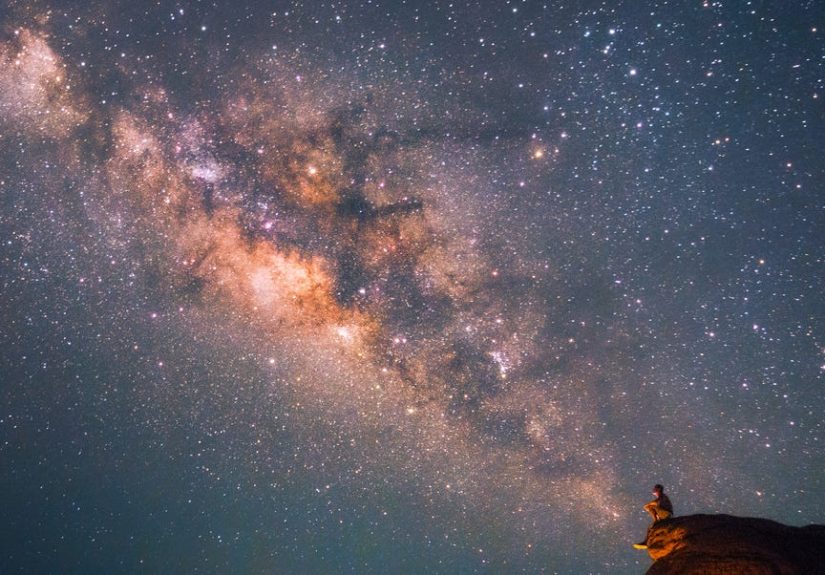
More importantly, July is prime time for the Milky Way in dark areas. Even without a marquee eclipse or planet opposition, stepping outside on a warm night and seeing the galactic band arch overhead is one of the most satisfying experiences in amateur astronomy. No ticket required. No red carpet. Just you, the universe, and a growing suspicion that your porch light is the enemy.
August: Perseids, a Blue Supermoon, and a Great Planet Pairing
August was loaded. First came the Perseid meteor shower, peaking on the night of August 11 and into the early hours of August 12. This is the annual favorite for many Northern Hemisphere observers, and 2024 delivered favorable viewing because the Moon set before the best pre-dawn hours. Under dark skies, seeing dozens of meteors per hour was realistic.
August also featured a close conjunction of Mars and Jupiter around August 14, a fun naked-eye sight in the morning sky. Then, on August 19, the full Sturgeon Moon arrived carrying extra labels like a celebrity at an awards show: it was a Blue Moon and a supermoon. It did not actually look blue, because the universe enjoys technicalities, but it was still one of the year’s most talked-about lunar events.
September: Saturn Shines and the Harvest Moon Gets Dramatic
September was a terrific month for skywatchers. Saturn reached opposition on September 8, meaning Earth lined up between Saturn and the Sun. That made the ringed planet brighter, larger, and visible for most of the night. For telescope users, this is the kind of date you circle with enthusiasm. For naked-eye observers, it meant a steady, golden point of light that did not twinkle much and looked suspiciously important.
Then came the partial lunar eclipse of September 17 to 18, which coincided with the Harvest Moon and a supermoon. This was one of the year’s most layered lunar events: a full moon, a supermoon, a Harvest Moon, and a partial eclipse all showing up to the same party. The eclipse itself was modest, but the combination made it memorable. September also closed with the equinox on September 22, another seasonal turning point for the sky.
October: Ring of Fire and the Closest Full Moon of the Year
On October 2, an annular solar eclipse swept from the Pacific toward southern South America. Unlike the April total eclipse, this one did not completely cover the Sun. Instead, observers in the central path saw the famous “ring of fire” effect, because the Moon appeared slightly too small to block the Sun entirely. Outside the path, a partial eclipse was visible from broader regions.
October also brought the Orionid meteor shower around October 20 to 21. The Orionids, another shower tied to Halley’s Comet, are known for swift meteors and occasional bright streaks. And if October still felt underbooked, it also served up the Hunter’s Moon on October 17, the closest full moon of the year. Big moon, crisp air, Halloween vibes. Honestly, October understood the assignment.
November: Fireballs, Leonids, and Long Nights
November did not feature a giant eclipse, but it offered some classic fall rewards. The Leonid meteor shower peaked around November 17 to 18. The Leonids are more famous for past meteor storms than for dependable yearly abundance, but they remain a beloved entry on any astronomy calendar. Some years are better than others, and moonlight can be an issue, yet the shower still earns attention from experienced observers.
November is also a superb month for long, dark observing sessions. By this point, many skywatchers are not chasing novelty so much as savoring the return of deep night. Constellations like Orion return to evening prominence, and the entire sky starts feeling richer again.
December: Jupiter at Opposition and the Geminids Close the Year
December ended the year with serious astronomy energy. Jupiter reached opposition on December 7, making it the brightest and best placed for observing in 2024. Even small binoculars can reveal its Galilean moons, and a modest telescope can turn a casual glance into a full-blown hobby upgrade.
The Geminid meteor shower peaked after midnight on December 14 and is usually one of the best meteor showers of the year. In 2024, a bright Moon interfered with the fainter meteors, so conditions were less than ideal. Even so, the Geminids are famous for bright, colorful meteors, and they still rewarded patient observers. The winter solstice arrived on December 21, and the year closed under long nights that felt made for one last look upward.
Best 2024 Stargazing Events at a Glance
If you only wanted the all-star lineup, here it is: April 8 for the total solar eclipse, August 11 to 12 for the Perseids, September 8 for Saturn at opposition, September 17 to 18 for the Harvest supermoon partial lunar eclipse, October 2 for the annular eclipse, October 17 for the closest full moon of the year, December 7 for Jupiter at opposition, and December 13 to 14 for the Geminids. Add May 10 to 11 for the surprise aurora outbreak and 2024 starts looking almost unfairly generous.
How to Get More Out of Events Like These
You do not need expensive gear to enjoy astronomy. For most events, the best upgrades are simple: darker skies, patience, warm clothes, and knowing when to look. Binoculars are one of the most useful beginner tools because they are easier to use than a telescope and great for the Moon, bright planets, star fields, and even Jupiter’s moons. For meteor showers, skip the telescope entirely and use your eyeballs. They came standard, and for wide-sky events, they are still excellent equipment.
Also, let your eyes adjust to the dark. That means putting away the flashlight, dimming the phone, and resisting the urge to check messages every six minutes. The universe is old. It can wait for your group chat, but your night vision cannot.
Stargazing Experiences From a Remarkable Year
What made the 2024 astronomy calendar special was not just the number of events. It was the feeling of moving through a year with repeated reasons to step outside and pay attention. January began in the cold with the Quadrantids, the sort of shower that makes you question your life choices at 4 a.m. until the first meteor slices through the sky and suddenly you feel like a genius. By spring, the total solar eclipse turned parking lots, farm fields, school grounds, and highway pull-offs into temporary communities. People who had never spoken before were sharing glasses, countdowns, weather apps, and snacks. For a few minutes, the sky made strangers act like neighbors.
That was a pattern all year long. The best astronomy events in 2024 were not just seen; they were shared. The Perseids invited families to throw blankets in the yard and stay up later than planned. The September partial lunar eclipse turned an ordinary full moon into something worth texting about. Saturn at opposition became an excuse for amateur astronomers to drag telescopes into driveways and sidewalks and say, “Take a look.” The October annular eclipse reminded everyone that even when an event is not visible from your own backyard, it can still feel worldwide. Skywatching has a funny way of making the planet feel both huge and connected at the same time.
Then there were the unscripted moments, which are often the ones people remember best. The auroras of May 2024 were a perfect example. Plenty of people went outside expecting a faint glow and got curtains of color instead. Some saw pink and green for the first time in their lives from places where the northern lights are usually more rumor than routine. It was the kind of event that made people pull over on country roads, wake up relatives, and stand in silence for a minute because language suddenly seemed underqualified.
There is also something deeply satisfying about how astronomy changes your relationship with time. A normal calendar tells you about meetings, bills, birthdays, and that one appointment you forgot until the reminder became passive-aggressive. An astronomy calendar tells you when Earth tilts, when the Moon slides into shadow, when our planet moves through old comet dust, and when a giant gas planet is lined up just right for a better look. It makes the year feel larger. Less like a stack of errands and more like a sequence of cosmic seasons.
For beginners, 2024 was a welcoming year because it offered obvious entry points. You did not need to understand right ascension, own a star tracker, or pretend you knew where Aquarius was on command. You just needed curiosity and decent timing. One eclipse could hook you. One meteor shower could turn a casual interest into a real habit. One look at Jupiter through even a small telescope could make you start browsing astronomy gear with the dangerous confidence of someone who has discovered a new personality.
That may be the best takeaway from the 2024 astronomy calendar. The sky did not simply provide events; it provided invitations. Invitations to look up, slow down, stay outside a little longer, learn a little more, and remember that wonder is still available without a subscription. Whether you caught one event or chased all of them, 2024 proved that stargazing is not just about rare celestial mechanics. It is about attention. And once you learn to give the sky that attention, even an ordinary night starts to feel a little less ordinary.
Conclusion
The 2024 astronomy calendar delivered the full package: a historic total solar eclipse, eye-catching lunar events, reliable meteor showers, bright planets, seasonal turning points, and a few unforgettable surprises. For seasoned observers, it was a feast. For beginners, it was the kind of year that can turn a casual glance upward into a lasting hobby. If there was one lesson from 2024, it was simple: keep looking up. The sky is usually doing something interesting, and every now and then it absolutely shows off.