Table of Contents >> Show >> Hide
- Why Cats Dig in Houseplants in the First Place
- Way #1: Make the Soil Harder to Reach and Less Fun to Dig
- Way #2: Give Your Cat a Better Outlet for Digging, Chewing, and Exploring
- Way #3: Create a Cat-Safe Plant Routine and Train With Consistency
- Final Thoughts
- Real-World Experiences: What Cat Owners Often Learn the Hard Way
Living with cats and houseplants can feel a little like trying to run a fancy indoor jungle inside a tiny demolition zone. One minute your monstera looks magazine-ready. The next minute your cat has turned the pot into a sandbox, the floor into a dirt confetti party, and your dignity into compost. If that sounds familiar, welcome. You are among friends.
The good news is that cats are not digging up houseplants because they are evil geniuses with a grudge against interior design. In most cases, they are doing what cats do best: investigating, pawing, digging, chewing, and generally behaving like furry little archaeologists. The better news is that you can stop the behavior without yelling, chasing, or declaring war on your pothos.
The smartest approach is not to focus on one magical trick. It is to understand why cats dig in plant soil and then make your home less tempting for the behavior while giving your cat a better outlet. That is where these three strategies come in. If you combine them, you can protect your houseplants, keep your cat safer, and stop sweeping potting soil off the rug every morning like it is part of your personality now.
Why Cats Dig in Houseplants in the First Place
Before getting into the three solutions, it helps to know what is driving the behavior. Cats often dig in houseplants for simple reasons: the soil is soft, the pot is easy to access, the leaves move in interesting ways, and the whole setup looks suspiciously like a fun project. For some cats, plant pots feel like a backup litter box. For others, the dirt is just interesting texture, the leaves are chew toys, or the plant is the easiest way to get attention.
Boredom also plays a big role. An indoor cat with too little enrichment may invent hobbies, and those hobbies are not always adorable. Sometimes they involve knocking pens off desks. Sometimes they involve ambushing ankles. And sometimes they involve digging up your favorite houseplant like they have been hired to build a backyard pool in a six-inch pot.
There is also a safety angle. Many popular houseplants are not cat-friendly. So if your cat is digging, chewing, or licking around plant pots, this is not just a décor problem. It can become a health problem, too. That is why prevention is about more than saving your fiddle leaf fig. It is about setting up a home where your cat cannot easily turn curiosity into a vet visit.
Way #1: Make the Soil Harder to Reach and Less Fun to Dig
The fastest way to reduce plant digging is to make the pot physically inconvenient. Cats are opportunists. If the soil is wide open, soft, and easy to reach, many will go for it. If the top of the pot is blocked, the plant is harder to access, and the setup feels awkward instead of rewarding, a lot of cats will move on.
Cover the Soil Surface
Start with the most obvious fix: block direct access to the dirt. You can do this with a breathable barrier such as a coco coir liner, burlap, landscape fabric, decorative mesh, or a cut-to-fit plant cover that sits around the stem. Some cat owners also use smooth river stones or larger decorative pebbles to cover the soil. The goal is simple: when your cat reaches a paw into the pot, the experience should be boring instead of satisfying.
If you use stones, choose pieces large enough that your cat cannot mouth or swallow them. Skip anything sharp, crumbly, or tiny. You want a barrier, not a snack. If you use fabric or mesh, make sure water can still reach the soil and the plant can still breathe. A cover that turns the pot into a swampy science experiment is not an upgrade.
Move Plants Out of the Launch Zone
Floor pots are basically open invitations. A curious cat can stroll over, hop in, and begin excavation without even warming up. Raising plants can help a lot. Hanging planters, wall-mounted shelves, enclosed plant stands, and rooms with limited cat access all make a difference. Think vertically. Cats do, and unfortunately they are usually better at it than we are.
That said, “put it higher” is not always enough. Some cats hear that advice as a personal challenge. If your cat treats shelves like a recreational parkour course, go one step further and place plants where the landing is awkward, the shelf edge is narrow, or the path is blocked by furniture the cat does not use. In other words, do not just move the plant. Change the route.
Choose Heavy, Stable Pots
Lightweight plastic pots are easy to tip, paw, and roll. A heavier planter can make a big difference, especially if your cat likes to hook a paw over the edge and start flinging dirt like a tiny backhoe operator. Stable pots are also safer because they are less likely to fall and break if your cat bumps them during a midnight inspection.
If you want to be extra strategic, place the pot inside a heavier decorative container and keep the surrounding area uncluttered. Cats love a dramatic entrance. Remove the stage.
Way #2: Give Your Cat a Better Outlet for Digging, Chewing, and Exploring
Blocking access helps, but redirection is what makes the change stick. Cats do not stop having instincts just because your peace lily has been moved to witness protection. If your cat loves to dig, chew, paw, or forage, the best long-term solution is to provide a better legal option.
Offer Cat Grass or a Cat-Safe Plant Zone
One of the easiest swaps is giving your cat a plant that is theirs. Cat grass is a popular option because it is easy to grow, relatively inexpensive, and more appropriate for nibbling than random houseplants. A small “yes garden” can work beautifully: one tray of cat grass, maybe a cat-safe herb or two, and a location where your cat is allowed to investigate without you panicking.
This matters because some cats are not obsessed with the houseplant pot itself. They are interested in the texture, smell, or urge to chew greenery. If you redirect that interest to cat grass, you reduce the novelty of your decorative plants. It is the feline version of giving a toddler their own remote so they stop stealing yours.
Increase Play and Foraging Time
A cat who is under-stimulated will find enrichment somewhere. Sadly, the somewhere is often your fern. Daily interactive play helps burn physical energy and reduce boredom. Wand toys, chase games, food puzzles, treat hunts, window perches, climbing shelves, and scratching posts all help create a richer indoor environment.
Try short play sessions once or twice a day, especially around dawn and dusk when many cats are naturally more active. You do not need to run a feline boot camp. Even ten to fifteen focused minutes can help. A cat who has stalked, chased, pounced, and “caught” a toy is more likely to nap afterward and less likely to go looking for trouble in your planter.
Food enrichment can help, too. Instead of serving every meal in a bowl, use puzzle feeders or scatter a portion of kibble in a snuffle-style setup approved for cats. That channels natural foraging behavior into something productive and keeps your cat’s brain busy. Busy cats are still cats, of course, but they are often less committed to amateur gardening sabotage.
Check the Litter Box Setup
If your cat keeps digging in plant pots, do not ignore the possibility that the pot resembles a litter box. Cats can be picky about box size, cleanliness, location, litter texture, or competition from other pets. If the real litter box is too small, too hidden, too dirty, too perfumed, or too annoying to reach, your houseplant may start looking like Plan B.
Make sure the litter box is scooped regularly, easy to access, and placed in a quiet area. In multi-cat homes, the setup matters even more. If your cat seems to dig in pots and eliminate there, address that immediately and talk with your veterinarian if needed. The issue may be behavioral, environmental, or medical, and it is better to solve it early.
Way #3: Create a Cat-Safe Plant Routine and Train With Consistency
The third strategy is about the big picture. Once you have blocked the soil and given your cat better outlets, it is time to make your plant routine smarter. This means choosing safer plants, removing risky temptations, and teaching your cat what pays off in your home.
Swap Out Dangerous Plants
If you live with cats, your plant collection should pass a basic safety test. Some houseplants can cause mild stomach upset, while others are far more dangerous. Instead of filling your home with plants your cat should never touch, lean toward safer choices whenever possible. Cat-friendly households often do better with options like calathea, parlor palm, African violet, cast iron plant, and certain orchids.
This does not mean your home must become a botanical monastery with three sad leaves and no personality. It just means your houseplants should not double as stress generators. And if you have lilies in the home, that is one category to take especially seriously around cats. When in doubt, verify every plant before bringing it indoors.
Use Positive Reinforcement, Not Punishment
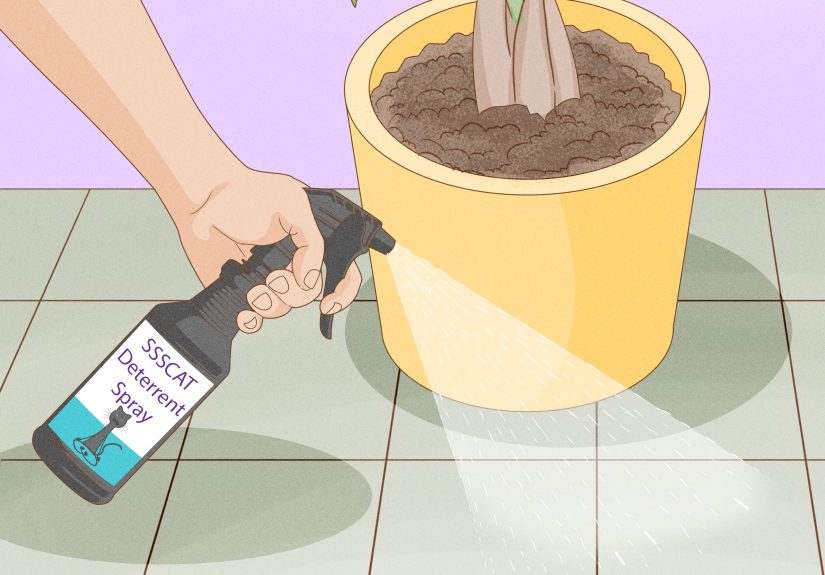
When a cat goes after a plant, many people instinctively clap, yell, or reach for a spray bottle. It feels dramatic. It also tends to work poorly. Punishment may interrupt the behavior in the moment, but it does not teach your cat what to do instead. In some cases, it simply teaches your cat to avoid the plant only when you are visible, which is less training and more bad theater.
A better approach is to interrupt gently, redirect immediately, and reward the better choice. If your cat steps away from the plant and heads to the scratching post, the cat grass, or a toy, that is the moment to reward. Treats, praise, play, or attention can all help. Cats repeat behaviors that work for them. Your job is to make the approved behavior more rewarding than pot excavation.
Consistency matters here. If the plant is off-limits on Monday but hilarious on Wednesday when you are too tired to intervene, your cat will receive mixed signals. Everyone in the household should respond the same way: block access, redirect, reward the better option, repeat. Elegant? Yes. Boring? Also yes. Effective? Much more than shouting at a cat who thinks chaos is enrichment.
Know When to Call the Vet
Most plant digging is behavioral, but sudden or intense interest in dirt, repeated soil eating, vomiting after chewing plants, changes in litter habits, or a major shift in activity level deserves attention. If your cat suddenly goes from mildly nosy to full-time dirt contractor, check with your veterinarian. Behavior changes can sometimes signal stress, digestive upset, or another issue that should not be brushed off as “just being weird.”
Final Thoughts
If you want to prevent cats from digging up houseplants, the best solution is not a single miracle gadget. It is a layered plan. First, make the soil physically less accessible. Second, give your cat better things to do, chew, and investigate. Third, build a cat-safe plant routine that relies on consistency instead of punishment. Put those three pieces together, and you stop treating the symptom while ignoring the cause.
In plain English: protect the pot, enrich the cat, and choose plants like someone in your home regularly licks random leaves. Because, well, someone probably does.
With the right setup, you can absolutely have a home that includes thriving houseplants and a happy indoor cat. It may take some trial and error. It may take moving a few pots, buying a tray of cat grass, and admitting that your cat has strong opinions about soil texture. But it is doable, and your vacuum will thank you.
Real-World Experiences: What Cat Owners Often Learn the Hard Way
One of the most common experiences cat owners describe is assuming the problem is the plant, when the real problem is access. A cat ignores every plant in the home except the one giant floor planter near a sunny window. The owner tries scolding, moving the cat away, and cleaning the mess faster. Nothing changes. Then the planter gets a soil cover, moves onto a stand, and suddenly the behavior drops off. The lesson is simple: convenience drives a lot of cat mischief. If the target is easy, the habit grows.
Another frequent experience involves boredom. A cat that spends long afternoons alone starts batting leaves, pawing soil, and knocking over lightweight pots. The owner thinks the cat is “acting out,” but the behavior improves once daily play becomes more predictable. A wand toy session before breakfast, a puzzle feeder in the afternoon, and a perch near the window can completely change the rhythm of the day. Cats do not always need less energy. They often need somewhere better to put it.
Many people also discover that plant digging and plant chewing are cousins, not strangers. A cat begins by pawing at the soil, then starts nibbling leaves, then graduates to trying every new plant that enters the house like a food critic with whiskers. This is when cat grass often becomes a turning point. Giving the cat a safe plant to investigate does not solve every case overnight, but it frequently reduces the obsession. It gives the cat a legal option, which is far more useful than repeatedly saying no in seven different tones.
Then there is the litter box surprise. Some owners spend weeks trying to “train away” plant digging only to realize the cat dislikes the litter setup. Maybe the box is too small. Maybe it is hidden beside a loud appliance. Maybe the litter has a strong scent. Maybe another pet blocks the path. Once the box becomes cleaner, larger, quieter, or easier to reach, the plant-pot digging eases up. This experience reminds people that cats are not random. They are often logical in ways that are easy for humans to miss.
Finally, plenty of cat owners learn that punishment creates stress without creating lasting success. A spray bottle may stop the behavior when the person is in the room, but the plant still gets attacked when no one is watching. Worse, the cat may become wary of the person instead of the plant. In contrast, households that use barriers, redirection, and rewards usually report steadier improvement. The cat learns what is off-limits, what is allowed, and where the fun actually lives. It is less dramatic than a showdown by the ficus, but it works better in real life.
If there is one shared experience behind all of this, it is that cat-proofing houseplants is rarely about winning a battle of wills. It is about arranging the environment so the right choice becomes the easy choice. Once that clicks, life gets calmer, the plants look better, and your cat can go back to focusing on more important business, like sitting in the one patch of sunlight you were about to use.