Table of Contents >> Show >> Hide
- Why Ingrown Hairs Happen After Epilation
- Way #1: Exfoliate Gently and Strategically
- Way #2: Improve Your Epilation Technique
- Way #3: Focus on Aftercare, Moisture, and Friction Control
- Common Mistakes That Make Ingrown Hairs Worse
- A Simple Routine You Can Actually Follow
- Conclusion
- Experiences and Real-World Lessons From People Dealing With Ingrown Hairs After Epilation
- SEO Tags
Note: HTML body only, ready for web publishing. Unnecessary citation artifacts have been removed.
Epilation can leave your skin feeling gloriously smooth for weeks. That is the good news. The slightly less glamorous news is that your freshly evicted hairs sometimes try to stage a comeback by curling under the skin instead of growing out normally. That is how you get ingrown hairs: those annoying bumps that can itch, sting, turn red, and make you question every beauty decision you have made since middle school.
The good news is that ingrown hairs after epilation are not inevitable. In fact, most of them can be reduced with a smarter routine before, during, and after hair removal. The trick is not to attack your skin like it insulted your family. The trick is to treat it like it has feelings, because it absolutely does.
This guide breaks down three practical ways to prevent ingrown hairs after epilation. You will also learn why they happen, what mistakes make them worse, and how to build an epilation routine that keeps your skin smoother, calmer, and far less dramatic.
Why Ingrown Hairs Happen After Epilation
An ingrown hair forms when a new hair grows back and curls into the skin instead of rising straight through the follicle opening. This is more likely when dead skin cells sit on the surface, when the hair is naturally coarse or curly, when the skin is irritated, or when friction from clothing rubs the area after hair removal.
Epilation removes hair from the root, which is why it lasts longer than shaving. But removing the hair from the root does not guarantee a perfect regrowth pattern. If the follicle opening gets blocked or the new hair struggles to break through the skin, that hair may bend sideways, curl back, and become trapped. The result can look like a tiny pimple, a rashy bump, or a patch of irritated skin that feels rude for no reason.
The most common problem areas are the legs, underarms, and bikini line because they deal with a triple threat: hair removal, sweat, and friction. In other words, your skin is trying its best while your jeans are making things worse.
Way #1: Exfoliate Gently and Strategically
If there is one habit that earns a gold star in ingrown-hair prevention, it is gentle exfoliation. Not angry scrubbing. Not sanding your legs like an old coffee table. Gentle exfoliation.
Why exfoliation matters
Dead skin cells can pile up over follicle openings and trap new hairs underneath the surface. Exfoliation helps remove that buildup so the hair has a clearer path out. It also helps smooth rough texture and may reduce the chance of bumps forming after hair starts growing back.
How to exfoliate before epilation
The sweet spot is usually gentle exfoliation before your epilation session, not aggressive scrubbing right after it. You can use a soft washcloth, a mild body scrub, or a chemical exfoliant designed for your skin type. Products with ingredients such as salicylic acid, glycolic acid, or lactic acid are commonly used to loosen dead skin cells, but stronger formulas are not always better.
If your skin is sensitive, start with the simplest option: a soft washcloth and lukewarm water. If your skin tends to get clogged, rough, or bumpy, a mild exfoliating lotion or cleanser may be more helpful. The goal is to clear the surface, not create a whole new problem called irritation.
How often should you exfoliate?
More is not more here. Over-exfoliating can leave your skin red, dry, and cranky, which can make post-epilation irritation worse. Many people do well with exfoliating one to three times a week depending on skin sensitivity, product strength, and the area being treated. Sensitive skin usually needs less. If your skin starts to sting, burn, peel, or feel tight, back off.
What to avoid
Do not exfoliate over sunburned skin, open cuts, active rashes, or freshly irritated follicles. Also do not layer every active ingredient you own just because your bathroom shelf believes in chaos. If you already use retinoids, benzoyl peroxide, or other strong acne treatments, go easy. Your skin barrier deserves a vote.
Bottom line: Exfoliate gently before epilation, then give your skin a short recovery window. That one habit alone can make a noticeable difference in preventing ingrown hairs after hair removal.
Way #2: Improve Your Epilation Technique
Sometimes the problem is not your skin. Sometimes the problem is the way the epilator is being used. Technique matters more than most people realize.
Start with clean skin and a clean device
Before epilating, wash the area with a mild cleanser and make sure the skin is dry unless your device is specifically designed for wet use. Sweat, lotion buildup, and leftover deodorant can all interfere with how the device grips hair. They can also contribute to irritation.
Your epilator itself needs regular cleaning too. A dirty device is not just gross in theory. It can leave lingering hairs, bacteria, and debris on the head, which is not what anyone wants rubbing across freshly treated skin. Clean the device according to the manufacturer’s directions after every use.
Hold the skin taut
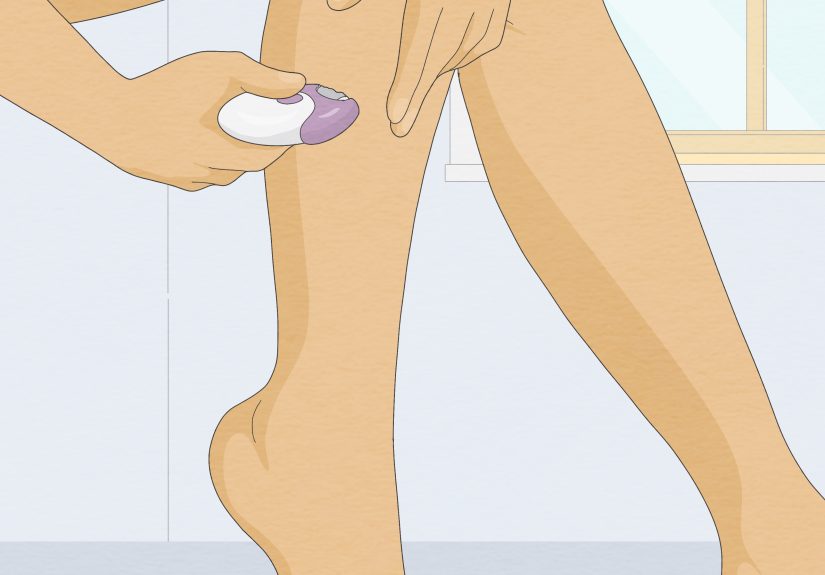
One of the easiest ways to reduce tugging is to gently pull the skin taut with your free hand while epilating. This can help the device grab hairs more cleanly and may reduce the amount of awkward yanking that leaves skin irritated. It is a small adjustment that makes a big difference, especially on curved areas like knees, ankles, and underarms.
Move slowly and follow hair growth
Rushing through epilation is how you end up with missed hairs, broken hairs, and a general feeling that the machine has betrayed you. Move slowly. Let the device do the work. Many experts also recommend moving with attention to the direction of hair growth rather than swiping wildly from every possible angle.
Broken hairs are not ideal because they can regrow in a way that is more likely to get trapped. A patient, controlled pass is far more helpful than five frantic ones.
Use the right angle and pressure
Most epilators work best when held at roughly a right angle to the skin. Pressing too hard can increase irritation without improving results. Think “steady contact,” not “I am trying to iron my leg.” A lighter touch is usually both more comfortable and more effective.
Time your session wisely
If your skin gets pink or reactive after epilation, doing it at night can be a smart move. By morning, a lot of that temporary redness may have settled down. This is especially useful if you do not want your coworkers, classmates, or mirror asking questions.
Bottom line: Better technique means less irritation, fewer broken hairs, and a cleaner regrowth pattern. Translation: fewer opportunities for ingrown hairs to show up uninvited.
Way #3: Focus on Aftercare, Moisture, and Friction Control
What you do after epilation can be just as important as what you do before it. Skin that is dry, inflamed, or constantly rubbing against tight fabric is much more likely to develop bumps and trapped hairs.
Moisturize right after epilation
After you finish, apply a gentle, fragrance-free moisturizer to calm the skin and support the barrier. This matters because epilation can temporarily irritate the follicle opening. Hydrated skin tends to handle regrowth more smoothly than dry, flaky skin.
Look for soothing ingredients like glycerin, ceramides, hyaluronic acid, or aloe if your skin tolerates them well. Heavy fragrance, harsh alcohols, or stinging “refreshing” products are not the heroes of this story.
Wait before exfoliating again
Yes, exfoliation helps prevent ingrown hairs. No, that does not mean you should scrub immediately after epilation. Freshly epilated skin may be too sensitive for that. A safer approach is to moisturize first, let the skin settle, and return to gentle exfoliation about 24 hours later if the area feels calm.
Wear loose, breathable clothing
Tight leggings, skinny jeans, and snug waistbands can create friction that irritates follicles and encourages hairs to grow sideways. This is especially true on the thighs, bikini line, and underarms. For the rest of the day after epilation, loose and breathable clothing is your friend. Cotton wins. Skin-tight synthetic fabrics can sit down.
Do not pick at bumps
If you notice a bump forming, resist the urge to squeeze it, scratch it, or perform bathroom-counter surgery with tweezers and poor lighting. Picking can increase inflammation, dark marks, and infection risk. Instead, use a warm compress, keep the area clean, and let the hair work its way out naturally whenever possible.
Know when to pause and when to get help
If you keep getting painful, inflamed, or infected ingrown hairs, it may be time to change methods or talk to a dermatologist. Persistent ingrown hairs can sometimes be managed with prescription treatments such as retinoids, antibiotics, or anti-inflammatory creams. For chronic cases, longer-term options like laser hair removal may also be discussed.
Call a healthcare professional if a bump becomes very painful, drains pus, feels hot, or the redness starts spreading. That is no longer a simple “wait it out” situation.
Bottom line: Moisturize, reduce friction, avoid picking, and give the skin room to recover. Post-epilation calm is not boring. It is effective.
Common Mistakes That Make Ingrown Hairs Worse
- Skipping exfoliation for weeks, then scrubbing like you are auditioning for a cleaning commercial
- Using an epilator on irritated, broken, or very dry skin
- Moving too fast and snapping hairs instead of removing them cleanly
- Applying heavily fragranced products right after hair removal
- Putting on tight clothes immediately after epilation
- Picking at every bump because patience apparently left the group chat
A Simple Routine You Can Actually Follow
The day before
Gently exfoliate the area and moisturize afterward.
The day of epilation
Clean the skin, make sure the epilator is clean, hold the skin taut, and move slowly with a light touch.
Right after
Apply a gentle moisturizer, skip irritating products, and wear loose clothing.
The next day
Resume gentle exfoliation if the skin feels calm, then keep moisturizing regularly.
Conclusion
Preventing ingrown hairs after epilation is not about luck. It is about routine. When you gently exfoliate before hair removal, use better epilation technique, and give your skin smart aftercare, you dramatically lower the odds of those stubborn bumps showing up later.
In other words, smoother skin is not just about removing hair. It is about helping the new hair grow back normally without getting stuck, inflamed, or irritated along the way. Treat your skin with a little patience, a little consistency, and a lot less chaos, and it will usually return the favor.
Experiences and Real-World Lessons From People Dealing With Ingrown Hairs After Epilation
One of the most common experiences people describe after starting epilation is confusion. At first, they love how long the results last. Their legs stay smooth longer than they do after shaving, and they think they have officially won the hair-removal lottery. Then a few days later, tiny bumps start appearing around the knees, calves, or underarms, and suddenly they are googling questions in a panic while wearing the softest pajama pants they own.
A typical pattern goes like this: someone epilates on completely dry, unprepped skin, rushes the process, then pulls on tight jeans and heads out the door. The next day the area feels rough, itchy, and irritated. After that, they either ignore it or attack the bumps with a harsh scrub. Neither plan works especially well. When they finally switch to a gentler routine, the results improve. That is the part people wish they knew sooner.
Another common experience is learning that “clean enough” is not actually clean enough. Many users discover that cleaning the epilator after every session matters more than they expected. Once they start removing trapped hairs from the head and wiping the device down properly, they often notice less irritation. It is not glamorous advice, but neither is dealing with clogged follicles.
People with sensitive skin often say the biggest breakthrough is realizing they cannot treat their skin like a hardwood floor. Once they stop over-scrubbing and start moisturizing consistently, bumps become less frequent. Some switch from gritty body scrubs to softer washcloth exfoliation. Others use mild chemical exfoliants once or twice a week instead of daily. In both cases, the lesson is similar: gentle and consistent beats harsh and heroic.
Friction is another lesson many people learn the annoying way. Someone epilates their bikini line or thighs, then spends the rest of the day in tight workout leggings, sits through a long commute, and ends up with irritated bumps. Later, they try the same hair-removal routine but wear loose cotton clothing afterward and notice a clear difference. It feels almost unfair that pants can sabotage skincare, but here we are.
There are also people who find that certain body areas simply need a different strategy. Legs may tolerate epilation beautifully, while underarms revolt dramatically. In those cases, experience teaches flexibility. Some continue epilating their legs but trim or use another method in more sensitive areas. That does not mean the routine failed. It means they paid attention to what their skin was saying instead of trying to win an argument with it.
Perhaps the most helpful real-world lesson is that recurring ingrown hairs are not always a sign you are doing everything wrong. Hair texture, skin sensitivity, hormones, sweat, and friction all play a role. Sometimes the best progress comes from reducing the problem rather than eliminating it completely. Fewer bumps, less irritation, and faster healing still count as success. Skin care does not have to be perfect to be effective.
In the end, the people who seem happiest with epilation are not the ones with magical skin. They are the ones who found a rhythm: exfoliate gently, epilate carefully, moisturize faithfully, and stop picking at bumps. Not exactly thrilling advice, but surprisingly powerful.