Table of Contents >> Show >> Hide
- Why Easy DIY Centerpieces Work So Well
- 30 Beautiful Centerpiece Ideas You Can DIY in Minutes
- 1. Mason Jar Flower Trio
- 2. Citrus Bowl Centerpiece
- 3. Candle and Greenery Runner
- 4. Bud Vase Collection
- 5. Wooden Tray Display
- 6. Pitcher Full of Garden Stems
- 7. Floating Flower Bowls
- 8. Simple Ceramic Bowl
- 9. Herb Pot Centerpiece
- 10. Wine Bottle Stem Vases
- 11. Fruit and Flower Mix
- 12. Book Stack Centerpiece
- 13. Lantern Centerpiece
- 14. Mini Pumpkin Cluster
- 15. Glass Hurricane and Seasonal Fillers
- 16. Monochrome Flower Arrangement
- 17. Farmers Market Basket
- 18. Taper Candle Lineup
- 19. Succulent Mini Garden
- 20. Vintage Tea Cup Flowers
- 21. Branches in a Tall Vase
- 22. Coastal Shell Bowl
- 23. Coffee Table Candle Cluster
- 24. Grocery Store Bouquet Upgrade
- 25. Napkin-Wrapped Vase
- 26. Edible Dessert Centerpiece
- 27. Dried Flower Bundle
- 28. Holiday Ornament Bowl
- 29. Place Card Centerpiece
- 30. Foraged Greenery Arrangement
- Quick Styling Tips for DIY Table Centerpieces
- Best Centerpiece Ideas by Occasion
- Common DIY Centerpiece Mistakes to Avoid
- Experience Notes: What I’ve Learned From Making DIY Centerpieces in Real Life
- Conclusion
A beautiful centerpiece does not need to involve a florist, a glue gun injury, or a dramatic midnight run to the craft store. Sometimes the best table decorations come from things already hanging around your kitchen, pantry, garden, or “miscellaneous pretty stuff” drawer. With the right mix of flowers, candles, fruit, greenery, trays, bowls, and everyday objects, you can create a DIY centerpiece in minutes and make your table look like it has its life togethereven if the laundry pile in the next room strongly disagrees.
Whether you are hosting brunch, decorating a coffee table, planning a casual dinner party, styling a wedding shower, or simply trying to make Tuesday night pasta feel less like a survival meal, these easy centerpiece ideas are fast, affordable, and flexible. The trick is to think in layers: one anchor piece, one natural element, one texture, and one little surprise. That formula works for modern tables, farmhouse tables, holiday tables, outdoor parties, and even tiny apartment dining corners.
Below are 30 beautiful centerpiece ideas you can DIY in minutes, plus practical styling tips and real-life experience notes at the end to help you avoid the classic centerpiece crimes: too tall, too crowded, too scented, too wobbly, and too “why is there a pumpkin in my water glass?”
Why Easy DIY Centerpieces Work So Well
Quick centerpieces work because they focus on visual impact instead of complicated construction. A low bowl of citrus, a cluster of bud vases, a pitcher full of garden stems, or a row of candles can instantly make a table feel intentional. You do not need perfection. In fact, a slightly relaxed arrangement often looks more inviting than something stiff and over-designed.
The best DIY table centerpiece should do three things: look pretty, fit the occasion, and stay out of the way. Guests should be able to talk across the table without leaning around a floral tower like they are trying to spot a friend at a concert. Keep dinner table arrangements low or narrow, save taller drama for buffet tables, and always leave room for plates, glasses, and elbows. Elbows are underrated design elements.
30 Beautiful Centerpiece Ideas You Can DIY in Minutes
1. Mason Jar Flower Trio
Place three mason jars down the center of the table and fill each with a small bunch of seasonal flowers. Use one color family for a polished look or mix wildflowers for a relaxed country feel. A strip of ribbon, twine, or linen around each jar adds texture without much effort.
2. Citrus Bowl Centerpiece
Fill a shallow bowl with lemons, oranges, limes, or grapefruit. Add a few glossy leaves or small white flowers between the fruit. It is fresh, cheerful, and bonus points: it can become lemonade later. This is one of the easiest centerpiece ideas for summer brunches and outdoor meals.
3. Candle and Greenery Runner
Lay eucalyptus, rosemary, olive branches, or faux greenery along the center of the table. Nestle pillar candles or battery-operated candles between the stems. The result feels romantic, natural, and expensive, even if you made it five minutes before guests rang the doorbell.
4. Bud Vase Collection
Gather several small vases, empty spice jars, or narrow bottles. Put one or two stems in each and scatter them along the table. This design is perfect when you have only a small bouquet but want it to look abundant. It also keeps the arrangement low enough for conversation.
5. Wooden Tray Display
Use a wooden tray as the base for a quick centerpiece. Add a candle, a small plant, a bowl of fruit, and a folded cloth napkin for softness. A tray makes random objects look curated, which is basically the magic wand of home decorating.
6. Pitcher Full of Garden Stems
A ceramic pitcher, glass water jug, or vintage metal pitcher can become a charming vase. Fill it with hydrangeas, roses, daisies, branches, or whatever your yard generously offers. This works especially well for farmhouse, cottage, and casual family tables.
7. Floating Flower Bowls
Fill a wide glass bowl with water and float flower heads on the surface. Roses, camellias, dahlias, and gardenias look especially pretty. Add floating candles for evening events, but keep fragrance light so the centerpiece does not compete with dinner.
8. Simple Ceramic Bowl
Sometimes one beautiful bowl is enough. Choose a sculptural ceramic bowl and fill it with pears, apples, pinecones, ornaments, wrapped candies, or nothing at all. Empty can be elegant. Empty also takes zero minutes, which is a design win.
9. Herb Pot Centerpiece
Line up small pots of basil, thyme, rosemary, mint, or parsley. This centerpiece looks fresh, smells pleasant, and can be clipped during dinner. It is especially useful for Italian dinners, garden parties, and anyone who wants décor that earns its keep.
10. Wine Bottle Stem Vases
Reuse clean wine bottles as narrow vases. Add one long-stemmed flower, branch, or dried grass to each bottle. Group three or five together for balance. Clear bottles feel modern, green bottles feel rustic, and painted bottles can match a party theme.
11. Fruit and Flower Mix
Combine sliced citrus, whole fruit, and flowers in a clear vase or compote. Lemons with white flowers, peaches with pink roses, or apples with fall mums create instant seasonal charm. Keep the fruit outside the water if you want the arrangement to last longer.
12. Book Stack Centerpiece
Stack two or three beautiful books and top them with a small candle, vase, or decorative object. This works well on coffee tables, sideboards, and casual dining tables. Choose books with attractive covers or wrap them in kraft paper for a softer neutral look.
13. Lantern Centerpiece
Place a lantern in the middle of the table and surround it with greenery, mini pumpkins, shells, ornaments, or flowers depending on the season. Use battery candles for safety, especially outdoors or around children, pets, and enthusiastic sleeve-wavers.
14. Mini Pumpkin Cluster
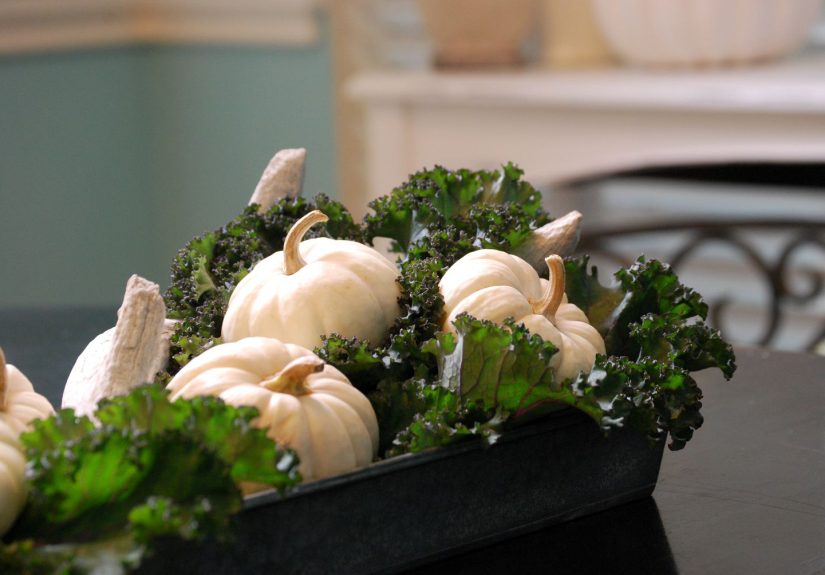
For fall, group mini pumpkins and gourds in a shallow basket or tray. Add leaves, wheat, eucalyptus, or taper candles for height. White pumpkins feel elegant, orange pumpkins feel festive, and painted pumpkins let you match any color scheme.
15. Glass Hurricane and Seasonal Fillers
Place a candle inside a glass hurricane and fill the bottom with coffee beans, cranberries, acorns, shells, pebbles, or faux snow. This easy centerpiece can shift from summer beach dinner to cozy winter gathering with a quick swap of fillers.
16. Monochrome Flower Arrangement
Choose flowers in one color and place them in a matching or neutral vase. All-white tulips, pink roses, yellow daffodils, or purple irises look intentional without complicated arranging. Monochrome centerpieces are perfect for beginners because the color does most of the design work.
17. Farmers Market Basket
Fill a low basket with fresh vegetables, herbs, and a few flowers. Artichokes, radishes, carrots with tops, tomatoes, and leafy greens look surprisingly stylish. This is a great centerpiece for casual dinners, farm-to-table meals, or anyone who wants the table to say, “Yes, I own a linen apron emotionally.”
18. Taper Candle Lineup
Arrange taper candles in holders down the center of the table. Vary the heights slightly but keep the colors cohesive. Add greenery or small flowers around the bases if you want more softness. For dinner parties, unscented candles are the safest choice.
19. Succulent Mini Garden
Place small succulents in a shallow dish, tray, or line of tiny pots. Add pebbles or moss to cover the soil. Succulents last long after the event, which makes this centerpiece practical for everyday decorating or guest favors.
20. Vintage Tea Cup Flowers
Fill mismatched tea cups with short flower stems. This is sweet for bridal showers, Mother’s Day, tea parties, and spring brunches. Use floral foam only if needed, or simply trim stems short and pack them tightly so they support each other.
21. Branches in a Tall Vase
For a buffet, entry table, or console, place dramatic branches in a tall vase. Cherry blossoms, curly willow, olive branches, and autumn leaves all make a strong statement. Avoid tall branches on a dinner table unless you want guests communicating by carrier pigeon.
22. Coastal Shell Bowl
Fill a bowl or tray with shells, driftwood, sea glass, and a few small candles. This centerpiece is perfect for summer meals, beach houses, or nautical themes. Keep it simple so it feels breezy instead of souvenir-shop-overload.
23. Coffee Table Candle Cluster
For living rooms, group candles of different heights on a tray. Add a small vase, matches in a pretty holder, and a decorative bead garland. The tray keeps everything organized and easy to move when snacks arrive, because snacks deserve respect.
24. Grocery Store Bouquet Upgrade
Buy one supermarket bouquet, separate the stems by type, remove extra leaves, and arrange them in several smaller containers. This makes a basic bouquet look custom. Add greenery from the yard or herbs from the kitchen to create more volume.
25. Napkin-Wrapped Vase
Wrap a plain jar or vase with a cloth napkin and secure it with twine, ribbon, or a rubber band hidden under fabric. Add flowers or branches. This trick is excellent when the only vase available is technically a pasta sauce jar with ambitions.
26. Edible Dessert Centerpiece
Place cupcakes, cookies, fruit tarts, or mini pastries on a cake stand in the center of the table. Add flowers around the base or tuck in greenery. It looks decorative before dinner and becomes dessert after dinner, which is the kind of efficiency everyone can support.
27. Dried Flower Bundle
Use dried lavender, wheat, bunny tails, eucalyptus, or preserved grasses in a simple vase. Dried arrangements are low-maintenance, long-lasting, and ideal for neutral interiors. Keep them away from open flames and humid rooms.
28. Holiday Ornament Bowl
During the holidays, fill a bowl with ornaments in two or three colors. Add fairy lights for sparkle. This takes less than five minutes and works for dining tables, mantels, coffee tables, and entry consoles.
29. Place Card Centerpiece
Turn place cards into part of the centerpiece by clipping names to small branches, tying tags around mini vases, or placing cards in fruit slices. This adds personality and helps guests find their seats without the awkward “Where do I belong?” shuffle.
30. Foraged Greenery Arrangement
Clip safe, clean greenery from your yard and place it in a vase, bowl, or along a runner. Magnolia leaves, evergreen sprigs, ivy, ferns, and herbs can look beautiful. Avoid unknown berries or toxic plants, especially if children or pets will be nearby.
Quick Styling Tips for DIY Table Centerpieces
Keep the Height Conversation-Friendly
For dining tables, low arrangements usually work best. A centerpiece should enhance conversation, not become a leafy wall between Aunt Linda and the mashed potatoes. If you love height, use tall, narrow elements or place dramatic pieces on a buffet instead.
Use Odd Numbers
Groups of three, five, or seven often look more natural than pairs. Try three bud vases, five candles, or seven small pumpkins. Odd numbers create movement and make the arrangement feel relaxed rather than overly symmetrical.
Repeat One Color
A centerpiece looks more polished when one color repeats across flowers, linens, candles, or dishes. For example, white roses, white napkins, and white taper candles create a clean design even if the tableware is simple.
Mix Textures
Combine smooth glass with rough wood, soft flowers with shiny fruit, or matte ceramics with flickering candlelight. Texture makes a simple centerpiece feel layered and interesting without adding clutter.
Think About Scent
Strongly scented flowers and candles can interfere with food. Save heavy fragrance for entry tables or bathrooms. At the dining table, choose unscented candles and lightly fragrant greenery like rosemary or eucalyptus.
Best Centerpiece Ideas by Occasion
For Everyday Dining
Choose something easy to move, such as a tray with a candle and small plant, a bowl of fruit, or a few bud vases. Everyday centerpieces should be pretty but practical. If it takes longer to move the décor than to eat the meal, the centerpiece has become the main character in the wrong movie.
For Dinner Parties
Use low flowers, candle clusters, greenery runners, or scattered bud vases. Leave space for serving dishes and glasses. A dinner party centerpiece should feel special but not steal all available real estate from the bread basket.
For Weddings and Showers
Bud vase collections, tea cup flowers, lanterns, and monochrome arrangements are budget-friendly and easy to repeat across multiple tables. Keep the design consistent by using the same vessel style or flower color on each table.
For Holidays
Seasonal fillers make quick decorating simple. Use pumpkins and leaves in fall, ornaments and greenery in winter, tulips and eggshell colors in spring, and citrus or shells in summer. A centerpiece feels festive when it reflects the season without overwhelming the table.
Common DIY Centerpiece Mistakes to Avoid
The first mistake is making the centerpiece too tall for a dining table. If guests have to dodge branches to ask for the salad, trim it down. The second mistake is overcrowding. A centerpiece needs breathing room, and so do forks, glasses, napkins, and actual human arms.
The third mistake is forgetting scale. A tiny bud vase may disappear on a long farmhouse table, while a huge floral arrangement can swallow a small round table. Match the centerpiece to the table shape: round tables often look best with one central arrangement, while rectangular tables can handle a runner-style design or several smaller pieces.
The fourth mistake is using materials that shed, stain, or smell too strong. Glitter, loose moss, wet leaves, and heavily perfumed candles can turn a pretty table into a cleanup project. Beauty is wonderful; vacuuming glitter from soup bowls is less wonderful.
Experience Notes: What I’ve Learned From Making DIY Centerpieces in Real Life
After experimenting with quick DIY centerpieces for casual dinners, family holidays, small celebrations, and “I need this table to look better before someone arrives” emergencies, one lesson stands above all: simple almost always wins. The centerpiece people compliment most is rarely the one that took the longest. It is usually the one that feels natural, fits the mood, and does not make guests nervous about knocking something over.
Fresh flowers are beautiful, but they are not mandatory. Some of the easiest centerpieces come from fruit bowls, potted herbs, candles, and trays. A bowl of lemons can brighten a kitchen table faster than an expensive arrangement, especially when paired with a white cloth or a few green leaves. For fall, mini pumpkins and taper candles create instant warmth. For winter, evergreen clippings in a pitcher can make the room feel cozy without requiring a single ornament. For spring, even two tulips in a small jar can look charming if the vase is clean and the table is uncluttered.
The biggest practical tip is to build the centerpiece where it will be used. Many people arrange everything on a counter, carry it to the table, and then discover it is too wide, too tall, or blocking every serving dish. Start directly on the table and check the view from a seated position. Sit down, look across, and ask: Can I see the person opposite me? Can plates still fit? Is anything too close to a candle flame? This tiny test saves a surprising number of design disasters.
Another helpful habit is keeping a small “centerpiece kit” at home. It does not need to be fancy. A few bud vases, neutral taper candles, battery tea lights, twine, a small tray, and one or two cloth napkins can solve most decorating problems. Add flowers from the grocery store, greenery from outside, or fruit from the kitchen, and you have a centerpiece in minutes. This is especially useful before holidays, birthdays, and last-minute hosting moments when your brain is already busy remembering whether you cleaned the bathroom.
Color restraint also makes a huge difference. When in doubt, choose two main colors and one neutral. White and green always work. Pink and peach feel soft and romantic. Blue and white feel crisp. Orange, brown, and cream feel autumnal. Gold, green, and white feel festive without becoming too loud. A limited palette helps inexpensive materials look intentional.
Finally, the best centerpieces have a little personality. A vintage pitcher from your grandmother, herbs from your windowsill, shells from a beach trip, handwritten place cards, or a funny little ceramic bowl can make a table feel personal. Guests remember that warmth more than they remember whether every stem was perfectly angled. A centerpiece is not just decoration; it is a welcome sign. It says, “I’m glad you’re here, and yes, I triedbut not so hard that we can’t relax.” That is the sweet spot.
Conclusion
Beautiful DIY centerpieces do not require a big budget, professional floral skills, or an entire weekend of crafting. With flowers, candles, fruit, greenery, trays, bowls, jars, and a little creative confidence, you can transform any table in minutes. The best centerpiece ideas are simple, flexible, and personal. They make the table feel finished without making guests feel like they are dining inside a craft-store explosion.
Start with what you already have, keep the arrangement low for conversation, repeat a color for polish, and use texture to create interest. Whether you choose mason jar flowers, a citrus bowl, a candle runner, potted herbs, a lantern, or a bowl of ornaments, your table can look beautiful fast. And honestly, if anyone asks how long it took, you are allowed to smile mysteriously and let them assume you are a domestic wizard.