Table of Contents >> Show >> Hide
- Why Old Paintings Make Such Ridiculously Good Memes
- 50 Classical Art Paintings That Were Reused To Create Relatable Memes
- When Life Feels Like a Group Project Designed by Villains
- For Social Anxiety, Awkward Silence, and Looking Busy on Purpose
- Relationship Drama, Romantic Delusion, and Other Historic Mistakes
- Work, Food, Productivity, and the Collapse of Personal Balance
- For Maximum Drama, Existentialism, and “Please Don’t Perceive Me” Energy
- Why These Meme Paintings Keep Working
- Conclusion
- Extra Reflection: What It Feels Like to See Your Modern Life Staring Back at You From an Old Painting
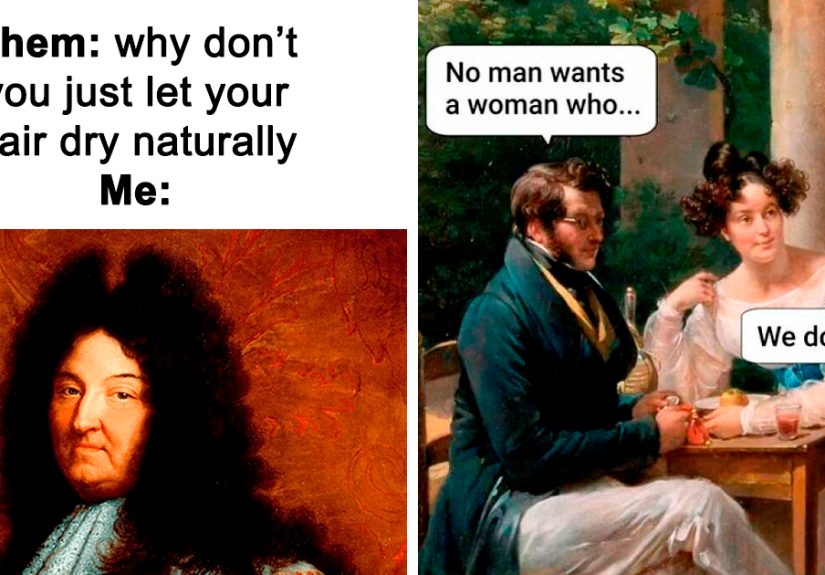
There are two kinds of people on the internet: people who post memes, and people who stare at a 400-year-old painting and whisper, “Wow, that is exactly how I look when someone says, ‘Per my last email.’” Somewhere along the way, the internet discovered that old paintings are not dusty, distant relics. They are emotional support images with better lighting.
That is why classical art memes keep thriving. A Renaissance side-eye, a Baroque fainting spell, a Romantic-era existential stare into the fognone of it needs much help. Add one modern caption, and suddenly a masterpiece becomes a group chat confession. It turns out people in elaborate collars, satin gowns, and tragic historical circumstances were still making the same basic faces we make today: tired, annoyed, suspicious, dramatic, hungry, and one inconvenience away from spiritual collapse.
Why Old Paintings Make Such Ridiculously Good Memes
The secret is contrast. Classical and historical paintings were designed to amplify emotion. Painters exaggerated posture, gesture, facial expression, and tension so viewers could read a story instantly. That visual drama is pure meme fuel. Modern memes also depend on speed: one image, one emotion, one punchline. Old paintings deliver the first two before the caption even arrives.
There is also the public-domain factor. Museums and major institutions have spent the last decade opening up huge digital collections, which means high-resolution images of older works are easier than ever to download, crop, remix, and circulate. In other words, the internet did not break art history; it found a new distribution channel and ran with it at full speed while holding iced coffee.
Most of all, these memes work because they collapse time. A 15th-century portrait, an 18th-century salon scene, and a 19th-century disaster painting all become modern shorthand for universal experiences: bad meetings, relationship nonsense, social exhaustion, doomscrolling, awkward dinners, and the ancient human pain of pretending everything is fine when it is very much not fine.
50 Classical Art Paintings That Were Reused To Create Relatable Memes
Below are 50 paintings that either show up often in classical-art meme culture or have the exact kind of emotional chaos that meme-makers love borrowing. Some are famous, some are weird, and all of them are one caption away from becoming the visual equivalent of “same.”
When Life Feels Like a Group Project Designed by Villains
- The Scream Edvard Munch
This is the reigning monarch of panic memes. It is the perfect image for “I checked my bank account” or “My boss said we need a quick call.” - Judith Beheading Holofernes Artemisia Gentileschi
Internet users love this one for rage with purpose. It radiates “I asked nicely three times, and now we are in consequences territory.” - Saturn Devouring His Son Francisco Goya
Not subtle, not calm, not emotionally regulated. This is every meme about stress-eating your feelings and then immediately regretting your life choices. - The Raft of the Medusa Théodore Géricault
A giant floating disaster full of desperation? That is just teamwork during deadline week with better anatomy and worse odds. - The Third of May 1808 Francisco Goya
This painting often gets meme treatment for moments of exaggerated surrender: “Fine, take my weekend,” “Sure, add another task,” and “I guess I live at work now.” - The Nightmare Henry Fuseli
Ideal for captions about insomnia, anxiety, and the specific terror of remembering an embarrassing thing from 2014 at 2:13 a.m. - Ophelia John Everett Millais
Beautiful, haunting, and weirdly useful for memes about emotionally floating through chaos while pretending to be serene. - Liberty Leading the People Eugène Delacroix
This one gets reused whenever someone wants to depict dramatic leadership over a ridiculously small cause, like marching into the kitchen for snacks at midnight. - Wanderer above the Sea of Fog Caspar David Friedrich
The official painting of “staring into the distance while rethinking every decision I made after 2020.” - The Garden of Earthly Delights Hieronymus Bosch
Basically a medieval fever dream with endless reaction-image potential. It has the energy of opening five social apps and regretting civilization.
For Social Anxiety, Awkward Silence, and Looking Busy on Purpose
- Girl with a Pearl Earring Johannes Vermeer
That expression says, “I heard what you said, and I am choosing politeness over honesty.” Classic meme restraint. - The Arnolfini Portrait Jan van Eyck
This one gets meme mileage from its stiff, formal awkwardness. It looks exactly like a couple taking a photo after a minor argument in the parking lot. - Las Meninas Diego Velázquez
A whole room full of people looking in different directions for different reasons. It is basically the visual form of a chaotic family group chat. - The Ambassadors Hans Holbein the Younger
Excellent for memes about trying to look polished while chaos, mortality, or unpaid subscriptions lurk in the corner. - American Gothic Grant Wood
Two faces, one emotional climate: “We said no gifts,” “We are disappointed,” and “Who touched the thermostat?” - Arrangement in Grey and Black No. 1 (Whistler’s Mother) James McNeill Whistler
The original “I’m not mad, I’m just observing your nonsense in silence.” - Nighthawks Edward Hopper
This painting is meme gold for loneliness, late-night overthinking, or the eerie feeling that everyone is awake for bad reasons. - Christina’s World Andrew Wyeth
Used online for moments when the goal is technically visible but emotionally still ten miles away. Relatable? Painfully. - Paris Street; Rainy Day Gustave Caillebotte
Perfect for urban alienation memes: surrounded by people, emotionally on airplane mode. - The Gleaners Jean-François Millet
The visual equivalent of “me picking up the scraps after everyone else already took the credit.”
Relationship Drama, Romantic Delusion, and Other Historic Mistakes
- The Kiss Gustav Klimt
Often used ironically for clingy affection, over-the-top romance, or couples who act like the grocery store is their private movie set. - The Birth of Venus Sandro Botticelli
Ideal for “showing up late but trying to make it look intentional.” It is elegance with suspiciously good PR. - Venus with a Mirror Diego Velázquez
The face is soft, but the vibe is pure “I know I look good, and yes, I saw you looking.” - The Lovers René Magritte
This one is endlessly useful for memes about poor communication, confusing relationships, and dating while emotionally wrapped in towels. - The Swing Jean-Honoré Fragonard
Flirty, playful, and a little chaotic. It is the painting version of “I am absolutely enjoying attention and will not be taking questions.” - Luncheon of the Boating Party Pierre-Auguste Renoir
A full cast of people pretending to be relaxed while someone in the group is definitely about to say something annoying. - The Card Players Paul Cézanne
Quiet competition, intense focus, and suspicious silence. Great for memes about passive-aggressive game night energy. - The Dance Class Edgar Degas
Perfect for captions about trying to look graceful while internally filing several complaints. - A Bar at the Folies-Bergère Édouard Manet
That thousand-yard service-industry stare has carried about half the internet’s customer-facing despair. - The Reluctant Bride Auguste Toulmouche
One of the clearest examples of an older painting becoming a modern meme sensation. Her expression has become a universal symbol for “I am physically present, spiritually filing an objection.”
Work, Food, Productivity, and the Collapse of Personal Balance
- Mound of Butter Antoine Vollon
Strangely beloved online because it feels both luxurious and unnecessary, like buying a little treat after surviving one email. - The Milkmaid Johannes Vermeer
A favorite for memes about quietly doing all the work while everyone else contributes opinions and zero labor. - The Last Supper Leonardo da Vinci
Great for chaotic dinner-table captions, office meetings, or any scenario where one piece of news instantly ruins the vibe for twelve people. - The School of Athens Raphael
Used for intellectual chaos, group projects, and moments when everyone has a theory and nobody has a plan. - Napoleon Crossing the Alps Jacques-Louis David
The internet loves using this for overconfidence: striding into a very ordinary task like it is a heroic military campaign. - The Oath of the Horatii Jacques-Louis David
Excellent for memes about dramatic commitment to things nobody else asked for. - The Death of Marat Jacques-Louis David
Darkly funny in the internet age, especially for captions about sending one final text before giving up on humanity. - The Son of Man René Magritte
Every meme about blocked communication, curated identity, and being mysterious mostly because nobody knows what is going on. - The Fallen Angel Alexandre Cabanel
This is pure wounded ego, defiance, and “I’m upset, but I still look amazing.” Frankly, meme excellence. - The Laughing Cavalier Frans Hals
The smirk alone can carry an entire meme about being far too pleased with yourself after doing the bare minimum.
For Maximum Drama, Existentialism, and “Please Don’t Perceive Me” Energy
- The Mona Lisa Leonardo da Vinci
Still undefeated in the category of “I know something you do not, and I will never explain it.” - The Anatomy Lesson of Dr. Nicolaes Tulp Rembrandt
Perfect for workplace memes where everyone is gathered around one deeply concerning development. - The Return of the Prodigal Son Rembrandt
This one appears in affectionate memes about being welcomed back after disappearing, ghosting, or making absolutely avoidable mistakes. - The Hay Wain John Constable
Calm on the surface, suspiciously exhausting underneath. Very useful for memes about romanticizing simple living while still needing Wi-Fi. - The Fighting Temeraire J. M. W. Turner
The internet reads it as beautiful burnout: aging glory being tugged along by practical reality. Honestly, too real. - Washington Crossing the Delaware Emanuel Leutze
Frequently reused for jokes about acting heroic on the way to do something minor, like returning an item to Target. - The Creation of Adam Michelangelo
Maybe the world’s most famous almost-touch. It has been meme-fied for failed communication, weak effort, and Wi-Fi signals barely reaching the bedroom. - A Sunday Afternoon on the Island of La Grande Jatte Georges Seurat
Looks peaceful until you realize everyone is standing around like NPCs at a park. Great for social fatigue memes. - The Persistence of Memory Salvador Dalí
This is the official meme painting for time blindness, burnout, and days that dissolve before lunch. - The Starry Night Vincent van Gogh
Often reused for emotional intensity, sleepless minds, and the experience of having beautiful thoughts while also being a complete mess.
Why These Meme Paintings Keep Working
The funniest thing about classical art memes is that they do not really mock the paintings. They reactivate them. A painting that once lived in a textbook or museum corridor suddenly returns to public life as a joke, a mood, or a social shorthand. That is not the death of art appreciation. It is art appreciation wearing sweatpants.
In many cases, the meme works because the original painting already contains a clear emotional narrative. A furious bride, a bored barmaid, a lonely diner, a screaming figure, a judgmental mother, a smirking cavalierthese are not random images. They are miniature theaters of human behavior. The internet merely changes the subtitles.
And that may be the real charm of the format. Under the wigs, velvet, halos, armor, and symbolism, these figures still feel familiar. Their lives were different. Their expressions were not. Annoyance, dread, desire, jealousy, performance, confusion, and social exhaustion are all old enough to qualify as historical artifacts on their own.
Conclusion
Classical art memes succeed because they prove something both funny and strangely comforting: people have always been dramatic. They have always looked overwhelmed in public, suspicious in conversation, too aware at dinner, too tired at work, and one emotional inconvenience away from starring in a tragedy. The internet did not invent relatability. It just gave it captions.
So the next time a centuries-old painting appears on your feed with text about burnout, bad dates, or pretending to be productive, do not dismiss it as lowbrow nonsense. It is actually a tiny collaboration across time. One artist painted the face. The internet supplied the punchline. And somehow, against all odds, both were correct.
Extra Reflection: What It Feels Like to See Your Modern Life Staring Back at You From an Old Painting
One of the strangest and most enjoyable experiences on the internet is realizing that a painting made hundreds of years ago understands your mood better than most people in your contacts list. You do not expect to feel emotionally represented by a woman in silk from 1866 or by a Dutch portrait subject who looks like he is silently judging your life choices. But then it happens, and suddenly art history stops feeling remote. It feels like an archive of expressions we are still using every day.
That is part of what makes classical art memes more than a quick joke. They create a weird little bridge between museum culture and ordinary life. A person might first meet The Reluctant Bride not in an art book, but in a meme about being tired of people talking over them. Someone else might discover Nighthawks through a caption about late-night loneliness, or The Milkmaid through a joke about doing all the work while everyone else sends “gentle reminders.” The meme becomes the doorway, and curiosity often walks in right after it.
There is also something satisfying about how these paintings give modern feelings a more dramatic costume. It is one thing to say, “I am overwhelmed.” It is another thing entirely to post a Romantic-era figure staring into a storm or a Baroque crowd looking like the group project has collapsed beyond repair. The feeling becomes bigger, funnier, and somehow easier to share. Humor softens the confession. Instead of announcing misery directly, people borrow an image that says, “I am hanging on by a decorative thread, but at least the composition is excellent.”
For a lot of people, that is the real magic of relatable art memes. They let you feel cultured and unhinged at the same time. You are not just complaining; you are curating. You are not merely tired; you are tired in oil on canvas. You are not overreacting; you are participating in a long human tradition of making facial expressions so dramatic that they survive for centuries.
And maybe that is why the format keeps lasting. Trends come and go, but recognizable emotion never really expires. Technology changes. Platforms change. Captions change. Human beings, however, remain gloriously consistent. We still get bored at gatherings, irritated in relationships, nervous about money, exhausted by work, and deeply offended by pointless meetings. The clothes change. The posture does not. In that sense, classical art memes are not trivial at all. They are proof that even when history feels distant, human nature remains hilariously, stubbornly familiar.