Table of Contents >> Show >> Hide
Blank walls are funny. They look harmless at first, like innocent little rectangles just minding their business. Then one day you sit down with your coffee, glance up, and realize your room has all the personality of an empty dentist’s office. That’s where DIY wall decor comes in. It adds warmth, color, texture, and a little “yes, an actual human with taste lives here” energywithout requiring a luxury budget or a design degree.
The best DIY wall decor ideas do more than fill space. They help a room feel finished, reflect your style, and solve real design problems. Need to make a small room feel bigger? Add mirrors. Want a rental-friendly update? Use removable options or lean art on shelves. Trying to warm up a modern space that feels a bit too serious? Bring in woven textures, handmade canvas art, or a cheerful gallery wall. In other words, your walls can work harder than just holding up the ceiling.
Below, you’ll find 50+ DIY wall decor ideas and practical tips for every room, style, and budget. Some are beginner-friendly. Some are wonderfully weird. All of them can help turn that big blank wall into something you actually want to look at.
Why DIY Wall Decor Works So Well
DIY wall decor is popular for one simple reason: it gives you custom style without custom pricing. Store-bought wall art can be beautiful, but it can also cost enough to make your wallet file a complaint. DIY lets you create large-scale art, personalized displays, and layered wall styling for a fraction of the price. It also gives you flexibility. You can swap things seasonally, update a room slowly, and mix meaningful items with decorative ones so your home feels collected instead of copied.
Another bonus? DIY wall decor can be practical. Floating shelves, peg rails, framed cork boards, and decorative storage pieces pull double duty. They look good while organizing the visual chaos of everyday life. Honestly, if your decor can hold keys, sunglasses, postcards, or a tiny plant, it deserves a round of applause.
56 DIY Wall Decor Ideas to Try
Paint, Pattern, and Surface Ideas
- Paint an accent wall in a bold, contrasting color to instantly define the room.
- Create a color-block wall with geometric shapes for a modern, playful look.
- Try a hand-painted arch behind a bed, desk, or console table to fake architectural interest.
- Stencil a repeating pattern if wallpaper feels too pricey or too permanent.
- Use peel-and-stick wallpaper panels for a renter-friendly statement wall.
- Paint a faux checkerboard treatment for personality without full renovation drama.
- Make a DIY mural with abstract brushstrokes, soft clouds, or botanical shapes.
- Add vertical stripes to make low ceilings look taller.
- Add horizontal stripes to make a narrow room feel wider.
- Create a limewash-inspired finish with layered paint for soft texture.
Canvas and Art Project Ideas
- Paint oversized abstract canvas art in your room’s color palette.
- Make minimalist line art on a neutral background for a clean, modern vibe.
- Create textured canvas art with plaster, joint compound, or modeling paste.
- Frame wrapping paper that looks suspiciously expensive.
- Frame wallpaper samples for a coordinated designer-style display.
- Print engineering prints of favorite photos for large art on a budget.
- Turn kids’ art into a gallery wall with matching frames for charm and color.
- Make pressed botanical art using leaves, herbs, or flowers.
- Frame sheet music, maps, or postcards for instant vintage character.
- Create paint-swatch art in ombré or rainbow layouts.
Gallery Wall Ideas
- Build a classic gallery wall with mixed frame sizes and a common color story.
- Use matching frames if you want the wall to feel polished and intentional.
- Mix frames, mats, and finishes if you prefer a layered, collected look.
- Anchor the arrangement with one large piece so the wall has a clear focal point.
- Add personal mementos like ticket stubs, handwritten notes, or menus from memorable nights out.
- Include objects that aren’t art such as mini shelves, sconces, or small woven pieces.
- Create a staircase gallery wall that follows the angle of the stairs.
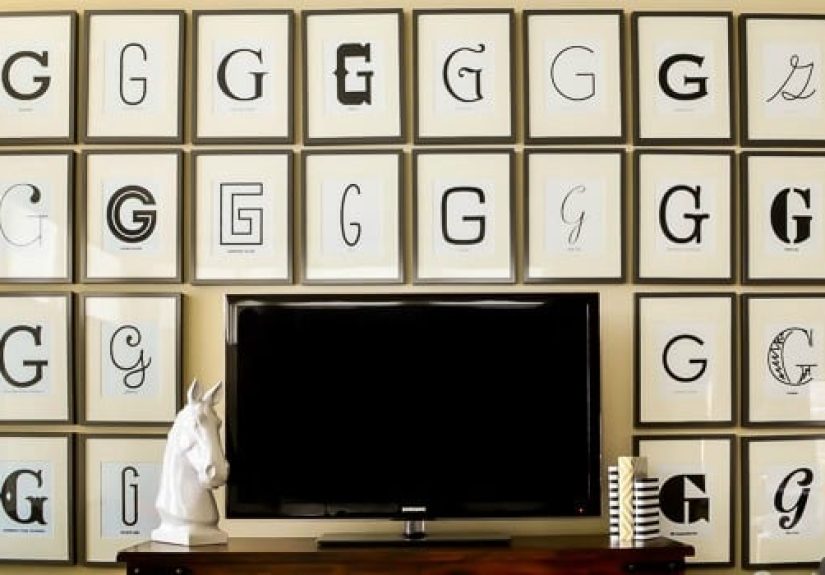
- Try a grid layout for a calm, symmetrical look.
- Go salon-style with tight spacing and plenty of personality.
- Use a picture ledge so you can layer and swap art without making new holes every month.
Texture-Rich DIY Wall Decor
- Hang woven baskets in a clustered arrangement for warmth and natural texture.
- Make a macramé wall hanging for a boho touch.
- Frame fabric remnants or vintage scarves for soft, colorful wall art.
- Display a quilt square or textile panel as statement decor.
- Hang decorative plates in a curated arrangement above a console or dining nook.
- Mount a small rug or tapestry to fill a large wall without using traditional art.
- Create wood slat wall art for warmth and subtle dimension.
- Use cane webbing in frames for airy, textured panels.
- Make a dried flower display with shadow boxes or simple hanging rods.
- Try embroidered hoops if you want something handmade and charming.
Mirror and Functional Decor Ideas
- Group vintage mirrors for a gallery wall that reflects light and makes a room feel bigger.
- DIY a large framed mirror for above a dresser, bench, or fireplace.
- Create a checkerboard wall with framed mirrors and patterned backing for extra depth.
- Add floating shelves to display art, ceramics, and plants together.
- Install peg rails for hats, baskets, and lightweight decor that looks stylish and useful.
- Hang a cork board in a custom frame for an office wall that isn’t visually tragic.
- Make a framed magnetic board for notes, cards, and rotating inspiration.
- Create hidden storage art with a shallow box and hinged frame.
- Build a floating photo frame for a clean, modern DIY display.
- Mount a small wall planter shelf to bring in living color.
Room-Specific Wall Decor Ideas
- Hang vertical art above nightstands to add height in a bedroom.
- Create a kitchen utensil wall with pretty cutting boards, baskets, or framed recipe cards.
- Style an entry wall with a mirror, narrow shelf, and hooks for a practical landing zone.
- Use oversized art behind a sofa when the room needs one strong visual statement.
- Frame bathroom wallpaper samples or botanicals for easy, humidity-friendly decor.
- Make a craft-room inspiration wall with clipboards, swatches, and rotating project ideas.
Best DIY Wall Decor Tips Before You Start
1. Think About Scale First
One of the biggest wall decor mistakes is choosing pieces that are too small for the wall. A tiny frame floating in the middle of a huge wall looks less “minimalist chic” and more “I gave up halfway through.” If you have a large blank wall, go bigger, group multiple items together, or use shelves and mirrors to build more visual weight.
2. Plan the Layout Before Hammer Time
Lay your pieces on the floor first. Better yet, trace them onto kraft paper or newspaper and tape the templates to the wall to test placement. It takes a little extra time, but it saves your wall from looking like it lost a fight with a woodpecker.
3. Use Eye Level as Your Starting Point
In most rooms, the center of your main piece should land around eye level. From there, you can build outward. This makes art feel connected to the room instead of floating somewhere in the upper atmosphere.
4. Mix Texture, Not Just Color
The most interesting wall decor usually combines more than one material. Pair framed prints with mirrors, wood, metal, woven elements, or fabric. Even a very neutral palette feels richer when the textures vary.
5. Don’t Ignore Function
Some of the best DIY wall decor ideas are useful too. Shelves, hooks, peg rails, framed memo boards, and hidden storage pieces can make a home look more styled while quietly helping you stay organized.
6. Make It Personal
A well-designed wall should say something about you. Travel photos, family snapshots, flea-market finds, favorite quotes, handwritten recipes, or a framed postcard from a special trip all make a home feel more lived in and more loved.
7. Keep Renters in Mind
If you rent, look for adhesive strips, removable wallpaper, leaning frames, picture ledges, and lightweight decor. You can still make a big visual impact without making your security deposit nervous.
How to Choose the Right DIY Wall Decor for Your Style
If your style is modern, lean into oversized abstract art, simple frames, monochrome palettes, and clean grid layouts. If you love farmhouse or rustic interiors, try wood-framed signs, botanical prints, woven baskets, and warm neutral tones. Bohemian spaces shine with macramé, textiles, layered mirrors, and collected objects. Traditional rooms tend to look great with symmetrical arrangements, classic frames, plates, and landscapes. Eclectic homes? Congratulationsyou can get away with almost everything, as long as it feels intentional.
The trick is repetition. Repeat a color, a shape, a material, or a frame finish so the wall feels cohesive even when the pieces are mixed. That’s the secret sauce. Or, if we’re being honest, the secret glue gun.
Final Thoughts
The best DIY wall decor ideas are the ones that make your space feel more like yours. You do not need a massive budget, a giant toolbox, or a mysterious design gene passed down from stylish ancestors. You just need a plan, a little creativity, and the willingness to stop staring at that blank wall like it’s going to decorate itself.
Start small with one shelf, one painted shape, or one framed collection. Or go big with a mural, a dramatic mirror wall, or a gallery arrangement that tells your whole life story one frame at a time. However you style it, the goal is simple: make your walls more beautiful, more useful, and a lot less boring.
Experience and Lessons From Real DIY Wall Decor Projects
One thing people rarely mention about DIY wall decor is that the process changes the way you look at your home. Once you start experimenting with your walls, you stop thinking of them as background and start seeing them as opportunities. A blank wall in a hallway becomes a photo story. The awkward space above a desk becomes a mood board. The wall behind the sofa becomes the place where the room finally decides to have a personality.
In practice, the most successful DIY wall decor projects usually start with a problem, not a product. Maybe a bedroom feels flat. Maybe a living room has plenty of furniture but still looks unfinished. Maybe an entryway is collecting shoes, keys, and existential dread. Wall decor works best when it solves one of those issues. A mirror can brighten a dark corner. A ledge shelf can make a narrow wall look styled instead of forgotten. A gallery wall can bring balance to a room with oversized furniture. Once you approach it that way, decorating feels less random and much more strategic.
Another real-world lesson is that layouts almost always look different on the wall than they did in your head. The pieces that seemed huge can suddenly look tiny. The arrangement that felt perfectly balanced on the floor may look too crowded once it goes vertical. That is why mockups matter. Paper templates, painter’s tape outlines, and floor layouts are not fussy extras; they are sanity-saving tools. They help you catch spacing problems before the wall looks like a trial-and-error scrapbook.
Texture also matters more than most people expect. Some of the most interesting walls are not the ones packed with expensive art, but the ones layered with different materials. A framed print next to a woven basket. A small brass sconce above a stack of books on a floating shelf. A soft textile beside a hard-edged mirror. That mix creates depth, and depth makes a room feel finished. It’s the difference between “we hung some things” and “this room has character.”
Budget projects can absolutely look high-end, but they usually need one thing: restraint. If every item is loud, the wall becomes visual confetti. Choosing a consistent color palette, repeating a frame finish, or sticking to one general theme helps even budget-friendly pieces feel elevated. The goal is not perfection. The goal is cohesion with enough surprise to keep things interesting.
Finally, the best DIY wall decor tends to evolve. The first version is rarely the final version, and that’s a good thing. You may start with three frames and add two more later. You may swap a print for a mirror or decide the wall needs a shelf after all. Good decorating is often less about getting it “done” in one weekend and more about building something that grows with your space. That approach takes the pressure off and makes decorating a lot more funwhich, frankly, is the whole point.