Table of Contents >> Show >> Hide
- What Is the Atlas 150 Aluminum Pasta Maker?
- Why the Atlas 150 Stands Out
- Design and Build Quality
- What You Can Make With It
- Performance: Is It Actually Good?
- Ease of Use for Beginners
- Cleaning and Care
- Who Should Buy the Atlas 150?
- Best Uses in a Real Home Kitchen
- on the Real Experience of Using the Atlas 150 Aluminum Pasta Maker
- Final Verdict
If fresh pasta had a gateway gadget, it would probably be the Atlas 150 Aluminum Pasta Maker. This machine has the kind of reputation usually reserved for cast-iron skillets, grandma’s lasagna pan, and that one wooden spoon nobody is allowed to throw away. For home cooks who want silky sheets of dough, tidy ribbons of fettuccine, and a kitchen experience that feels just a little more Italian than Tuesday night usually does, the Marcato Atlas 150 remains one of the most talked-about manual pasta machines on the market.
And for good reason. The Atlas 150 hits a sweet spot between sturdy construction, beginner-friendly design, and real pasta-making versatility. It is not a gimmick. It is not a countertop spaceship with 47 buttons you will never touch. It is a classic hand-crank pasta maker designed to roll dough evenly, cut it cleanly, and make homemade pasta feel achievable instead of intimidating. In other words, it is the kitchen equivalent of a tool belt that actually has the right screwdriver in it.
What Is the Atlas 150 Aluminum Pasta Maker?
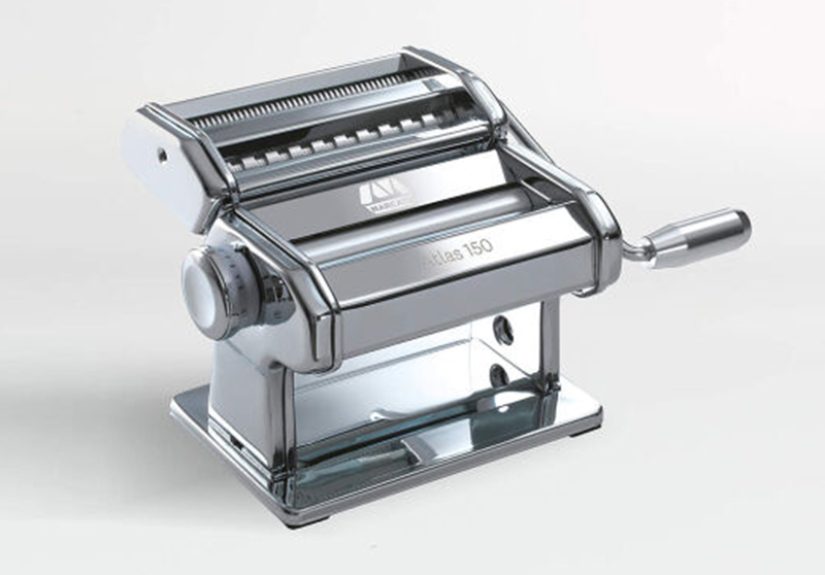
The Atlas 150 is a manual pasta machine made in Italy and associated with Marcato, one of the best-known names in home pasta equipment. The “150” refers to its 150mm rolling width, which is a practical size for home kitchens: wide enough for lasagna sheets, ravioli dough, and long ribbons of pasta, but still compact enough to store without needing its own zip code in your cabinets.
One detail that often causes a little confusion is the product name itself. Some retailers present it as an Atlas 150 Aluminum Pasta Maker, while the machine also features a chrome-plated steel body. The important part is that the rollers and handle are commonly described as anodized aluminum, which is one of the reasons the machine gets so much attention. That roller material is tied to smooth performance, food-safe contact, and easy handling, while the overall frame still feels solid and built for repeat use.
Why the Atlas 150 Stands Out
The biggest reason this pasta maker stands out is consistency. Plenty of pasta rollers can flatten dough. Fewer can do it cleanly, smoothly, and repeatedly without turning your dinner plans into a light emotional crisis. The Atlas 150 is widely praised because it rolls dough with very little friction, handles thick slabs well at wider settings, and can produce very thin sheets for ravioli and other filled pastas.
That matters more than it sounds. A weak pasta machine tends to create torn edges, wrinkled sheets, or noodles that refuse to separate unless you practically negotiate with them. The Atlas 150 has earned its reputation because it gives home cooks more control over thickness and shape while reducing the drama. And in pasta making, less drama is a beautiful thing.
Another major selling point is versatility. Out of the box, the Atlas 150 is typically set up to produce flat pasta sheets plus classic cuts like fettuccine and tagliolini. With additional accessories, it can expand into a much broader shape library. That means it can grow with your enthusiasm. Today: lasagna. Next month: ravioli night. Three months from now: you are discussing dough hydration like a person who definitely now owns too much semolina.
Design and Build Quality
A machine that feels like a real tool
The Atlas 150 has the old-school charm people want in a manual pasta machine, but it is more than a pretty countertop object. Its design is practical. It clamps to the table, uses a hand crank, and relies on adjustable rollers to thin the dough gradually. Many cooks like that mechanical simplicity because it gives them more direct control over the process.
The thickness-adjustment system is one of the machine’s most important features. Marcato describes the Atlas 150 with a 10-position adjustment knob, while some retailer listings describe it as having nine numbered settings. That is less contradiction than it sounds; many users see the dial labeled from 0 to 9, which effectively creates 10 positions. Either way, the takeaway is the same: you get a useful range of thickness options, from broad initial passes to very thin sheets for delicate pasta work.
Stable, compact, and easy to understand
The clamp setup is also part of the Atlas 150’s appeal. A good clamp matters because nobody wants a pasta machine that moonwalks across the counter while you are trying to make tagliatelle. Reviewers often point out that the Atlas 150 feels stable when attached correctly, and the crank motion is generally described as smooth and comfortable. That may sound like a small detail, but it becomes a big one after the sixth pass through the rollers.
What You Can Make With It
The Atlas 150 is the kind of tool that makes people start with “I just want to try homemade noodles once” and end up planning a weekend pasta menu. Straight from the machine, you can typically make:
- Lasagna sheets
- Fettuccine
- Tagliolini
That is already enough for a solid range of meals, but the real attraction is the add-on ecosystem. Extra Atlas 150 accessories can expand the machine for more pasta shapes, and it is also compatible with Marcato’s motor options. That means the machine can begin as a fully manual roller and later evolve into something faster and a bit easier on your forearms.
For buyers who enjoy tools that do more than one job well, this is a real advantage. You are not locked into a one-and-done machine. You are buying into a platform that can support beginner pasta nights and more serious homemade pasta projects later on.
Performance: Is It Actually Good?
Yes, and that is why the Atlas 150 keeps showing up in “best pasta maker” lists. Across multiple review roundups and cooking publications, it is repeatedly highlighted as a top manual pasta maker and, in several cases, the best overall manual option. That kind of consistency matters. Kitchen gear gets hyped all the time. It is rare for a product to stay relevant across so many tests unless it genuinely performs.
What makes the performance strong? First, it handles thick dough better than many competitors at wide settings. Second, it moves through progressive thinning smoothly, which is essential if you want sheets that get thinner without tearing. Third, it cuts noodles relatively cleanly when the dough is at the right dryness and thickness. That last point is worth underlining: even a great machine cannot fully rescue dough that is too wet, too sticky, or too thick for the cutter.
That is why experienced cooks often talk about the Atlas 150 as a machine that rewards good process. Give it rested dough, a lightly floured surface, and sensible thickness progression, and it tends to behave beautifully. Ignore those steps, and even the pasta maker of your dreams may respond with spaghetti that looks like it has had a stressful morning.
Ease of Use for Beginners
The Atlas 150 is beginner-friendly, but let’s be honest: “beginner-friendly” does not mean “you will instantly become a pasta deity.” There is a learning curve, just not a brutal one. If you are new to homemade pasta, the biggest challenge is usually not the machine itself. It is the dough.
Most pasta guides recommend starting at the widest roller setting, passing the dough through several times, folding it, and then gradually narrowing the rollers until you reach the desired thickness. That process helps refine texture and smoothness. Many recipe guides also note that pasta for noodles is often ready around the mid-range settings, while thinner sheets for ravioli or delicate pasta may require higher settings.
Once you understand that rhythm, the machine feels intuitive. Clamp it down, turn the crank steadily, catch the dough, dust lightly with flour when needed, and keep moving thinner. It becomes surprisingly meditative. There is something deeply satisfying about watching a stubby piece of dough transform into a smooth, elegant sheet. It makes you feel competent in a way that frozen garlic bread never quite can.
Cleaning and Care
If you buy the Atlas 150, remember this rule: do not treat it like a mixing bowl. The manufacturer’s cleaning guidance is clear that the machine should not be washed under running water or put in the dishwasher. Instead, the outside is cleaned with a cloth and brush, and removable combs and scrapers can be cleaned separately and dried completely before being reinserted.
This is one of the few “old-school tool” quirks that some modern shoppers need to accept. If you want dishwasher-safe convenience, this is not that kind of appliance. But if you are okay with dry-brush maintenance and a little attention after use, care is pretty simple. In fact, many experienced home cooks prefer this style of upkeep because it protects the mechanism and keeps the machine performing well over time.
Who Should Buy the Atlas 150?
Buy it if:
- You want a reliable manual pasta machine with a strong reputation.
- You care about making fresh pasta sheets, fettuccine, and tagliolini at home.
- You like tools that can expand with attachments and motor options.
- You want a machine that feels substantial without being overwhelmingly large.
- You enjoy hands-on cooking and do not mind a little manual effort.
Skip it if:
- You want a fully automatic pasta maker that mixes, kneads, and extrudes for you.
- You strongly prefer dishwasher-safe cleanup.
- You are only interested in short extruded shapes like rigatoni or macaroni.
- You do not want to learn basic dough technique.
Best Uses in a Real Home Kitchen
The Atlas 150 works especially well for cooks who want to make pasta as an event, not just a task. It is ideal for weekend cooking, dinner parties, date nights, and family projects where the process matters almost as much as the plate. That sounds romantic because it is romantic. Flour on the counter, dough on the board, someone taste-testing sauce too early: the machine fits that whole scene perfectly.
It is also a smart choice for people who want better fresh pasta without committing to a bulky electric extruder. Manual rolling gives you control over the final sheet, which is especially useful for lasagna, ravioli, tortellini, and broad ribbon pastas. If your goal is restaurant-style texture and a more tactile cooking experience, this pasta maker earns its space.
on the Real Experience of Using the Atlas 150 Aluminum Pasta Maker
The experience of using the Atlas 150 Aluminum Pasta Maker usually begins with a tiny burst of confidence and a slightly larger burst of flour. You clamp the machine to the counter, admire how handsome it looks, turn the crank once or twice, and think, “Yes, I am clearly the kind of person who makes pasta now.” Five minutes later, you learn the first law of fresh pasta: the dough is in charge until you get your technique right.
That is not a flaw in the machine. It is actually part of why people end up loving it. The Atlas 150 gives you enough control to understand what is happening. If the dough is too wet, you can see it come through a little shaggy. If it is too thick, you feel the resistance. If it is just right, the sheet rolls out smooth, supple, and almost glossy, and suddenly the whole project starts to click.
A typical good experience follows a rhythm. You begin at the widest setting, feed the dough through, fold it like a letter, and pass it through again. After a few passes, the dough starts looking civilized. Then you move down a notch. Then another. By the middle settings, it begins to feel less like a lump and more like pasta. That transformation is a huge part of the fun. It feels hands-on and satisfying in a way that pressing a button on an appliance simply does not.
Many home cooks find that the Atlas 150 shines most when they stop rushing. The machine rewards patience. Light flouring helps. Rested dough helps even more. Working with smaller pieces instead of one giant slab helps save both your sanity and your countertop. Once you settle into that pace, the experience gets easier fast. The crank motion becomes smoother, your hands learn where to guide the dough, and you stop looking mildly betrayed every time a sheet folds over itself.
Then comes the moment everyone remembers: the first truly pretty batch. Maybe it is fettuccine. Maybe it is ravioli dough thin enough to hold filling without feeling heavy. Maybe it is a lasagna sheet so smooth you briefly consider framing it. That is the payoff. The Atlas 150 turns fresh pasta from abstract cooking ambition into something repeatable.
Cleanup also shapes the ownership experience. This is not a rinse-it-and-forget-it gadget. You brush it out, wipe it down, and give it a little respect. For some people, that sounds annoying. For others, it is part of the pleasure. The machine feels like a real kitchen tool, not a disposable appliance. You maintain it because you expect to keep it.
Perhaps the most telling part of the experience is this: once people get comfortable with the Atlas 150, they start planning meals around it. Fresh tagliolini for a simple butter sauce. Weekend ravioli with ricotta filling. A stack of homemade lasagna sheets for a family dinner. The machine does not just make pasta. It changes the kind of cooking people imagine themselves doing. And that is a pretty impressive trick for a countertop crank machine.
Final Verdict
The Atlas 150 Aluminum Pasta Maker remains one of the smartest buys for anyone serious about making fresh pasta at home. It combines classic design, strong performance, useful thickness control, and room to expand with attachments and motor options. It is not the fastest route to dinner, and it will not magically fix bad dough, but that is almost beside the point. What it offers is control, consistency, and a genuinely enjoyable cooking process.
If you want a fresh pasta maker that feels dependable, versatile, and worthy of its reputation, the Atlas 150 deserves the hype. It is the kind of machine that can carry a beginner into confidence and give an experienced home cook a dependable tool for years. In a market full of gadgets that promise the moon and deliver a pile of sticky noodles, that is refreshingly real.