Table of Contents >> Show >> Hide
- Why “green” tax planning matters for businesses
- Tax credits vs. tax deductions: the quick difference
- The main federal green tax incentives businesses should know
- 1) Section 179D: Energy Efficient Commercial Buildings Deduction
- 2) Section 30C: Credit for EV charging and other refueling property
- 3) Section 48E: Clean Electricity Investment Credit
- 4) Section 45Y: Clean Electricity Production Credit
- 5) Section 45X: Advanced Manufacturing Production Credit
- 6) Section 48C: Advanced Energy Project Credit
- 7) Section 45L: Relevant for builders and developers
- Green incentives that changed or expired
- Do green projects also create ordinary deductions?
- How businesses should evaluate a green tax project
- Common mistakes businesses make
- Do not ignore state incentives and financing
- The bottom line on going green for tax purposes
- Experiences businesses commonly have when they pursue green tax incentives
- SEO Tags
Going green used to sound like something a company did after a branding retreat, three oat-milk lattes, and one very enthusiastic sustainability consultant. Now it is also a tax strategy. A smart one.
For many businesses, eco-friendly upgrades can do three jobs at once: lower utility bills, modernize operations, and create tax savings. The trick is knowing which incentives are still alive, which ones have changed, and which “green” expenses are really credits versus deductions. That matters because a tax credit usually reduces tax liability dollar for dollar, while a deduction reduces taxable income. In plain English, both are helpful, but a credit often lands a bigger punch.
If you are planning solar panels, battery storage, commercial building upgrades, EV charging equipment, or clean-energy manufacturing investments, there may be meaningful federal tax benefits on the table. But there is a catch: this area changes fast. Some incentives were expanded, some became more complex, and some were cut short by later law changes. So if your business wants to save money while cutting emissions, the best move is not “buy random green stuff and hope for the best.” It is to match the project to the right tax treatment from the start.
Why “green” tax planning matters for businesses
Energy costs have a sneaky way of behaving like office snacks: individually harmless, collectively alarming. Lighting, HVAC, hot water, refrigeration, fleet fueling, and industrial equipment can quietly eat into margins month after month. Green tax incentives help offset the upfront cost of fixing that problem.
In practical terms, businesses often benefit in four ways:
- Immediate tax relief through credits or deductions.
- Lower operating costs from reduced energy use or cleaner fueling.
- Improved asset value for upgraded buildings and infrastructure.
- Better brand positioning with customers, investors, tenants, and employees.
The best results usually come when tax planning is part of project planning. Waiting until return-prep season to ask, “Can we deduct the shiny new efficient thing?” is a bit like baking a cake and only then wondering whether you remembered flour.
Tax credits vs. tax deductions: the quick difference
Tax credits
A tax credit reduces the amount of tax your business owes. If your company qualifies for a $50,000 credit, that can reduce your tax bill by $50,000, subject to the rules that apply to that credit.
Tax deductions
A tax deduction reduces taxable income. If your business claims a $50,000 deduction, the actual tax savings depend on your tax rate. Deductions are still valuable, just less dramatic in headline form.
When businesses talk about green tax breaks, they are often mixing the two together. That is understandable. The IRS absolutely separates them, and your CPA will too.
The main federal green tax incentives businesses should know
1) Section 179D: Energy Efficient Commercial Buildings Deduction
This is one of the most important green tax incentives for owners of commercial buildings. It can apply to energy-efficient improvements involving interior lighting, HVAC and hot water systems, or the building envelope. In short, it rewards projects that materially improve building energy performance.
For many businesses, 179D is the workhorse incentive because it targets real-world upgrades that owners were considering anyway: replacing outdated rooftop units, improving ventilation controls, tightening the building envelope, or redesigning lighting so the place stops consuming electricity like it is hosting a rock concert every night.
The deduction is not automatic. The project generally needs certification, and the property must meet required energy savings thresholds compared with a reference building. Beginning with 2023-and-later rules, the deduction structure changed, and the amount can increase depending on energy savings and whether prevailing wage and apprenticeship rules are met. That means the numbers can look much better when the project is designed and documented correctly.
This incentive is especially relevant for:
- Office buildings
- Warehouses
- Retail centers
- Hotels
- Medical offices
- Industrial buildings with qualifying systems
Example: A company owns a 40,000-square-foot office building and completes a major HVAC and lighting upgrade. If the project meets the required energy-reduction standards and all documentation is done properly, the business may be able to claim a sizable Section 179D deduction rather than simply admiring the new thermostat from afar.
2) Section 30C: Credit for EV charging and other refueling property
If your business installs qualified EV charging equipment or other eligible refueling property, Section 30C may help offset the cost. This is a credit, not a deduction, which is why accountants suddenly sit up straighter when it comes up.
For qualified business property placed in service from 2023 through June 30, 2026, the credit generally equals 6% of cost, up to a maximum credit of $100,000 per item. Businesses that satisfy prevailing wage and apprenticeship requirements can potentially qualify for a 30% credit with the same per-item cap. That difference is not small. It is the difference between “nice bonus” and “please bring that spreadsheet back.”
There is also a geographic rule. Property typically must be placed in an eligible census tract, so location is not a footnote here. It is central. You also need to watch basis reduction and recapture rules.
Example: A distribution company installs multiple charging ports at its warehouse for a growing electric fleet. If the site is in an eligible location and project labor rules are satisfied, the credit may significantly reduce the after-tax cost of the charger installation.
3) Section 48E: Clean Electricity Investment Credit
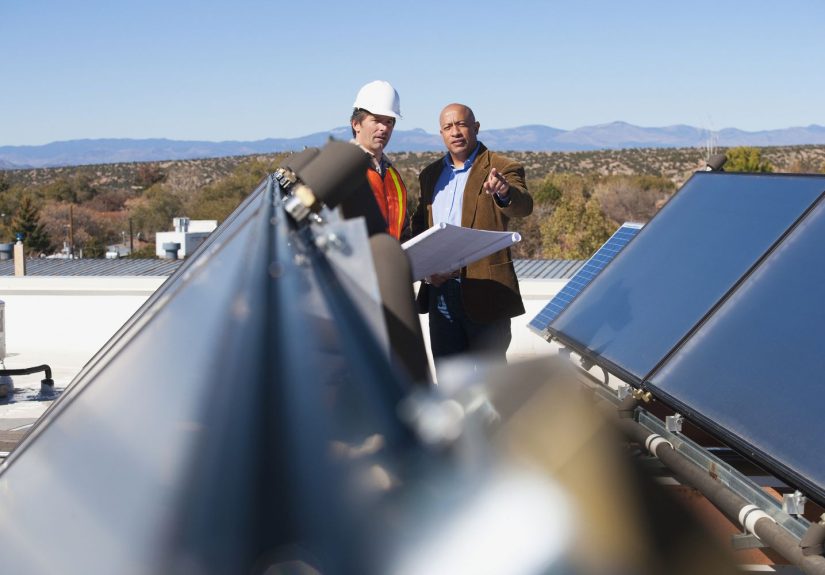
For larger clean-energy projects, the Clean Electricity Investment Credit can be a major incentive. This is where green tax planning gets more capital-intensive and more exciting. Think solar, certain storage projects, and other qualifying clean electricity property placed in service after December 31, 2024.
This credit is especially relevant for businesses that want to invest directly in on-site generation or larger clean-power assets. It may also interact with transferability rules, which can be important for businesses that cannot efficiently use the full credit themselves.
For a business with a large rooftop, substantial electricity demand, or a campus-style footprint, this can turn a renewable energy project from “interesting idea” into “serious board discussion.”
4) Section 45Y: Clean Electricity Production Credit
Some businesses and project owners may be better served by a production-based incentive rather than an investment-based one. Section 45Y is designed around the output of qualifying clean electricity facilities. In other words, instead of focusing on how much you spent building the project, it focuses more on how much clean electricity the project produces over time.
This is usually more relevant for larger-scale projects, energy developers, and businesses with sophisticated energy strategies. It is not the typical first stop for a neighborhood bakery, unless that bakery also secretly operates like a mini utility.
5) Section 45X: Advanced Manufacturing Production Credit
If your business manufactures eligible clean-energy components in the United States, Section 45X deserves a serious look. This credit is aimed at domestic production of eligible components such as certain solar components, inverters, battery components, and applicable critical minerals.
This is not the “swap out the office bulbs” incentive. It is a manufacturing incentive with real strategic weight. For qualifying manufacturers, the credit is based on specific credit rates tied to the eligible components produced and sold. It can also intersect with payment or transfer rules, depending on the facts.
Example: A U.S. manufacturer expanding battery-component production may find that Section 45X materially changes project economics, hiring plans, and capital budgeting.
6) Section 48C: Advanced Energy Project Credit
Section 48C is another major incentive for clean-energy manufacturing and industrial decarbonization projects. Unlike broad “just claim it if you qualify” credits, 48C is an allocation-based program. That means businesses usually apply and compete for it.
This credit can support projects that build or expand clean-energy supply chains, recycle critical materials, or reduce greenhouse gas emissions at industrial facilities. For the right project, it can be extremely valuable. For the wrong project, it is just an acronym that looks expensive.
If your company is planning a major manufacturing or industrial investment, 48C should be evaluated early, not as an afterthought.
7) Section 45L: Relevant for builders and developers
Most ordinary businesses can skip this one, but eligible contractors building or substantially developing qualifying energy-efficient homes may care a great deal. If your business operates in homebuilding, multifamily development, or qualifying residential construction, 45L can still be relevant. However, timing matters because later law changes accelerated the termination date for homes acquired after June 30, 2026.
That makes 45L less of a forever strategy and more of a “check the calendar before ordering celebratory donuts” situation.
Green incentives that changed or expired
This is where many online articles become unhelpful. They list every green incentive ever created as though time stopped in 2023. It did not.
As of 2026, businesses should be especially careful with incentives tied to clean vehicles and certain short-dated provisions. For example, the Qualified Commercial Clean Vehicle Credit under Section 45W was accelerated to end for vehicles acquired after September 30, 2025, subject to special rules for binding contracts and placement in service. That means a business buying commercial EVs today should not assume the old credit is still waiting with open arms and a rebate bow.
Likewise, Section 30C for refueling property and Section 179D for certain projects now have deadlines businesses need to track closely. In green tax planning, “almost eligible” is emotionally compelling but financially disappointing.
Do green projects also create ordinary deductions?
Sometimes yes, but the answer depends on the nature of the spending.
Routine repairs, maintenance, and many energy-management expenses may be deductible under ordinary business tax principles. Capital improvements are a different animal. If you install new long-lived equipment or materially improve a building, you may need to capitalize the cost and recover it through depreciation unless a specific credit or deduction applies.
That is why the project structure matters so much:
- Repairs and maintenance may be currently deductible.
- Capital upgrades may need to be depreciated.
- Special green incentives may override or supplement the standard treatment.
Some renewable energy projects may also benefit from depreciation treatment in addition to a tax credit, depending on the project and current tax rules. That combination can materially improve payback periods.
How businesses should evaluate a green tax project
Start with the project type
Is this a building retrofit, an EV charging installation, an on-site clean electricity project, or a manufacturing expansion? The answer determines which section of the tax code matters.
Then check timing
Placed-in-service dates, acquisition dates, and construction-begin rules matter. Missing the window can turn a profitable tax assumption into a very awkward meeting.
Check labor and location rules
Some credits are worth far more if prevailing wage and apprenticeship requirements are met. Some also depend on geography, census-tract eligibility, or bonus-credit qualifications tied to domestic content or energy communities.
Model the after-tax economics
Do not just estimate utility savings. Estimate the project with and without credits, deductions, depreciation effects, and any state or utility incentives. The difference can be dramatic.
Document everything
Certification reports, placed-in-service dates, invoices, basis calculations, labor records, and location eligibility are not glamorous. They are, however, what stand between your business and a future tax headache.
Common mistakes businesses make
- Assuming every eco-friendly purchase automatically earns a tax credit.
- Confusing consumer credits with business incentives.
- Forgetting that some credits have sunset dates or accelerated terminations.
- Ignoring prevailing wage and apprenticeship rules until the job is already done.
- Claiming a building upgrade without required certification.
- Missing the census-tract requirement for EV charging projects under Section 30C.
- Failing to coordinate federal tax incentives with rebates, grants, loans, or state programs.
Do not ignore state incentives and financing
Federal incentives get the headlines, but state-level programs can quietly improve returns. DSIRE remains one of the best places to identify state and utility incentives for renewable energy and energy efficiency. Depending on your project, rebates, grants, low-cost financing, or utility programs may stack with federal tax benefits.
Small businesses should also keep an eye on financing tools, including SBA-backed options that can support energy-efficiency and clean-energy investments. Tax credits are powerful, but pairing them with smart financing is often what gets the project approved.
The bottom line on going green for tax purposes
Going green is no longer just a values statement. For many businesses, it is a capital allocation decision with tax consequences, operating savings, and competitive upside.
The biggest opportunities tend to cluster around four areas: commercial building upgrades, EV charging infrastructure, on-site clean electricity projects, and clean-energy manufacturing. But the rules are not casual. Credits and deductions depend on timing, technical standards, labor requirements, certification, and documentation. Some incentives are still strong. Some are narrower than they used to be. Some have already headed into the tax-law sunset carrying a beach chair.
The smartest approach is simple: plan the tax strategy before you spend the money. If your business does that, “going green” can mean lower emissions, lower operating costs, and lower taxes. That is a rare triple win in a world where even the office coffee machine now seems to charge subscription fees.
Experiences businesses commonly have when they pursue green tax incentives
One of the most common experiences businesses report is that the tax incentive is not what starts the conversation, but it is what helps close the deal. A company usually begins with a practical problem: utility bills are too high, HVAC complaints never end, fleet fueling costs are messy, or a building is aging badly. The tax credit or deduction enters the story later, once the owners realize the upgrade may not be as expensive after tax as it looked on day one.
Commercial property owners often describe the same pattern with energy retrofits. First comes skepticism. Then comes an audit or engineering review. Then the project scope grows because once lighting is being updated, someone asks about controls, then insulation, then rooftop units, and suddenly the company has a real energy plan instead of a pile of invoices. The businesses that feel happiest afterward are usually the ones that treated documentation as part of the project, not a post-project scavenger hunt.
Businesses installing EV chargers often say the tax analysis changed the tone of the investment conversation. Before the credit is modeled, management sees chargers as a nice amenity or a fleet experiment. After the credit is modeled, the project starts looking like infrastructure. That is an important psychological shift. It moves the conversation away from “Is this trendy?” and toward “Is this financially rational over five to ten years?”
Manufacturers tend to have a different experience. Their projects are larger, their timelines are longer, and the incentives can materially affect location decisions, supplier strategy, and workforce planning. For these businesses, the green tax incentive is not just a cost reducer. It can influence whether an expansion happens in the United States, whether a production line is added now instead of later, and whether the project is framed as compliance, growth, or market positioning.
Another common experience is discovering that the tax side is more technical than expected. Many businesses assume that if equipment is energy efficient, the incentive will be simple. In reality, green tax benefits often rely on placed-in-service rules, labor standards, project certification, basis adjustments, and forms that absolutely do not fill themselves out while you sleep. The companies that navigate the process best usually have their tax advisor, project developer, engineer, and finance team communicating early.
Finally, businesses often find that the biggest payoff is not the first-year tax savings alone. It is the combination of tax savings, lower energy bills, fewer maintenance surprises, better tenant or employee satisfaction, and a stronger long-term operating model. That is why so many businesses come away from green projects saying the same thing in different words: the incentive got the project moving, but the operating results are what made the decision feel truly smart.