Table of Contents >> Show >> Hide
- What Does Closet Control Really Mean?
- Step 1: Empty the Closet and Face the Fabric
- Step 2: Declutter Without Turning It Into a Court Trial
- Step 3: Build Closet Zones That Match Your Routine
- Step 4: Use Vertical Space Like a Storage Genius
- Step 5: Choose the Right Hangers, Bins, and Dividers
- Step 6: Organize Clothing by Category, Color, or Use
- Step 7: Control Shoes Before They Form a Village
- Step 8: Make Seasonal Rotation Part of Closet Control
- Step 9: Improve Closet Lighting and Visibility
- Step 10: Maintain Closet Control With Tiny Habits
- Small Closet Control: How to Win With Limited Space
- Walk-In Closet Control: Avoid the “Bigger Mess” Trap
- Common Closet Control Mistakes
- Closet Control for Families and Shared Spaces
- Budget-Friendly Closet Control Ideas
- Real-Life Experiences With Closet Control
- Conclusion: Closet Control Is Really Life Control in Disguise
- SEO Tags
Closet control is not about turning your wardrobe into a museum where every sock stands at attention. It is about building a closet that helps you get dressed faster, keeps your favorite pieces visible, and stops that suspicious sweater avalanche from greeting you every Monday morning.
A good closet should work like a helpful assistant: quiet, efficient, and not emotionally dramatic about your shoe collection. Whether you have a roomy walk-in closet, a tiny reach-in closet, or a “technically this is a closet but spiritually it is a cave” situation, the right system can transform daily chaos into calm. The secret is not buying every basket in America. The secret is using what you own, what you wear, and how you live as the foundation for your closet organization plan.
What Does Closet Control Really Mean?
Closet control means managing your clothing, shoes, accessories, linens, and storage items in a way that makes sense for your routine. It combines decluttering, smart storage, visibility, accessibility, and maintenance. In plain English: you should be able to open the closet, find what you need, and close the door without negotiating with a mountain of hoodies.
The best closet systems are not always the most expensive. A carefully sorted wardrobe, matching hangers, labeled bins, drawer dividers, shelf organizers, and a sensible layout can make a modest closet feel dramatically larger. Even better, closet control saves time. When your work shirts, jeans, jackets, and shoes each have a clear home, getting ready becomes less of a scavenger hunt and more of a smooth morning routine.
The Goal Is Function, Not Perfection
Social media has made many people believe a closet must look like a boutique where beige sweaters whisper affirmations to each other. Nice? Sure. Necessary? Not at all. A controlled closet should support real life. That includes laundry days, busy mornings, seasonal changes, rushed outfit decisions, and the occasional “I have nothing to wear” performance, even when the closet is full.
Step 1: Empty the Closet and Face the Fabric
The first major step in closet control is removing everything. Yes, everything. Clothes, shoes, belts, bags, forgotten gift boxes, mystery cords, and that one hanger that looks like it survived a windstorm. Emptying the closet gives you a clear view of the space and forces every item to earn its way back in.
Once the closet is empty, clean the shelves, vacuum the floor, wipe the rods, and check corners for dust. This is also the perfect time to inspect the closet structure. Are the shelves too high? Is there unused wall space? Could the back of the door hold hooks or an organizer? Does the lighting make navy blue and black look like identical twins? Small observations now can lead to big improvements later.
Sort Before You Store
Create simple piles: keep, donate, repair, recycle, seasonal storage, and unsure. Avoid making 27 categories unless you enjoy turning your bedroom into a clothing airport. The goal is momentum. Ask practical questions: Do I wear this? Does it fit my current life? Is it comfortable? Would I buy it again today? If the answer is no, it may be time to let it go.
Step 2: Declutter Without Turning It Into a Court Trial
Decluttering is where many closet projects either succeed or collapse into emotional negotiations. Clothing can carry memories, ambitions, guilt, and fantasy versions of ourselves. There is the blazer for a job you no longer want, the jeans from another decade, the dress bought for an event that never happened, and the shoes that look amazing but feel like medieval punishment devices.
Closet control requires honesty, not harshness. Keep clothes that fit, flatter, function, and make sense for your lifestyle. Donate pieces in good condition that no longer serve you. Repair items you genuinely love and will wear again. Recycle textiles that are too worn to donate. Toss only what cannot be responsibly reused.
Use the “Real Life” Test
Imagine your actual week. Not your fantasy week involving rooftop dinners, surprise invitations, and mysteriously unlimited dry-cleaning funds. Your real week. What do you wear to work, school, errands, workouts, dinners, relaxing at home, and special occasions? Your closet should serve that life first.
For example, if you work from home four days a week, your closet should not be dominated by stiff formalwear. If you wear sneakers constantly, they deserve better access than shoes you wore once in 2019. Closet control begins when storage reflects reality.
Step 3: Build Closet Zones That Match Your Routine
Closet zones are dedicated areas for specific categories. Instead of shoving everything wherever it fits, assign homes for shirts, pants, dresses, jackets, shoes, bags, accessories, workout clothes, seasonal items, and special-occasion pieces. This makes the closet easier to use and easier to maintain.
The most-used items should sit at eye level or within easy reach. Less-used items can go higher, lower, or farther back. Daily essentials deserve prime real estate. Holiday sweaters, heavy coats, keepsake garments, and once-a-year formalwear can move to secondary zones.
Suggested Closet Zones
- Daily wear: clothes you reach for several times a week.
- Work or school outfits: shirts, pants, jackets, uniforms, or polished basics.
- Seasonal clothing: sweaters, coats, swimwear, or summer dresses.
- Shoes: organized by frequency of use, not just by prettiness.
- Accessories: belts, scarves, hats, jewelry, ties, and bags.
- Special occasion: formalwear, costumes, or event-specific clothing.
Zones reduce decision fatigue. When everything has a place, your brain stops doing unpaid inventory management every morning.
Step 4: Use Vertical Space Like a Storage Genius
Most closets waste vertical space. The floor gets crowded, the rod gets packed, and the top shelf becomes a retirement home for random objects. To gain closet control, look upward. Add stackable bins, shelf dividers, extra shelves, hanging organizers, or a second clothing rod if the space allows.
Vertical storage works especially well in small closets. A narrow shelf tower can hold folded jeans, sweaters, bags, or shoes. Clear bins on upper shelves can store seasonal clothing while keeping contents visible. Hooks on side walls can hold hats, belts, or lightweight bags. Over-the-door organizers can handle shoes, scarves, accessories, or small folded items.
Do Not Forget the Closet Door
The back of the closet door is valuable territory. Use it for slim storage, not bulky chaos. Hooks, pocket organizers, belt racks, or scarf hangers can free up shelf and rod space. Just avoid overloading the door until it swings with the grace of a refrigerator.
Step 5: Choose the Right Hangers, Bins, and Dividers
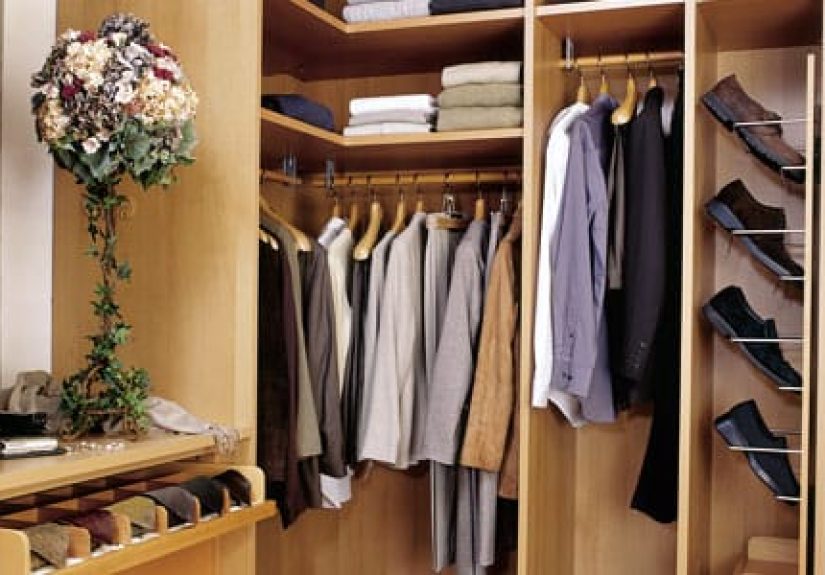
Closet products should solve problems, not create a second hobby. Matching slim hangers can make clothing look neater and often save rod space. Velvet hangers help slippery garments stay put. Wooden hangers work well for heavier coats and structured jackets. Specialty hangers can organize belts, scarves, ties, or pants.
Bins and baskets are ideal for items that do not stack neatly. Use them for scarves, hats, handbags, workout gear, off-season accessories, or small clothing categories. Clear bins are helpful when visibility matters. Fabric baskets look softer and more decorative. Labels make everything easier, especially in shared closets or family storage spaces.
Use Dividers to Stop Shelf Landslides
Shelf dividers are excellent for folded sweaters, jeans, towels, and handbags. Without dividers, folded stacks often lean, wobble, and eventually collapse like a poorly planned sandwich. Dividers keep categories separated and make shelves easier to reset after laundry day.
Step 6: Organize Clothing by Category, Color, or Use
There is no single correct way to arrange clothes. The best method is the one you can maintain. Many people start with category: shirts together, pants together, dresses together, jackets together. Within each category, you can sort by color, sleeve length, fabric weight, or occasion.
Color organization looks beautiful and helps you spot duplicates. Category organization is practical and fast. Outfit-based organization works well for people who wear similar combinations every week. For example, you might keep office outfits on one side, casual clothes in the center, and workout clothes in drawers or bins.
Try the Reverse Hanger Method
If you are unsure what you actually wear, turn all hangers backward at the beginning of a season. After wearing an item, return it with the hanger facing normally. After a few months, the backward hangers reveal what has not been worn. It is simple, visual, and slightly dramatic in a useful way.
Step 7: Control Shoes Before They Form a Village
Shoes can quickly take over a closet floor. The solution depends on your space and collection size. Use shoe racks, cubbies, clear boxes, shelves, or over-the-door organizers. Keep everyday shoes easiest to reach and store special-occasion pairs higher or farther back.
Before organizing shoes, inspect them honestly. Shoes that hurt, are damaged beyond repair, or no longer match your lifestyle should not occupy premium closet space. Your closet is not a shoe hospital with unlimited beds.
Store Shoes by Frequency
Place daily shoes near the closet entrance or lower shelves. Seasonal boots can go in labeled bins or upper storage during warmer months. Dress shoes can be stored in clear boxes or cubbies. Athletic shoes should be easy to grab if they are part of your weekly routine.
Step 8: Make Seasonal Rotation Part of Closet Control
Seasonal rotation prevents overcrowding. Heavy coats, thick sweaters, boots, and cold-weather accessories do not need to dominate your closet in July. Likewise, swimwear and linen shirts do not need front-row access in January unless you live somewhere delightfully warm or are emotionally committed to vacation energy.
Store off-season items in breathable bags, labeled bins, under-bed containers, or upper shelves. Clean clothes before storing them, and make sure everything is fully dry. This prevents odors and keeps garments ready for the next season.
Use a Twice-Yearly Reset
Schedule closet resets in spring and fall. Review what you wore, what stayed untouched, and what needs repair or replacement. A seasonal reset keeps clutter from quietly rebuilding its empire.
Step 9: Improve Closet Lighting and Visibility
A dark closet makes organization harder. Poor lighting hides stains, mismatched colors, missing buttons, and the fact that you own four nearly identical black shirts. Better visibility helps you make faster outfit decisions and reduces forgotten items.
If your closet does not have built-in lighting, consider battery-powered LED lights, motion-sensor lights, or adhesive light strips. Clear bins, open shelving, and labeled containers also improve visibility. The easier something is to see, the more likely you are to use it.
Step 10: Maintain Closet Control With Tiny Habits
The real magic of closet control is maintenance. A closet can look fantastic for one day after a major cleanout, but the goal is long-term order. Tiny habits make the system stick.
Put clothes back in their assigned zones. Keep a donation bag nearby. Do a five-minute reset once a week. Return empty hangers to one spot. Avoid stuffing clean laundry into random gaps. When buying something new, consider removing something old. This “one in, one out” mindset prevents the closet from expanding beyond its limits.
The Five-Minute Closet Reset
Once a week, set a timer for five minutes. Rehang fallen items, straighten shoes, return accessories, remove dry-cleaning bags, and place laundry where it belongs. Five minutes may not sound heroic, but it prevents the need for a full Saturday rescue mission.
Small Closet Control: How to Win With Limited Space
Small closets require sharper decisions. Every inch matters. Start by reducing volume, then maximize the space you have. Use slim hangers, vertical shelves, hooks, door organizers, stackable bins, and drawer units. Fold bulky items that do not need hanging. Store seasonal pieces elsewhere if possible.
In a small closet, visibility is everything. If you cannot see it, you may forget it exists. Keep daily items front and center. Use labels. Avoid deep bins for frequently used items because they often become clutter caves. Choose storage that lets you retrieve items easily without creating a domino effect.
Small Closet Example
Imagine a 4-foot reach-in closet with one rod and one shelf. Add a second lower rod on one side for shirts and pants. Use the other side for longer garments. Place labeled bins on the top shelf for seasonal clothes. Add a narrow shoe rack on the floor and hooks inside the door for belts and bags. Suddenly, the closet has zones, visibility, and breathing room.
Walk-In Closet Control: Avoid the “Bigger Mess” Trap
A walk-in closet offers more space, but more space does not automatically mean more organization. In fact, large closets can become storage jungles because there is room to hide clutter. The key is intentional design.
Use separate zones for hanging clothes, folded items, shoes, accessories, and seasonal storage. Add drawers for smaller pieces. Use shelves for bags and sweaters. Keep floors as clear as possible. If the closet is shared, divide space clearly so each person has defined zones. Closet peace is real, and it is worth protecting.
Add Beauty Where It Helps Behavior
A closet that looks pleasant is easier to maintain. Matching hangers, clean bins, simple labels, good lighting, and a small mirror can make the space feel more inviting. You do not need luxury finishes. You need a system that makes putting things away feel natural.
Common Closet Control Mistakes
One common mistake is buying organizers before decluttering. Storage products should fit the items you decide to keep, not the clutter you plan to avoid thinking about. Another mistake is treating every item as equally important. Your favorite jeans should not compete with a costume hat for prime shelf space.
Another mistake is ignoring maintenance. Even a beautifully designed closet needs resets. Clothes move, seasons change, and laundry has a mysterious talent for multiplying. Without regular attention, clutter creeps back in wearing socks that do not match.
Do Not Overstuff
A closet should not be packed to maximum capacity. Leave breathing room between hangers. Keep shelves manageable. Make drawers easy to open. When the closet is too full, every task becomes harder: choosing outfits, putting laundry away, and noticing what you actually own.
Closet Control for Families and Shared Spaces
Shared closets need clear boundaries. Assign zones by person, category, or frequency of use. Use labels for children, roommates, or partners who claim they “didn’t know where it went.” Labels are not bossy; they are tiny peace treaties.
For kids, keep daily clothing at reachable heights. Use bins for simple categories like shirts, pants, pajamas, socks, and sports gear. For shared linen closets, place most-used towels and sheets at eye level, with extra blankets and guest linens higher up. The easier the system is, the more likely everyone will follow it.
Budget-Friendly Closet Control Ideas
You do not need a custom closet installation to get organized. Start with low-cost improvements: remove clutter, use matching hangers, add labels, repurpose baskets, install hooks, fold efficiently, and use existing shelves better. Even cardboard boxes can work temporarily if they are labeled and sized correctly.
If you decide to spend money, prioritize items that solve real problems. Need more hanging space? Add a second rod or hanging organizer. Shoes everywhere? Try a rack or cubbies. Folded clothes collapsing? Use shelf dividers. Accessories disappearing? Use small bins or drawer inserts.
Measure Before Buying
Measure width, depth, height, shelf spacing, rod length, and door clearance before purchasing organizers. Guessing leads to returns, frustration, and the kind of sighing normally reserved for assembling furniture at midnight.
Real-Life Experiences With Closet Control
The most useful closet control lessons often come from ordinary homes, not picture-perfect showrooms. In one small apartment closet, the biggest breakthrough was not a fancy organizer. It was removing 30 unused hangers, donating two bags of unworn clothing, and moving winter coats to under-bed storage. The closet instantly felt wider, even though no walls moved. Funny how physics behaves when clutter leaves the building.
Another experience came from helping organize a shared closet where one person folded everything and the other believed chairs were a valid clothing storage system. The solution was not a lecture. It was a simpler layout. Work clothes went on the left, casual clothes on the right, shoes stayed on a low rack, and a labeled basket became the official home for “not dirty, not clean” clothes. That basket saved the floor, the chair, and possibly the relationship.
In a family linen closet, the original problem was too many categories mixed together. Towels, sheets, medicine, cleaning cloths, beach blankets, and old pillowcases lived in one giant fabric soup. The fix was basic but powerful: towels on the middle shelf, sheet sets folded together in pillowcases, cleaning cloths in a labeled bin, guest linens on the top shelf, and expired or unnecessary items removed. After that, no one had to unfold six sheets to find one pillowcase. A small miracle, but still a miracle.
A personal wardrobe reset can also reveal buying habits. Many people discover duplicates: five black T-shirts, three nearly identical cardigans, or enough tote bags to supply a conference. Closet control makes patterns visible. Once you see what you already own, shopping becomes more intentional. You stop buying another “maybe” shirt and start choosing pieces that actually fill gaps.
One of the best experiences with closet control is the morning after the project is finished. You open the door and there is no drama. Your favorite shirt is where it should be. Your shoes are paired. Your belt is not hiding inside a tote bag from a conference you barely remember. The space feels calmer because decisions have already been made.
Of course, real closets do not stay perfect. Laundry arrives. Seasons change. Busy weeks happen. The difference is that a controlled closet is easier to recover. Instead of starting from chaos, you return items to zones. Instead of wondering where everything belongs, the closet tells you. That is the real value of closet control: not perfection, but repeatable order.
The experience also teaches that organization is personal. Some people love color-coded clothing. Others prefer categories. Some need open shelves because they forget what is hidden. Others need closed bins because visual clutter stresses them out. A successful closet is not copied from someone else’s home. It is designed around your habits, your space, your wardrobe, and your patience level.
In the end, closet control feels less like cleaning and more like editing. You remove what no longer fits the story. You highlight what you use and love. You create a system that supports the person you are now, not the person who bought uncomfortable shoes during a wildly optimistic sale. And when your closet finally works, even a regular Tuesday outfit can feel like a small victory.
Conclusion: Closet Control Is Really Life Control in Disguise
Closet control is not about being perfect, minimalist, or obsessed with labels. It is about creating a space that makes daily life easier. A controlled closet saves time, reduces stress, protects clothing, prevents unnecessary shopping, and helps you see what you actually own.
Start by emptying the closet, decluttering honestly, building useful zones, maximizing vertical space, choosing practical organizers, and maintaining the system with small weekly habits. Whether your closet is tiny, shared, walk-in, or mildly rebellious, it can become more functional with the right strategy.
The best closet is not the one with the most expensive system. It is the one that helps you get dressed without muttering under your breath. And honestly, that is a beautiful thing.
SEO Tags
Note: This article is written in original American English and synthesized from practical home organization, professional organizing, storage design, and consumer lifestyle guidance.