Table of Contents >> Show >> Hide
- The Fail That Started the Conversation
- What a Crystal Actually Does
- Why Two Crystals With the Same Label Can Behave Differently
- Why This Matters in Real Products
- Crystal, Resonator, or Oscillator Module?
- How to Avoid Your Own Crystal Disaster
- The Bigger Lesson
- Experience Section: What This Failure Feels Like in the Real World
- Conclusion
Every engineer has a moment when a project stares back and says, “You thought this would be easy, didn’t you?” This week’s lesson comes wrapped in metal cans, tiny ceramic packages, and the kind of confidence that only disappears after three hours of debugging. The topic is humble but deadly important: crystal timing components. They may look interchangeable, but they absolutely are not.
If that sounds dramatic for a part that often costs less than lunch, welcome to modern electronics. In embedded systems, wireless modules, clocks, sensors, and data converters, the crystal is the quiet little referee telling the whole system when to move. When that referee is even slightly off, everything from radio links to real-time clocks can go sideways. Not explode-in-a-movie sideways, but the much more annoying kind: silently, intermittently, and right before a deadline.
So let’s talk about why this “fail of the week” matters, why one crystal can behave very differently from another, and why assuming all crystals are born equal is a great way to manufacture your own misery.
The Fail That Started the Conversation
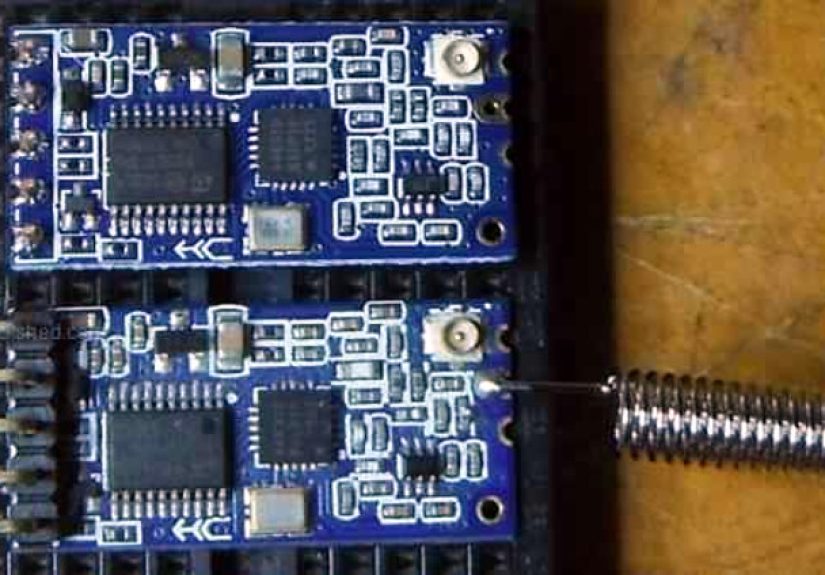
The core story is delightfully frustrating. A set of HC-12 serial wireless modules looked the same, used apparently similar circuitry, and should have talked to each other without drama. But some modules would not communicate properly with others. After investigation, the problem turned out not to be firmware, not wiring, not cosmic betrayal, but frequency error. One batch was measured roughly 37 kHz away from another, and the culprit traced back to an out-of-spec 30 MHz reference crystal feeding the radio chip.
That is the kind of failure engineers hate most. The board looks right. The parts look right. The module partly works. It can even fool you into thinking the bug lives in software, where you will gladly waste a weekend. But timing errors are sneaky. A crystal that drifts too far, starts unreliably, or does not match the expected load conditions can turn a perfectly reasonable design into a haunted appliance.
The big takeaway is simple: similarity in appearance is not similarity in behavior. In electronics, “same footprint” is not the same as “same performance,” and “same frequency printed on the label” is definitely not the same as “same system result.”
What a Crystal Actually Does
A quartz crystal is not magic, even though engineers occasionally speak about it as if it were blessed by a timekeeping wizard. It is a piezoelectric resonator. When placed in the right oscillator circuit, it vibrates at a predictable frequency and provides a stable timing reference. That timing reference becomes the heartbeat of a microcontroller, radio, clock, or signal-processing chain.
In practice, that heartbeat affects nearly everything. A radio needs a stable reference so the transmit and receive frequencies stay where they belong. A microcontroller needs clock accuracy for serial communication, timing loops, USB behavior, and low-power wake schedules. A real-time clock needs long-term stability so your device does not start believing lunch is breakfast.
That is why datasheets do not just list “16 MHz” or “32.768 kHz” and call it a day. They also care about tolerance, stability over temperature, aging, equivalent series resistance, drive level, startup behavior, and load capacitance. A crystal is a system component, not a decorative pebble.
Why Two Crystals With the Same Label Can Behave Differently
1. Frequency Tolerance Is Only the Beginning
The first trap is assuming the printed frequency tells the whole story. It does not. A crystal may be nominally 30 MHz, but the real question is: how close is it to 30 MHz under actual operating conditions? Frequency tolerance describes how far the part may be from nominal at a reference temperature, usually 25°C. If the design expects tight timing and the actual component wanders too far, trouble starts early.
For many systems, the total error budget includes not only initial tolerance but also temperature stability and aging. That means the crystal can be reasonably accurate on day one, then drift with heat, cold, mechanical stress, or time. In a forgiving application, nobody notices. In a radio or precision clock path, everybody notices.
2. Temperature Changes the Game
Crystals are not frozen in perfection. Their resonant frequency shifts with temperature, and different crystal cuts respond in different ways. A common 32.768 kHz watch crystal, for example, tends to follow a curved temperature characteristic rather than staying perfectly flat across the operating range. That matters in wearables, battery-powered sensors, automotive electronics, and anything expected to behave outdoors instead of only on a nice lab bench.
This is why some designs move from a basic crystal to a temperature-compensated crystal oscillator, or TCXO, when better stability is required. It costs more, but so does explaining to your boss why the product works in the office and lies in the parking lot.
3. Load Capacitance Is Not a Suggestion
One of the most common crystal mistakes is treating load capacitance like optional seasoning. It is not. A crystal is designed to operate with a certain load capacitance, and the surrounding circuit has to match that expectation. If the load is wrong, the oscillator can run off-frequency, show poor startup behavior, or become unstable.
That point is especially important because the “right” capacitor values on paper are not the whole story. Stray board capacitance, package parasitics, MCU input characteristics, and even layout details all join the party. A design can miss spec without a single obviously wrong part. That is the engineering version of stepping on a rake.
4. ESR and Package Size Matter More Than People Expect
Equivalent series resistance, usually shortened to ESR, also plays a major role. If ESR is too high for the oscillator circuit, startup becomes unreliable or the oscillation margin shrinks. Smaller crystal packages often come with higher ESR, which means that shrinking the design without reevaluating the oscillator can create mysterious failures. The board still looks modern and compact, but the clock source may now be one bad Monday away from refusing to start.
Miniaturization is wonderful until physics asks to speak to management.
5. Layout Can Turn a Good Crystal Into a Bad Day
Even a perfectly chosen crystal can be sabotaged by sloppy layout. Oscillator circuits are sensitive to stray capacitance, noise coupling, and board contamination. Long traces, noisy neighbors, bad grounding, or careless placement can pull performance off target. This is why manufacturers keep repeating the same advice in application notes: place the crystal and its supporting parts close to the IC, keep the loop tight, and respect the oscillator as an analog circuit even if the rest of the board feels digital.
Ignore that advice, and your crystal may not fail dramatically. It will do something worse. It will fail just enough to make debugging annoying.
Why This Matters in Real Products
Wireless Modules and Radios
Radio systems are especially unforgiving. When the reference clock is off, the transmitted or received frequency can move out of the expected window. Sometimes the system still works with identical bad units from the same batch, which creates a false sense of confidence. Then a customer mixes modules from another batch, or tries to communicate with a standards-compliant device, and suddenly the “fine in testing” product becomes a support ticket factory.
That is exactly why the HC-12 story stings. The modules looked right. Some of them even worked together. But once the crystal accuracy no longer matched the radio’s expectations, interoperability suffered. That is a fancy way of saying the parts became socially awkward.
Real-Time Clocks and Low-Power Devices
At 32.768 kHz, watch crystals support real-time clocks, low-power sleep timing, and timekeeping in countless devices. Here, startup time, temperature behavior, and long-term drift matter a lot. A device that sleeps beautifully but wakes late, or slowly gains minutes over weeks, may not be “broken” in the obvious sense. It is simply wrong in a way customers can measure.
Precision Measurement and Filtering
Clock accuracy also matters in data converters and systems that depend on precise frequency relationships. In some designs, substituting a ceramic resonator for a quartz crystal may technically make the circuit oscillate, but not accurately enough for the application. If a digital filter or measurement chain expects a certain clock quality, a lower-accuracy timing source can degrade the result in subtle but meaningful ways.
Crystal, Resonator, or Oscillator Module?
This is where smart design choices save time. A plain quartz crystal can be excellent when the oscillator circuit, load conditions, and application requirements are well understood. A ceramic resonator is often cheaper and more rugged in some contexts, but usually gives up accuracy and stability. An oscillator module wraps the resonator and drive circuitry into one package, often offering better predictability and easier implementation at a higher cost.
There is no universal winner. The right choice depends on whether your design values cost, precision, low power, startup reliability, phase noise, jitter, environmental stability, or all of the above. Unfortunately, many failures begin when a team chooses the timing part as if only the price column exists.
How to Avoid Your Own Crystal Disaster
Read Beyond the Frequency Number
Check tolerance, temperature stability, aging, ESR, drive level, and load capacitance. If the datasheet gives you a whole table, that is because the table matters.
Match the Crystal to the IC
Microcontrollers, radios, and transceivers often have very specific oscillator requirements. A “close enough” crystal may not be close enough at all. Follow the silicon vendor’s guidance, not your optimism.
Respect Layout Rules
Short traces, clean grounding, low noise, and tight placement are not aesthetic preferences. They are part of the timing solution.
Test Across Temperature and Production Variation
A board that works on one bench at room temperature has passed one tiny audition. Test cold, hot, across supply variation, and with parts from different lots. That is how you discover whether your design is robust or just lucky.
Do Not Substitute Blindly
Changing crystal vendors, shrinking the package, or swapping in a ceramic resonator can alter behavior enough to break the design. Review the full oscillator network before approving a substitute.
The Bigger Lesson
The beauty of this fail is that it teaches a universal engineering truth. Tiny components carry giant assumptions. A project rarely collapses because one part looked suspiciously evil under a microscope. More often, it collapses because everyone assumed a category of parts was interchangeable until reality sent in a correction.
Crystals are a perfect example. They are small, common, cheap, and easy to underestimate. Yet they influence timing, synchronization, communication, power behavior, filtering, and long-term product reliability. Treat them casually, and they will eventually return the favor.
So no, all crystals are not born equal. Some are accurate. Some are stable. Some are better at surviving temperature swings. Some start reliably. Some demand precise loading. Some belong in a high-performance RF design, and some belong nowhere near it. They may share a family name, but they do not share a destiny.
Experience Section: What This Failure Feels Like in the Real World
Anyone who has worked around embedded hardware for long enough eventually collects a crystal story, and almost none of those stories begin with, “Everything was fine forever.” They begin with a board that works in the lab, a prototype that behaves most of the time, or a production run that only fails when the room is cold, the battery is low, or the modules come from a new supplier. The emotional arc is always similar: confidence, confusion, denial, bargaining, measurement, then reluctant respect for oscillator physics.
One common experience goes like this: a team builds ten units, and all ten pass a quick functional test. Great news. Then someone notices that a wireless link drops packets at the edge of range. Software gets blamed first, because software is always the easiest villain to accuse. Logs are added. Retries are tuned. Packets are counted. Nothing obvious changes. Then a frequency counter or spectrum measurement shows the reference clock is not where everyone assumed it was. Suddenly the bug is no longer mysterious. It is measurable. That is both comforting and slightly humiliating.
Another experience shows up in low-power products. A device sleeps, wakes, timestamps data, and seems respectable during development. Weeks later, field units begin drifting in time. Not wildly, just enough to annoy. A few seconds here, a minute there, then enough accumulated error to cause missed events or ugly logs. The hardware team discovers that the watch crystal’s temperature behavior was real, the load network was not ideal, and the “good enough” assumption was never actually tested under realistic conditions. Congratulations: the clock was technically running, but the schedule was fiction.
Then there is the startup failure, which is perhaps the most theatrical. The board powers up beautifully on a clean bench supply. It passes during engineering validation. But on certain units after assembly, or after storage, or after a humid week, the oscillator starts slowly or not at all. That kind of problem makes grown engineers stare silently at a scope probe while reconsidering life choices. Eventually the culprit turns out to be some mix of ESR margin, contamination, stray capacitance, or layout sensitivity. The crystal was not bad in the simple sense. The design was just less forgiving than everyone hoped.
These experiences all point to the same lesson: timing parts reward humility. When engineers stop treating crystals as commodity trivia and start treating them as performance-defining components, projects get calmer, radios get friendlier, and clocks stop freelancing. That may not sound glamorous, but in hardware, boring reliability is the dream.
Conclusion
The real fail is not that a bad crystal exists. The real fail is assuming the timing source does not deserve serious attention. A crystal can be the difference between a dependable product and a warranty-return pen pal. If the part sets the rhythm of the system, it deserves more than a casual glance at the frequency marking.
In other words: trust, but verify. And when in doubt, never assume all crystals are born equal.