Table of Contents >> Show >> Hide
- The Colorado Drone Mystery: A Quick Overview
- Why Did the Colorado Drones Get So Much Attention?
- What Authorities Found During the Investigation
- Were the Colorado Drones Illegal?
- Possible Explanations for the Colorado Drone Sightings
- Colorado Drones Today: Why You May See More of Them
- How to Tell Whether You Are Seeing a Drone
- Why the Colorado Drone Story Still Matters
- What Should Drone Operators Learn From the Colorado Case?
- What Residents Should Know Before Panicking
- Experiences and Real-Life Lessons From the Colorado Drone Mystery
- Conclusion: So, What Were Those Drones in Colorado?
- SEO Tags
If you have ever stood outside on a cold Colorado night, looked up, and wondered whether the blinking lights above the plains were aircraft, hobby drones, government surveillance tools, or the opening scene of a very low-budget sci-fi movie, you are not alone. The phrase “Colorado drones” became a national curiosity after a wave of mysterious nighttime sightings swept across eastern Colorado and neighboring states in late 2019 and early 2020.
Residents described groups of lights moving in patterns, sometimes in formations, often after dark. Local sheriffs received report after report. The Federal Aviation Administration, the FBI, the U.S. Air Force, the Colorado Department of Public Safety, and county law enforcement agencies all tried to determine what people were seeing. The answer, frustratingly and fascinatingly, was not as simple as “one company did it” or “case closed.”
So, what were those drones in Colorado? The most responsible answer is this: some sightings were likely real small drones, some were commercial aircraft or atmospheric conditions, some were stars or planets mistaken for drones, and a small number remained unexplained. In other words, the Colorado drone mystery was part aviation puzzle, part public-safety investigation, and part lesson in how quickly uncertainty can fly faster than a quadcopter with fresh batteries.
The Colorado Drone Mystery: A Quick Overview
The Colorado drone sightings began gaining serious attention in December 2019, especially across rural northeastern Colorado. Reports spread through counties such as Phillips, Yuma, Morgan, Weld, Washington, Sedgwick, and Lincoln, then expanded into parts of Nebraska, Kansas, and Wyoming. Witnesses said the objects appeared at night, moved in groups, and sometimes seemed to follow grid-like flight paths.
Some reports described drones with wingspans of around six feet. Others mentioned lights moving steadily between roughly 6 p.m. and 10 p.m. In farming country, where night skies are usually filled with stars, aircraft, and the occasional owl minding its own business, synchronized lights can feel strange fast. Rural residents were not being silly; they were reporting something that looked unusual from the ground.
Why Did the Colorado Drones Get So Much Attention?
There were three big reasons the story took off. First, the sightings happened repeatedly. This was not one person seeing one odd light one time. Multiple residents and law enforcement officers reported aerial activity across several counties. Second, the objects were said to be flying in groups, which made people wonder whether the flights were coordinated. Third, no obvious operator stepped forward.
That last point mattered. If a mapping company, university, energy firm, agricultural surveyor, or government agency had simply said, “Yes, that was us,” the story might have landed quietly. Instead, the mystery kept climbing. The FAA checked with drone companies, unmanned aircraft test sites, airports, and operators with waivers in the area, but no confirmed source emerged. The Air Force and several major companies denied responsibility. The public was left with a very human question: if nobody claims the drones, whose blinking lights are those?
What Authorities Found During the Investigation
In January 2020, dozens of local, state, and federal agencies gathered to coordinate their response. A task force involving the FBI, FAA, U.S. Air Force, Colorado public-safety officials, and local sheriffs looked into the reports. Investigators followed up on sightings, reviewed possible explanations, and even searched for signs of a “command vehicle” that might be controlling multiple drones. No such smoking-gun control center was found.
The Colorado Department of Public Safety later reported that many investigated sightings could be explained. Of 90 reports received between November 23, 2019, and January 13, 2020, 14 were confirmed as smaller hobbyist drones. During a more focused field-operation period from January 6 to January 13, officials reviewed 23 reports: 13 were attributed to planets, stars, or small hobbyist drones; six were ruled out as atmospheric conditions or commercial aircraft; and four could not be identified by law enforcement.
That finding did not prove nobody ever saw a larger drone. It did show that the strongest public version of the mysterylarge drones flying together in organized fleets across the plainswas not substantiated by the official investigation. The result was less “alien invasion” and more “mixed bag of real drones, mistaken identity, and a few question marks.” Not quite a Hollywood ending, but the sky does not always hire scriptwriters.
Were the Colorado Drones Illegal?
Drone legality depends on the time, location, aircraft, pilot certification, and purpose of the flight. Under FAA rules, drone pilots generally must avoid manned aircraft, operate safely, keep the drone within visual line of sight, respect altitude limits, and follow restrictions around airports, stadiums, emergency areas, and controlled airspace.
Today, many registered drones must also comply with Remote ID rules, which function a bit like a digital license plate. Remote ID helps authorities identify drones and their control stations during flight. The FAA began fully enforcing Remote ID compliance after its discretionary enforcement period ended in March 2024, meaning noncompliant operators can face penalties.
Night drone operations are also regulated. Current Part 107 rules allow routine night operations under certain conditions, including required training and anti-collision lighting visible for at least three statute miles. However, the rules in place during the 2019-2020 Colorado sightings were more restrictive for many operations, which added to the concern at the time.
Possible Explanations for the Colorado Drone Sightings
1. Hobbyist Drones
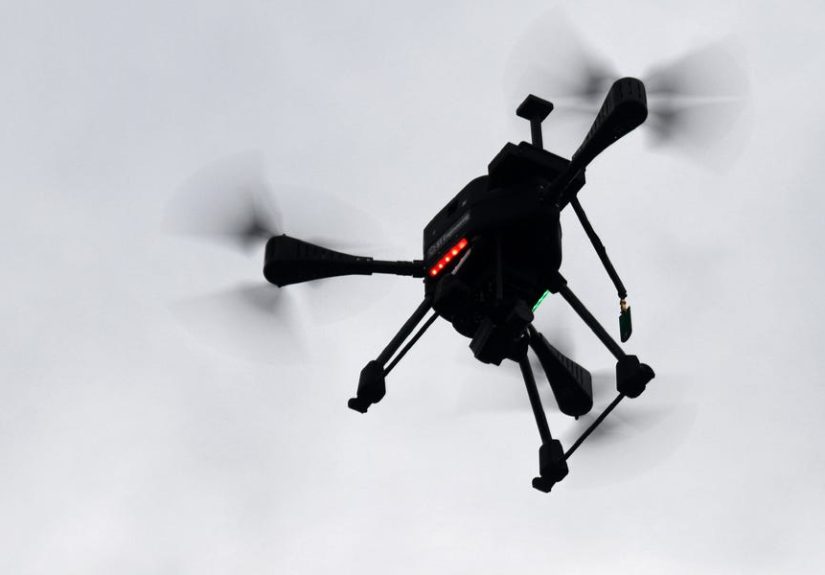
Some sightings were confirmed as hobbyist drones. Consumer drones had become popular by 2019, and many models included bright lights, stable hovering, GPS-assisted flight, and high-quality cameras. A small drone at night can look bigger than it is, especially when distance is difficult to judge. Add a dark horizon, a quiet rural road, and a few neighbors comparing notes, and suddenly your average drone can gain the stage presence of a UFO with a gym membership.
2. Commercial Aircraft
Aircraft can be surprisingly deceptive at night. A plane flying toward you may appear to hover. Navigation lights can look like multiple objects. A low-flying aircraft on approach may seem closer than it is. In wide-open parts of Colorado, where there are fewer visual reference points, people can easily misjudge altitude, speed, and size.
3. Stars, Planets, and Atmospheric Conditions
Bright planets are repeat offenders in sky-mystery stories. Venus, Jupiter, and other celestial objects can appear unusually bright near the horizon. Atmospheric distortion can make lights shimmer, shift, or appear to move. Investigators concluded that some Colorado sightings were likely planets, stars, or atmospheric effects rather than drones.
4. Agricultural or Mapping Operations
Because many sightings occurred over rural land, some observers wondered whether the drones were connected to agriculture, surveying, oil and gas infrastructure, or mapping. Drones are widely used for crop monitoring, land surveys, pipeline inspection, and infrastructure assessment. However, no operator publicly took responsibility for the mystery flights, and official checks did not confirm a commercial source for the widely discussed sightings.
5. Public-Safety and Law-Enforcement Drones
Colorado agencies now use drones for many practical purposes, including search and rescue, scene mapping, wildfire awareness, and emergency response. In recent years, Colorado police departments have also explored “drone as first responder” programs, where a drone can arrive at an incident scene before officers and provide real-time information. That does not explain the 2019 mystery, but it does help explain why more Colorado residents may notice drones today.
Colorado Drones Today: Why You May See More of Them
The drone world has changed dramatically since 2020. Drones are now common tools for real estate photography, construction site progress tracking, roof inspection, law enforcement, search and rescue, news gathering, land management, and outdoor filmmaking. In Colorado, that means drones may appear near farms, highways, construction zones, emergency scenes, public events, and mountain communities.
There are also more restrictions in places where drones create risk. For example, drones are not allowed near major sporting events during restricted periods. In 2026, authorities warned drone operators after unauthorized drone sightings near Coors Field during a Colorado Rockies homestand. Airspace around major stadiums is restricted around game time because even a small drone can create public-safety problems.
Colorado’s parks and wildlife areas also require caution. Drone use is restricted on Colorado Parks and Wildlife lands, and pilots cannot use drones to harass wildlife or assist in hunting. National Park Service lands generally prohibit launching, landing, or operating drones without special permission. That means a beautiful mountain view does not automatically come with permission to launch your flying camera. The elk did not sign a media release.
How to Tell Whether You Are Seeing a Drone
Identifying a drone at night is harder than people think. A real drone may hover, change direction sharply, make a buzzing sound if nearby, and show blinking or colored lights. But distance can fool the eye. A helicopter, plane, planet, satellite, or even reflected light can seem drone-like under the right conditions.
If you see suspicious drone activity in Colorado, take a calm and practical approach. Note the time, location, direction of travel, color and pattern of lights, estimated altitude, sound, and whether the object appears to hover or follow a route. Take video if it is safe, but avoid chasing it. Do not shoot at it. Drones are considered aircraft, and firing at one can create serious legal and safety problems. Also, bullets that go up eventually come down, and gravity has never once said, “My bad.”
Why the Colorado Drone Story Still Matters
The Colorado drone mystery remains relevant because it sits at the intersection of technology, privacy, public safety, and trust. Drones are useful. They can find missing people, map dangerous terrain, inspect infrastructure, help firefighters, and collect data without putting humans in harm’s way. But they can also make people feel watched, especially when the operator is unknown.
The 2019-2020 sightings showed how quickly public anxiety can grow when new technology appears without clear communication. In rural communities, privacy is not an abstract idea. People know their neighbors, their roads, their land, and their sky. When something unfamiliar flies overhead night after night, asking questions is not paranoia. It is common sense wearing a winter jacket.
What Should Drone Operators Learn From the Colorado Case?
Drone pilots should take one big lesson from the Colorado drones: transparency matters. Legal flight is not always enough to build public trust. If a company or agency is conducting repeated nighttime operations near homes, farms, or public roads, community notice can prevent confusion. A simple public announcement may save everyone from rumors, emergency calls, and Facebook threads that age like unrefrigerated milk.
Operators should also follow FAA rules carefully. That includes checking airspace, maintaining visual line of sight unless properly authorized, respecting altitude limits, using required lighting for night operations, complying with Remote ID, and avoiding restricted locations. In Colorado, pilots should also check local rules for parks, wildlife areas, city properties, airports, stadiums, and emergency scenes.
What Residents Should Know Before Panicking
If you spot drones in Colorado today, the most likely explanation is ordinary: a hobbyist, photographer, contractor, real estate professional, public-safety agency, or commercial operator. Still, unusual activity deserves attention. Repeated night flights over private property, flights near emergency operations, drones around airports, or drones over stadiums should be reported to the appropriate authorities.
The key is balance. Not every blinking light is a secret government program, and not every drone is harmless. The smart response is to observe, document, report if necessary, and avoid spreading unverified claims. A blurry video may be interesting, but it is not the same as proof. As the Colorado drone mystery showed, the sky can turn ordinary lights into legends when the story outruns the evidence.
Experiences and Real-Life Lessons From the Colorado Drone Mystery
The most interesting part of the Colorado drones story is not only the technology. It is the experience of living through a mystery in real time. Imagine standing outside a farmhouse in eastern Colorado on a winter evening. The air is sharp, the fields are quiet, and the horizon stretches so far it feels like the Earth forgot to install walls. Then a cluster of lights appears. They move steadily. Maybe one seems to hover. Maybe another crosses behind it. You call a neighbor, and they see it too. Suddenly, the night sky is not background scenery anymore; it is the main event.
For residents, the experience was unsettling because there was no quick explanation. People were not simply asking, “What is that?” They were asking, “Why is it over my home?” That difference matters. A drone flying over a public park during the day may feel harmless. A group of unknown lights moving over rural property at night feels more personal. Even when no threat is present, uncertainty can create stress. The Colorado case reminds us that privacy is emotional as well as legal.
Law enforcement also faced a difficult experience. Sheriffs had to take residents seriously while avoiding speculation. They had to coordinate with federal agencies, collect reports, and respond to public concern without overpromising answers. That is not easy when the internet is already busy building theories with the speed and confidence of a raccoon opening a trash can. Every new report added pressure, but every investigation also showed how many sightings could have ordinary explanations.
For drone pilots, the experience is a warning label with propellers. Even legal drones can alarm people if operations are repeated, unexplained, or poorly communicated. A pilot may think, “I am just testing equipment,” while a resident thinks, “Why is that thing watching my pasture?” Both reactions can exist at the same time. The best operators understand that trust is part of flight planning. Clear notices, visible identification, responsible timing, and respect for local concerns can prevent confusion before it takes off.
For readers today, the Colorado drones mystery offers a practical mindset. Look up, but do not leap to conclusions. Record details, but do not turn every light into a conspiracy. Respect the usefulness of drones, but expect accountability from the people who fly them. Colorado’s sky is big enough for aircraft, satellites, stars, and dronesbut public trust needs more than blinking lights. It needs answers, rules, and a little common sense with its landing gear down.
Conclusion: So, What Were Those Drones in Colorado?
The Colorado drone sightings were never solved in one neat sentence. Investigators found that many reports involved planets, stars, hobbyist drones, atmospheric conditions, or commercial aircraft. A few sightings remained unidentified, and no single operator was publicly confirmed as the source of the larger mystery. That combination is exactly why the story still fascinates people.
In the end, the Colorado drones were a preview of a future we are now living in: more unmanned aircraft, more public questions, more privacy concerns, and more need for clear rules. Drones can be helpful, exciting, and even lifesaving. They can also be confusing when they show up unannounced after dark. The lesson is not to fear every drone. The lesson is to make the sky more understandable for everyone below it.