Table of Contents >> Show >> Hide
- What Makes a First French Kiss Go Well?
- How to Initiate a First French Kiss: 12 Steps
- 1. Make sure the moment actually makes sense
- 2. Check for comfort before you do anything bold
- 3. Use words if that feels easier
- 4. Get physically closer in a gentle way
- 5. Slow down the approach
- 6. Start with a regular kiss first
- 7. Let the French kiss develop gradually
- 8. Pay attention and match their pace
- 9. Keep your hands respectful and calm
- 10. Do not overthink technique in the middle of the moment
- 11. Know when to pause or stop
- 12. End the moment warmly, not awkwardly
- Common Mistakes to Avoid
- Quick Confidence Tips Before Your First French Kiss
- Experiences and Real-Life Situations: What a First French Kiss Often Feels Like
- Conclusion
- SEO Tags
There are few moments in life more dramatic than a first French kiss. Your brain is racing, your hands suddenly forget how hands work, and your mouth is out here applying for a full-time job without previous experience. Relax. A first French kiss does not need movie lighting, a violin soundtrack, or supernatural lip wisdom passed down by your ancestors. It just needs two people who are both comfortable, interested, and willing to go slowly.
If you are wondering how to initiate a first French kiss without making it weird, the good news is this: the best approach is not flashy. It is respectful, calm, confident, and tuned in to the other person. In other words, less “grand romantic stunt,” more “smart human who can read the room.”
This guide walks through 12 practical steps for initiating a first French kiss in a way that feels natural, thoughtful, and far less awkward than trying to improvise while your heart is drumming like a garage band. You will also find examples, common mistakes to avoid, and a longer section on real-life experiences so the whole thing feels a little less mysterious and a lot more manageable.
What Makes a First French Kiss Go Well?
A good first French kiss is not about being advanced, bold, or “good at kissing” on command. It is about timing, consent, comfort, and paying attention. That means you do not force a moment, rush the other person, or treat the kiss like a performance review. You create a warm, comfortable vibe, make your interest clear, and stay responsive to what the other person is communicating.
Also, let’s clear up a myth right away: more tongue does not equal more romance. A French kiss is still a kiss, not an Olympic event. Gentle, gradual, and responsive beats aggressive every single time.
How to Initiate a First French Kiss: 12 Steps
-
1. Make sure the moment actually makes sense
The best first French kiss usually happens when there is already some chemistry in the room. You have been talking, laughing, lingering, making eye contact, maybe standing a little closer than “just friends waiting for the bus” close. If the energy feels rushed, tense, distracted, or one-sided, it is probably not the moment.
Think of timing as your secret weapon. A quiet walk, a long goodbye, a pause after a heartfelt conversation, or a moment when both of you are smiling and relaxed works much better than trying to force a kiss in the middle of chaos.
-
2. Check for comfort before you do anything bold
Before you initiate a first French kiss, notice how the other person responds to closeness. Are they leaning in? Holding eye contact? Smiling in a relaxed way? Staying near you instead of drifting away? Those are good signs. If they seem stiff, distracted, uneasy, or they keep creating distance, slow down.
This step matters because confidence is attractive, but ignoring signals is not. The goal is not to “make a move” at all costs. The goal is to share a moment both of you want.
-
3. Use words if that feels easier
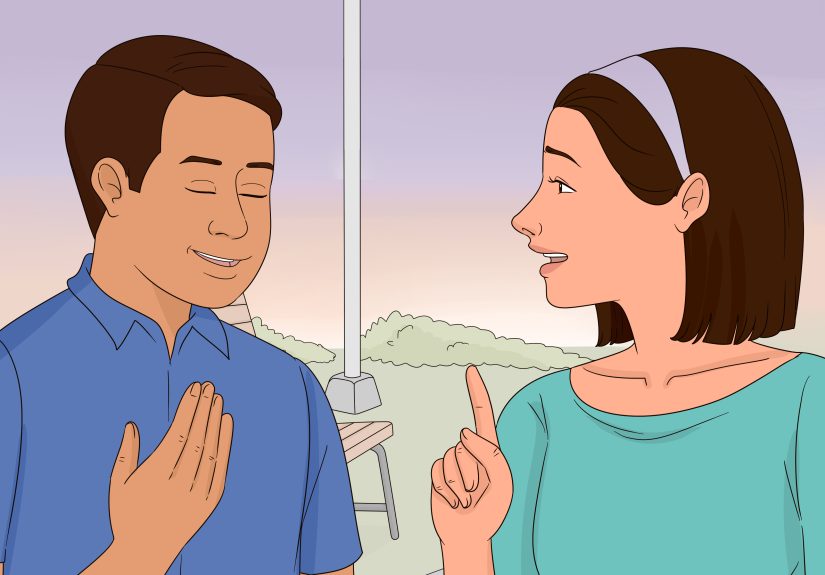
You do not have to guess your way into a kiss. Sometimes the smoothest move is the simplest one: ask. “Can I kiss you?” is not unromantic. In fact, it is clear, respectful, and often incredibly sweet. It shows maturity and takes pressure off the other person.
If direct words feel too formal for the moment, you can soften it: “I really want to kiss you right now,” or “I have been wanting to do this all evening.” That still communicates interest while giving the other person room to respond honestly.
-
4. Get physically closer in a gentle way
Initiating a first French kiss usually starts before your lips ever meet. Stand or sit a little closer. Let the conversation slow down. Hold eye contact for an extra beat. If that feels natural, lightly touch their hand, shoulder, or waist only if that already seems welcome.
The key word here is gentle. You are creating a moment, not launching an ambush. If they meet your closeness with their own, great. If not, do not push it.
-
5. Slow down the approach
One of the biggest mistakes people make is moving too fast. A rushed first kiss can feel confusing even when the attraction is real. As you lean in, do it slowly enough that the other person has time to meet you halfway, smile, nod, or pause things if they want to.
This is the part where movies accidentally give decent advice: the pause matters. It builds anticipation, gives space for consent, and makes the moment feel mutual instead of surprising.
-
6. Start with a regular kiss first
If this is your first French kiss together, begin with a soft, regular kiss. No need to arrive with full dramatic intensity like you are trying to win a trophy. Start simple. Closed lips or barely parted lips are completely fine at first.
This gives both of you a chance to settle into the moment. It also helps you figure out rhythm, pressure, and comfort before adding anything more. Think of it as the trailer before the feature presentation.
-
7. Let the French kiss develop gradually
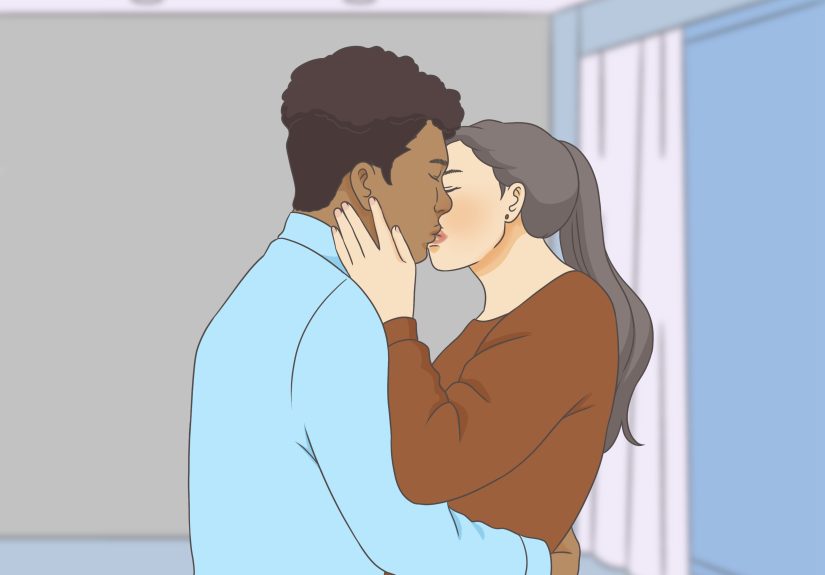
Once the regular kiss feels comfortable and clearly mutual, let the kiss deepen naturally. Part your lips slightly. Use only a little tongue, and keep the movement soft and unhurried. The “French” part should feel like a natural extension of the kiss, not a sudden plot twist.
Less is almost always better at the start. A first French kiss should feel curious and connected, not overwhelming. If the other person responds warmly and stays engaged, keep going gently. If they pull back even a little, return to a simpler kiss or pause completely.
-
8. Pay attention and match their pace
A kiss works best when it feels like a conversation, not a speech. That means listening with your attention. If the other person kisses slowly, do not go fast. If they pause, pause. If they smile and rest their forehead against yours, that may be the moment, not a cue to speed up.
Matching pace shows emotional intelligence. It says, “I am here with you, not just doing my own thing.” That alone can make a first French kiss feel far more romantic than any “expert move” ever could.
-
9. Keep your hands respectful and calm
People often panic about what to do with their hands. Good news: they do not need to perform miracles. You can place a hand lightly on the other person’s shoulder, upper back, hand, or cheek if that feels natural and clearly welcome. The safest rule is simple: keep your touch respectful, gentle, and easy to stop.
A first French kiss is not the time to get overly grabby or theatrical. Calm, steady touch feels much more confident than random hand choreography that looks like you are buffering.
-
10. Do not overthink technique in the middle of the moment
Trying to monitor every angle, breath, movement, and facial expression in real time is the fastest route to awkwardness. Stay present instead. Breathe through your nose, keep your lips relaxed, and let the kiss unfold naturally.
If you make a tiny mistake, welcome to the human race. Teeth may tap. Timing may wobble. Someone may laugh. None of that ruins the moment unless you decide it does. In fact, a shared laugh often makes a first kiss feel more real and memorable.
-
11. Know when to pause or stop
Part of knowing how to initiate a first French kiss is knowing how to back off gracefully. If the other person seems unsure, stops responding, turns away, or says they are not ready, you stop. No guilt trip. No pressure. No “come on, just once.” Respect is always more attractive than persistence.
And if you feel nervous or not ready, you can pause too. A first French kiss is not a deadline. It is not a test. It is definitely not something you owe anyone because the mood seemed right for twelve seconds.
-
12. End the moment warmly, not awkwardly
After the kiss, keep it simple and kind. Smile. Make eye contact. Say something honest like, “I really wanted to do that,” or “That was nice.” You do not need a speech, a ranking system, or a post-kiss press conference.
A warm ending matters because it reassures both people that the moment was mutual and appreciated. Sometimes the sweetest part of a first French kiss is what happens right after: the smile, the little laugh, the shared “wow,” and the relief that neither of you spontaneously turned into a disaster documentary.
Common Mistakes to Avoid
Going too fast
Rushing is one of the biggest reasons a first French kiss feels awkward. Slow down. Let anticipation do some of the work for you.
Using too much tongue
This is the classic beginner mistake. A French kiss should feel soft and responsive, not like you are trying to solve a maze with your mouth.
Ignoring body language
If the other person is not leaning in, not responding, or not looking comfortable, that matters. A kiss only works when both people are clearly into it.
Treating it like a performance
You are not auditioning for anything. A great first French kiss feels natural because both people are present, not because one person is trying to impress an invisible jury.
Forgetting the basics
Fresh breath, clean lips, and basic grooming are not shallow details. They are part of making the moment pleasant. A mint is fine. An entire cloud of overpowering gum flavor is less ideal.
Quick Confidence Tips Before Your First French Kiss
- Take a breath and relax your shoulders.
- Make sure your breath is fresh.
- Choose a moment with privacy and calm, not chaos.
- Remember that asking is allowed and often appreciated.
- Start simple and let the kiss build naturally.
- Focus on connection, not perfection.
Experiences and Real-Life Situations: What a First French Kiss Often Feels Like
People love to talk about first kisses as if they always arrive wrapped in sunset lighting and flawless timing. Real life is usually messier, funnier, and honestly a lot more charming. One person may spend an entire date wondering whether the other person likes them back, only to realize later that the answer was obvious in the way they kept smiling and lingering. Another person may finally get their first French kiss after three separate “goodbye” attempts, one nervous laugh, and a debate over who was being shy. Romance, as it turns out, often has the organizational style of a cluttered desk.
A very common experience is feeling nervous right up until the moment the kiss starts. Many people expect some magical wave of total confidence before they lean in. Usually, that wave never arrives. What actually happens is smaller and more human: your heart speeds up, your brain says, “Well, this is either going to be adorable or deeply embarrassing,” and then you go for it carefully. The moment works not because you stopped being nervous, but because both of you felt safe enough to be a little vulnerable.
Another common experience is realizing that a good first French kiss is surprisingly gentle. People sometimes imagine it has to be intense right away because the phrase “French kiss” sounds dramatic. In reality, the better first experiences often begin with one soft regular kiss, a pause, and then a gradual deepening if both people are comfortable. That slower rhythm gives both people time to adjust, respond, and enjoy the moment instead of wondering whether they just got swept into a weather event.
There is also the experience of awkwardness, which deserves better public relations. Awkward does not mean bad. Sometimes noses bump. Sometimes someone tilts the wrong direction. Sometimes one person laughs because they are happy and the other laughs because they were one second away from panicking. Those moments do not ruin the kiss. In many cases, they make it sweeter because they remind both people that this is real life, not a polished scene written by someone who has clearly never tried to coordinate two nervous humans at close range.
For some people, the most meaningful part of the first French kiss is what it confirms emotionally. Maybe it tells you the feelings were mutual. Maybe it makes the relationship feel more real. Maybe it simply shows that the other person respects your pace and pays attention to your comfort. That last one matters more than people realize. A first kiss can be exciting, but it can also reveal character. Someone who slows down, checks in, and responds to your cues is showing you something important about how they handle closeness.
And finally, many people come away from their first French kiss with the same surprising thought: “Oh. That was not nearly as scary as I made it in my head.” The anticipation is often bigger than the moment itself. Once it happens, you usually discover that the best kiss is not the most technically impressive one. It is the one where both people feel wanted, respected, relaxed, and happy to be there. That is the real goal. Not perfection. Not performance. Just a genuine moment shared by two people who are both saying yes to it.
Conclusion
If you want to know how to initiate a first French kiss, the answer is wonderfully unglamorous: be respectful, pay attention, ask or clearly check for comfort, start slowly, and let the moment build naturally. That is the formula. Not tricks. Not pressure. Not trying to seem wildly experienced when your soul is doing cartwheels.
The best first French kisses are not memorable because they are flawless. They are memorable because they feel mutual, exciting, a little vulnerable, and genuinely sweet. So if the moment comes, trust the basics. Be kind. Be calm. Keep it simple. And remember that a good kiss is never about proving something. It is about sharing something.