Table of Contents >> Show >> Hide
- Why Dresden At Night Feels So Magical
- Start At Neumarkt And The Frauenkirche
- Follow The Streets Toward The Procession Of Princes
- Walk To Dresden Castle And The Historic Core
- Step Onto Brühl’s Terrace, The Balcony Of Europe
- Cross The Augustus Bridge For The Iconic Skyline
- Admire The Semperoper And Theaterplatz
- Continue To The Zwinger For Baroque Drama
- Let The Elbe River Guide Your Walk
- Explore Neustadt For Dresden’s Livelier Side
- Seasonal Magic: Dresden At Night In Winter
- Is Dresden Safe For Walking At Night?
- A Suggested Dresden Night Walk Itinerary
- Food, Drinks, And Little Nighttime Rewards
- Practical Tips For Walking Through Dresden At Night
- Experiences Related To Walking Through The Streets Of Dresden At Night
- Conclusion: Dresden At Night Is A Walk Worth Taking Slowly
Note: This article is written in original American English and is grounded in current travel, tourism, culture, museum, transit, and official city information about Dresden.
Dresden at night does not simply “turn on the lights.” It changes character. The city softens, the Elbe River begins to mirror the sky, the sandstone façades glow like toasted honey, and the old streets suddenly seem to whisper, “Walk slower, please. I dressed up for this.” For travelers who love history, architecture, quiet river views, lively neighborhoods, and the occasional heroic pastry, a nighttime walk through Dresden is one of the most rewarding ways to meet the city.
Known for its Baroque landmarks, world-class museums, rebuilt historic core, and creative Neustadt district, Dresden offers a rare combination: grand European beauty without the feeling that every corner has been turned into a theme park. The Old Town is compact enough to explore on foot, while the river, bridges, courtyards, and squares create a natural walking route that feels cinematic after dark. This is not a city you rush through with a checklist. This is a city you stroll through while pretending you are in a very tasteful historical dramapreferably one with comfortable shoes.
Why Dresden At Night Feels So Magical
During the day, Dresden impresses with scale and detail. At night, it impresses with mood. The historic center gathers around the Elbe River like a stage set, with the Frauenkirche, Semperoper, Zwinger, Dresden Castle, and Brühl’s Terrace all close enough to connect in a relaxed evening walk. The warm lighting gives the architecture depth, and the river adds movement. Even when the city is busy, the atmosphere often feels calm, thoughtful, and almost theatrical.
Part of the magic comes from Dresden’s layered story. Many of its best-known landmarks were damaged or destroyed during World War II and later rebuilt, restored, or preserved with extraordinary care. The result is not a city frozen in the past, but one that carries memory visibly. At night, when shadows settle into carved stone and statues stand above quiet squares, that history feels especially present. You are not just looking at beautiful buildings. You are walking through resilience, reconstruction, and a stubborn love of beauty.
Start At Neumarkt And The Frauenkirche
A perfect evening walk begins at Neumarkt, the square surrounding the Frauenkirche. The Church of Our Lady is one of Dresden’s most recognizable landmarks, famous for its great dome and its symbolic reconstruction after wartime destruction. In daylight, the church is monumental. At night, it becomes almost intimate. Light spills from the windows, the stone surface glows softly, and the surrounding square feels like an outdoor living room for visitors, locals, musicians, photographers, and people who are definitely pretending they “just happened” to take 47 photos.
Take your time here. Walk a slow circle around the square. Notice the contrast between reconstructed historic façades and modern city life. Listen for street music if performers are out. In cooler months, the air may carry the smell of roasted nuts, mulled wine, or something buttery enough to make your diet quietly resign. In warmer months, restaurant terraces bring a gentle buzz to the area without overwhelming the view.
What To Notice Around Neumarkt
Look up at the dome of the Frauenkirche, then look across the square at the carefully restored buildings that frame it. This area is not only photogenic; it is also a reminder that urban beauty can be rebuilt, reimagined, and protected. For SEO-minded travelers searching for the best Dresden night walk, Neumarkt is the obvious starting point because it combines architecture, history, atmosphere, restaurants, and easy access to nearby landmarks.
Follow The Streets Toward The Procession Of Princes
From Neumarkt, wander toward the Fürstenzug, or Procession of Princes. This famous mural shows Saxon rulers in a long parade and is made from Meissen porcelain tiles. By day, it is impressive. At night, it feels like a scene from a storybook that takes itself very seriouslyand honestly, it has earned the right. The figures stretch along the wall with horses, robes, armor, and stern expressions that suggest nobody in medieval Saxony ever forgot to answer an email.
This part of Dresden’s Old Town is ideal for slow exploration because the sights are close together. The pedestrian rhythm matters. You turn a corner and find a palace wall. You cross a passage and discover another courtyard. You pause for a photo and suddenly realize the same photo has been taken by millions of people before you, but yours has “special energy” because your phone battery is at 9 percent and courage makes art.
Walk To Dresden Castle And The Historic Core
Dresden Castle, or Residenzschloss, anchors the historic center with a sense of weight and royal memory. It houses major collections connected to the Dresden State Art Collections, including treasures associated with the Green Vault. Even if you do not enter a museum at night, the exterior adds richness to an evening walk. The towers, gates, and façades create a transition from open square to palace district, reminding you that Dresden was once a seat of Saxon power and taste.
For visitors who enjoy cultural travel, this area is a gold mine. Museums may have specific opening hours, and some offer extended hours on certain days or during special exhibitions, so it is worth checking schedules before planning an evening visit. Still, the outdoor experience requires no ticket. That is one of Dresden’s great gifts: you can enjoy a meaningful architectural walk without needing to convert your vacation into a spreadsheet.
Step Onto Brühl’s Terrace, The Balcony Of Europe
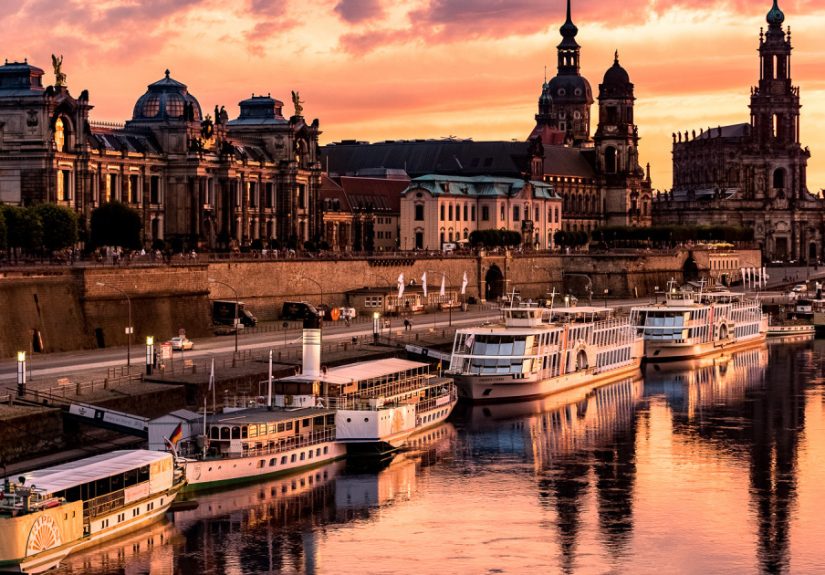
Brühl’s Terrace is one of the highlights of Dresden at night. This elevated promenade stretches along the Elbe and is famously known as the “Balcony of Europe.” The name sounds dramatic, but once you stand there after sunset, it feels fair. The river opens below, the bridges carry lights across the water, and the Old Town rises behind you with quiet confidence.
Walk the terrace slowly between the Augustus Bridge area and the direction of the Albertinum. The views change with every few steps. You may see boats moored along the riverbank, cyclists passing below, couples leaning against the railing, and photographers trying to capture reflections without accidentally including three strangers and a trash bin. The terrace is especially beautiful during blue hour, when the sky is not fully dark and the city lights begin to glow.
Best Photo Moments On Brühl’s Terrace
For the best Dresden night photography, arrive shortly before sunset and stay into the early evening. Frame the skyline with the river in the foreground, use the bridges as leading lines, and capture the warm lighting on the stone buildings. The view across the Elbe from the Neustadt side is also excellent, especially if you want the classic panorama of Dresden’s Old Town illuminated along the river.
Cross The Augustus Bridge For The Iconic Skyline
The Augustus Bridge is one of the most rewarding places to continue your nighttime walk. Crossing it gives you a shifting view of Dresden’s historic skyline: the Frauenkirche dome, the Hofkirche, the Semperoper area, and the riverfront all appear in conversation with one another. The bridge connects the Old Town with the Neustadt side, making it both practical and scenic.
Halfway across, pause and look back. This is the kind of view that makes people suddenly speak in softer voices. The lights ripple on the Elbe, the buildings form a glowing silhouette, and the city seems to understand composition better than most travel brochures. If you are walking with someone, this is a good place to say something profound. If you are walking alone, this is a good place to nod thoughtfully like the main character in an independent film.
Admire The Semperoper And Theaterplatz
Back on the Old Town side, Theaterplatz is another essential stop. The Semperoper, Dresden’s famous opera house, stands beside the Elbe and remains one of the city’s great cultural landmarks. The original opera house opened in the 19th century, and the building’s history includes fire, rebuilding, wartime destruction, and later restoration. At night, its curved façade, sculptural details, and elegant placement on the square create one of Dresden’s most memorable scenes.
Even if you do not attend a performance, walking around Theaterplatz after dark gives you a taste of Dresden’s artistic identity. People arrive dressed for the opera, trams pass nearby, and the square balances grandeur with everyday movement. It is fancy, but not stiff. Think of it as cultural elegance with good public transportation.
Continue To The Zwinger For Baroque Drama
The Zwinger is one of Germany’s most important Baroque architectural ensembles and one of Dresden’s best-known attractions. Its courtyards, pavilions, galleries, and sculptural details were created in connection with the ambitions of Augustus the Strong, whose taste for spectacle was clearly not shy. In the evening, the Zwinger’s architecture becomes more dramatic as shadows deepen and illuminated details stand out against the night.
Depending on access and timing, you may walk around the exterior or through open areas nearby. The Zwinger is especially beautiful when the air is still and the lights reflect around the fountains and stonework. It is a place where Baroque design does what Baroque design does best: it reminds everyone that minimalism was not invited to the party.
Let The Elbe River Guide Your Walk
Dresden’s relationship with the Elbe River is central to its nighttime charm. The river gives the city breathing room. Instead of feeling boxed in by buildings, the historic center opens toward water, sky, and long perspectives. A walk along the riverbank can be peaceful after visiting the busier squares. You can follow the Terrassenufer, watch boats, or cross to the Neustadt side for skyline views.
The Elbe meadows and river paths are especially appealing in milder weather. They offer a more relaxed, local feeling compared with the monumental Old Town. Bring a light jacket, because rivers enjoy reminding humans who is in charge of temperature. In winter, dress warmly and reward yourself afterward with something hot, sweet, and possibly involving cinnamon.
Explore Neustadt For Dresden’s Livelier Side
If the Old Town is Dresden’s grand historical face, Neustadt is its creative eyebrow raise. Across the Elbe, the Outer Neustadt is known for alternative shops, cafés, bars, live music, colorful streets, and a lively nightlife scene. This district is less polished than the Old Town and more spontaneous. Murals, courtyards, small restaurants, and independent venues give the area a different rhythm after dark.
A night walk through Neustadt works best when you allow room for detours. You might find a cozy bar, a late snack, a small gallery, or a courtyard that looks like it was designed by someone who had coffee with a thunderstorm. The Kunsthofpassage, with its artistic courtyards, is one of the better-known creative spots in the district, though it is worth seeing in daylight as well to appreciate the details.
Old Town Or Neustadt: Which Is Better At Night?
Choose the Old Town if you want architecture, history, river views, and romantic evening photos. Choose Neustadt if you want bars, street art, local energy, and a less formal atmosphere. The best answer, naturally, is both. Start with the Old Town at sunset, cross the river for skyline views, and then continue into Neustadt for dinner or drinks.
Seasonal Magic: Dresden At Night In Winter
Dresden becomes especially atmospheric during the holiday season. The city is famous for the Striezelmarkt, one of Germany’s oldest Christmas markets, held on the Altmarkt. Evening is the best time to experience the lights, stalls, traditional crafts, seasonal food, and festive decorations. The market adds warmth and color to winter nights, turning a walk through the city into a cheerful test of how many delicious things one person can “sample” before calling it dinner.
Winter nights in Dresden can be cold, but the reward is strong. The illuminated Old Town, Christmas pyramids, market stalls, and scent of mulled wine create a classic Central European holiday atmosphere. Wear warm layers, keep your hands free for snacks, and do not underestimate the emotional power of a good stollen.
Is Dresden Safe For Walking At Night?
For most visitors, central Dresden is comfortable to explore at night, especially in well-lit, popular areas such as the Old Town, Theaterplatz, Brühl’s Terrace, and main routes around the river. As in any city, use normal travel awareness: keep valuables secure, avoid poorly lit isolated areas late at night, follow local transit guidance, and know how you are getting back to your accommodation.
Dresden’s public transportation network helps make evening exploration easier. Many tram routes operate late, and night transport connections are available, though schedules vary by route and time. If you plan to stay out very late, check current tram, bus, or regional transport information before leaving. Future youthe one standing in the cold at 1:17 a.m.will be grateful.
A Suggested Dresden Night Walk Itinerary
Stop 1: Neumarkt And Frauenkirche
Begin around sunset. Enjoy the square, photograph the Frauenkirche, and take in the atmosphere as lights come on.
Stop 2: Procession Of Princes And Dresden Castle
Walk through the historic lanes toward the Fürstenzug and Residenzschloss. This section is rich in detail and ideal for slow wandering.
Stop 3: Brühl’s Terrace
Head to the Elbe for one of the city’s best nighttime views. Pause often. This is not cardio; this is culture with steps.
Stop 4: Augustus Bridge
Cross the bridge for panoramic views of the illuminated Old Town. Look back toward the skyline and river reflections.
Stop 5: Neustadt
Continue into Neustadt for dinner, drinks, music, or a more local street-life experience. If you prefer a quieter evening, return across the river and end at Theaterplatz.
Stop 6: Semperoper And Zwinger
Finish with the Semperoper and Zwinger area. The lighting, open squares, and Baroque architecture make this a memorable final chapter.
Food, Drinks, And Little Nighttime Rewards
No serious Dresden night walk should ignore refreshments. Around the Old Town, you will find restaurants, cafés, wine bars, and hotel lounges suitable for a relaxed stop. Neustadt offers a wider range of casual bars, international food, vegetarian options, late-night snacks, and student-friendly places. The city’s culinary scene is not only about tradition, though Saxon comfort food certainly has its place.
Try something regional if you can. In colder months, look for stollen, roasted almonds, bratwurst, or warm drinks. In warmer months, sit outside and enjoy the fact that “people-watching” sounds much classier than “resting because my feet have filed a complaint.” Dresden rewards walkers, but it also rewards those wise enough to pause.
Practical Tips For Walking Through Dresden At Night
Wear comfortable shoes because the historic center includes cobblestones, steps, and uneven surfaces. Bring a light jacket even in mild seasons, especially if you plan to spend time along the Elbe. Keep your phone charged for maps and photos. If you are serious about photography, carry a small tripod where permitted, or at least steady your camera against railings and walls.
Plan your route loosely rather than rigidly. Dresden’s Old Town is compact, and part of the pleasure is letting the streets reveal themselves. Check museum and performance schedules in advance if you want to combine your walk with an exhibition or opera. Also check public transport times before heading into Neustadt or returning late from the river.
Experiences Related To Walking Through The Streets Of Dresden At Night
There is a particular feeling that arrives when you walk through Dresden after the tour groups thin out. The city does not become empty; it becomes more personal. The daytime facts remainthe Frauenkirche is still the Frauenkirche, the Zwinger is still a masterpiece of Baroque ambition, and the Elbe is still flowing with calm authoritybut at night, these places feel less like landmarks and more like companions.
One memorable way to experience Dresden is to begin without hurry at Neumarkt, just as the last color drains from the sky. The square still has movement: restaurant servers carrying plates, visitors checking maps, children chasing pigeons that clearly have union protection, and musicians setting up near the church. Then the lights grow stronger. The Frauenkirche no longer looks like a building you came to inspect. It looks like the center of a story you have accidentally entered.
From there, the walk toward the Procession of Princes feels like stepping through a corridor of memory. The porcelain mural is long, detailed, and quietly commanding. At night, you may not catch every figure or inscription, but you feel the sweep of it. That is often how travel works. You do not always understand every layer in the moment. You absorb an impression first, then the meaning follows later, sometimes when you are already home and making coffee.
The most powerful part of the walk may be Brühl’s Terrace. Standing above the Elbe, you can watch the city breathe. Cars pass over bridges, trams move like lit ribbons, and the river gathers every reflection without complaint. The terrace encourages silence. Even talkative travelers tend to pause there. It is not because there is nothing to say; it is because the view has already said quite a lot.
Crossing the Augustus Bridge adds a gentle sense of transition. Behind you is the formal beauty of the Old Town. Ahead is Neustadt, with its bars, murals, courtyards, and looser energy. This contrast is one of Dresden’s greatest pleasures. The city is not only a museum of restored grandeur. It is also lived-in, creative, imperfect, young, and active. A good night walk lets you experience both sides without choosing between them.
In Neustadt, the mood changes quickly. The streets feel more casual and local. You may hear music from a doorway, smell food from three countries within half a block, or pass a group of friends debating where to go next with the seriousness of diplomats negotiating a treaty. This is the Dresden that reminds you cities are not only built by kings, architects, and historians. They are also built nightly by students, cooks, bartenders, artists, cyclists, and people looking for one more place that is still open.
Then, if you return to the Old Town later, the familiar buildings look different again. Theaterplatz may be quieter. The Semperoper may glow against the dark. The Zwinger may feel almost dreamlike, its ornate details softened by shadow. At that point, your walk has become more than sightseeing. It has become a rhythm: square, street, river, bridge, neighborhood, and back again.
That is why walking through Dresden at night is such a rich travel experience. It combines beauty with reflection, history with ordinary life, and elegance with just enough cobblestone chaos to keep your ankles humble. You do not need to understand every date, dynasty, or architectural term to enjoy it. You only need curiosity, patience, and shoes that are not actively plotting against you.
Conclusion: Dresden At Night Is A Walk Worth Taking Slowly
To walk through the streets of Dresden at night is to see the city at its most atmospheric. The Old Town glows with restored Baroque beauty, the Elbe reflects bridges and domes, Brühl’s Terrace offers one of Europe’s loveliest river views, and Neustadt adds creativity, nightlife, and local flavor. Whether you are visiting for photography, romance, culture, history, or simply a peaceful evening stroll, Dresden rewards attention.
The best advice is simple: do not rush. Start near the Frauenkirche, follow the historic streets, step onto Brühl’s Terrace, cross the Augustus Bridge, and let the city unfold at walking speed. Dresden at night is not just something to see. It is something to feelquietly, warmly, and preferably with a snack waiting at the end.