Table of Contents >> Show >> Hide
- What Did TDK Actually Announce?
- Why Solid-State Batteries Matter
- Where TDK’s New Battery Could Be Used First
- How TDK’s CeraCharge Technology Fits In
- Why 1,000 Wh/L Is a Big Number
- What This Does Not Mean
- The Biggest Challenges Ahead
- Why This Breakthrough Still Matters
- How It Could Affect the Battery Industry
- Experience-Based Perspective: What This Means for Real Users
- Conclusion
TDK claims solid state battery with 100X energy density, and yes, that headline sounds like the kind of thing that makes gadget lovers spill coffee on their keyboards. A battery that could pack far more energy into a tiny space? Smaller earbuds that last longer? Smartwatches that do not beg for a charger before dinner? Hearing aids with better endurance? The promise is excitingbut the fine print matters.
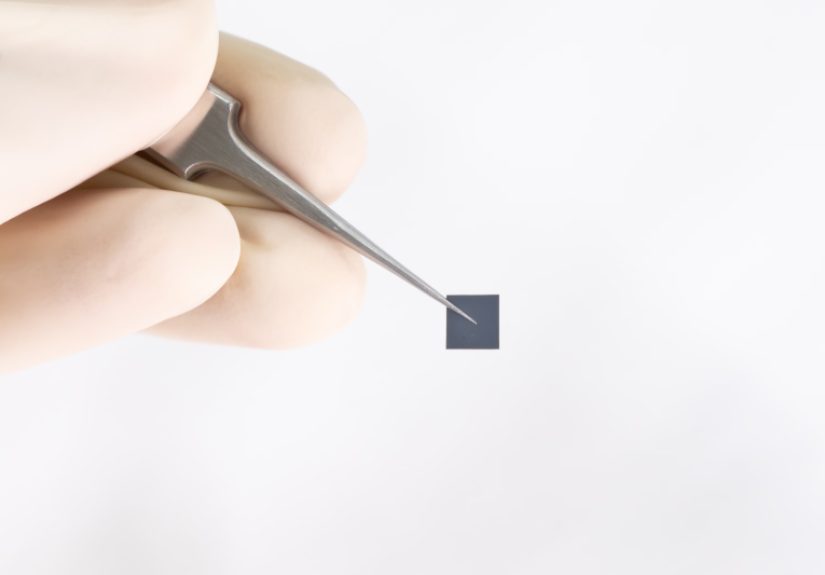
In June 2024, TDK announced that it had developed a new material for its next-generation CeraCharge solid-state battery. The company said the material could support an energy density of about 1,000 watt-hours per liter, or roughly 100 times greater than TDK’s own conventional mass-produced solid-state battery. That last part is important enough to put in bold, underline, and maybe tape to the refrigerator: TDK is not saying this tiny battery is 100 times better than every lithium-ion battery in your phone, laptop, or electric vehicle.
Still, even with the hype filter turned on, this is a big deal. TDK’s breakthrough targets small electronicsespecially wearables, wireless earphones, hearing aids, smartwatches, compact sensors, and other devices where every cubic millimeter counts. In a world where gadgets keep shrinking while our expectations keep growing, better small batteries could quietly change the way everyday technology feels.
What Did TDK Actually Announce?
TDK said it developed a material for CeraCharge, its rechargeable solid-state SMD battery technology. The new material uses an oxide-based solid electrolyte and lithium alloy anodes, which together help raise volumetric energy density while maintaining the safety advantages associated with solid-state designs.
Traditional lithium-ion batteries usually rely on liquid electrolytes that help ions move between electrodes. Solid-state batteries replace that liquid with a solid electrolyte. That design can reduce leakage risk, improve safety, and potentially allow new electrode materials that store more energy. For small devices that sit close to the human bodylike hearing aids, smart rings, medical sensors, and earbudssafety is not a bonus feature. It is the whole party.
The 100X Claim Needs Context
The phrase “100X energy density” is technically tied to TDK’s conventional solid-state battery, not to mainstream rechargeable coin cells or modern smartphone batteries. That matters because TDK’s earlier CeraCharge batteries were extremely safe and compact, but they were not designed to compete with large lithium-ion cells on raw energy capacity.
Think of it like comparing a bicycle basket to a delivery truck. If the basket gets 100 times bigger, that is impressivebut it does not automatically mean it can replace the truck. TDK’s claim is still meaningful because it suggests the company may be closing the gap between safe, ceramic solid-state microbatteries and the energy needs of real consumer gadgets.
Why Solid-State Batteries Matter
Solid-state batteries have been one of the most talked-about technologies in energy storage for years. They are often described as the next big leap after lithium-ion. The reason is simple: batteries are the bottleneck in almost everything portable. Phones are limited by battery size. Wearables are limited by battery size. Electric vehicles are limited by battery cost, charging speed, safety, and energy density. Even tiny Internet of Things sensors are limited by the question nobody wants to answer: “Who is going to replace all these little batteries?”
A solid-state battery can offer several theoretical advantages:
- Improved safety because there is no flammable liquid electrolyte to leak.
- Higher energy density if advanced anode materials can be used successfully.
- Compact design for miniature devices with very limited internal space.
- Longer cycle life in certain designs, depending on chemistry and manufacturing quality.
- Better design flexibility for electronics makers trying to build smaller products.
That said, solid-state batteries are not magic cookies from the future. They still face manufacturing challenges, interface stability issues, cost questions, scaling problems, and durability concerns. A material breakthrough is not the same as a mass-produced product sitting inside your earbuds next Tuesday.
Where TDK’s New Battery Could Be Used First
TDK is aiming this technology at small devices, not electric cars. That makes sense. Small batteries are easier to commercialize than large automotive packs, and the value of extra energy density is enormous in compact electronics.
Wireless Earbuds
Wireless earbuds are tiny engineering puzzles. Inside each earbud, manufacturers must fit a speaker driver, microphones, wireless chips, sensors, antennas, charging contacts, and a battery. Then customers complain if the earbuds do not last all day, cancel noise perfectly, sound like a concert hall, and weigh about as much as a popcorn flake.
A higher-density solid-state battery could help brands extend listening time without making earbuds bulky. It could also create room for better sensors, improved audio processing, or more comfortable designs.
Smartwatches and Smart Rings
Smartwatches are becoming health dashboards, fitness coaches, notification centers, wallets, sleep trackers, and tiny wrist computers. Smart rings are even more space-constrained. Better batteries could help these devices track more data, run more advanced sensors, or simply spend less time attached to a charger.
Anyone who has ever forgotten to charge a smartwatch before a trip knows the pain. You board the plane with a “smart” watch that becomes a decorative bracelet by lunchtime.
Hearing Aids and Medical Wearables
Hearing aids may be one of the most practical early markets. These devices need to be compact, reliable, safe, and comfortable for daily use. A battery that stores more energy in less space could improve user convenience and reduce charging anxiety.
Medical wearables and health sensors could benefit too, especially when devices need to sit close to the body for long periods. A safer, compact rechargeable battery is attractive in any product where reliability matters more than flashy marketing.
IoT Sensors and Energy Harvesting Devices
TDK’s CeraCharge technology has long been associated with compact electronics and energy harvesting. In an IoT sensor, a small rechargeable solid-state battery can store tiny amounts of energy collected from light, vibration, or other sources. That could reduce the need for disposable coin cells in sensors used around homes, factories, warehouses, and offices.
If you multiply one tiny battery by millions of connected devices, the environmental and maintenance benefits become much more interesting.
How TDK’s CeraCharge Technology Fits In
CeraCharge is TDK’s rechargeable solid-state SMD battery platform. “SMD” stands for surface-mount device, meaning it can be mounted directly onto circuit boards using electronics manufacturing processes. That is a big advantage for device makers because it allows batteries to be integrated more like electronic components.
Earlier CeraCharge products were notable for their safety, compact size, and ceramic multilayer structure. They were useful in low-power applications such as real-time clock backup, energy harvesting modules, and compact IoT devices. Their limitation was capacity. The new material aims to move the technology into a more powerful category.
Why 1,000 Wh/L Is a Big Number
Energy density can be measured in different ways. Volumetric energy density, measured in watt-hours per liter, tells us how much energy fits into a given amount of space. This is especially important for wearables and tiny electronics because space is the real luxury item. In a smartwatch, every millimeter is expensive real estate.
TDK’s claimed 1,000 Wh/L would be highly competitive for small rechargeable batteries. It could place solid-state microbattery technology closer to or above many compact liquid-electrolyte alternatives. The result would not necessarily be a giant battery revolution overnight, but it could allow meaningful gains in device runtime and design flexibility.
For consumers, this might show up as practical improvements: earbuds that last longer per charge, hearing aids with fewer charging interruptions, trackers that run for longer periods, and wearables with more sensors without bigger cases.
What This Does Not Mean
Let’s slow the hype train before it leaves the station wearing rocket boosters.
TDK’s announcement does not mean your smartphone will suddenly last a month. It does not mean electric vehicles will instantly double their range. It does not mean lithium-ion batteries are heading to a retirement home next week with a blanket and a cup of tea.
The technology is aimed first at small batteries. Scaling a solid-state chemistry from tiny cells to large battery packs is difficult. Automotive batteries must handle high currents, mechanical stress, thermal changes, fast charging, thousands of cycles, and strict safety standards. A smartwatch battery and an EV battery live in the same energy-storage universe, but they are very different planets.
The Biggest Challenges Ahead
Manufacturing at Scale
Battery breakthroughs are often easier to announce than to manufacture. A lab-scale material must become a repeatable, reliable, cost-effective product. That means consistent quality, high yields, stable supply chains, and integration into existing device manufacturing.
Cycle Life and Real-World Durability
A battery must not only store energy; it must keep doing so after many charge and discharge cycles. Wearables and earbuds are charged constantly. If a new battery loses capacity too quickly, consumers will noticeand they will not be gentle in online reviews.
Cost
Small electronics are brutally competitive. A battery can be amazing, but if it costs too much, it may appear only in premium devices first. Over time, manufacturing improvements could bring costs down, but early adoption often starts where performance justifies the price.
Integration With Device Designs
Device makers must redesign products around new battery formats. That takes testing, certification, supply agreements, and time. Even if TDK’s material performs well, it still has to fit into real products that companies can build at scale.
Why This Breakthrough Still Matters
The consumer electronics industry has reached a strange point: chips keep getting faster, sensors keep getting smarter, and software keeps getting more ambitious, but battery life often improves slowly. Many modern gadgets are not limited by imagination. They are limited by the tiny rectangle of stored energy inside the case.
TDK’s new material could help unlock better designs in categories where battery size is the main constraint. In earbuds, it could mean longer listening time or smaller housings. In hearing aids, it could improve convenience and comfort. In wearables, it could support more advanced health tracking. In IoT sensors, it could reduce maintenance and waste.
The most realistic view is also the most exciting one: this is not a universal battery miracle, but it could be a very practical improvement for small devices.
How It Could Affect the Battery Industry
TDK is not the only company working on solid-state batteries. Automakers, startups, electronics suppliers, and research labs are all chasing better energy storage. Companies working on EV batteries often focus on high-capacity cells measured in watt-hours per kilogram, fast-charging ability, and long cycle life. TDK’s approach is different because it focuses on compact, ceramic-based solid-state batteries for smaller applications.
That could be a smart path. Instead of trying to beat lithium-ion in the hardest market first, TDK can target devices where the advantages of solid-state batteries are clearer and the technical scale is more manageable. Small products also tend to refresh quickly, which means new battery technologies can enter the market faster than in cars or grid storage.
Experience-Based Perspective: What This Means for Real Users
Anyone who uses modern gadgets knows that battery life is the invisible boss of the day. Your earbuds may sound great, but if they die during a workout, they instantly become expensive earplugs. Your smartwatch may track sleep, heart rate, steps, and notifications, but if it needs charging at the wrong moment, it becomes another tiny responsibility. Your Bluetooth tracker may be helpful until its battery dies quietly in a drawer like a spy who forgot the mission.
This is why TDK’s solid-state battery claim feels so relevant. The average user does not wake up thinking about oxide-based solid electrolytes or lithium alloy anodes. People care about whether their devices work when needed. Better energy density means product designers may have more choices. They can make the same device last longer, make the device smaller, add more features, or balance all three.
Imagine a pair of wireless earbuds designed for travel. Today, many earbuds rely heavily on the charging case. That works fine until the case is also low, which usually happens when you are already late, tired, and standing near an airport gate with the emotional stability of a toaster. A better internal battery could reduce that dependence. You might get more hours of playback, stronger noise cancellation, or better voice processing without increasing earbud size.
For hearing aid users, the improvement could be even more meaningful. Battery life is not just a convenience issue; it affects communication, confidence, and daily independence. A smaller, safer, longer-lasting rechargeable battery could make devices easier to wear and maintain. That kind of improvement does not need fireworks. It just needs to work quietly every day.
Smartwatches could also benefit. Many users want continuous health tracking, but continuous tracking consumes power. Sleep monitoring, blood oxygen tracking, GPS workouts, always-on displays, and wireless notifications all compete for the same limited battery. A higher-density battery could let manufacturers improve runtime without turning watches into wrist-mounted pancakes.
There is also an environmental angle. Disposable coin cells are convenient, but they create waste and require replacement. If more small devices can use rechargeable solid-state batteries, manufacturers may reduce reliance on disposable cells. That is especially valuable in IoT devices, where thousands or millions of small sensors may be deployed in homes, buildings, factories, and cities.
From a practical buying perspective, consumers should not rush to delay every gadget purchase because of this announcement. Battery technology takes time to move from material development to mass-market products. Early versions may appear in premium or specialized devices first. The best approach is to watch for real product specifications: battery capacity, runtime, cycle life, charging speed, safety certifications, and warranty terms.
The most important lesson is simple: battery breakthroughs become valuable only when they improve real-life behavior. A great battery is not one that wins a press release. It is one that lets you forget about charging for a little longer. If TDK can commercialize this technology successfully, the result may not look dramatic from the outside. Your earbud may look the same. Your watch may look the same. Your hearing aid may look the same. But inside, the battery could be doing much more work in much less spaceand that is the kind of quiet innovation people actually feel.
Conclusion
TDK’s claim of a solid-state battery with 100X energy density is exciting, but the smartest reading is the accurate one. The 100X comparison is against TDK’s conventional solid-state battery, not against every lithium-ion battery on the market. Even so, the claimed 1,000 Wh/L energy density is impressive and could matter greatly for small electronics.
The breakthrough points toward a future where earbuds last longer, smartwatches become more capable, hearing aids become more convenient, and IoT sensors rely less on disposable batteries. The road from material development to mass production is still full of engineering speed bumps, but TDK’s announcement is more than empty buzz. It is a serious sign that solid-state batteries may first transform the smallest devices before they reshape the biggest ones.
Note: This article is written for general technology education and web publishing. The “100X” figure should always be presented with context: it refers to TDK’s own previous solid-state battery technology, not a universal comparison with all modern lithium-ion batteries.