Table of Contents >> Show >> Hide
- What Actually Happened at the Paris Olympics?
- Elon Musk Enters the Chat
- Why the Backlash Hit So Hard
- Was It Really a “Last Supper” Parody?
- The Strange Politics of Selective Offense
- What the Olympics Wanted vs. What the World Saw
- Why This Story Became Bigger Than One Ceremony
- Experiences Related to the Controversy: What It Feels Like in Real Life
- Conclusion
- SEO Tags
The 2024 Paris Olympics opening ceremony was supposed to be a floating love letter to France: theatrical, flamboyant, rainy, and just a little chaotic. Instead, one segment detonated into a culture-war fireworks show. Elon Musk weighed in. Christian leaders condemned it. Defenders called it art. Critics called it blasphemy. And somewhere in the middle, the Olympics learned a timeless lesson: if you stage something that even vaguely resembles The Last Supper, the internet will not react with calm, measured nuance.
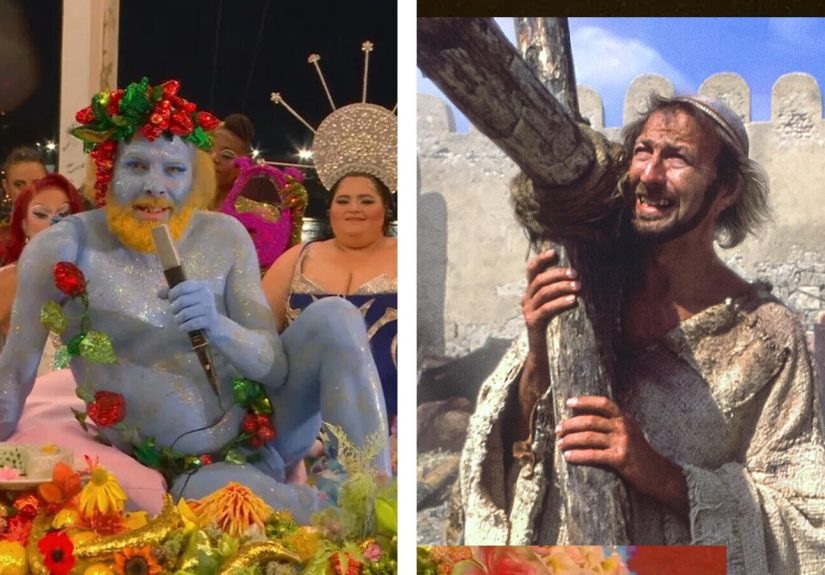
What made the whole thing even more fascinating was the messenger. Musk, who had previously praised a scene from Monty Python’s Life of Briana film famous for poking at religion, politics, and human absurditysuddenly found himself casting the Olympics as “extremely disrespectful to Christians.” That twist gave the controversy a second act. It was no longer just about Paris, drag performers, or religious imagery. It became a story about selective outrage, the politics of offense, and how modern cultural debates can sprint from art to ideology in about six minutes flat.
What Actually Happened at the Paris Olympics?
The uproar centered on a tableau from the opening ceremony that many viewers felt echoed Leonardo da Vinci’s The Last Supper. The scene featured DJ and producer Barbara Butch at the center, surrounded by drag performers, dancers, and a performer styled as Dionysus, the Greek god associated with wine, festivity, and ecstasy. To critics, the visual resemblance to Christian iconography was obvious. To organizers, it was misunderstood symbolism wrapped in avant-garde French spectacle.
That gap between what audiences saw and what organizers said they meant became the entire controversy in miniature. Paris 2024 apologized to people who felt offended, while also insisting there had been no intention to insult any religious group. Artistic director Thomas Jolly said the scene was not inspired by The Last Supper but by a pagan feast tied to the gods of Olympus. In other words, viewers said, “That looks like da Vinci,” and organizers replied, “Actually, it’s Dionysus.” The internet, unsurprisingly, did not respond with a polite nod and a cappuccino.
Elon Musk Enters the Chat
Elon Musk did what Elon Musk does: he jumped into the middle of a global argument and made it bigger. On X, he wrote that the scene was “extremely disrespectful to Christians.” That line spread fast because it was short, sharp, and perfectly designed for the outrage economy. It gave critics of the ceremony a celebrity-grade rallying cry and helped push the story beyond sports pages into politics, religion, and media commentary.
But Musk’s reaction also carried a layer of irony thick enough to spread on toast. In 2022, he praised the famous “Loretta” scene from Monty Python’s Life of Brian, a film long associated with irreverent comedy around faith-adjacent subjects. That earlier embrace of satire is why some commentators framed him as a Life of Brian defender now objecting to another provocative public performance. To supporters, that distinction was simple: satirizing social absurdity is different from mocking Christian imagery at a global sporting event. To critics, it looked like a classic case of free expression for me, moral emergency for thee.
Why the Backlash Hit So Hard
1. Christian Symbolism Is Never Neutral
The Last Supper is not just a famous painting. For many Christians, it represents a sacred moment at the center of their faith. So even an accidental visual echo can feel loaded. Critics of the ceremony argued that if another major religion’s sacred imagery had been invoked this casually, organizers would never have taken the same artistic risk. That argument helped the controversy spread far beyond practicing Catholics or conservative Christians. It tapped into a broader feeling that mainstream institutions are often more comfortable provoking Christians than anyone else.
2. France and America Read Provocation Differently
Part of the clash came from a real cultural divide. France has a long tradition of secularism, anti-clericalism, and artistic provocation. American audiences, especially in conservative and faith-driven circles, often read those gestures very differently. A segment meant as theatrical excess in Paris can land in the United States as contempt dressed up in sequins. Neither side thinks it is being unreasonable, which is exactly why these clashes keep happening.
3. Social Media Turned a Scene Into a Symbol
On social media, no controversy stays local. A few screenshots and short clips transformed a single performance into a civilization-level argument. Once the ceremony was reframed as “Olympics mocks Christianity,” nuance evaporated faster than a puddle in August. People who never watched the full segment, never heard the organizers’ explanation, and never cared about the opening ceremony suddenly had strong opinions. By then, the story was no longer about stagecraft. It was about identity, tribe, and whose offense counts.
Was It Really a “Last Supper” Parody?
This is the hinge of the entire story, and the honest answer is messy. Visually, many people clearly saw a resemblance to da Vinci’s composition. That reaction was not invented out of thin air. At the same time, the organizers and defenders pointed to Dionysus, Greek mythology, and a broader theme of festivity and inclusion. Both things can be true at once: the creators may have intended one set of references, while millions of viewers recognized another.
That is the risk of symbolic performance. Once you put bodies in a tableau that resembles one of the most famous religious images in Western art, you cannot be shocked when audiences connect the dots. Intent matters, but reception matters too. The Olympics may not have set out to parody Christianity, yet the visual language they used practically begged for that reading. In media terms, that is called a messaging problem. In internet terms, that is called stepping on a rake in 4K.
The Strange Politics of Selective Offense
Musk’s reaction landed because it plugged neatly into his evolving public persona. Over the past few years, he has increasingly positioned himself as a critic of progressive culture, “woke” institutions, and what he sees as elite hypocrisy. His comments about Christianity fit into that larger framework. The Olympics scene gave him a chance to argue, implicitly and explicitly, that Christianity has become an acceptable target in modern cultural spaces.
Still, this is where the criticism of Musk gets sharper. Many observers pointed out that he has often defended edgy speech, provocation, and satire when it aligns with his own instincts. So when he condemns offense in one context while celebrating transgressive humor in another, opponents see inconsistency. Supporters see discernment. That split is a familiar pattern in culture-war politics: nobody is really against offense in the abstract. They are against being the one offended this time.
What the Olympics Wanted vs. What the World Saw
Paris wanted audacity. It wanted a ceremony that felt unmistakably French: artistic, rebellious, sensual, inclusive, and weird in a way that announces confidence rather than confusion. In that sense, it absolutely succeeded. People are still talking about it, which is usually the dream of any opening ceremony producer.
But visibility is not the same as clarity. The organizers wanted a celebration of diversity and community tolerance. A large share of the audience saw a provocation involving Christian imagery. That disconnect matters because public spectacle has no private meaning. Once it goes live, it belongs to viewers. If millions interpret your message the “wrong” way, you may still be sincere, but you are not exactly communication valedictorian of the year.
Why This Story Became Bigger Than One Ceremony
This controversy endured because it sat at the intersection of several already-heated debates: faith in public life, LGBTQ+ representation, artistic freedom, the politics of mockery, and Musk’s ever-expanding role as a cultural accelerant. Had this been only about one odd scene in one opening ceremony, it would have burned out quickly. Instead, it became a proxy war over what counts as satire, who gets protected from offense, and whether modern liberal culture treats Christianity as heritage to be admired or material to be remixed.
That is also why the Life of Brian angle matters. It reveals a double standard that is not limited to Musk. Plenty of people cheer satire when it targets their opponents and recoil when it lands near their own sacred symbols. The point is not that everyone must laugh at everything. The point is that outrage often arrives wearing principle and leaves looking suspiciously like team loyalty.
Experiences Related to the Controversy: What It Feels Like in Real Life
One reason this story resonated so widely is that it mirrors an experience millions of people now recognize: watching a cultural moment turn into a moral referendum in real time. A person tunes in for sports, music, or spectacle. Ten minutes later, their phone is telling them civilization has either collapsed or been gloriously reborn. That emotional whiplash has become part of modern life. The Paris ceremony was not just a performance; it was an example of how quickly public events get processed through personal beliefs.
For religious viewers, the experience can be genuinely jarring. Even people who enjoy comedy, value artistic freedom, and do not consider themselves especially rigid can still feel stung when a sacred image appears to be repurposed for shock, style, or irony. The reaction is often not “ban this forever,” but something more human: Why this symbol? Why this moment? Why does it feel like reverence is always the joke? That feeling helps explain why criticism of the ceremony spread beyond political influencers and reached ordinary believers who were not looking for a fight but felt pulled into one anyway.
For defenders of the ceremony, the experience looked completely different. Many saw a bold display of inclusion, theatricality, and queer visibility on a global stage. To them, the outrage felt familiar tooanother case of people treating LGBTQ+ presence itself as offensive, no matter the stated symbolism. In that reading, the backlash was less about da Vinci and more about who was standing in the frame. That is why some defenders argued that the problem was not the tableau; the problem was that drag performers occupied a space some viewers think should remain culturally guarded.
Then there are the athletes and casual fans, who had the strangest experience of all. They showed up for the Olympics and found themselves trapped inside a debate about theology, satire, France, free speech, and Elon Musk’s posting habits. For them, the whole thing likely felt like trying to watch the 100-meter final while your group chat argues about Renaissance iconography. That is the hidden cost of symbolic controversy: it can swallow the event that created it. The opening ceremony was meant to launch the Games, but for days the conversation drifted from medals to meaning.
There is also the experience of online escalation. A few years ago, viewers might have argued with friends, rolled their eyes, and moved on. Now every reaction can be turned into content, every complaint becomes a post, and every post becomes evidence in some wider ideological trial. Outrage is not just an emotion anymore; it is a format. That is why this controversy produced apologies, defenses, think pieces, corporate reactions, celebrity commentary, and harassment reports almost immediately. The machine does not pause. It feeds.
In that sense, the Paris opening ceremony was not unusual at all. It was almost painfully familiar. People brought their faith, politics, identity, and assumptions to the same image and came away with entirely different stories. Some saw mockery. Some saw inclusion. Some saw France being France. Some saw Elon Musk doing Elon Musk things on schedule. The experience of living through it was less about reaching agreement and more about realizing, again, that in the digital age no spectacle stays just a spectacle. Everything becomes a test, and everyone is asked to choose a side before the rain has even stopped falling.
Conclusion
The Paris Olympics opening ceremony did what memorable public art often does: it dazzled, confused, provoked, and refused to stay in one lane. Elon Musk’s criticism added fuel, but the controversy did not begin with him, and it does not end with one quote. At its core, this was a clash between artistic intent and public interpretation, between secular pageantry and sacred symbolism, between satire embraced and satire rejected.
The sharpest irony remains the simplest one. A man who once applauded the irreverence of Life of Brian condemned the Olympics for crossing a line. Maybe that is hypocrisy. Maybe it is context. Maybe it is just another reminder that people love free expression right up until it elbows something they hold dear. Either way, Paris wanted an unforgettable opening ceremony. Mission accomplished. The world is still arguing about it, which may be the most Olympic outcome of all: drama, spectacle, judges everywhere.