Table of Contents >> Show >> Hide
- What Did Lily Allen Actually Say About James Corden?
- The 2008 Backstory: Lily Allen, James Corden, and a Very Noughties Moment
- Why the “Beg Friend” Comment Hit a Nerve
- James Corden’s Side of the Story
- What Is a “Beg Friend,” Really?
- Lily Allen’s Honesty Is Part of Her Brand
- The Internet Reaction: Shade, Slang, and Social Memory
- Why This Story Still Matters in 2026
- Experience Section: What the “Beg Friend” Story Teaches About Real-Life Relationships
- Conclusion
- SEO Tags
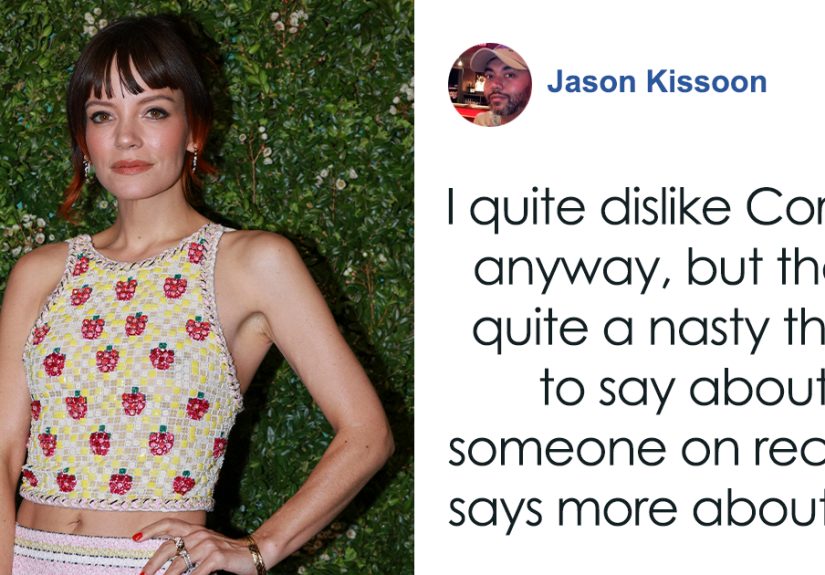
Lily Allen has never been famous for politely sanding the edges off her opinions. From her early Myspace-era pop stardom to her candid turns as a podcaster, singer, actor, and professional truth grenade, Allen has built a public persona around saying the thing many people would only text to their best friend. So when she looked back on her past connection with James Corden and described him as a “beg friend,” the internet did what the internet does best: leaned forward, refreshed furiously, and asked, “Wait, what exactly is a beg friend?”
The comment came during an episode of Miss Me?, the BBC Sounds podcast Allen co-hosts with her longtime friend Miquita Oliver. The two were discussing “beg friends,” a British slang term used for people who try a little too hard to attach themselves to someone’s social life, status, or connections. It is not quite the same as being friendly. It is friendship with a receipt printer attached. It is enthusiasm with networking energy. It is the social equivalent of sending “just circling back” three times after being left on read.
Allen named James Corden as her famous example from “back in the day,” referring to the period after he appeared on her 2008 chat show, Lily Allen and Friends. According to Allen, Corden was flirtatious during that appearance, the two became friendly for a while, and she introduced him to her circle. Her point was not that Corden is still chasing her approval today. In fact, she joked that he is doing just fine now. But the story reopened a fascinating little time capsule from the late-2000s British celebrity scene, when Allen was a sharp-tongued pop star on the rise and Corden was transitioning from respected British comedy actor to global entertainment personality.
What Did Lily Allen Actually Say About James Corden?
Allen’s remarks were casual, funny, and very much in the tone of a podcast conversation between old friends. She said Corden had been “a bit of a beg friend” for her and recalled that he had been “very flirtatious” when he appeared on her show. The two then became friendly enough that Allen brought him into her social circle.
The phrase “beg friend” is doing a lot of work here. It is not necessarily an accusation of villainy. It is more like a social diagnosis: someone is pushing too hard to be included, too eager to be liked, or too alert to what friendship might do for their status. In celebrity culture, where dinner invitations can become career currency, the term lands with extra spice.
Allen also made it clear that the dynamic belongs to the past. Corden went on to major success, including hosting The Late Late Show with James Corden on CBS from 2015 to 2023 and turning Carpool Karaoke into one of late-night TV’s most viral formats. In other words, the man no longer needs to hover near anyone’s green room holding a friendship application. He has had Grammys, Tonys, global guests, and enough viral singing-in-a-car moments to power a small algorithmic city.
The 2008 Backstory: Lily Allen, James Corden, and a Very Noughties Moment
To understand why this story caught attention, you have to rewind to 2008. Lily Allen was already a defining voice of British pop culture after the success of songs like “Smile” and her debut album Alright, Still. She represented a new kind of celebrity: witty, blunt, internet-native, and allergic to overly polished media training.
That year, she hosted Lily Allen and Friends, a BBC Three chat show built around celebrity guests, internet culture, and fan interaction. It was a very 2008 concept, which means it had the chaotic energy of early social media, flip phones, skinny scarves, and people genuinely believing Myspace might be forever.
Corden, meanwhile, was known in the U.K. for work including The History Boys and the beloved sitcom Gavin & Stacey, which he co-created with Ruth Jones. His appearance on Allen’s show came before his American late-night fame, before Carpool Karaoke, and before he became a familiar face to U.S. audiences. At that point, both Allen and Corden were highly visible but still inside a British entertainment ecosystem that could feel surprisingly small. Everyone knew everyone, or at least knew someone who had once shared a cigarette outside an awards afterparty with everyone.
Why the “Beg Friend” Comment Hit a Nerve
The reason this story traveled so quickly is not simply because two famous names were involved. It is because the idea of a “beg friend” is instantly recognizable. Most people have met someone who treats friendship like a ladder. They do not just want to know you; they want to be seen knowing you. They laugh a little too loudly at your jokes, appear suddenly wherever opportunity gathers, and turn every casual hangout into a low-budget networking summit.
In ordinary life, that might mean someone befriending a popular coworker to get invited to better parties. In entertainment, the stakes are bigger. A friendship can mean access to writers, producers, musicians, casting directors, press attention, or a new public image. Celebrity friendships are often genuine, but they also exist in an industry where visibility is oxygen. That makes the line between connection and calculation unusually blurry.
Allen’s wording worked because it was both funny and cutting. “Beg friend” sounds playful until you realize it describes a deeply uncomfortable social experience: being pursued not simply for who you are, but for what orbit you occupy.
James Corden’s Side of the Story
Corden has previously written about having a romantic interest in Allen in his 2011 memoir, May I Have Your Attention, Please?. His own version, as reported over the years, suggested he believed there might be something more between them after their interactions around the show. He later realized he had misread the situation.
That detail is important because it changes the story from a simple “celebrity shade” moment into something more human. One person experienced the dynamic as flirtation and possible romance; the other remembers feeling like the attention was too eager, too public, or too socially ambitious. Neither version has to be cartoonishly evil for the mismatch to be awkward. Sometimes the cringe is not in what happened, but in how differently two people understood the same room.
Allen has also previously pushed back against the idea that she had encouraged Corden romantically. Her latest podcast comments fit a longer pattern: she is not only revisiting a funny celebrity anecdote, but also correcting what she appears to see as an old misunderstanding about her own behavior.
What Is a “Beg Friend,” Really?
A friendship with too much strategy
A “beg friend” is not simply a person who wants friendship. Wanting friends is normal. Wanting connection is human. A beg friend is different because the effort feels lopsided, performative, or self-serving. They are not just interested in your personality; they are interested in your proximity to something they want.
The follow-up problem
Allen’s explanation of the term focused on people who cannot take a hint. You do not respond, and they follow up. You stay vague, and they press harder. You offer polite distance, and they treat it as a scheduling conflict. The behavior becomes less about warmth and more about insistence.
Why it is common in entertainment
Creative industries are full of temporary closeness. People bond intensely on shows, tours, films, podcasts, festivals, and press circuits. Then the project ends and the emotional scaffolding disappears. In that environment, some people become skilled at turning quick access into lasting relevance. That can create real friendships, but it can also create beg-friend behavior dressed in designer shoes.
Lily Allen’s Honesty Is Part of Her Brand
Allen’s comments also fit the current appeal of Miss Me?. The podcast works because Allen and Oliver are not doing glossy celebrity branding. They talk like women who have known each other long enough to skip the publicist-approved version of events. Their chemistry gives the show its charm: one moment funny and chaotic, the next reflective and emotionally precise.
That is why Allen’s Corden story landed differently than a random tabloid swipe. It came inside a broader conversation about social behavior, boundaries, aging, fame, and self-awareness. Allen even admitted that she has been guilty of beg-friend tendencies herself. That self-implication makes the story sharper. She is not standing on a marble balcony declaring herself above social desperation. She is saying, essentially, “We have all done embarrassing things for connection. Some of us just did them near cameras.”
The Internet Reaction: Shade, Slang, and Social Memory
Online, the story had all the ingredients of a viral entertainment moment: a recognizable celebrity, a fresh insult, a strange slang term, and a dusty bit of 2000s pop-culture history. People who already had strong feelings about Corden saw the comment as confirmation. Others saw it as a funny but minor anecdote from a long time ago. Some focused on Allen’s delivery, while others were more interested in the gender dynamics of public flirtation.
That last point matters. Women in entertainment are often expected to manage awkward male attention gracefully. If they reject it directly, they risk being called rude. If they laugh it off, the laughter can be misread as encouragement. If they speak about it years later, people ask why they did not say something sooner. Allen’s comments point to that uncomfortable bind without turning the article into a courtroom transcript.
Why This Story Still Matters in 2026
Celebrity gossip moves fast, but some stories stick because they describe social patterns people recognize in their own lives. Allen’s “beg friend” comment is one of those stories. It is about fame, yes, but it is also about boundaries. It is about how people pursue access. It is about the weirdness of being friendly without wanting to be claimed. And it is about how two people can leave the same interaction with completely different emotional souvenirs.
The timing also reflects a larger trend in celebrity media. Audiences increasingly respond to stars who revisit older stories with adult perspective. The polished memoir has been joined by the messy podcast confession. Instead of waiting ten years for a carefully edited autobiography, celebrities now unpack old dynamics in real time, sometimes between jokes, sometimes with startling honesty, and sometimes while accidentally giving the internet its new favorite insult.
Experience Section: What the “Beg Friend” Story Teaches About Real-Life Relationships
The Lily Allen and James Corden story feels celebrity-specific, but the experience behind it is surprisingly ordinary. Many people have had a “beg friend” in their lives, even if they never had a name for it. It might be the person who suddenly becomes extremely interested when you get a promotion. It might be the old acquaintance who ignored you for years, then reappears the moment your business, podcast, social account, or creative project starts gaining attention. It might be someone who treats every coffee invitation like a pitch meeting wearing casual shoes.
The first lesson is that enthusiasm is not the same as intimacy. Real friendship has rhythm. It gives space. It survives silence. Beg-friend energy, on the other hand, often feels urgent. The person wants closeness now, access now, inclusion now. Their warmth may be real, but it comes wrapped in pressure. That pressure is what makes people uncomfortable, even when the beg friend is charming, funny, or well-connected.
The second lesson is that boundaries do not need a dramatic announcement. You do not have to hold a press conference every time someone makes you uneasy. Sometimes a delayed reply, a shorter answer, or a polite refusal is enough. The problem begins when the other person refuses to read those signals. That is where persistence stops being flattering and starts becoming socially exhausting. A person who respects you will notice distance and adjust. A person who wants something from you will treat distance as an obstacle to overcome.
The third lesson is that people often misread friendliness, especially in public or professional settings. A laugh during an interview does not equal romantic interest. An introduction to friends does not equal lifelong loyalty. A shared night out does not mean someone has signed an emotional contract. This is especially true for women, who are often expected to soften awkwardness with politeness. Allen’s reflection highlights how easily charm, performance, and expectation can tangle into a story that looks different depending on who tells it.
The fourth lesson is self-awareness. Allen’s story is more interesting because she admitted she has also been capable of beg-friend behavior. That matters. Most people have, at some point, wanted approval from someone cooler, more successful, or more connected. The goal is not to pretend we are above wanting acceptance. The goal is to notice when our desire for closeness becomes needy, strategic, or disrespectful of someone else’s space.
In everyday life, the healthiest friendships are the ones that do not feel like auditions. You should not have to prove your usefulness to keep a seat at the table. You should not feel hunted for your contacts, your platform, or your social glow. The best relationships have mutual curiosity, not social climbing. They feel relaxed, not transactional. They make room for silence, boundaries, and change.
That is why this pop-culture anecdote has lasted beyond a quick headline. Under the celebrity names and podcast laughter is a familiar question: who wants to know us, and who wants to be near what they think we can offer? Lily Allen’s “beg friend” comment may have sounded like a joke, but like many good jokes, it worked because there was a little truth hiding under the punchline, waving politely and trying not to follow up too soon.
Conclusion
Lily Allen’s reflection on her past relationship with James Corden is more than a spicy celebrity sound bite. It is a snapshot of fame before social media became fully industrialized, a reminder of how messy early-career relationships can be, and a surprisingly useful lesson in boundaries. By calling Corden a “beg friend,” Allen gave the internet a memorable phrase for a behavior many people already knew too well: the eager, strategic pursuit of friendship for status, access, or validation.
To be fair, the story belongs to a different era in both of their lives. Corden went on to major international success, while Allen has continued evolving as an artist and commentator. Neither appears to need anything from the other now. But the anecdote remains compelling because it captures the awkward theater of social ambition: the flirting, the misreading, the introductions, the old memories, and the slightly painful realization that not every connection means the same thing to both people involved.
Note: This article is an original, human-style synthesis based on publicly reported entertainment-news information and does not contain embedded source links or citation placeholders in the article body.