Table of Contents >> Show >> Hide
- When Paint Decides It Wants to Become Metal
- What Is Portola Paints Wrought Iron Finish?
- Why Designers Love an Aged Iron Look
- Best Uses for Portola Paints Wrought Iron Finish
- Color, Texture, and Finish: What to Expect
- How to Use the Finish Tastefully
- Practical Application Advice
- Interior Design Examples
- Common Mistakes to Avoid
- Is Portola Paints Wrought Iron Finish Right for You?
- Experience Notes: Living With the Wrought Iron Look
- Conclusion
Editorial note: Product availability may vary. Portola Paints has historically offered a Wrought Iron Finish and Rust Solution, but shoppers should confirm current availability directly with Portola or an authorized retailer before planning a project.
When Paint Decides It Wants to Become Metal
Some paints politely sit on a wall and behave. Portola Paints Wrought Iron Finish, on the other hand, walks into the room wearing boots, a linen apron, and the confidence of an antique gate found behind a Tuscan farmhouse. It is not simply a color. It is an attitude. It is the design equivalent of saying, “Yes, this wood cabinet door now looks like it survived a century of dramatic weather, and no, we will not be apologizing.”
The appeal of Portola Paints Wrought Iron Finish comes from its ability to give ordinary paintable surfaces the moody, timeworn character of aged iron. Historically described as a water-based finish mixed with iron filings, it was designed to create the look and feel of authentic wrought iron on surfaces such as wood, plastic, masonry, and metal. When paired with a rust-activating solution, the finish can shift from flat black to a rusted, weathered patina that feels architectural, old-world, and refreshingly imperfect.
That is exactly why this finish has such staying power in design conversations. In a world full of smooth white drywall, factory-perfect furniture, and suspiciously shiny hardware, a wrought iron paint finish adds texture, depth, and a little lovable grit. It is a shortcut to age, but not in a fake “theme restaurant wall” way. Done well, it looks collected, layered, and quietly expensive.
What Is Portola Paints Wrought Iron Finish?
Portola Paints is known for artisanal, eco-minded coatings made in Los Angeles, including Lime Wash, Roman Clay, specialty finishes, acrylic paints, and enamel paints. The brand has built a loyal following among designers because its finishes often create movement, depth, and hand-applied personality rather than the flat uniformity of standard wall paint.
Wrought Iron Finish fits into that specialty category. Instead of behaving like a simple black paint, it is meant to imitate metal. Older product coverage describes it as a water-based paint containing iron filings, which is the secret sauce behind the effect. The result is a dark, iron-like surface that can be left more subdued or activated with a rust solution for a weathered, oxidized look.
In plain English: it helps a surface cosplay as antique iron. A new gate can look old. A plain cabinet panel can become a patinated focal point. A decorative object can suddenly seem like it has a backstory involving a French flea market, a rainstorm, and someone named Étienne.
Why Designers Love an Aged Iron Look
Designers have a long-standing love affair with materials that look touched by time. Limewash, Roman clay, plaster, unlacquered brass, reclaimed wood, zellige tile, honed stone, and oxidized metal all share one thing: they do not look sterile. They catch light differently throughout the day. They have visual irregularities. They make a room feel lived-in before the throw pillows even arrive.
Portola’s broader reputation comes from this same philosophy. Its Lime Wash is known for soft, weathered movement, while Roman Clay creates a plaster-like finish suitable for smooth interior walls. Wrought Iron Finish belongs to the more dramatic side of the family. It does not whisper texture; it clears its throat.
It Adds Contrast Without Looking Harsh
Black paint can be elegant, but it can also feel flat if the sheen or surface is wrong. A wrought iron effect offers a richer alternative. The surface reads dark, but not dead. It has tiny shifts in tone, subtle roughness, and, when rusted, earthy orange-brown undertones. That makes it easier to pair with natural materials such as wood, stone, linen, concrete, terracotta, and aged leather.
It Works With Multiple Interior Styles
A Portola Paints Wrought Iron Finish look can fit beautifully into Spanish revival homes, modern farmhouse kitchens, industrial lofts, rustic cabins, Mediterranean-inspired patios, and even minimalist interiors that need one grounded focal point. The trick is restraint. One aged iron feature looks curated. Twelve aged iron features can make your house feel like it is auditioning for a medieval streaming series.
Best Uses for Portola Paints Wrought Iron Finish
The beauty of a specialty finish is that it can transform small details without forcing you into a full renovation. You do not have to redo the entire kitchen. You can start with one feature and let it carry the drama like a very helpful supporting actor.
1. Gates, Railings, and Decorative Metalwork
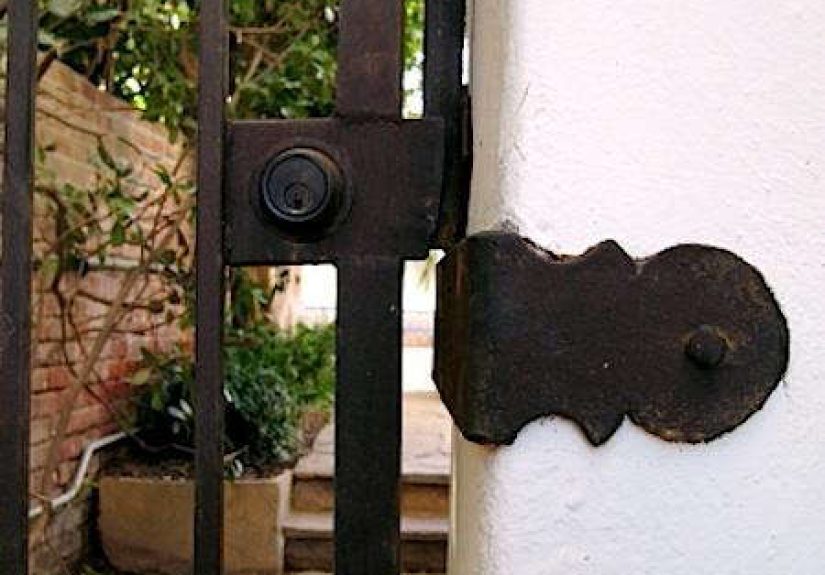
The most obvious use is on gates and railings, especially when you want a newer piece to look more established. A fresh metal gate can sometimes look too crisp beside an older home, stucco wall, or garden path. A wrought iron finish helps soften that newness and gives the piece architectural credibility.
For exterior metalwork, however, surface prep matters. Real outdoor metal is exposed to moisture, sun, temperature changes, and wear. If the piece already has rust, flaking paint, or poor adhesion, decorative finish alone will not save it. Loose rust and peeling coatings should be removed, and the correct primer or undercoat should be chosen according to the manufacturer’s recommendations.
2. Kitchen Accents
One of the most compelling examples of a wrought-iron-style finish is its use as a textural kitchen focal point. A designer can take a plain surface and make it feel like custom metalwork without the cost, weight, or fabrication timeline of actual iron. Think cabinet fronts, a bar face, a hood surround, open shelving brackets, or a breakfast nook detail.
The key is balance. If the kitchen already has strong stone veining, heavily patterned tile, and multiple wood tones, a rusted iron finish should be used like seasoning, not soup. A small accent can make the whole room feel layered; too much can feel busy.
3. Fireplace Surrounds and Mantels
A fireplace is already a natural focal point, so it can handle a bolder finish. Wrought iron texture works especially well around fireplaces because it brings visual weight and a sense of permanence. Paired with plaster walls, warm wood beams, or stone flooring, the finish can create a room that feels collected rather than decorated all at once.
Important note: decorative paint finishes should only be used where heat exposure is appropriate for the product. Around fireplaces, always confirm whether the selected finish and sealer are safe for the exact surface and temperature zone. The goal is “beautiful patina,” not “surprise science experiment.”
4. Furniture Makeovers
A console table, sideboard, cabinet, mirror frame, or pedestal can become a standout piece with an iron-like finish. This is where DIYers often get excited, because the project scale is manageable. A small table is far less intimidating than an entire room, and if something goes wrong, you are not crying into 400 square feet of wall.
Furniture with clean lines tends to show the finish best. Ornate pieces can work too, but heavy carving plus heavy patina may look visually crowded. Let the finish be the story.
5. Planters and Garden Objects
For patios and garden areas, a rusted iron effect can make new planters, urns, trellises, and decorative panels look like they have been outside for years. This pairs beautifully with olive trees, lavender, rosemary, gravel paths, weathered brick, and climbing vines. Basically, it gives your garden the confidence of a boutique hotel courtyard.
Color, Texture, and Finish: What to Expect
Portola Paints Wrought Iron Finish is not about perfect uniformity. It is about variation. Depending on application, surface, lighting, and whether a rust solution is used, the finish may appear deep black, charcoal, iron-gray, brown-black, or rust-streaked. That shifting character is the point.
In a bright room, the texture may reveal more movement. In low light, it may read as a dark, moody architectural surface. Under warm bulbs, rust undertones can look richer and more earthen. Under cool daylight, the iron effect may appear sharper and more industrial.
Because specialty finishes are more expressive than regular paint, sampling is not optional. It is the adult thing to do, right up there with measuring twice and not buying a sofa after midnight. Apply a sample on the actual surface or on a similar test board, then view it during morning, afternoon, and evening light.
How to Use the Finish Tastefully
The easiest mistake is treating a dramatic finish like a neutral background. Wrought iron texture is not shy. It brings visual weight. That means it should be placed where the eye naturally wants to pause.
Use It as an Anchor
A wrought iron finish can ground a pale room. Imagine creamy limewashed walls, white oak floors, linen curtains, and one dark iron-textured console. The contrast keeps the space from floating away into beige cloud territory.
Pair It With Natural Materials
This finish loves honest textures: stone, clay, wood, leather, linen, wool, handmade tile, and unlacquered metals. The more natural the surrounding palette, the more convincing the iron effect becomes. Plastic-heavy décor and glossy synthetic surfaces can make it look less intentional.
Repeat Dark Notes Elsewhere
If you use a wrought iron finish on one feature, repeat dark tones in two or three smaller places. Try black window frames, dark picture frames, charcoal pottery, iron cabinet pulls, or a blackened metal light fixture. Repetition makes the finish feel designed rather than random.
Practical Application Advice
Because specialty finishes vary by surface and product version, the safest rule is simple: follow Portola’s current instructions for the exact product you purchase. Product formulas, availability, primers, sealers, and recommended methods can change over time.
That said, the usual principles of decorative finishing still apply. Start with a clean, dry, sound surface. Remove dust, grease, loose coating, and anything that might interfere with adhesion. If the surface is glossy, slick, or previously coated, it may need scuff sanding or a compatible primer. For metal surfaces, rust and failing paint should be addressed properly before any decorative coating is applied.
When using any rust-activating solution, wear appropriate protection, ventilate the area, and keep children and pets away from the work zone. Do not improvise with unknown chemicals. This is paint, not a pirate chemistry club.
Interior Design Examples
Picture a Spanish-style entry with white plaster walls, terra-cotta floors, and a new wood console painted in a rusted iron finish. Add a round mirror, a ceramic lamp, and a bowl for keys, and suddenly the entry feels like it has architectural roots.
In a modern kitchen, imagine a flat-front island panel finished in dark iron texture while the surrounding cabinets remain warm white oak. The contrast gives the room depth without relying on another trendy tile. Add honed marble or quartzite counters, simple bronze hardware, and warm lighting, and the finish becomes sophisticated rather than rustic.
For a garden courtyard, use the effect on large planters or a trellis panel. Against green foliage and gravel, the aged iron look feels relaxed, earthy, and established. It is especially effective when the rest of the palette is restrained: olive green, chalky white, weathered wood, and soft gray stone.
Common Mistakes to Avoid
Skipping the Sample
Never judge a specialty finish by a tiny online image. Screen color is a charming liar. It may look different in your home because of light, surrounding colors, surface texture, and application technique.
Using It Everywhere
Too much aged iron can make a space feel heavy. Use the finish as a feature, not wallpaper for your entire personality.
Ignoring the Existing Palette
Rust tones can clash with certain cool grays, blue-white walls, or polished chrome finishes. If your home leans cool and sleek, use the rusted version carefully. A darker non-rusted iron effect may be easier to integrate.
Forgetting Maintenance
Decorative finishes are not always as scrub-friendly as standard enamel paint. High-touch areas may need sealing or may be better suited to a more durable coating system. Before applying it to cabinet doors, stair rails, or furniture tops, confirm how the finish should be protected.
Is Portola Paints Wrought Iron Finish Right for You?
This finish is ideal for people who love texture, patina, and imperfection. If you want every surface to look factory-smooth and identical from every angle, it may not be your soulmate. But if you like finishes that shift with light and tell a visual story, Wrought Iron Finish can be a design gem.
It is especially useful when you want the look of aged metal without commissioning custom ironwork. Real iron is beautiful, but it can be expensive, heavy, and impractical for certain surfaces. A specialty paint finish gives you creative flexibility.
It is also a smart choice for smaller design experiments. A mirror frame, side table, planter, or built-in niche can give you the effect without a huge commitment. Start small, learn the finish, and then decide whether your home is ready for more drama.
Experience Notes: Living With the Wrought Iron Look
The first thing you notice with a wrought iron finish is how quickly it changes the emotional temperature of a room. A plain painted surface says, “I was selected at a paint counter.” A wrought iron-style surface says, “I may have been salvaged from a historic villa, but I am not here to brag.” That difference matters. Texture has a way of slowing the eye down. Instead of bouncing past a flat surface, you pause to notice shadow, depth, and irregularity.
In practical use, the finish works best when treated as a design layer rather than a magic trick. The most successful projects begin with a clear reason. Maybe a new gate looks too shiny beside an older stucco wall. Maybe a kitchen needs one dark focal point to balance pale cabinetry. Maybe a fireplace surround feels bland and needs architectural weight. When the finish solves a design problem, it looks intentional. When it is added just because it is cool, it can still look good, but it may feel disconnected.
Lighting is the great referee. In natural daylight, the iron effect can appear more dimensional and honest. In warm evening light, rust tones become richer and more romantic. Under harsh cool bulbs, however, the finish may look flatter or more severe. Before committing, test it under the lighting you actually live with. Do not judge it only at noon on a sunny day unless your house has politely agreed to remain sunny forever.
Touch is another part of the experience. A finish with iron-like depth can make a room feel more tactile even when you are not physically touching it. This is why it pairs so well with plaster walls, linen upholstery, rough ceramics, and natural wood. The eye understands the language of handmade surfaces. Even a very clean, modern space can feel warmer with one imperfect, patinated element.
Maintenance expectations should stay realistic. If the finish is used on a decorative panel or object, life is easy. If it is used on a high-touch cabinet, railing, tabletop, or exterior surface, durability depends on surface prep, correct primer, compatible sealer, weather exposure, and daily use. The finish may look rugged, but decorative coatings still need thoughtful handling. Rugged-looking and indestructible are cousins, not twins.
One of the best ways to style the finish is with restraint. A rusted iron planter beside a pale wall looks beautiful because the contrast is clear. A dark iron kitchen accent looks elegant when nearby materials are calm. A fireplace surround becomes stronger when the room gives it breathing space. Let the finish have its moment. Do not surround it with six other finishes also demanding applause.
For homeowners and designers who enjoy patina, Portola Paints Wrought Iron Finish represents a larger design idea: new things do not have to look new. A home can feel layered without being old, soulful without being cluttered, and dramatic without shouting. The finish gives ordinary surfaces a sense of age and material honesty. It is not for every project, but when it fits, it can make a room feel as if it has always had that one perfect, weathered detail.
Conclusion
Portola Paints Wrought Iron Finish is more than a decorative coating; it is a way to bring depth, contrast, and old-world character into modern spaces. Whether used on a gate, cabinet face, fireplace surround, planter, or furniture piece, the finish can transform simple surfaces into something that feels handcrafted and timeworn. Its greatest strength is atmosphere. It makes rooms feel layered, collected, and just a little mysteriousin the best possible way.
For best results, approach it thoughtfully. Sample first, prep carefully, use compatible products, and let the finish play a supporting role in a balanced design palette. When used with restraint, the wrought iron look can be the detail that turns a nice room into a memorable one.