Table of Contents >> Show >> Hide
Some television episodes are about paint colors, clever storage, and whether that backsplash is “bold” or simply having a moment. S47 E6: Community Carpenters is not one of those episodes. This chapter of This Old House lands with more weight, more heart, and more sawdust in its soul. Set within the show’s Carolina Comeback arc, the episode follows rebuilding work in the Asheville area after Hurricane Helene and turns what could have been a standard home-improvement installment into something richer: a story about skill, service, and the stubborn American habit of picking up a hammer when life gets ugly.
On paper, the episode is neatly structured. Kevin O’Connor helps install interior window trim in Swannanoa. He visits Mountain Heritage High School, where teacher Jeremy Dotts and his carpentry students are building homes for storm victims. In North Asheville, updated electrical service work shows how recovery is not just about replacing what was there, but making it safer and more resilient. Meanwhile, Tom Silva helps homeowner Paula transform an antique chest into a bathroom vanity. That sounds like four separate story beats. In practice, they all point to the same idea: carpentry is never just about wood. It is about shelter, dignity, continuity, and sometimes the very ordinary miracle of making a damaged place feel livable again.
What Happens in “Community Carpenters”?
The episode opens in a stage of renovation that many homeowners underestimate: finish carpentry. Demo gets the glory, framing gets the respect, and trim work gets the phrase, “How hard can it be?” right before someone cuts a board backward and invents new vocabulary. In Swannanoa, Kevin joins project manager Noah Swaty to install interior window trim, and the segment quietly makes a bigger point. Recovery is not only about tearing out what the storm ruined. It is also about reaching the phase where a house begins to look like a home again.
Finish Carpentry as a Sign of Real Progress
Window trim may not sound cinematic, but it matters. It signals a transition from emergency rebuilding to refinement. When a jamb box and casing frame go in, the work stops feeling temporary. Walls stop looking wounded. Openings gain definition. Rooms start to look intentional instead of interrupted.
That is one of the episode’s smartest choices. Rather than chase only the most dramatic damage, it lingers on a detail-oriented task that symbolizes recovery in a more realistic way. The message is subtle but effective: disaster repair is not finished when the mud is gone. It is finished when people can look around their home and exhale.
A High School Shop Class With Real-World Stakes
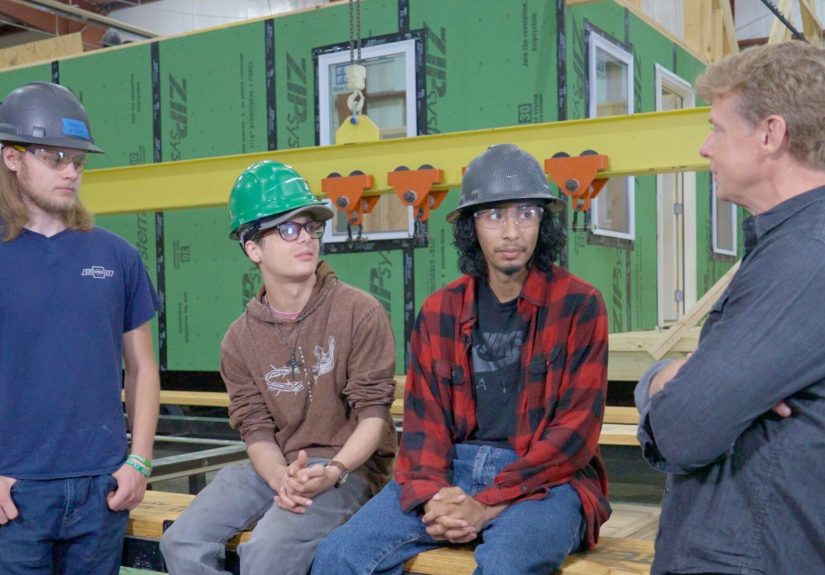
The emotional center of the episode arrives at Mountain Heritage High School, where Kevin meets teacher Jeremy Dotts and students using their carpentry skills to build homes for people affected by the storm. This is where Community Carpenters earns its title. The show is not simply admiring craftsmanship from a polite distance. It is showing how trade education can become direct community action.
That matters for several reasons. First, it reframes carpentry as public service. These students are not building abstract class projects destined to collect dust beside old science fair boards. They are working on structures intended to help real people. Second, it shows how career and technical education can respond quickly to local need. Third, it gives the rebuilding story a future tense. The next generation is not waiting around for adulthood to become useful. They are already useful.
And frankly, that is refreshing. In an age of endless hot takes about whether young people know how to do anything besides scroll, the students in this episode are out here building walls, creating shelter, and making the internet look embarrassingly unproductive.
Electrical Upgrades That Tell a Bigger Story
Another strong segment follows electrician Mario Salamone as he installs a new meter box and enclosure. It would be easy to treat this as routine infrastructure work, but the episode gives it narrative weight. The replacement is tied to current code requirements, including a larger meter and modern safety features such as an integrated emergency disconnect and exterior-mounted breakers.
This is where the series shows its maturity. Rebuilding after a storm is not a sentimental exercise in restoring yesterday. It is an opportunity to build smarter than before. Better electrical systems, safer access, and more resilient planning are not glamorous television compared with a shiny kitchen reveal, but they are exactly what long-term recovery requires.
An Antique Chest Becomes a Vanity
Then there is Tom Silva helping Paula convert an antique chest into a bathroom vanity. At first glance, this might feel like the episode’s “fun little side quest.” But it does more than add charm. It balances the recovery narrative with personality and design. Amid flood damage, code updates, and hard rebuilding lessons, the vanity project reminds viewers that beauty still belongs in the conversation.
The method matters, too. Tom uses a template to transfer plumbing locations accurately before cutting openings into the furniture piece. That detail captures what the show has always done well: it makes craftsmanship look approachable without pretending precision is optional. The transformation is not magic. It is measured work. In other words, no one waves a design wand and yells “farmhouse chic.” A skilled person marks carefully, cuts cleanly, and earns the result.
Why This Episode Works So Well
The best home-improvement television does more than teach a technique. It explains why the technique matters in a real human context. Community Carpenters succeeds because it connects tools to people, and projects to purpose.
It Understands That Recovery Is Collective
One of the strongest themes in the episode is that recovery does not happen in isolation. Contractors, homeowners, students, teachers, and specialists all appear as parts of the same larger ecosystem. That makes the episode feel honest. After a regional disaster, no one rebuilds alone. The image of the lone hero with a tool belt may look great on a poster, but real recovery is collaborative, messy, and deeply local.
By featuring students and community partners alongside the familiar This Old House team, the episode shifts the spotlight away from celebrity expertise and toward shared effort. The pros are still impressive, of course. Tom Silva can make almost anyone feel like they should stand up straighter around a miter saw. But the story is bigger than any single expert. It is about the web of knowledge that keeps communities standing.
It Makes Trade Skills Feel Relevant and Urgent
For years, Americans have been told to admire the trades in theory while somehow forgetting to invest in them in practice. Community Carpenters pushes back on that with quiet force. Carpentry, electrical work, finish work, and design adaptation are not background labor. They are part of the social infrastructure of recovery.
The episode also shows why skilled trades are compelling to watch when presented properly. This is not “look at a board, now the board is shorter.” This is precision solving real problems. It is knowing how to install trim so a repaired room finally feels finished. It is understanding electrical code so a rebuilt house is safer than before. It is taking an old chest and reshaping it for modern plumbing without turning a beautiful piece into firewood.
It Balances Utility With Hope
There is a tonal challenge in any disaster-recovery episode: lean too hard into tragedy and the show becomes emotionally exhausting; lean too hard into upbeat makeover energy and it risks feeling tone-deaf. Community Carpenters threads that needle well. It acknowledges the destruction behind the work, but it spends most of its time on action, teaching, and progress. That makes the hope feel earned rather than staged.
The Bigger Meaning of the “Carolina Comeback” Arc
Within Season 47, Episode 6 functions as more than a standalone installment. It marks a midpoint where viewers can see that the larger rebuilding effort is gaining shape. Earlier episodes establish the scale of damage and the emotional toll. Later episodes move closer to completion and return. Community Carpenters sits in the sweet spot where recovery becomes visible not as theory, but as repeated acts of competent labor.
That placement is important. It allows the series to show that comeback stories are not built on inspirational slogans alone. They are built on measurements, permits, code updates, material choices, and people who show up again tomorrow. The title sounds warm and neighborly, and it is, but the episode also carries a sterner truth: community is a verb. It is what happens when people do useful things for one another over and over until a place becomes livable again.
Key Takeaways for Homeowners, DIY Fans, and Anyone Who Loves a Good Rebuild
1. Small Details Often Signal Big Progress
Trim work, finish carpentry, and fixture adaptation may seem less dramatic than tearing out ruined material, but they are often the clearest signs that recovery is moving forward. A house starts to feel whole again through details.
2. Updating Is Better Than Merely Replacing
The electrical work in this episode highlights a lesson every homeowner should remember: when disaster forces replacement, there is value in rebuilding to newer safety and performance standards rather than chasing a perfect copy of the old setup.
3. Skilled Trades Create Community Value
The Mountain Heritage High segment is not just heartwarming television. It is a practical argument for investing in trade education. These students are gaining marketable skills while serving neighbors who need help now, not someday.
4. Good Design Still Matters During Recovery
The vanity project proves that resilience and personality can coexist. A rebuilt home does not need to feel sterile or purely functional. Design choices can help restore emotional comfort, not just physical shelter.
Final Thoughts on S47 E6: Community Carpenters
S47 E6: Community Carpenters is one of those episodes that sneaks up on you. You start by thinking you are watching a home-improvement show, and halfway through you realize you are watching a civic lesson disguised as a renovation hour. It is about trim and templates, yes. It is also about how communities recover: through schools, trades, local knowledge, updated systems, and the deeply unfashionable but incredibly effective act of helping.
What makes the episode memorable is not just that people build. It is that they build for each other. In a media landscape packed with competition, spectacle, and before-and-after vanity shots, Community Carpenters stands out by caring about usefulness. That may not sound flashy, but in the real world, usefulness is underrated. A safe electrical upgrade is useful. A finished window is useful. A student-built home for a storm victim is useful. An antique chest turned vanity that helps a homeowner reclaim normal life? Also useful, and considerably prettier.
In the end, this episode makes a persuasive case that carpentry is not just a trade. It is a language of repair. And in Asheville’s recovery story, that language speaks clearly.
Experiences Related to “S47 E6: Community Carpenters”
Watching Community Carpenters feels a lot like walking into a worksite where the coffee is strong, the boots are muddy, and nobody has time for fake inspiration. The experience is moving because it is so grounded. There are no superhero capes, unless you count tool belts, which frankly have better storage.
One experience the episode captures beautifully is the strange emotional power of ordinary progress. Anyone who has lived through a renovation, flood cleanup, or even a brutal home repair knows that the biggest victories are not always dramatic. Sometimes the moment that breaks you, in a good way, is seeing trim installed around a window or a light fixture working where darkness used to be. Those details tell your nervous system that the chaos is ending.
Another experience tied to this episode is the feeling of shared competence. In hard times, communities do not only need sympathy. They need people who know how to do things. They need someone who can wire safely, cut accurately, level properly, plan ahead, and teach others. That is why the Mountain Heritage High School segment lands so strongly. It shows young people not being talked about as “the future” in some vague poster-slogan way, but acting in the present. Viewers who care about education, labor, and local resilience will probably come away from that scene thinking the same thing: this is what useful learning looks like.
The episode also reflects a very specific homeowner experience: trying to hold onto personality while rebuilding under pressure. After damage, people often have to make practical decisions quickly. What gets saved? What gets replaced? What can be improved? The antique chest vanity story taps into that emotional tug-of-war. Keeping an old piece and adapting it for a new purpose is not just a design decision. It is a way of saying, “The storm does not get to erase all of me.” That is a feeling many viewers will recognize, even if they have never touched a pipe wrench in their lives.
There is also the experience of watching skilled professionals and realizing how calming competence can be. Tom Silva, Kevin O’Connor, and the local tradespeople do not create drama for entertainment. They create momentum. In a world where so many people perform expertise loudly, this episode is refreshing because it shows expertise quietly. Measure. Cut. Fit. Explain. Improve. Repeat. It is oddly therapeutic.
Most of all, Community Carpenters captures the experience of hope that has calluses on its hands. Not abstract hope. Not motivational-poster hope. Real hope, the kind that backs up a truck, unloads material, checks code, teaches students, and keeps going. That is what makes the episode linger after it ends. It reminds viewers that rebuilding is never just about structures. It is about morale, identity, safety, pride, and the comfort of seeing a place take shape again. The experience of this episode is not merely that you watched a home project. It is that you spent time with people proving that craftsmanship can be one of the most practical forms of kindness.