Table of Contents >> Show >> Hide
- Why This Scalloped Russet and Sweet Potatoes Recipe Works
- Ingredients
- How to Make Scalloped Russet and Sweet Potatoes
- Tips for the Best Texture and Flavor
- Scalloped Potatoes vs. Au Gratin: What Is the Difference?
- What to Serve with Scalloped Russet and Sweet Potatoes
- Make-Ahead, Storage, and Reheating
- Common Mistakes to Avoid
- Frequently Asked Questions
- Final Thoughts
- Experiences and Serving Ideas: Why This Dish Keeps Earning a Spot on the Table
There are side dishes that politely sit on the table, and then there are side dishes that walk in like they pay rent. This scalloped russet and sweet potatoes recipe belongs firmly in the second category. It is creamy, cozy, beautifully layered, and just dramatic enough to make people ask, “Who made this?” before they even sit down. The combination of russet potatoes and sweet potatoes gives you the best of both worlds: russets bring that classic soft, silky, almost cloudlike interior, while sweet potatoes add color, subtle sweetness, and a little personality.
If your holiday meals tend to include at least one relative who believes beige food is a personality trait, this dish offers peace talks. It looks elegant, tastes rich, and feels familiar without being boring. Even better, it is easier than it looks. Slice, layer, pour, bake, and resist the urge to hover over the oven window like it is a season finale.
This recipe keeps the spirit of classic scalloped potatoes with a creamy sauce, fragrant thyme, garlic, onion, and a touch of nutmeg. The result is savory first, sweet second, and deeply comforting all the way through. Whether you serve it at Thanksgiving, Christmas, Sunday supper, or a random Wednesday when you need carbs to restore your faith in humanity, it delivers.
Why This Scalloped Russet and Sweet Potatoes Recipe Works
The magic is in the contrast. Russet potatoes are starchy, which means they soften beautifully and help create that velvety, spoonable texture people expect from scalloped potatoes. Sweet potatoes, on the other hand, are denser and naturally sweeter, so they hold their shape a little better and give each layer more definition. Together, they create a casserole that is creamy without feeling one-note.
This version also avoids the common trap of turning a potato casserole into a dairy swamp. The sauce is rich, yes, but it is balanced. A mix of milk and cream keeps it luxurious without becoming too heavy. A small amount of flour helps it thicken as it bakes, while garlic, onion, thyme, and black pepper add depth. Nutmeg is the quiet overachiever here. Use just a little, and suddenly the whole dish tastes warmer, rounder, and somehow more polished.
Another reason this recipe works is slice size. Thin, even slices cook at the same rate, so you do not end up with one layer that melts and another that fights back like a stubborn undercooked coin. Aim for about 1/8 inch thick. A mandoline helps, but a sharp knife and patience will also do the job.
Ingredients
- 1 1/2 pounds russet potatoes, peeled
- 1 1/2 pounds sweet potatoes, peeled
- 1 medium yellow onion, very thinly sliced
- 3 cloves garlic, minced
- 2 tablespoons unsalted butter, plus more for greasing the dish
- 2 tablespoons all-purpose flour
- 1 3/4 cups whole milk
- 3/4 cup heavy cream
- 1 tablespoon fresh thyme leaves, plus extra for garnish
- 1/4 teaspoon ground nutmeg
- 1 3/4 teaspoons kosher salt
- 1/2 teaspoon black pepper
- Optional: 1/3 cup finely grated Parmesan for the top
Ingredient Notes
Russet potatoes: These are ideal for that classic scalloped texture because they soften easily and help thicken the sauce as they bake.
Sweet potatoes: Choose medium ones with smooth skin and firm flesh. They should feel heavy for their size and not resemble wrinkled gym socks.
Milk and cream: This combo gives you richness and structure. Heavy cream alone can tip the dish into overly rich territory.
Thyme and nutmeg: These add warmth and balance. Do not skip them unless you enjoy living without minor culinary miracles.
How to Make Scalloped Russet and Sweet Potatoes
1. Prep the oven and baking dish
Preheat your oven to 375°F. Butter a 9-by-13-inch baking dish or a similar 3-quart casserole dish. Set it aside.
2. Slice the potatoes
Thinly slice the russet potatoes and sweet potatoes into rounds about 1/8 inch thick. Try to keep them as even as possible so everything bakes uniformly. If you are using a mandoline, now is the time to feel like a professional. Also now is the time to use the guard and keep all your fingertips.
3. Build the sauce
In a medium saucepan over medium heat, melt the butter. Add the onion and cook for 4 to 5 minutes until softened but not browned. Stir in the garlic and cook for 30 seconds, just until fragrant. Sprinkle in the flour and stir continuously for 1 minute to form a light roux.
Slowly whisk in the milk and cream. Add the thyme, nutmeg, salt, and black pepper. Cook for 3 to 5 minutes, stirring often, until the sauce is smooth and lightly thickened. It should coat a spoon but still pour easily.
4. Layer the casserole
Arrange one-third of the russet and sweet potato slices in the prepared dish, alternating them for color and even distribution. Spoon one-third of the sauce over the potatoes. Repeat the layers two more times, finishing with the sauce on top. Gently press down on the layers with the back of a spoon so the liquid settles into the dish.
If you want a little golden savory edge, sprinkle Parmesan over the top. This is optional, because classic scalloped potatoes traditionally lean more creamy than cheesy. But rules in home cooking are often more like suggestions wearing sensible shoes.
5. Bake until tender and bubbling
Cover the dish tightly with foil and bake for 45 minutes. Remove the foil and continue baking for 25 to 35 minutes, or until the potatoes are tender when pierced with a knife and the top is bubbling and lightly golden.
If the top starts browning too quickly before the potatoes are fully tender, loosely tent it with foil for the final stretch.
6. Rest before serving
Let the casserole rest for 10 to 15 minutes before serving. This step matters. The sauce will settle and thicken, making the layers easier to scoop. Fresh from the oven, it will be delicious but slightly chaotic, like a great party guest who arrives too early.
Tips for the Best Texture and Flavor
Slice evenly
Even slices are the difference between luxurious and frustrating. If some pieces are thick and others are paper-thin, the casserole will bake unevenly. That is how you get one bite that melts and another that crunches suspiciously.
Do not rinse the potato slices
For roasted potatoes, rinsing can be helpful. For scalloped potatoes, the starch is your friend. It helps the sauce thicken and cling to the layers.
Season every layer through the sauce
Potatoes are flavor sponges, which is wonderful when the sauce is well seasoned and tragic when it is not. Taste the sauce before layering. It should seem slightly assertive on its own because the potatoes will mellow it out.
Let it rest
This is not optional if you want neat servings. The casserole needs a few minutes to settle, or it will spread like a creamy landslide. A tasty landslide, but still.
Scalloped Potatoes vs. Au Gratin: What Is the Difference?
This question shows up every holiday season like clockwork. Traditional scalloped potatoes are usually baked in a cream or milk-based sauce and do not require cheese. Au gratin potatoes generally include cheese and sometimes breadcrumbs for a more browned, crusty top. In real American kitchens, the terms overlap constantly, and no potato police are coming to your house. Still, this recipe leans more scalloped than au gratin, with cheese kept optional rather than essential.
What to Serve with Scalloped Russet and Sweet Potatoes
This dish plays especially well with roast turkey, glazed ham, pork tenderloin, roast chicken, or a simple green salad with a sharp vinaigrette. Because the potatoes are rich and creamy, they benefit from something fresh, bitter, or acidic nearby. Think roasted Brussels sprouts, garlicky green beans, sautéed kale, cranberry relish, or a crisp apple salad.
It also works surprisingly well as the star of a vegetarian dinner. Serve it with a crunchy salad, roasted mushrooms, and warm bread, and nobody will miss the meat. Potatoes are more than side characters. Sometimes they are the main plot.
Make-Ahead, Storage, and Reheating
Make ahead
You can assemble the casserole several hours ahead of time and refrigerate it, tightly covered, before baking. Let it sit at room temperature for about 20 to 30 minutes before it goes into the oven so the dish does not go from icy to volcanic too abruptly.
Storage
Store leftovers covered in the refrigerator for up to 4 days. The flavors deepen overnight, which means day-two potatoes are not leftovers. They are a reward for planning ahead.
Reheating
Reheat individual portions in the microwave, or warm the full casserole in a 350°F oven, loosely covered with foil, until heated through. Remove the foil for the last few minutes if you want the top to perk back up. A splash of milk or cream can help loosen the sauce if it has thickened a lot in the fridge.
Common Mistakes to Avoid
- Using thick slices: Thick potatoes take forever to soften and can leave the center undercooked.
- Skipping the foil at the beginning: Covering helps the potatoes steam and soften before the top browns.
- Underseasoning: Potatoes need enough salt and pepper to taste like something other than polite starch.
- Overloading with cheese: Too much can overpower the balance between russet potatoes and sweet potatoes.
- Serving immediately: Resting the casserole improves texture and sliceability.
Frequently Asked Questions
Can I use all sweet potatoes?
Yes, but the texture and flavor will be sweeter and a bit denser. The beauty of this recipe is the mix, so using both creates a more balanced result.
Can I add cheese?
Absolutely. Gruyère or Parmesan work especially well. Add a light layer between the top two layers or sprinkle some over the top for a more gratin-style finish.
Can I use half-and-half instead of cream?
Yes. The casserole will still be delicious, just a little lighter. If you use only milk, the sauce will be less rich but still workable.
Do I need to peel the potatoes?
For the smoothest, most elegant texture, yes. If you like a more rustic casserole, you can leave the skins on the russets after scrubbing them well, though sweet potato skins are usually best removed here.
Final Thoughts
Scalloped russet and sweet potatoes hit that rare sweet spot between comfort food and special-occasion side dish. They are familiar enough for picky eaters, interesting enough for people who claim to be “not that into casseroles,” and pretty enough to hold their own on a holiday table full of show-offs. The russets turn soft and creamy, the sweet potatoes add color and gentle sweetness, and the herb-scented sauce ties the whole thing together without becoming too heavy.
If you have been looking for a potato dish that feels classic but not predictable, this is the one. It is cozy, crowd-friendly, and deeply satisfying in the way only layered potatoes can be. Honestly, the hardest part is waiting for it to cool before diving in with a serving spoon the size of your ambition.
Experiences and Serving Ideas: Why This Dish Keeps Earning a Spot on the Table
One of the best things about a scalloped russet and sweet potatoes recipe is how flexible it feels in real life. On paper, it reads like a holiday side dish. In practice, it shows up whenever people want something warm, generous, and vaguely reassuring. It is the kind of casserole that makes an ordinary dinner feel thought-out, even if the rest of the meal is just roast chicken and a bagged salad trying its best.
For holiday meals, this dish solves a surprisingly common problem: choosing between classic scalloped potatoes and sweet potato casserole. A lot of families are split. Some want the creamy, savory potato dish they grew up with. Others want sweet potatoes on the table, but not necessarily with marshmallows involved. This recipe lets both camps win without requiring two separate casseroles and a small amount of emotional negotiation. The russets keep the dish rooted in tradition, and the sweet potatoes bring color and gentle sweetness that feel festive without sliding into dessert territory.
In my experience, this casserole also does well with guests who say they only want “a little.” They never mean it. They take a modest spoonful, sit down, taste it, and then suddenly develop a very urgent need to revisit the buffet. The layered texture has a lot to do with that. It is softer and creamier than roasted potatoes, but more structured than mashed potatoes. Every bite feels rich without being heavy-handed, especially when the onions, garlic, thyme, and nutmeg are balanced properly.
It is also a smart make-ahead choice for busy cooks. You can assemble it earlier in the day, keep it chilled, and bake it when you are ready. That alone makes it valuable during entertaining season, when oven space becomes more competitive than concert tickets. Once baked, it reheats beautifully, which means leftovers are not an afterthought. The next day, a square of this casserole alongside eggs or a crisp green salad feels suspiciously luxurious for something retrieved from the fridge.
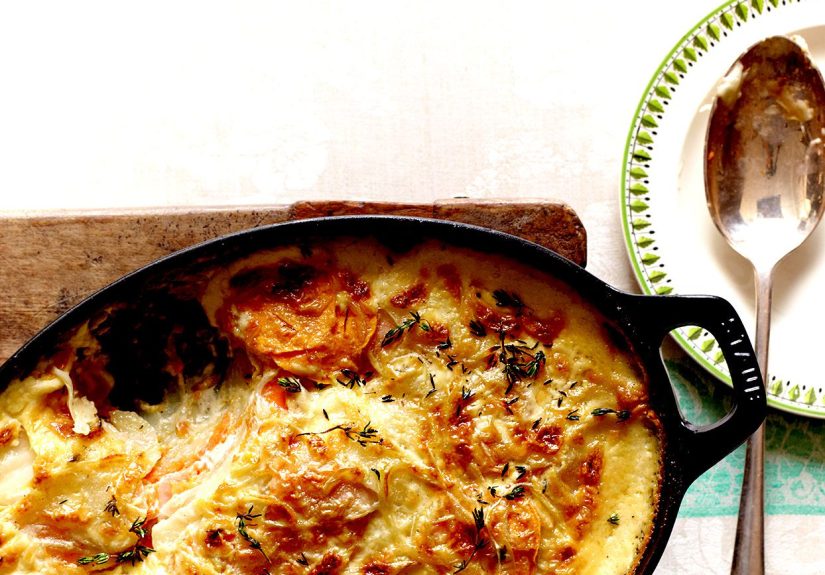
Another reason people come back to this recipe is that it looks more impressive than the effort suggests. Alternating the orange and pale cream-colored slices creates a naturally beautiful pattern, especially if you take an extra moment with the top layer. It is the culinary version of making the bed before company comes over. Nobody needs to know it only took a few extra minutes, but everyone notices.
There is also something nostalgic about it. Scalloped potatoes in any form tend to remind people of family dinners, potlucks, and holidays where the side dishes were somehow more memorable than the centerpiece. Adding sweet potatoes gives that memory a fresh twist without losing the comfort. It feels familiar, but upgraded. Traditional, but awake. Cozy, but with better lighting.
Most importantly, this is a dish that invites personal variation. Some cooks add Parmesan. Some use sage instead of thyme. Some add a pinch of cayenne for contrast. Some serve it with ham at Easter and turkey at Thanksgiving, and some make it on a rainy Tuesday because the week has been rude. However it lands on your table, it tends to do the same job every time: make dinner feel generous, make the house smell amazing, and make people ask for the recipe before dessert appears.