Table of Contents >> Show >> Hide
- Why a Gramophone Is More Than a Nostalgia Machine
- The First Big Lesson: Speed Control Is Everything
- The Second Lesson: Separate Power From Precision
- The Third Lesson: The Groove Is a Design Philosophy
- The Fourth Lesson: Sound Needs Direction, Not Just Volume
- The Fifth Lesson: Mechanical Music Should Be Easy to Edit
- The Sixth Lesson: Reliability Is Part of the Art
- What a Better Marble Music Machine Might Actually Look Like
- Experiences From the Workshop and the Listening Room
- Conclusion
Some inventions refuse to stay politely in their century. The gramophone is one of them. At first glance, it seems like a charming museum resident: a big horn, a spinning disc, a hand crank, and enough vintage charisma to make every coffee shop owner weak in the knees. But look closer, and the gramophone is not just old-timey décor. It is a beautifully practical lesson in mechanical control, acoustic efficiency, and repeatable performance. That is exactly why it has something valuable to teach anyone trying to build a better marble music machine.
A marble music machine sits at the intersection of music, motion, and mild chaos. It is part instrument, part sculpture, part engineering stress dream. When it works, it feels magical. When it does not, it feels like gravity itself has decided to become uncooperative. The challenge is not simply getting marbles to move. It is getting them to move with timing, consistency, clarity, and enough musical precision that the machine becomes more than a clever contraption.
That is where gramophone thinking becomes useful. The best gramophone designs solved problems that every serious marble music machine builder faces today: how to regulate speed, how to smooth uneven human input, how to amplify sound without adding clutter, how to guide motion precisely, and how to make a mechanical performance repeatable enough to sound intentional. In short, the gramophone can teach the marble machine a little discipline. And frankly, every beautiful machine needs some.
Why a Gramophone Is More Than a Nostalgia Machine
The gramophone was never just about playing music. It was about controlling motion well enough that stored information could become sound. That sounds abstract until you realize a marble music machine is trying to do something similar. Instead of a stylus reading a groove, you have marbles triggering notes. Instead of a horn projecting a recording, you have resonators, bars, strings, drums, and wooden surfaces trying to turn impacts into music rather than noise.
The important lesson is that the gramophone treated every stage of the process as a design problem. Rotation had to stay steady. The contact between parts had to remain predictable. Sound had to be directed, not merely created. The whole machine had to translate messy physical motion into something that the human ear could recognize as organized and pleasing. That is not old-fashioned engineering. That is timeless engineering.
The First Big Lesson: Speed Control Is Everything
Tempo drift can ruin even the prettiest machine
Many marble music machines look amazing before they sound amazing. That is not an insult. It is just the mechanical truth. A hand-cranked system naturally speeds up when the operator gets excited and slows down when the operator gets tired, distracted, or briefly remembers their rent. In a visual kinetic sculpture, that may be fine. In a musical machine, it is disastrous. Timing is the music. If the speed wanders, the groove disappears.
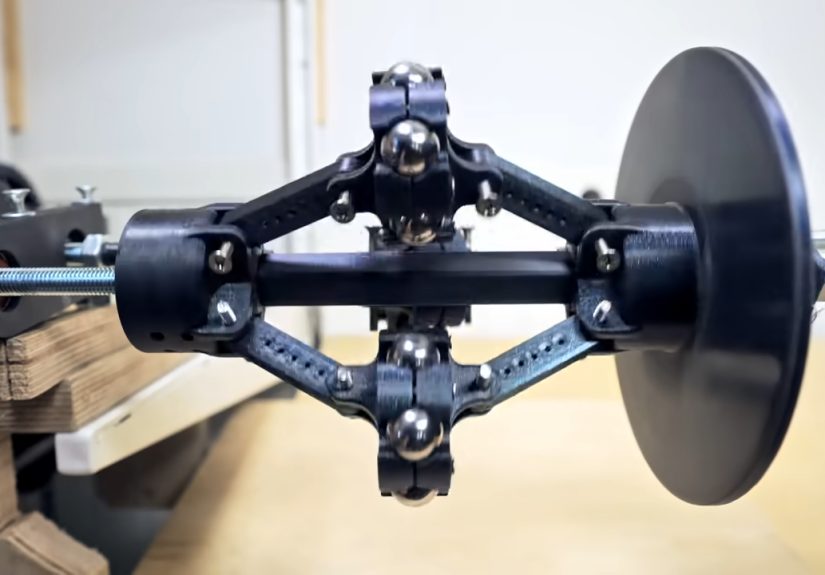
This is why gramophone-inspired regulation matters so much. A better marble music machine needs a way to resist the wobble of human input. A flywheel helps by storing rotational energy and smoothing out the pulse of the crank. A governor helps even more by actively resisting speed changes. That combination transforms performance from “approximately musical” into something much more controlled.
A governor gives the machine a memory of its intended speed
The genius of a governor is that it creates feedback without electronics. If the shaft spins too fast, the mechanism responds and pulls things back. If the speed drops, resistance changes and balance returns. This is not glamorous in the way flashing lights are glamorous, but it is vastly more useful. A marble machine that keeps a stable tempo feels confident. Notes land where they should. Repeated patterns sound like patterns instead of accidents in formalwear.
That is why taking cues from a gramophone is so smart. The goal is not to copy antique hardware for the sake of aesthetics. The goal is to borrow the logic. Build a system that expects imperfect human input and calmly evens it out before the marbles ever reach the note triggers.
The Second Lesson: Separate Power From Precision
One of the sneakiest problems in mechanical music is asking one motion to do too many jobs. If the same crank is simultaneously powering a lift, feeding marbles, driving a programming wheel, and directly determining note timing, small inconsistencies compound quickly. The result is a machine that looks busy and sounds nervous.
Gramophone logic suggests a cleaner architecture. Let the human provide energy, but let the machine manage timing. In practical terms, that means using the crank to charge a flywheel or steady rotating system, then drawing controlled motion from that stable source. Precision should come downstream from regulation, not directly from someone’s forearm.
This matters because musical timing hates lumpiness. Human motion is wonderful for expression on a violin bow or piano key. It is less wonderful when it directly governs the spacing of hundreds of steel marbles. A better marble music machine needs to decouple enthusiasm from tempo. You want the player to feel involved, not responsible for micro-corrections every half second.
The Third Lesson: The Groove Is a Design Philosophy
Guide the moving part so it has only one correct path
A gramophone record works because the stylus is constrained. It does not “sort of” follow the groove. It follows the groove or it fails. That level of guidance is worth stealing. In a marble music machine, every track, channel, gate, and drop point should be designed with the same ruthless clarity.
Too many marble runs rely on charm where they should rely on geometry. A marble should not be invited to choose from three nearly acceptable paths. It should be told exactly where to go. Corners need proper banking. Slopes need reliable margins. Entry points need generous capture geometry. Return paths need to avoid bounce, rebound, and weird side adventures. A marble is not a musician. It is a chrome-plated opportunist.
Make the note event binary
The most important action in a marble music machine is the release of a single marble at the correct moment. Not two marbles. Not zero marbles. Not one marble and its chaotic emotional-support twin. One marble. That means the release mechanism should behave more like a precision escapement than a toy dispenser.
Borrowing from gramophone precision means designing note release as a clean, discrete event. The gate opens. One marble passes. The gate resets. Clearances matter. Surface finish matters. Timing matters. If the release system is ambiguous, the music will be ambiguous too.
The Fourth Lesson: Sound Needs Direction, Not Just Volume
The gramophone’s horn was not merely decorative drama. It was an acoustic strategy. It gathered and projected sound in a useful direction. Marble music machines can learn a lot from that. Too many builds focus so heavily on visible motion that they forget the audience is also listening. The machine may generate plenty of impact noise, but not enough musical clarity.
A better design asks practical questions. Where does the note bloom? Which surfaces resonate musically, and which merely rattle? Are the instrument elements mounted on stable structures that let them sing, or on flimsy frames that swallow energy and add chatter? Are the marbles striking tuned surfaces cleanly, or are they slapping around like they are late for a train?
This is where acoustic thinking matters. Instead of making everything louder, make the right things louder. Use resonant materials intentionally. Isolate the noisiest mechanical subsystems. Keep the drive train from sharing every vibration with the note-producing parts. Add soundboards where needed. Add damping where needed. In other words, let the instrument speak and ask the machinery to stop interrupting.
The Fifth Lesson: Mechanical Music Should Be Easy to Edit
Old mechanical instruments understood programmability
Long before software playlists, mechanical instruments were already storing musical instructions in physical form. Pinned cylinders, barrels, and programmed wheels all shared a brilliant idea: the music lived in an editable pattern. Change the pattern, change the tune.
That principle is pure gold for marble music machines. If you want the machine to become a serious musical tool rather than a one-song internet celebrity, the programming interface must be humane. The pin layout should be readable. Timing divisions should be visible. Adjustments should not require partial disassembly and a whispered apology to the workshop gods.
The best systems are modular and legible. A builder should be able to test a phrase, move a few trigger points, re-run the passage, and hear the difference immediately. When programming is painful, experimentation stops. When experimentation stops, the machine stops evolving.
The Sixth Lesson: Reliability Is Part of the Art
Here is the sentence that separates engineering romance from engineering reality: a machine that jams every two minutes is not expressive. It is needy. And marble machines, for all their beauty, are extraordinarily good at becoming needy.
Marbles behave like tiny negotiators looking for loopholes. They exploit poor tolerances, inconsistent slopes, surface wear, bad transitions, bounce-prone materials, and any mechanism that works only when observed by optimistic people. A gramophone-inspired mindset helps because it values dependable repetition. The machine must not merely work once for a camera. It must work over and over without turning each rehearsal into a hostage situation.
That means designing for maintenance from the beginning. Add access points. Make jam zones visible. Use wear-resistant contact surfaces where repeated impacts occur. Standardize parts so replacements are easy. Avoid decorative complexity that prevents cleaning, calibration, or repair. A better marble music machine should be enchanting on stage and sensible on a workbench.
What a Better Marble Music Machine Might Actually Look Like
Imagine the machine as a chain of clearly defined modules. First comes human input at the crank. That feeds a flywheel and a regulated drive section. From there, a stable rotating shaft turns the programming system. The programming system controls precise single-marble release gates. Those gates send marbles to instrument modules designed for clean strikes and good resonance. Finally, a return system collects marbles gently and feeds them back without adding random timing errors.
Notice what changed. The machine is no longer one giant swirling event. It is a disciplined mechanical ensemble. Each module has one job. Each transition is intentional. Each acoustic choice supports musical clarity. The visual magic remains, but it is backed by a quieter, more mature engineering philosophy.
That is what the gramophone really contributes: not a vintage look, but a design attitude. Control motion. Respect acoustics. Reduce ambiguity. Build repeatability. Let the machine earn its own elegance.
Experiences From the Workshop and the Listening Room
In real-world builds, the experience of working on a marble music machine often changes your priorities. At the beginning, most people fall in love with the spectacle. You imagine silver marbles streaming down polished tracks, little hammers dancing, gears spinning, wood glowing under shop lights, and a crowd smiling like they have just seen physics decide to become cheerful. The dream is cinematic. Then you start building, and the machine kindly informs you that beauty is the easy part.
One of the first experiences builders talk about is how strangely physical tempo becomes. On paper, timing feels abstract. In the workshop, timing is a sensation in your wrist, shoulder, and ears. You crank a little faster and the machine sounds anxious. You slow slightly and the phrase drags. You discover that what seemed like tiny speed changes are musically enormous. That is usually the moment when the idea of a governor stops sounding quaint and starts sounding brilliant.
Another common experience is the humbling power of tiny errors. A track that is off by a hair can create a bounce. A gate with just a little extra clearance can release doubles. A frame that is slightly too flexible can turn a bright note into a dull thud. Nothing fails with theatrical grandeur. The machine usually misbehaves in small, irritating ways that repeat until you finally admit the problem is not “basically fine.” It is a wonderful education in the difference between motion and controlled motion.
There is also the acoustic surprise. Standing next to a marble machine is not the same as hearing it from a few feet away, and neither is the same as hearing it through a microphone. Builders often learn that the loudest part of the machine is not the musical part. It is the chain, the lift, the return chute, the frame, or some innocent-looking bracket that has decided to audition as a snare drum. That experience pushes you toward gramophone-like thinking. You stop asking only, “How do I make sound?” and start asking, “How do I shape what the listener actually hears?”
Then comes the emotional shift from invention to instrument. At first, every successful run feels like a victory over mechanics. Later, once the machine becomes more reliable, you begin making musical decisions. You care about phrasing, spacing, attack, sustain, and arrangement. That is the most rewarding phase because the machine stops being a novelty and starts becoming expressive. It is still stubborn, of course. Mechanical devices enjoy staying humble on your behalf. But the relationship changes. You are no longer begging it to work. You are collaborating with it.
And perhaps the most memorable experience is sharing it with other people. Audiences do not just hear a marble music machine; they watch cause and effect become visible. They can see rhythm happen. They can feel the suspense before a release gate opens, the satisfaction when a pattern lands cleanly, and the delight when a machine that looks impossible somehow behaves with grace. When that happens, all the adjustments, jams, rebuilds, and muttered workshop monologues start to feel worth it. The machine becomes more than a device. It becomes a performance of engineering itself.
Conclusion
Taking cues from a gramophone does not mean turning a marble music machine into a historical replica with a nicer horn and a stronger mustache. It means learning from one of the clearest examples of mechanical sound design ever built. The gramophone teaches that stable speed beats heroic cranking, guided motion beats hopeful motion, acoustic direction beats raw noise, and repeatability beats improvisation by hardware.
If builders apply those lessons well, the marble music machine becomes something richer than a clever internet marvel. It becomes a true mechanical instrument: expressive, dependable, tunable, and deeply satisfying to watch and hear. That is the real upgrade. Not more marbles. Better thinking.