Table of Contents >> Show >> Hide
- Why Nightlights Suddenly Became a Parenting Debate
- The Simple Truth: Nightlights Are Not Automatically Bad
- How Light Affects Children’s Sleep
- Does Sleeping With a Nightlight Hurt Children’s Eyes?
- When a Nightlight Can Help
- When a Nightlight Can Backfire
- How to Choose the Best Nightlight for Kids
- Nightlights for Babies: Do Infants Need Them?
- Nightlights for Toddlers and Preschoolers
- Nightlights for Older Kids
- What About Hallway Lights?
- A Practical Nightlight Plan for Parents
- Real Parenting Experiences: What Nightlights Look Like in Actual Homes
- Conclusion: So, Should Your Child Use a Nightlight?
- SEO Tags
Parenting debates used to be about screen time, picky eating, and whether glitter is a craft supply or a household curse. Now, somehow, one of the hottest bedtime arguments is glowing quietly from a wall outlet: the nightlight.
Yes, the tiny plastic moon plugged beside the dresser has become a surprisingly serious parenting topic. Some parents swear a nightlight is the only reason their child sleeps without launching a midnight rescue mission into the adults’ bed. Others worry that any light at night could disrupt melatonin, damage sleep quality, or create a dependence that turns every hotel room into a lighting negotiation worthy of Congress.
So, are nightlights good or bad for kids? The answer is not dramatic enough for social media, but it is useful: a nightlight can help some children feel safe, especially during the fear-of-the-dark years, but the brightness, color, placement, and timing matter. A soft amber glow across the room is very different from a blue-white LED beam shining directly into a toddler’s eyeballs like a tiny interrogation lamp.
This article breaks down the parenting controversy around nightlights, what pediatric sleep experts generally recommend, how light affects children’s sleep, and how parents can choose a setup that supports both emotional comfort and healthy rest.
Why Nightlights Suddenly Became a Parenting Debate
The nightlight debate sits at the intersection of three big parenting anxieties: sleep, safety, and independence. Parents want children to feel secure at bedtime, but they also want them to sleep deeply, stay in their own beds, and avoid creating habits that require a travel suitcase full of bedtime equipment.
For toddlers and preschoolers, fear of the dark is common. Their imaginations are developing faster than their ability to separate “a jacket on a chair” from “a suspicious bedroom goblin wearing fleece.” A nightlight can reduce panic, make the room feel familiar, and help a child navigate to the bathroom or call for help without feeling swallowed by darkness.
At the same time, modern sleep advice often emphasizes darkness. Parents hear that light exposure at night can affect circadian rhythm, suppress melatonin, and make sleep less restful. Add in concerns about blue light from screens, LED bulbs, and smart nursery gadgets, and suddenly the nightlight becomes more than a cute cloud-shaped accessory. It becomes a symbol of whether you are raising a calm sleeper or accidentally running a 24-hour airport terminal in your child’s bedroom.
The Simple Truth: Nightlights Are Not Automatically Bad
For many children, a small nightlight is not a sleep disaster. In fact, it can be a practical tool when used thoughtfully. Pediatric guidance often recognizes that children who are afraid of the dark may benefit from a nightlight, especially if it helps them stay calm enough to fall asleep without repeated reassurance.
The key word is “small.” A nightlight should not turn the bedroom into a brunch café. The goal is to provide just enough visibility to soften fear, not enough brightness to tell the brain, “Great news, it is apparently 10:00 a.m.”
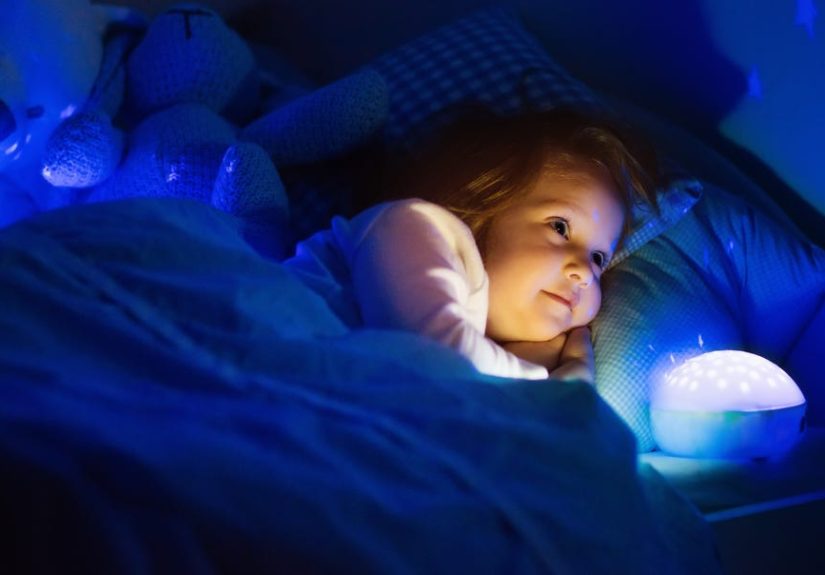
A good nightlight supports sleep by reducing anxiety. A bad nightlight competes with sleep by creating too much stimulation. That difference explains why parents can have completely opposite experiences. One family plugs in a dim amber light and bedtime becomes smoother. Another family installs a bright color-changing projector with dancing stars, ocean waves, and a Bluetooth lullaby feature, then wonders why their child is hosting a rave at 9:45 p.m.
How Light Affects Children’s Sleep
Sleep is strongly influenced by the body’s internal clock, also called the circadian rhythm. Darkness signals the brain that it is time to prepare for sleep. Light, especially bright or blue-toned light, can delay that signal and make the body feel more alert.
Children may be especially sensitive to evening light exposure. Their eyes allow light to reach the retina efficiently, and their sleep systems are still developing. This does not mean a dim nightlight will ruin bedtime forever. It means parents should be careful about the type and amount of light in the room.
Blue and white light can be more stimulating
Cool-toned light, including blue-white LEDs, can be more alerting than warm-toned light. This is why screens before bed are such a common sleep concern. Tablets, phones, televisions, and bright smart devices can send wake-up signals right when a child’s body should be winding down.
A nightlight is usually much dimmer than a screen, but color still matters. A soft red, orange, or amber light is usually a better choice for sleep than bright blue, purple, green, or icy white. In bedtime terms, warm light whispers. Blue-white light brings a clipboard and asks why everyone is not being productive.
Brightness matters more than cuteness
Parents often choose nightlights based on how adorable they look in the store. Understandable. Some of them are shaped like sleepy dinosaurs, and we are only human. But the best nightlight is not necessarily the cutest one. It is the dimmest useful one.
If your child can read a book by the nightlight, it is probably too bright. If it casts sharp shadows across the room, it may make fear worse instead of better. If it shines directly at the bed, move it. The ideal nightlight provides a faint glow near the floor, away from the child’s face.
Does Sleeping With a Nightlight Hurt Children’s Eyes?
One common worry is whether nightlights cause vision problems, especially nearsightedness. This fear grew partly from older discussions about children sleeping with lights on and later developing myopia. However, the relationship is not as simple as “nightlight equals bad eyesight.” Later expert discussions have pointed out that family history, genetics, outdoor time, near-work habits, and other factors play major roles in childhood myopia.
A small nightlight is not considered a proven cause of vision damage. Parents should focus more on broader eye-health habits: regular vision checks, outdoor play, balanced screen use, and watching for signs such as squinting, headaches, or sitting very close to screens.
In other words, the tiny turtle lamp is probably not the villain. The child watching cartoons from four inches away while wrapped around a tablet like a tech-support koala is the bigger conversation.
When a Nightlight Can Help
A nightlight can be useful in several common parenting situations. It can help a toddler who wakes confused in the middle of the night. It can support a preschooler who is afraid of shadows. It can make nighttime bathroom trips safer for older children. It can also reduce the need for parents to turn on a hallway light, which may be much brighter and more disruptive than a dim light already in the room.
Nightlights can be especially helpful during transitions. Moving from crib to bed, changing bedrooms, starting school, welcoming a new sibling, or sleeping away from home can all increase bedtime anxiety. A familiar soft light may help a child feel anchored when other parts of life feel new.
Nightlights and fear of the dark
Fear of the dark is not bad behavior. It is usually a normal developmental stage. Children’s imaginations are powerful, but their coping skills are still under construction. A nightlight can be part of a calm plan that says, “You are safe, your room is safe, and you can handle bedtime.”
The best approach combines reassurance with confidence. Instead of checking every corner for monsters for the seventeenth time, parents can validate the feeling and redirect the child toward a simple routine: nightlight on, comfort object ready, one check-in, then sleep. Otherwise, the monster inspection process becomes a nightly franchise opportunity.
When a Nightlight Can Backfire
A nightlight can become a problem if it is too bright, too stimulating, or used as the only coping strategy. If a child cannot fall asleep unless the room is lit like a convenience store, the setup may be working against deeper sleep.
Some children also become more anxious when shadows are partially visible. A dim light placed in the wrong spot can create moving shapes that look scarier than total darkness. Ceiling projectors, rotating lights, or color-changing devices may seem soothing at first, but they can keep some children visually engaged instead of relaxed.
Another issue is parent behavior around the nightlight. If every bedtime fear leads to new lighting upgrades, a child may learn that darkness is dangerous and must be defeated with equipment. The goal is not to remove comfort. The goal is to use comfort as a bridge toward confidence.
How to Choose the Best Nightlight for Kids
The best nightlight for kids is simple, dim, warm-colored, and boring. Boring is underrated at bedtime. Boring is beautiful. Boring is what you want when the mission is sleep.
Choose a warm color
Look for amber, orange, or red-toned light. Avoid bright blue-white bulbs, flashing colors, or highly saturated novelty lights. A warm glow is less likely to interfere with sleep cues and usually feels cozy rather than energizing.
Keep it dim
A nightlight should provide enough light to orient the child in the room but not enough to read, play, or inspect dust particles with scientific intensity. Adjustable brightness is helpful because some children need more light at first and less over time.
Place it low and away from the bed
Place the nightlight near the floor or across the room, not at eye level and not beside the pillow. If your child wakes during the night, the light should help them recognize the room without shining directly into their face.
Avoid interactive features
Projectors, sound effects, timers, and app-connected devices can be useful for some families, but they can also turn bedtime into a control panel. If the child keeps asking to change the color, restart the stars, or negotiate whale sounds versus rain sounds, the device has become entertainment. At bedtime, entertainment is sneaky caffeine.
Nightlights for Babies: Do Infants Need Them?
Most babies do not need a nightlight for emotional comfort because they are not yet afraid of the dark in the same way older toddlers and preschoolers can be. For infants, darkness is usually better for sleep. If parents need light for feeding, diaper changes, or checking on the baby, a very dim warm light used briefly is better than turning on overhead lighting.
For newborn care, the nightlight is often for the parent, not the baby. That is perfectly reasonable. No one wants to change a diaper in total darkness and discover too late that the wipes were actually socks. Use the least amount of light necessary, keep it warm-toned, and avoid shining it toward the baby’s face.
Nightlights for Toddlers and Preschoolers
Toddlers and preschoolers are the main nightlight audience. This is the age when imagination blooms, independence grows, and bedtime fears can suddenly appear. A child who slept happily in darkness may one day announce that the corner of the room is “looking at me.” Congratulations: your child has discovered shadows.
For this age group, a nightlight can be part of a predictable bedtime routine. It should be introduced calmly, not dramatically. Say something simple: “This little light helps you see your room. Your room is safe. It is time to sleep.” Keep the rest of the routine consistent: bath, pajamas, teeth, story, cuddle, goodnight.
If your child asks for brighter and brighter light, gently hold the boundary. You can offer choices within limits: “Do you want the small amber light by the door or the small amber light by the bookshelf?” This gives the child control without turning bedtime into a lighting showroom.
Nightlights for Older Kids
Older children may still prefer a nightlight, especially during stressful periods. There is no need to shame them for it. Some adults still prefer a bit of hallway light, and nobody writes a parenting thread about Uncle Dave needing the bathroom visible at 2:00 a.m.
For school-age children, focus on independence. The nightlight can be framed as a practical tool rather than a fear signal. If they want less light over time, dim it gradually. If they sleep well and wake rested, a small nightlight may not be worth turning into a family battle.
What About Hallway Lights?
Many parents leave the hallway light on with the child’s door cracked open. This can work, but it may be brighter than a small nightlight. Hallway light can also change during the night if adults move around, which may wake sensitive sleepers.
If your child likes the door open, try a dim plug-in nightlight in the hallway instead of a full overhead light. Another option is a motion-sensor bathroom light for children who wake to use the toilet. The goal is safe navigation without flooding the bedroom with light.
A Practical Nightlight Plan for Parents
If the nightlight debate has taken over your bedtime routine, simplify it. Start with the least disruptive setup: one dim, warm light placed low and away from the bed. Keep screens out of the bedroom. Turn off bright lights during the wind-down period. Use blackout curtains if outside light is a problem. Make mornings bright with natural light when possible.
If your child is afraid, talk about it earlier in the day, not during the bedtime panic window. Make a plan together. Draw a “brave bedtime map.” Choose a comfort object. Practice a short phrase such as, “I am safe in my room.” Then follow the same bedtime steps each night.
If your child sleeps well with a small nightlight, you may not need to change anything. Parenting already comes with enough unnecessary guilt. Not every glowing object is a crisis. Sometimes a nightlight is just a nightlight.
Real Parenting Experiences: What Nightlights Look Like in Actual Homes
In real life, the nightlight decision is rarely made after reading a sleep study over herbal tea. It is usually made at 1:13 a.m. by a parent wearing one slipper, holding a stuffed bunny, and whispering, “Fine, yes, we will plug in the moon.”
One common experience is the child who was perfectly fine in the dark until preschool imagination arrived like a delivery truck with no brakes. Suddenly, the closet has opinions. The pile of laundry has shoulders. The innocent rocking chair becomes “the tall thing.” In that moment, a dim nightlight can calm the room just enough for the child to recognize familiar shapes. The chair becomes a chair again. The laundry becomes laundry again, though sadly still not folded.
Another common family story involves travel. A child who sleeps well at home may panic in a hotel room, a grandparent’s guest room, or a vacation rental with unfamiliar shadows. Parents quickly learn that a portable nightlight can be as important as pajamas. A small amber plug-in light or rechargeable dim lamp can make a strange room feel predictable. It is not magic, but at 10:30 p.m. on vacation, anything that prevents a meltdown feels suspiciously magical.
Some parents discover that the nightlight is not actually for fear. It is for control. The child likes knowing something is the same every night. The light becomes part of the bedtime sequence, like the same book, the same blanket, or the same demand for water exactly eight seconds after being tucked in. For these children, changing the nightlight suddenly may create more stress than the light itself ever caused. A gradual shift usually works better: dimmer setting, farther placement, shorter timer, or a smaller hallway glow.
Other parents have the opposite experience. They add a nightlight to solve fear and accidentally create a party atmosphere. The child starts making shadow puppets, sorting toys, or staring at the ceiling projection like a tiny planetarium director. In those homes, removing the visual entertainment and switching to a boring low amber glow can make a big difference. The lesson is simple: if the light invites play, it is not a bedtime tool. It is a toy with electricity.
Parents also report that siblings complicate everything. One child wants total darkness. Another wants a glowing unicorn. Shared bedrooms require compromise. A low light near the child who needs it, a sleep mask for the darkness-loving sibling, or a small directional nightlight can help. The point is not to find the perfect universal rule. The point is to design a sleep environment that works for the actual children in the actual room.
There is also the parent experience of guilt. Someone online says nightlights are terrible. Someone else says darkness is cruel. A third person says their child slept twelve hours in a blacked-out room while listening to classical music and thinking positive thoughts. Please take a breath. Children are not laboratory lamps. They are people. Some need more reassurance. Some need less stimulation. Some change by age, stress level, season, and whether they saw a weird-looking tree branch outside the window.
The most useful parenting approach is observation. Does your child fall asleep faster with the nightlight or slower? Do they wake more often? Are they rested in the morning? Is the light soothing, or does it start negotiations? A sleep-friendly nightlight should reduce drama, not create a new bedtime hobby.
In many homes, the best solution is not “nightlight forever” or “darkness immediately.” It is a flexible middle path. Use a dim, warm light when your child needs comfort. Reduce brightness when confidence grows. Keep the routine steady. Avoid turning every fear into a crisis. And remember: the goal is not to win an internet debate. The goal is for everyone in the house to sleep, preferably before the adults begin bargaining with a stuffed animal.
Conclusion: So, Should Your Child Use a Nightlight?
The most controversial parenting topic right now may be nightlights, but the answer is refreshingly practical. A dim, warm, well-placed nightlight can be helpful for children who are afraid of the dark or need safe nighttime navigation. Bright, blue-white, flashing, or interactive lights can interfere with bedtime by making the room too stimulating.
Parents do not have to choose between emotional comfort and healthy sleep. The sweet spot is a bedroom that feels safe but still signals nighttime. Keep it calm, dark enough, cool, quiet, and predictable. Use the nightlight as a support, not the star of the show.
In the end, the humble nightlight is not a parenting failure, a sleep villain, or a glowing moral test. It is a tool. Use the right one, in the right way, for the right child, and then go enjoy the rarest parenting luxury of all: a quiet hallway.