Table of Contents >> Show >> Hide
- What “New Taxidermy” Means in a Cycling Context
- Why Cyclists Are Especially Vulnerable to This Trend
- When a Bike Becomes Wall Art
- The Emotional Logic Behind the Trend
- How to Do It Without Making Your Home Look Like a Bike Shop Had a Midlife Crisis
- Why the Trend Feels Especially Modern Right Now
- Is It Pretentious? A Little. Is It Also Great? Often, Yes.
- Experiences From the Saddle to the Wall
- Conclusion
There was a time when a trophy on the wall meant antlers, glass eyes, and a conversation you were not emotionally prepared for before coffee. Then design culture did what design culture always does: it borrowed the silhouette, tossed out the dust, and replaced the drama with wit. Enter the new taxidermy for cyclists, where retired handlebars, beloved frames, and weathered components are mounted, displayed, and admired like the noble beasts they always believed they were.
Yes, it is a little ridiculous. That is part of the charm. But it is also surprisingly sincere. For riders, a bike is rarely just a machine. It is a commute that changed your mornings, a training block that kept you sane, a college beater that somehow survived three apartments and one extremely questionable roommate, or a road bike that carried you through heartbreak, hill repeats, and a full-blown obsession with finding “the perfect espresso stop” 42 miles from home. When you look at cyclist taxidermy through that lens, it stops feeling like gimmicky decor and starts looking like memory preservation with better hardware.
In its smartest form, this trend is less about cluttering your wall with bicycle leftovers and more about reframing cycling culture as personal history. The bicycle does not disappear when it stops rolling. It changes roles. It becomes art, keepsake, identity marker, and, in the hands of a tasteful rider, a very effective excuse to drill holes into an otherwise innocent wall.
What “New Taxidermy” Means in a Cycling Context
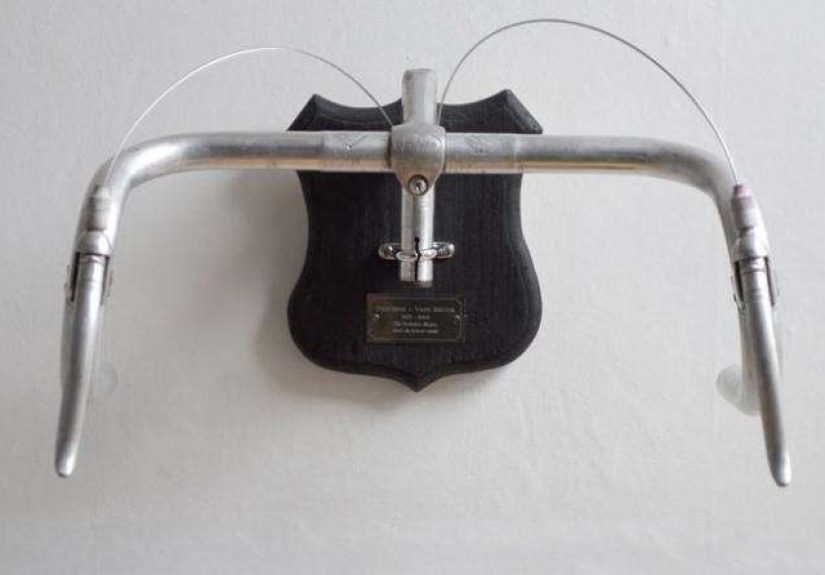
In the cyclist edition, taxidermy is not literal. No one is stuffing a fixie. The phrase borrows the language of preservation and display from traditional taxidermy, then applies it to objects that once had motion, use, and emotional value. Instead of mounting an animal head, the modern cyclist mounts handlebars, forks, saddles, wheels, or a meaningful section of a bicycle on a plaque or architectural support. The result sits somewhere between sculpture, memorabilia, and design joke. It is clever enough for an art opening and sentimental enough for a rider who still remembers every scratch on the top tube.
This idea took shape in a memorable way through designer Regan Appleton’s bicycle taxidermy work, which treated retired handlebars like commemorative wall pieces. That concept helped give the trend a name and a visual language: mounted bars, engraved plaques, rich wood backings, and a dead-serious presentation for something delightfully alive with irony. The humor matters, but the craftsmanship matters more. The appeal comes from treating an everyday object with ceremonial respect.
The best versions do not feel kitschy. They feel intentional. A drop bar on dark wood can read like industrial sculpture. A weathered track handlebar can feel like a portrait of speed. A brushed metal stem paired with a clean oak mount can look more gallery-worthy than half the mass-produced wall decor sold to people who have never once cleaned chain grease off a calf.
Why Cyclists Are Especially Vulnerable to This Trend
Cyclists are prime candidates for emotionally overvaluing objects, and I say that with admiration. Riders assign meaning to components the way other people assign meaning to heirloom watches. A handlebar is not just a handlebar. It is the shape your hands learned over thousands of miles. A saddle is not just a saddle. It is a witness. A scratched brake lever is not damage. It is evidence that you were there.
That is why cyclist taxidermy works so well. It taps into three truths at once. First, bikes are deeply personal. Second, they are visually beautiful. Third, many riders live in places where floor space is a precious natural resource, so displaying a bike on a wall can be both decorative and practical. When design publications and cycling outlets started treating bicycles as objects worthy of display, the leap from storage to shrine became very small indeed.
Modern bike culture has also helped normalize the idea that bicycles belong indoors, and not just hidden in a mud room or banished to the garage next to a half-empty bag of potting soil. In city apartments, studios, and compact homes, wall-mounted bikes are often a storage solution. But once the bike is clean, well-positioned, and surrounded by good lighting, it starts behaving like art. At that point, cyclist taxidermy becomes less weird than inevitable.
When a Bike Becomes Wall Art
The line between storage and display is thinner than a racing tire. Hang a bike horizontally with care, and it becomes composition. Mount it vertically in a tight hallway, and it becomes efficient sculpture. Suspend a retired set of bullhorn bars on a wood plaque with a small engraved date, and suddenly you are not “keeping old parts.” You are curating a life.
This is one reason the trend resonates beyond hardcore riders. Even people who do not know a chainring from a salad fork understand the visual appeal. Bicycles have strong geometry: circles, triangles, symmetry, tension. Their parts are already designed with performance, minimalism, and weight in mind, which means they often look fantastic in interiors that favor modern, industrial, Scandinavian, or workshop-inspired aesthetics.
Design-wise, the smartest displays work because they respect scale and restraint. One mounted component with breathing room looks intentional. Fifteen random parts nailed to a wall looks like your garage lost an argument. Cyclist taxidermy is strongest when it keeps one foot in memory and one foot in editing. Curate the story. Do not dump the parts bin on drywall and call it a concept.
The Emotional Logic Behind the Trend
There is also a genuine emotional usefulness here. Cyclists retire bikes and parts for all kinds of reasons: a frame cracks, a geometry standard changes, a beloved commuter finally gives up, or a rider grows into a new phase of life. Sometimes the bike still works, but it no longer fits the body, the terrain, or the ambition. Getting rid of it can feel weirdly disloyal, especially when the object is tied to accomplishment.
Turning part of that bicycle into a mounted keepsake offers a middle path between hoarding and forgetting. It says, “This mattered, and I am not pretending it did not.” That is powerful. It is also healthier for a home than parking three obsolete bikes in a corner and insisting they are “projects.” We all know at least one rider living in that fiction.
There is another layer, too: cyclist taxidermy lets riders celebrate wear instead of hiding it. Scratches, faded tape residue, old decals, and polished contact points all become part of the story. Perfection is not the point. Evidence is. The mounted object becomes a record of use, and use is what makes cycling beautiful in the first place.
How to Do It Without Making Your Home Look Like a Bike Shop Had a Midlife Crisis
Start with one meaningful piece
The best candidate is usually the part that carries the strongest visual identity or personal memory. Drop bars from your first serious road bike? Great. A saddle from your cross-country tour? Excellent. The stem and bars from a beloved commuter that survived rain, potholes, and your brief “I can bike in loafers” era? Perfect.
Choose a mount that adds dignity
Wood plaques, blackened steel brackets, matte hardware, and simple engraving all help. The mount should elevate the object, not compete with it. Think gallery label, not novelty store. If the backing looks more expensive than the bike part, you may actually be on the right track.
Let patina do some of the work
Do not over-restore. The point is memory, not cosmetic amnesia. Clean grime, yes. Erase history, no. A little honest wear gives the piece credibility and keeps it from looking like decorative cosplay.
Mind the room
Entryways, offices, studios, dens, and home gyms are obvious fits. Bedrooms can work if the display feels quiet and sculptural. Kitchens are riskier unless your whole style is “European messenger with excellent knives.” Even then, proceed carefully.
Why the Trend Feels Especially Modern Right Now
The new taxidermy, cyclists edition, speaks to a broader modern habit: we want our possessions to say something about how we live. Mass-produced decor has trained people to buy generic “personality” by the box. Cyclist taxidermy does the opposite. It takes a real object from a real life and turns it into a visual marker of experience.
It also fits a moment when many people see biking as more than exercise. Riding can be transportation, independence, routine, recovery, identity, climate-conscious mobility, and plain old joy. For short urban trips, bicycles make obvious sense, and for many riders they represent freedom in a way few consumer objects can. A wall-mounted bike part is not just decoration. It is a symbol of an entire way of moving through the world.
That helps explain why this aesthetic lands with both design lovers and practical riders. One group sees line, material, and composition. The other sees miles, weather, and ritual. The object satisfies both readings at once, which is rare. Most decor cannot claim that. Most decor cannot even survive a pothole.
Is It Pretentious? A Little. Is It Also Great? Often, Yes.
Let us be honest: mounted bicycle parts can absolutely drift into self-important territory. There is always a danger that a beautifully framed set of handlebars starts radiating “please ask me about my artisanal chain lube.” But that risk is manageable. The antidote is sincerity. If the object means something, and the display is thoughtful, the result feels human rather than performative.
And even when it is a little ridiculous, that is not necessarily a flaw. Good homes have personality. Good hobbies leave residue. Good stories deserve an object or two. A cyclist who displays a retired bar set on the wall is not claiming nobility. They are making room for memory with a wink. That is a much more appealing energy than fake minimalism and a blank wall pretending it has never loved anything.
Experiences From the Saddle to the Wall
What makes this whole idea stick is the lived experience attached to the parts. Almost every committed cyclist has an object they cannot quite throw away. It might be the bars from the bike they rode to their first real job, still marked where the tape came loose during a summer heat wave. It might be the stem from a track bike that taught them what speed feels like when the world narrows to breath, cadence, and nerve. It might be a dinged-up saddle from a commuter that was never expensive, never glamorous, and somehow still became the most loyal thing they owned.
That emotional residue is hard to explain to non-riders. To them, an old handlebar looks like scrap metal with ambition. To the rider, it is a chapter. It remembers the bridge taken before sunrise, the coffee stop after a cold descent, the humiliating headwind that turned five easy miles into a spiritual test, and the tiny victorious feeling of rolling home with tired legs and a cleaner mind. When a part like that goes onto a wall, it is not being “saved” because it is valuable in a resale sense. It is being saved because it carries proof that a version of you existed and kept going.
There is also something oddly comforting about seeing bike history indoors. A mounted piece can interrupt the flatness of everyday routine. You walk into your office half annoyed about emails, glance up, and there it is: the old drop bar from the bike you rode through a thunderstorm because you were twenty-three and thought waterproofing was a personality trait. Suddenly the day expands. The object does what good memorabilia always does. It collapses time.
For some riders, these displays become conversation starters. Friends come over, point at the plaque, and ask what the story is. Then out comes the tale: the century ride that almost became eighty-two miles and a dramatic phone call, the commuter that got stolen and miraculously returned, the first bike built from mismatched parts that looked terrible and rode like freedom. The mounted object gives those stories a place to live. It keeps cycling from being just another hobby stored in an app, trapped in ride data and forgotten folders.
There are quieter experiences, too. Some people mount a bicycle part after injury, after aging out of racing, or after a big move that changed how they ride. In those cases, cyclist taxidermy can feel less playful and more ceremonial. It honors a season without claiming it is over forever. It says, “This mattered. This still matters. I am making space for what it gave me.” That is why the idea has such staying power. Beneath the visual joke is a very human instinct: we want to keep evidence of the things that shaped us.
And maybe that is the real reason the new taxidermy works so well for cyclists. Riding leaves behind more than fitness or gear opinions or a suspicious number of tiny hex keys in random drawers. It leaves stories in objects. A wall-mounted bike part turns those stories visible. It transforms motion into memory, utility into artifact, and a once-ordinary component into something almost ceremonial. That may sound dramatic for an old set of bars, but cyclists are not famous for under-romanticizing their machines. Frankly, that is part of the fun.
Conclusion
The new taxidermy, cyclists edition, is not really about novelty. It is about re-seeing the bicycle as an object loaded with form, feeling, and cultural meaning. It borrows the presentation language of trophies and specimens, then gives it a fresh purpose: to honor movement, memory, and design. For cyclists, that is a natural fit. Bikes already occupy an unusual place in life. They are tools, companions, status symbols, stress relief, transportation, and small mechanical theaters of ambition. Of course some part of that ends up on the wall.
Done well, cyclist taxidermy is funny, handsome, space-savvy, and unexpectedly moving. It lets riders keep the spirit of a beloved machine without tripping over it in the hallway. More importantly, it gives physical form to the miles that changed them. That is not clutter. That is biography with handlebars.