Table of Contents >> Show >> Hide
- Why Touch Matters More Than We Admit
- The Three Types of Touch Patients Experience
- Clinical Touch: Your Hands Are a Diagnostic Instrument
- Comforting Touch: Small Gestures, Big Meaning
- Consent Isn’t a FormIt’s a Moment-to-Moment Practice
- Boundaries and Chaperones: Protecting Patients (and Clinicians)
- Infection Prevention: Touch Must Be Safe, Not Just Kind
- Touch Therapies: What Helps, What’s Hype, and What’s Still Debated
- What Patients Actually Remember About Touch
- Training the Unspoken Skill: A Simple Framework
- Touch in a Tech-Heavy Era: Bringing the Bedside Back
- Experiences Related to the Unspoken Skill of Touch (Realistic Vignettes)
- Conclusion
In health care, we spend a lot of time talking about the “hard skills”:
interpreting labs, reading imaging, titrating meds, charting like your keyboard owes you money.
And we spend a decent amount of time talking about the “soft skills”: empathy, listening, bedside manner.
But there’s one skill that sits awkwardly in the middlerarely taught, often assumed, and deeply felt by patients:
touch.
Touch is the original medical technology. It predates the stethoscope, the MRI, and that one computer
that always freezes right when you try to discharge someone. The human hand can assess, reassure, guide,
andwhen done thoughtfullyhelp a patient feel safe in a place that can be loud, cold, and scary.
The tricky part is that touch is powerful precisely because it’s quiet. It says things we don’t always put in words:
“I’m paying attention.” “You’re not alone.” “I’m here, and I’m careful with you.” Or, if done poorly:
“You’re a task.” “You don’t get a choice.” “Hurry up.”
Why Touch Matters More Than We Admit
Humans are wired for touch. In everyday life, a quick hug, a handshake, or a hand on the shoulder can communicate
comfort faster than a paragraph of well-intended words. In clinical settings, research on “touch interventions”
(from supportive touch to structured bodywork) suggests that touch can be associated with improvements in
anxiety, pain, and emotional distress for some peoplethough results vary by context and the kind of touch involved.
That “vary by context” is important. A reassuring hand during a painful procedure is not the same as a full
therapeutic massage. And a skilled abdominal exam is not the same as “energy work.” Touch isn’t one thing.
It’s a family of actions with different goals, different evidence, and different risks.
The Three Types of Touch Patients Experience
1) Clinical touch: assessment and care
This is touch with a job description: palpation, percussion, positioning, wound care, checking pulses, placing leads,
evaluating swelling, assessing tenderness, guiding a patient safely from bed to chair. Clinical touch is about information
and functiondone respectfully, it can be both efficient and humane.
2) Communicative touch: “I see you”
Communicative touch is nonverbal care: a steadying hand, a brief squeeze, helping someone sit up without rushing,
holding a hand while they hear difficult news. It’s not required for every patient, but for many it’s a signal of presence.
Used wisely, it can make clinical care feel less like a conveyor belt and more like a relationship.
3) Complementary touch therapies: adjunct comfort
These include modalities like massage therapy and certain hospital-based “touch therapy” programs (often offered as supportive
services). Evidence for massage is mixed but suggests it may help some types of painoften short-termand can support relaxation.
“Therapeutic Touch” as a specific biofield/energy modality is a separate category with more debated evidence and varying study quality.
Clinical Touch: Your Hands Are a Diagnostic Instrument
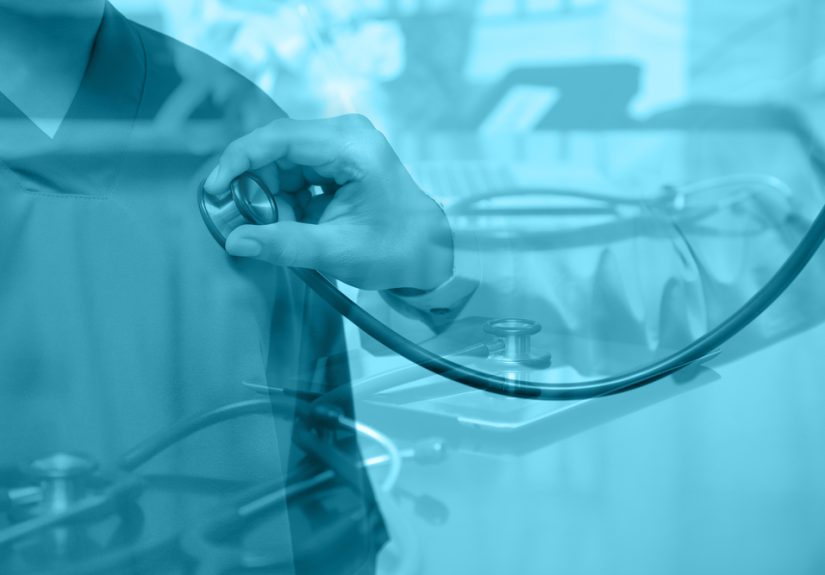
A good physical exam is more than traditionit can provide real information, quickly. Percussion and palpation can help identify
patterns (like fluid, enlargement, or tenderness) that guide next steps. Skilled hands can also make care safer:
identifying a new area of warmth and redness, noticing edema that wasn’t there yesterday, or recognizing pain that doesn’t match
the story and needs urgent attention.
But the “unspoken skill” isn’t just knowing where to press. It’s knowing how to do it:
the pressure, pacing, and professionalism that keep the exam clinically useful without making the patient feel like a mannequin.
- Warmth and warning: Cold hands and surprise contact are the fastest way to turn a normal exam into a tense one.
- Draping and dignity: Expose only what you need, for as long as you need, and narrate what happens next.
- Check-in points: “Is this pressure okay?” takes two seconds and buys a lot of trust.
Comforting Touch: Small Gestures, Big Meaning
Professional touch can communicate caring and empathyespecially in nursing, where proximity is part of the job.
Sometimes it’s as simple as holding a hand during an IV start, or placing a steady palm on a forearm to help
someone slow their breathing.
The key is that comforting touch isn’t about the clinician’s feelings. It’s about the patient’s experience.
It should never be automatic, never performative, and never used to “override” a patient’s discomfort.
When comforting touch helps
- During painful or anxiety-provoking moments (procedures, first mobilization after surgery, difficult conversations)
- When a patient signals openness (reaching out, asking for a hand, leaning in rather than away)
- When words are insufficient (grief, shock, fear) and the patient welcomes presence
When it can backfire
- If a patient has a trauma history (known or unknown) and touch feels unsafe
- If cultural or personal norms make touch uncomfortable
- If the touch is ambiguous, prolonged, or not clearly connected to care
Consent Isn’t a FormIt’s a Moment-to-Moment Practice
In trauma-informed care, clinicians aim to create safety, trust, collaboration, and choice. That doesn’t just apply to therapy visits;
it applies to physical exams, injections, and routine care. For many patients, health care involves vulnerability: gowns, exposed skin,
unfamiliar rooms, and people touching their bodies. Consent is what turns that vulnerability into partnership.
Think of consent like a running conversation:
Ask → Explain → Do → Check In. Repeat as needed.
This approach respects autonomy without slowing care to a crawl.
Practical permission phrases that don’t sound robotic
- “I’m going to listen to your lungs nowokay if I lift your shirt a bit?”
- “You’ll feel pressure here. Tell me if you want me to stop.”
- “Would you prefer I explain each step as I go, or give you the overview first?”
- “Do you want a support person or chaperone in the room?”
Boundaries and Chaperones: Protecting Patients (and Clinicians)
Some touch is inherently sensitive: breast, genital, and rectal exams; examinations involving undressing; care involving intimate areas.
In these settings, clarity and safeguards matter. A chaperone policycommunicated clearly, offered respectfully, and honored when requested
can increase patient comfort and support professionalism.
If you’ve ever heard, “I didn’t know that was going to happen,” you’ve met the real villain here:
surprise. Surprise is what makes routine care feel violating. The fix is not complicated:
explain what you’re doing, why you’re doing it, who will be present, and what choices the patient has.
Making sensitive exams more humane
- Before: Explain the purpose, steps, and what the patient might feel.
- During: Narrate each transition (“Now I’m going to…”), go slowly, and pause when asked.
- After: Offer tissues, time, and the option to ask questions fully dressed.
Infection Prevention: Touch Must Be Safe, Not Just Kind
Touch is also a pathway for germsno way around it. That’s why infection control is part of touch literacy.
The message isn’t “touch less.” It’s “touch smarter.” Standard Precautions exist because patients deserve care that is both
compassionate and safe: hand hygiene, appropriate gloves and PPE when exposure is anticipated, and clean technique.
Done well, infection prevention doesn’t make care colder. It can make it more reassuring:
“I’m washing my hands so we keep you safe” is both good practice and good communication.
Touch Therapies: What Helps, What’s Hype, and What’s Still Debated
Hospitals and clinics increasingly offer supportive services that involve touchespecially for comfort, relaxation, and symptom relief.
The evidence differs depending on the modality.
Massage therapy
Research summaries suggest massage may help some types of pain (like low-back pain) and can support relaxation,
though the overall strength of evidence is often described as limited or variable, with benefits that may be short-term.
In recent evidence reviews, massage has shown beneficial associations with pain outcomes in certain contexts.
Translation: it can be a helpful tool, especially as part of a broader plan, but it’s not magic and not a replacement for medical care.
“Therapeutic Touch” and other biofield/energy modalities
Therapeutic Touch (as a named modality) is often described as working with a “human energy field,” sometimes without direct skin contact.
Reviews of the research report mixed results and variable study quality across conditions and settings. Some patients report relaxation
and reduced distress; the scientific community debates mechanisms and the reliability of findings.
The most responsible stance in patient-facing care is simple: if used at all, it should be adjunctive,
transparent about uncertainty, and never positioned as a substitute for evidence-based treatment.
What Patients Actually Remember About Touch
Long after discharge, many patients forget their potassium level (understandably) but remember how they were treated.
Patient experience measures emphasize courtesy, respect, listening, and clear explanationsbecause those are the building blocks
of trust. Touch can support those goals when it aligns with what patients want and when it’s paired with good communication.
Touch doesn’t “fix” a rushed encounter. But in a respectful encounter, it can be the amplifier:
the thing that makes the patient feel you meant what you said.
Training the Unspoken Skill: A Simple Framework
Touch skill can be taught. Not as “be more touchy,” but as professional techniquelike learning to listen to heart sounds.
Here’s a practical framework clinicians can practice and teams can coach:
The CARE steps
- Context: What is this touch forassessment, safety, comfort, or therapy?
- Ask: Get permission in plain language. Offer a no-pressure opt-out when possible.
- Respect: Culture, trauma history, modesty, pain, and personal preference.
- Evaluate: Watch body language. Check in. Adjust. Stop if needed.
Micro-skills that make a big difference
- Narrate transitions: “I’m moving from your shoulder to your chest now.”
- Use neutral zones first: Forearm/hand before shoulders/back when appropriate, especially with anxious patients.
- Keep touch purposeful: Clear beginning, middle, and end. No lingering.
- Match energy: Calm hands, calm voice. If you’re rushed, your hands will “sound” rushed.
- Close the loop: “All donethank you. You did great.” (Adults deserve this too.)
Touch in a Tech-Heavy Era: Bringing the Bedside Back
Modern care is full of screens, alerts, and documentation demands. Telehealth adds another layer: patients may feel
“seen” digitally but not physically cared for. That makes the moments of in-person touchexam, procedure, help with mobility
even more meaningful.
Touch is also a counterbalance to the impersonality patients sometimes feel in busy systems. A clinician who introduces themselves,
explains what they’re doing, and uses respectful touch communicates: “You’re a person, not a problem list.”
That doesn’t require extra time. It requires intention.
Experiences Related to the Unspoken Skill of Touch (Realistic Vignettes)
The best way to understand touch in health care is to picture the moments where it changes the entire temperature of a room.
Below are composite-style vignettesscenes that reflect the kinds of experiences clinicians and patients commonly describe.
They’re not meant to be sentimental. They’re meant to be practical.
1) The “first touch” in the emergency department
A patient arrives anxious, breathing fast, eyes scanning for exits. The clinician doesn’t start with, “Rate your pain from 0 to 10”
like it’s a game show. They start with a calm introduction and a question:
“Is it okay if I check your pulse on your wrist?” The patient nods. The clinician’s hand is steadyno sudden grab.
That small, consent-based touch becomes the first signal of safety.
The clinical outcome mattersvitals, exam, tests. But the relational outcome matters too:
the patient stops holding their breath like they’re bracing for impact. Touch didn’t diagnose the problem,
but it helped create the conditions for cooperation, accurate assessment, and trust.
2) Oncology: when words run out
A patient finishes a difficult conversation about next steps. The room goes quiet in that way that feels heavy.
The nurse asks, “Would you like me to sit with you a moment?” The patient says yes, then reaches out.
The nurse holds their handbriefly, clearly, without turning it into a performance.
Nothing about the prognosis changes. But the patient’s nervous system does what nervous systems do when they feel supported:
their shoulders drop a fraction, their jaw unclenches, their breathing slows. The touch is not “treatment” in the narrow sense.
It’s care in the widest sensethe kind patients talk about years later as proof they were not abandoned in a hard moment.
3) Pediatrics: the art of “safe touch”
A child needs an exam and is not impressed with adult explanations. The clinician demonstrates on a teddy bear first.
“Teddy gets a belly press. Now you. Is that okay?” The child giggles, then agrees.
The parent watches the whole interaction and relaxes toobecause the clinician just showed they value consent
even when the patient is small.
The lesson carries forward: today it’s a belly exam; in the future it’s a more sensitive visit.
Repeated experiences of respectful touch teach kids that their bodies are theirsand that health care can be collaborative,
not something done to them.
4) ICU: touch when the patient can’t speak
In the ICU, patients may be sedated, intubated, or too weak to communicate. Touch becomes both clinical and human:
repositioning to prevent pressure injuries, holding a hand while explaining what you’re doing even if they can’t answer,
using gentle, predictable movements rather than hurried flips like you’re turning a pancake.
Families notice. They watch the hands. They can’t evaluate ventilator settings, but they can see whether touch is careful
or careless. In these rooms, touch is part of the unit’s culture: it signals whether the patient is treated as a body
or as a person who still deserves dignity.
5) After COVID: rebuilding trust through touch
Many patients associate hospitals with isolationmasks, gloves, visitor limits, distance. Some still do.
A clinician who says, “I’m going to wash my hands, then I’ll examine your shouldertell me if you want me to stop,”
is doing more than good technique. They’re rebuilding a bridge between safety and closeness.
In a world where care can feel rushed and automated, deliberate touchpaired with consent and clear explanationcan restore
what patients often fear they’ve lost: the sense that someone is fully present. Not every patient wants that kind of touch.
The skill is knowing how to offer it in a way that protects choice. The unspoken skill isn’t touching more.
It’s touching better.
Conclusion
Touch in health care is not a sentimental extra. It’s a practical, teachable skill that shapes diagnosis, safety, trust,
and patient experience. At its best, touch is purposeful, consent-based, culturally aware, trauma-informed, and aligned with
infection prevention. It can comfort without confusing, examine without violating, and support without overstepping.
If health care is the work of helping people through vulnerable moments, then touch is one of the most direct ways we communicate:
“You’re safe with me.” The unspoken skill is learning how to make that message truefor every patient, every time.