Table of Contents >> Show >> Hide
- How to Choose Home Gym Equipment Without Wasting Money
- The 25 Best Home Gym Equipment Picks
- Adjustable Dumbbells
- Resistance Bands
- Exercise Mat
- Adjustable Weight Bench
- Kettlebell
- Jump Rope
- Pull-Up Bar
- Suspension Trainer
- Power Rack or Squat Rack
- Olympic Barbell
- Weight Plates
- Functional Trainer or Cable Machine
- Rowing Machine
- Treadmill
- Walking Pad
- Indoor Exercise Bike
- Medicine Ball or Slam Ball
- Stability Ball
- Plyo Box or Step Platform
- Ab Wheel
- Dip Bars or Parallettes
- Foam Roller
- Massage Ball or Recovery Ball
- Weighted Vest
- Smart Home Gym System or Fitness Mirror
- What to Buy First if You’re Starting from Scratch
- Common Home Gym Buying Mistakes
- Experience: What Building a Home Gym Actually Feels Like
- Final Rep
Building a home gym used to sound like a millionaire hobby. You know, the kind of thing that lives next to an indoor sauna, a cold plunge, and a fridge full of suspiciously green smoothies. Not anymore. A smart home gym can be as simple as a mat, a pair of adjustable dumbbells, and enough floor space to do a lunge without kicking a lamp into another dimension.
The real trick is not buying more equipment. It is buying the right equipment. Adults do best with a mix of cardio and strength work, and the baseline public-health target is at least 150 minutes of moderate aerobic activity a week plus muscle-strengthening work on at least two days.[1] Better yet, you do not need a giant commercial setup to get results. Current sports-medicine guidance notes that bodyweight training, resistance bands, and other home-based routines can be highly effective for strength, muscle growth, and physical function.[2]
So, instead of turning your guest room into a warehouse of regret, let’s build smarter. Below is a big, practical list of the 25 best home gym equipment picks for strength, cardio, mobility, recovery, and small-space training. Some are essential. Some are “nice if your budget allows.” And some are the kind of purchase that makes you feel like the CEO of leg day.
How to Choose Home Gym Equipment Without Wasting Money
Before you buy anything, ask three questions: What kind of training do you actually enjoy? How much space do you have? And will you use this piece more than once a week after the first burst of motivation wears off? Across current expert roundups, the most consistently recommended starting points are versatile items like adjustable dumbbells, resistance bands, benches, mats, compact cardio gear, and space-saving strength tools.[3][4][5][6][7][8][9]
Start with movement patterns, not shiny machines
A good home gym should help you squat, hinge, push, pull, carry, brace, and move your heart rate up on command. That is why compact, multi-use tools often beat giant single-purpose machines for beginners and intermediate exercisers.
Think in layers
Layer one is your foundation: a mat, dumbbells, bands, and maybe a bench. Layer two is progression: kettlebells, a pull-up bar, a barbell setup, or a cardio machine. Layer three is luxury: smart mirrors, premium rowers, and full cable stations. If your budget is tight, layer one can still deliver a seriously effective setup.[6][10]
The 25 Best Home Gym Equipment Picks
Adjustable Dumbbells
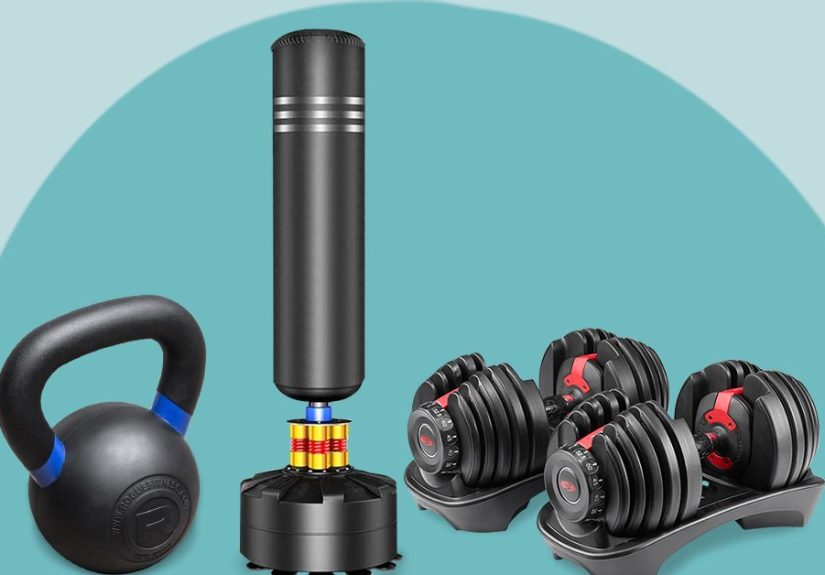
If there is one MVP of the home gym, this is it. Adjustable dumbbells save space, support progressive overload, and work for presses, rows, goblet squats, lunges, Romanian deadlifts, curls, and carries. Multiple expert-tested lists put them near the top because they replace a whole rack of weights without eating half your room.[3][6][7][9]
Resistance Bands
Resistance bands are cheap, portable, and way more useful than their innocent rubber appearance suggests. They are great for warm-ups, rows, presses, glute work, rehab-style moves, and travel workouts. They also let you train at different angles without needing a huge machine, which is why exercise pros still keep them in rotation.[2][10]
Exercise Mat
A quality mat turns hard floors from “absolutely not” into “okay, maybe I’ll do core today.” It helps with stretching, mobility, Pilates, yoga, bodyweight sessions, and cooldowns. This is not the flashy purchase, but it is one of the most used.
Adjustable Weight Bench
An adjustable bench unlocks incline presses, seated shoulder work, step-ups, hip thrusts, chest-supported rows, and countless dumbbell movements. If you want strength variety without a commercial gym footprint, a bench is a brilliant upgrade.[3][6]
Kettlebell
Kettlebells are terrific for swings, cleans, carries, goblet squats, and full-body conditioning. One kettlebell can humble your grip, challenge your core, and remind your lungs that they are part of the team too.
Jump Rope
Cheap, tiny, and brutally effective, a jump rope is one of the best cardio tools for small spaces. It is ideal for intervals, quick warm-ups, and adding athletic flavor to a routine without buying a giant machine.
Pull-Up Bar
A doorway or wall-mounted pull-up bar gives you one of the best upper-body movements around. Pull-ups, chin-ups, hanging knee raises, and dead hangs all become possible. It is a compact way to add serious pulling strength to your setup.
Suspension Trainer
Suspension straps are wildly underrated. They make push-ups harder, rows easier to scale, lunges more stable, and core work much more interesting. They are perfect for people who want versatility without dedicating much floor space.
Power Rack or Squat Rack
If strength training is your main goal, a rack is the home gym throne. It supports squats, bench work, rack pulls, barbell presses, safeties, and attachments. Many current “best home gym” lists still treat a rack as the backbone of a serious setup.[3][4][5]
Olympic Barbell
A barbell is hard to beat for heavy compound lifts and long-term progression. Deadlifts, squats, overhead presses, and rows all get better when load becomes easier to fine-tune. This is the piece that says, “Yes, I do schedule my week around leg day.”
Weight Plates
Barbells do not go far without plates. Whether bumper plates for quieter training or iron plates for classic lifting, this is where your strength setup becomes truly scalable. Buy enough to grow into, not just enough to survive your first month.
Functional Trainer or Cable Machine
If you love smooth resistance and lots of exercise variety, a cable system is one of the smartest premium buys. Presses, pulldowns, rows, flyes, face pulls, curls, triceps work, and rotational moves all live here. No wonder cable-equipped home gyms keep showing up in top expert-tested picks.[4][5]
Rowing Machine
A rower delivers low-impact, full-body cardio in one shot. Legs, back, arms, and lungs all get invited to the meeting. It is especially appealing if you want cardio that feels more athletic than staring at a treadmill display while bargaining with yourself.
Treadmill
Treadmills remain one of the most practical home cardio machines because they make walking and running incredibly accessible. If weather, time, or neighborhood conditions derail outdoor exercise, a treadmill removes excuses in one expensive but effective swoop.[8][9]
Walking Pad
For small apartments and home offices, a walking pad is the stealth option. It is less intimidating than a full treadmill, usually easier to store, and useful for low-intensity movement during work breaks or casual step goals.[7][9]
Indoor Exercise Bike
Stationary bikes are a favorite for low-impact cardio. They are easier on joints than running and work for steady rides, intervals, and guided classes. If you like structured cardio and don’t want repeated impact, this is a strong pick.
Medicine Ball or Slam Ball
These are fantastic for power, conditioning, rotational work, wall throws, and old-fashioned stress management. Few things say “productive workout” like slamming a ball into the floor on purpose.
Stability Ball
A stability ball adds variety to core training, mobility work, hamstring curls, and some beginner-friendly strength movements. It is not essential for everyone, but it is useful, inexpensive, and surprisingly versatile.[6][10]
Plyo Box or Step Platform
This one is excellent for box squats, step-ups, split squats, elevated push-ups, jumps, and conditioning circuits. It adds height, which adds exercise options, which adds fewer excuses.
Ab Wheel
Small? Yes. Easy? Not even slightly. The ab wheel is one of the simplest tools for serious core training. It punishes sloppy bracing and rewards patience, which is rude but effective.
Dip Bars or Parallettes
These are great for dips, L-sits, push-up variations, mountain climbers, and gymnastic-style strength work. If you want bodyweight training to feel more advanced without buying a giant machine, parallettes are a smart add-on.
Foam Roller
Mobility and recovery deserve shelf space too. A foam roller can help you warm up, ease stiffness, and add soft-tissue work after tough sessions. It keeps showing up in expert home-gym essentials for good reason.[6][11][12]
Massage Ball or Recovery Ball
Think of this as the smaller, meaner cousin of the foam roller. It is excellent for feet, glutes, shoulders, and those tiny annoying knots that appear after a tough upper-body session.
Weighted Vest
A weighted vest adds intensity to walks, step-ups, squats, push-ups, and bodyweight circuits without needing you to grip a weight. It is especially helpful if you like functional training or want to make simple movements hit harder.
Smart Home Gym System or Fitness Mirror
These tech-heavy systems combine coaching, guided programming, and compact resistance in one polished package. They are expensive, but current testing roundups keep highlighting them for people who want structure, feedback, and a premium small-space experience.[4][5]
What to Buy First if You’re Starting from Scratch
If you are brand new, do not sprint straight into a full rack, cable machine, and cardio throne room. Start with a mat, adjustable dumbbells, resistance bands, and either a bench or a suspension trainer. That setup covers strength, mobility, and conditioning for a huge range of workouts. From there, add a cardio machine if you know you will use it consistently, then expand into bigger strength equipment as your training style becomes more specific.[6][7][10]
Common Home Gym Buying Mistakes
Buying for fantasy you
Fantasy you wakes up at 5:00 a.m., loves burpees, and does hill sprints for fun. Real you may prefer brisk walking, dumbbell circuits, and playlists with dramatic choruses. Buy for real you.
Ignoring storage
The best equipment is the equipment you can leave accessible or store easily. Foldable machines, adjustable weights, and compact tools matter a lot in apartments and shared spaces.[7][9]
Skipping recovery tools
Strength and cardio get all the glamour, but a foam roller, mat, and mobility ball can help you stay consistent. Consistency beats heroics every time.
Experience: What Building a Home Gym Actually Feels Like
Here is the funny thing about home gym equipment: the first purchase feels thrilling, the second feels strategic, and the seventh somehow turns into a personality trait. At first, you tell yourself you only need a pair of dumbbells. Then you discover how useful a bench would be. Then you realize bands would make warm-ups easier. Next thing you know, you are comparing rack depths like you are buying real estate.
In practice, the best home gym setups are usually not the fanciest ones. They are the setups that remove friction. The mat is already on the floor. The dumbbells are easy to grab. The bike is close enough that a 20-minute ride feels easier than making an excuse. That convenience changes everything. A home gym works best when it makes the healthy choice the path of least resistance.
Another real-world lesson: versatility beats novelty. A big shiny machine can be exciting for two weeks, but adjustable dumbbells, a good bench, and resistance bands keep earning their spot month after month because they adapt to your progress. You can go heavy, light, slow, fast, strength-focused, rehab-focused, or “I only have 18 minutes and a stubborn attitude” focused. That flexibility is gold.
There is also a confidence factor people do not talk about enough. Training at home can feel less intimidating than stepping into a crowded gym where every machine looks like it was designed by a robot with trust issues. At home, you can learn movements, repeat basics, mess up a set, rest too long, or dance terribly between rounds without anyone watching. That freedom can make it easier to build consistency, especially for beginners.
Of course, home gyms are not magical. You still have to use the equipment. A treadmill is not a spell. A kettlebell does not judge you into better habits. And the foam roller will never become emotionally supportive, no matter how often you lie on it and rethink your life choices. But the right tools can make your routine more realistic, more enjoyable, and a whole lot easier to maintain.
The most successful home gym owners tend to do one thing well: they build around their lifestyle. Parents may prioritize fast dumbbell circuits and walking pads. Lifters may center the room around a rack and barbell. Apartment dwellers may go all-in on bands, a bench, adjustable weights, and a compact cardio machine. None of these are the “correct” answer. The correct answer is the setup that fits your body, your schedule, your space, and your budget.
So if you are building your own setup, do not chase perfection. Chase usefulness. Buy the items that make you want to move more often, recover better, and train with less hassle. That is the true ultimate flex: not owning the most equipment, but owning the right equipment and actually using it.
Final Rep
The best home gym equipment is not about turning your home into a commercial fitness center. It is about creating a space that helps you train consistently, safely, and enjoyably. Start with versatile essentials, add equipment that matches your goals, and leave room for progress. Whether your setup is a yoga mat in the corner of your bedroom or a full power rack in the garage, the best home gym is the one that gets used.