Table of Contents >> Show >> Hide
- Why Upgrade From a Single Sink Vanity to a Double Sink?
- Is Your Bathroom Large Enough for a Double Sink Vanity?
- Plumbing: The Part That Decides the Budget
- Choosing the Right Double Sink Vanity
- Countertop and Sink Options
- Lighting and Mirrors for a Double Sink Vanity
- Storage: The Hidden Superpower of a Double Vanity
- How Much Does It Cost to Convert a Single Sink Vanity to a Double Sink?
- Design Ideas for an Updated Bathroom With a Double Sink Vanity
- Common Mistakes to Avoid
- Step-by-Step Planning Checklist
- Real-Life Experience: What Homeowners Learn During a Single-to-Double Vanity Upgrade
- Conclusion
Turning a single sink vanity into a double sink vanity sounds like a small bathroom update until you realize the sink has friends: plumbing, countertop holes, cabinet depth, mirror width, lighting, storage, wall clearance, and that mysterious little pipe that always seems personally offended when touched. Still, when planned well, this upgrade can completely change the way a bathroom works. For couples, families, roommates, and anyone tired of waiting while someone else flosses like they are preparing for dental Olympics, a double sink vanity can make mornings smoother and the room feel more polished.
An updated bathroom with a single sink vanity converted to a double sink is not just about adding a second faucet. It is about improving flow, increasing storage, creating visual balance, and making better use of wall space. The project can be simple when the vanity wall is wide enough and the existing plumbing is accessible. It can also become more involved when drains need to be moved, supply lines need rerouting, electrical outlets must shift, or the old flooring stops under the former cabinet like it gave up halfway through the job.
This guide breaks down what homeowners should know before switching from a single vanity to a double sink vanity, including ideal dimensions, plumbing considerations, cost factors, design ideas, common mistakes, and practical experience-based advice for getting the finished bathroom to look intentional rather than “weekend project that developed a personality.”
Why Upgrade From a Single Sink Vanity to a Double Sink?
The biggest reason is convenience. A double sink bathroom vanity allows two people to use the same bathroom at once without negotiating territory over one basin. In a primary bathroom, that can mean one person can shave while the other does skincare, brushes teeth, or conducts a dramatic inspection of their eyebrows under bright lighting. In a kids’ bathroom, it can reduce morning traffic jams and the classic sibling argument over whose toothpaste blob is whose.
A double vanity can also make the bathroom feel more upscale. Symmetry is powerful in design. Two sinks, two mirrors or one large mirror, two faucets, and balanced lighting can create a custom look even when the cabinet is a ready-made model. The upgrade may also increase storage because double vanities are typically wider than single vanities and often include more drawers, center cabinets, or built-in organizers.
However, bigger is not automatically better. A double sink vanity needs enough width, clearance, and plumbing support. If the bathroom is narrow, forcing in two sinks can create a cramped layout, reduce counter space, and make the room feel like an airport restroom with nicer towels. The goal is not simply “more sink.” The goal is a better bathroom.
Is Your Bathroom Large Enough for a Double Sink Vanity?
Before shopping for a new vanity, measure the bathroom carefully. Standard single sink vanities often range from about 24 to 48 inches wide. Double sink vanities commonly start around 48 inches, but most comfortable layouts are closer to 60, 66, or 72 inches wide. A 48-inch double vanity can work in some cases, but it usually leaves limited counter space between the basins. For daily use, a 60-inch vanity is often the practical starting point.
Key Measurements to Check
- Wall width: Measure the full available wall from side wall to side wall, door trim, shower glass, or any tall cabinet.
- Depth: Most bathroom vanities are about 17 to 24 inches deep. Make sure the cabinet will not block movement, doors, drawers, or the shower entry.
- Front clearance: Plan for comfortable open space in front of the vanity. A roomy bathroom feels better than one where you have to turn sideways to open a drawer.
- Sink spacing: Two sink centerlines should generally be spaced far enough apart for comfortable use. Crowding two basins together defeats the purpose.
- Side clearance: The sink should not be jammed against a wall. Leave enough room so elbows, toothbrushes, and soap dispensers can coexist peacefully.
A helpful rule of thumb is this: if your current single sink vanity is 36 inches wide, replacing it with a double sink is probably not realistic without expanding the cabinet footprint. If it is 48 inches wide, a compact double may be possible, but counter space will be tight. If you have 60 inches or more, you are in much better territory.
Plumbing: The Part That Decides the Budget
The cabinet is the pretty part. Plumbing is the bossy part. Converting one sink to two usually requires adding a second faucet, second drain connection, and hot and cold water supply lines for the additional basin. Depending on the wall, the existing drain location, and local plumbing code, the plumber may be able to tie both sinks into one drain line, or they may need to modify the drain and venting system.
If the new double vanity has sinks close to the original plumbing location, the project is easier. If the sinks are widely spaced, wall plumbing may need to be opened and rerouted. That means drywall repair, possible tile repair, and more labor. In other words, the second sink may be small, but it can invite a whole renovation committee.
Common Plumbing Tasks in a Single-to-Double Conversion
- Extending hot and cold water lines to serve the second faucet
- Adding or adjusting shutoff valves
- Connecting two P-traps or a shared drain configuration where allowed
- Confirming proper venting so drains do not gurgle, smell, or drain slowly
- Cutting the cabinet back or drawers around pipes if needed
- Testing for leaks before closing walls or loading the vanity with storage baskets
For most homeowners, hiring a licensed plumber is the safer choice. Even confident DIYers should be honest about their skills. A faucet install is one thing; modifying drain and vent lines is another. Water damage has a cruel sense of humor and often appears after the project looks finished.
Choosing the Right Double Sink Vanity
The best double vanity is the one that fits the room, supports daily routines, and works with the existing plumbing as much as possible. Style matters, but function should lead the decision. A beautiful vanity that blocks the bathroom door is not a design statement. It is a daily obstacle course.
Freestanding Double Vanity
A freestanding vanity is the most common choice. It sits on the floor, offers strong storage, and comes in many sizes and finishes. This option works well for traditional, transitional, farmhouse, and modern bathrooms. It can also hide plumbing more easily than a floating vanity.
Floating Double Vanity
A floating vanity mounts to the wall and leaves open space beneath the cabinet. It creates a clean, modern look and can make a bathroom feel larger. However, it needs strong wall support and careful plumbing placement. If the wall is not properly reinforced, the vanity may not be suitable without extra framing work.
Custom Double Vanity
A custom vanity is ideal when the bathroom has an unusual layout, a narrow depth, off-center plumbing, or specific storage needs. It costs more than a ready-made option, but it can solve problems that standard cabinets cannot. Custom design also allows homeowners to choose drawer layouts, tower storage, countertop overhang, and exact sink placement.
Countertop and Sink Options
The countertop does a lot of work in a double sink bathroom. It handles water, soap, cosmetics, toothpaste, dropped hair tools, and the occasional coffee mug that absolutely should not be in the bathroom but somehow is. Popular vanity countertop materials include quartz, granite, marble, cultured marble, solid surface, laminate, and porcelain tops.
Quartz is a favorite for many updated bathrooms because it is durable, nonporous, and available in many colors. Marble is elegant but needs more maintenance and can stain or etch. Cultured marble and integrated vanity tops can be budget-friendly and easy to clean. Laminate is affordable, but it needs careful protection from moisture at seams and edges.
Undermount vs. Vessel vs. Integrated Sinks
Undermount sinks are practical and easy to wipe clean because there is no raised rim. Vessel sinks sit on top of the counter and make a bold style statement, but they can reduce usable counter space and require the right faucet height. Integrated sinks are molded into the countertop, creating a seamless surface that is simple to maintain.
For a busy shared bathroom, undermount or integrated sinks are usually the most practical. Vessel sinks can look stunning in a powder room or guest bath, but in a high-traffic primary bathroom, convenience often wins. Nobody wants to clean around two decorative bowls every morning before coffee.
Lighting and Mirrors for a Double Sink Vanity
A double sink vanity deserves thoughtful lighting. One overhead fixture is rarely enough because it can create shadows on the face. Better options include two or three wall sconces, a long vanity light above the mirror, or a combination of ceiling and mirror-level lighting.
For mirrors, homeowners usually choose either one large mirror spanning both sinks or two separate mirrors centered over each basin. One large mirror can make the bathroom feel bigger and brighter. Two mirrors create a more tailored look and allow each sink area to feel like its own station. Both approaches can work beautifully. The right choice depends on wall width, lighting placement, and the style of the room.
Storage: The Hidden Superpower of a Double Vanity
Storage is one of the best reasons to upgrade from a single sink vanity to a double sink. A larger cabinet can include drawers for daily items, deep storage for towels, and divided spaces for two users. The key is choosing drawers and cabinets that work around plumbing.
Many double vanities lose some interior space because each sink needs drain pipes. To avoid disappointment, look closely at the interior layout before buying. Full-width drawers may not work under sinks unless they are U-shaped or designed around plumbing. Center drawers between the sinks are extremely useful for toothpaste, razors, cosmetics, and small grooming tools.
Smart Storage Features to Consider
- Drawer dividers for cosmetics and grooming tools
- Pull-out shelves for cleaning supplies
- Built-in electrical outlets for hair dryers or electric toothbrushes
- Tall side cabinets for towels and toiletries
- Open lower shelves for baskets in a spa-style bathroom
A double vanity can reduce clutter, but only if storage is planned. Otherwise, the bathroom simply gains a second sink and twice the number of abandoned toothpaste caps.
How Much Does It Cost to Convert a Single Sink Vanity to a Double Sink?
The cost depends on the vanity size, material quality, countertop selection, plumbing complexity, labor rates, and how much repair work is needed after the old vanity is removed. A basic replacement with a prefabricated double vanity and simple plumbing modifications may cost far less than a custom vanity with stone counters, wall-mounted faucets, new lighting, and tile repair.
As a broad planning range, homeowners may spend several hundred dollars for a simple vanity installation and several thousand dollars when plumbing, countertops, mirrors, lighting, wall repair, and finish upgrades are included. The biggest budget jump usually happens when plumbing must be moved inside the wall or when the project triggers related updates, such as replacing flooring, repainting, moving outlets, or changing backsplash tile.
Budget Items to Include
- New double sink vanity cabinet
- Countertop and sinks
- Two faucets and drain assemblies
- Plumbing labor and materials
- Old vanity removal and disposal
- Mirror or mirrors
- Lighting and electrical work if needed
- Backsplash, paint, trim, flooring, and drywall repair
One smart budgeting trick is to price the visible items first, then add a contingency for the invisible items. Bathrooms love surprises. Old shutoff valves may be corroded. The wall behind the vanity may need patching. The previous installer may have cut flooring around the cabinet. A contingency fund keeps a normal surprise from becoming a full-blown renovation melodrama.
Design Ideas for an Updated Bathroom With a Double Sink Vanity
A single-to-double vanity upgrade is a great opportunity to refresh the entire bathroom style. Even without moving the shower or toilet, the vanity wall can become the focal point.
Modern Warm Wood Vanity
A warm wood double vanity with a white quartz countertop creates a clean but inviting look. Pair it with matte black faucets, simple mirrors, and soft lighting for a bathroom that feels current without chasing trends too hard.
Classic White Vanity With Polished Fixtures
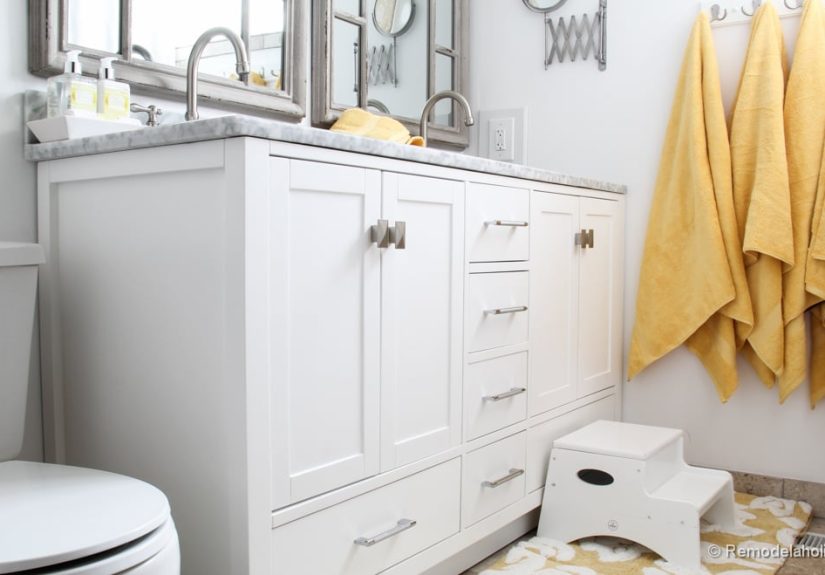
A white shaker-style double vanity works well in traditional and transitional bathrooms. Add chrome or polished nickel faucets, marble-look quartz, and framed mirrors for a timeless design. This is a safe choice for resale because it feels bright, familiar, and easy to personalize.
Floating Vanity With Wall-Mounted Faucets
For a sleek updated bathroom, a floating vanity with wall-mounted faucets can look high-end and architectural. This design requires careful planning because faucet valves must be placed inside the wall at the correct height. It is not the cheapest route, but the finished result can be dramatic.
Furniture-Style Vanity
A furniture-style vanity with legs, decorative hardware, or inset drawers can add character. This works especially well in older homes where a plain cabinet may feel too generic. Just make sure the design still offers enough storage for daily life, not just enough charm for a photo.
Common Mistakes to Avoid
The most common mistake is choosing a vanity before measuring carefully. A cabinet that looks perfect online may be too deep, too wide, or poorly aligned with existing plumbing. Always measure the room, the door swing, the shower entry, nearby walls, and the location of current pipes.
Another mistake is forgetting counter space. Two sinks are useful, but not if there is nowhere to place soap, skincare, a toothbrush holder, or a curling iron. In some bathrooms, one larger sink with generous counter space may function better than two cramped sinks.
Homeowners also forget about mirrors and lighting until late in the project. A double sink layout may require new mirror placement and electrical adjustments. If the old light fixture was centered over one sink, it may look awkward above two. Plan the entire vanity wall as one composition: cabinet, sinks, countertop, faucets, backsplash, mirrors, lights, outlets, and hardware.
Step-by-Step Planning Checklist
- Measure the bathroom: Record wall width, available depth, front clearance, and existing plumbing location.
- Choose a vanity size: Aim for a size that allows two sinks without sacrificing comfort or counter space.
- Consult a plumber: Confirm whether the existing drain and supply lines can support two sinks.
- Select countertop and sinks: Choose durable materials that match your cleaning habits and budget.
- Plan mirrors and lighting: Decide between one large mirror or two mirrors and coordinate light placement.
- Check electrical needs: Make sure outlets are safe, convenient, and code-compliant.
- Prepare for repairs: Budget for drywall, paint, backsplash, flooring, and trim adjustments.
- Install and test: After installation, test both faucets, drains, shutoff valves, and drawers before declaring victory.
Real-Life Experience: What Homeowners Learn During a Single-to-Double Vanity Upgrade
Many homeowners begin this project with a simple goal: stop sharing one sink. That sounds straightforward, but the experience often teaches a few lessons quickly. The first lesson is that the old vanity may have been hiding more than cleaning supplies. Once it comes out, you may discover unfinished flooring, uneven wall paint, patched drywall, old water stains, or plumbing that was installed with the creative confidence of someone who owned exactly one wrench.
One common experience is realizing that the new vanity changes the visual weight of the bathroom. A small single sink cabinet may have made the room feel open, while a larger double vanity can make it feel more substantial. This is usually good in a primary bathroom, but it needs balance. Lighter finishes, raised legs, floating designs, or a large mirror can keep the room from feeling heavy. Homeowners who choose a dark 72-inch cabinet in a small bathroom sometimes love the storage but wish they had added brighter lighting or a lighter countertop.
Another lesson involves daily habits. Two sinks do not automatically make two people organized. If both users leave products on the counter, the larger vanity can become a wider stage for clutter. The best upgrades include drawer organizers from day one. Assign each person a drawer or side of the cabinet. Use trays for daily items and keep backup products in bins below. The bathroom will stay cleaner, and no one has to ask why there are four open tubes of toothpaste. There just are. Humans are mysterious.
Homeowners also learn that faucet choice matters more than expected. Tall faucets can splash in shallow sinks. Short faucets can feel awkward with larger basins. Matte black fixtures look sharp but may show water spots in hard-water areas. Brushed nickel and chrome are forgiving, widely available, and easy to match with towel bars and shower trim. Before buying faucets, check sink depth, faucet reach, handle clearance, and countertop hole configuration.
Timing is another practical lesson. Even a small vanity conversion can temporarily disable the bathroom. If this is the only full bathroom in the house, plan carefully. Have all parts on site before demolition: vanity, top, faucets, drains, supply lines, mirrors, lights, hardware, and paint. Waiting two weeks for a missing backsplash side splash is not the glamorous part of renovation television, but it happens.
Finally, many homeowners say the upgrade is worth it when the layout is right. A double sink vanity can make a bathroom feel calmer because each person has space. It can make a dated bathroom look newer even if the shower and toilet stay in place. It can also add a sense of luxury to ordinary routines. Brushing your teeth may still be brushing your teeth, but doing it at your own sink, with your own drawer, under flattering lighting? That is domestic peace in countertop form.
Conclusion
Updating a bathroom from a single sink vanity to a double sink vanity is one of those remodeling projects that can deliver both beauty and everyday convenience. The key is planning beyond the cabinet. Measure carefully, respect clearance requirements, understand the plumbing, choose durable materials, and design the entire vanity wall as a complete feature. When done well, the upgrade can improve morning routines, add storage, create a more balanced look, and make the bathroom feel more like a shared retreat than a crowded checkpoint.
A double sink is not right for every bathroom. In a tight space, one larger sink with generous counter space may still be the smarter choice. But when the room has enough width, proper plumbing access, and a thoughtful layout, converting a single sink vanity to a double sink can be a practical and stylish update with long-term value. And yes, it may even reduce arguments over sink time. No remodel can fix every household debate, but two faucets are a surprisingly strong start.