Table of Contents >> Show >> Hide
- What Is a US Navy Aircraft Carrier, Really?
- Why Aircraft Carriers Still Matter in US Strategy
- The Two Carrier Classes You Should Know
- Ford-Class Progress: Successes, Delays, and Reality Checks
- How Carrier Flight Operations Work
- Carrier Strike Groups: The Carrier Never Works Alone
- The Big Debates About US Navy Aircraft Carriers
- The Future of US Navy Aircraft Carriers
- Experiences Related to US Navy Aircraft Carriers (Extended Section)
- Conclusion
If warships had a “main character” setting, the US Navy aircraft carrier would absolutely use it. These floating airbases are enormous, nuclear-powered, and capable of projecting military power far from U.S. shores without asking anyone for a runway. They are also expensive, controversial, deeply complex, and still central to how the United States thinks about sea control, deterrence, and rapid response.
In plain English: a carrier is not just a ship. It is an airfield at sea, a command hub, a logistics challenge, a maintenance marathon, and a symbol. Whether people praise them as unmatched tools of power projection or criticize them as high-value targets in the missile age, one thing is clear: aircraft carriers remain a cornerstone of U.S. naval strategy.
This guide breaks down how U.S. Navy carriers work, why they matter, what makes the Nimitz and Ford classes different, and where the carrier force may be heading next. We will also end with a longer “experience” section that captures what life around these giants feels like for sailors, aviators, and visitors who see them up close.
What Is a US Navy Aircraft Carrier, Really?
A U.S. Navy aircraft carrier (designated CVN for nuclear-powered carriers) is a warship designed to launch, recover, fuel, arm, and support aircraft at sea. “CV” is the traditional hull classification root for aircraft carriers, and the “N” indicates nuclear propulsion. These are not small ships with a helicopter pad. They are among the largest warships ever built.
Modern American carriers serve as the centerpiece of a carrier strike group. That means the carrier itself is supported by escorts (such as destroyers and sometimes cruisers), submarines, logistics ships, and the embarked carrier air wing. The result is a mobile force that can conduct strike operations, air defense, maritime security missions, intelligence support, and humanitarian response.
Why the “Floating Airfield” Description Matters
The phrase gets repeated a lot because it is accurate. A carrier allows the U.S. to move aviation capability where land bases may be unavailable, politically sensitive, or simply too far away. In a crisis, that flexibility is the whole point. A carrier can reposition, operate for long periods, and provide options to national leaders without the immediate need for host-nation basing rights.
Think of it as a mix of airport, power plant, operations center, and industrial facility except everything moves, shakes, launches jets, and occasionally gets hit by weather that would cancel every flight at your local airport for a week.
Why Aircraft Carriers Still Matter in US Strategy
Carriers remain central to U.S. naval planning because they deliver a rare combination of speed, reach, and flexibility. They can deter aggression simply by being present, support combat operations when needed, and provide immediate options in fast-moving situations.
The U.S. Navy and defense planners also value carriers for something less dramatic but very practical: persistence. A carrier strike group can stay on station and sustain operations in ways that short-duration sorties from distant land bases may not match, especially when geography or diplomacy complicates access.
Common Missions for US Navy Aircraft Carriers
- Deterrence and presence: signaling capability and commitment in contested regions.
- Power projection: launching aircraft for strike and support missions.
- Sea control: protecting maritime routes and naval forces.
- Maritime security: supporting interdiction and regional security operations.
- Humanitarian assistance and disaster response: helicopters, logistics, and command-and-control support when infrastructure ashore is damaged.
In other words, carriers are not just for “big war” scenarios. They are used across the spectrum from showing up early in a crisis to supporting coalition operations to helping move aid after disasters.
The Two Carrier Classes You Should Know
Today’s U.S. carrier force is built around two classes of nuclear-powered supercarriers: the Nimitz-class and the newer Gerald R. Ford-class. For years, the Nimitz class carried the load. Now the Ford class is gradually replacing it, ship by ship, over decades.
Nimitz-Class Aircraft Carriers
The Nimitz class (CVN-68 through CVN-77) has been the backbone of U.S. carrier aviation for decades. These ships are huge, battle-tested, and designed for long service lives. The Navy’s carrier fact sheets emphasize that both Nimitz- and Ford-class carriers are built for roughly 50 years of service, with one mid-life refueling and complex overhaul (RCOH).
A big reason the Nimitz class matters in any conversation about U.S. carriers is simple: it defines the baseline. When people debate whether the Ford class is “better,” they are usually comparing it to what the Nimitz class already did reliably for years in real-world operations.
Gerald R. Ford-Class Aircraft Carriers
The Ford class is the next generation of U.S. supercarriers, led by USS Gerald R. Ford (CVN-78). The class introduces major design changes intended to improve efficiency, increase electrical power capacity, support future systems, and reduce manning requirements over the ship’s lifespan.
Key features often highlighted in discussions of the Ford class include:
- EMALS (Electromagnetic Aircraft Launch System) instead of traditional steam catapults
- AAG (Advanced Arresting Gear) for aircraft recovery
- Advanced Weapons Elevators designed to improve ordnance movement efficiency
- New reactor and electrical capacity to support future technologies
- Reduced crew requirements compared with legacy designs (a major life-cycle cost consideration)
The promise is clear: more efficient operations and better long-term adaptability. The catch? New systems are hard. That has shaped much of the public debate around CVN-78.
Ford-Class Progress: Successes, Delays, and Reality Checks
The Ford program is a good example of how advanced defense systems often evolve in public view: high expectations, engineering breakthroughs, painful delays, and gradual improvement.
USS Gerald R. Ford (CVN-78) was commissioned in 2017 and later reached initial operational capability. Its first deployment began in 2022. Since then, reporting from defense oversight and Navy-related sources has shown a more balanced picture than the hottest takes online: Ford has demonstrated real operational value, but key systems still face reliability and testing challenges.
The Good News
Oversight reporting has noted that during deployment, Ford and its embarked air wing generated sorties sufficient to meet operational taskings. That matters because it shows the ship is not just a technology demo it is doing real work.
There have also been visible milestones for Ford-class launch and recovery systems, including continued progress in EMALS and AAG testing and operations. In short: the systems are maturing, even if not as quickly or cleanly as planners once hoped.
The Ongoing Challenges
At the same time, defense testing reports have repeatedly emphasized that the Ford class still needs more operationally representative data and testing before final judgments are made on some performance goals. Reliability and maintainability issues involving EMALS and AAG have remained major concerns because they directly affect sortie generation and flight deck tempo.
This is the heart of the Ford debate. Critics point to delays and cost growth. Supporters point to long-term gains, system maturation, and the fact that first-in-class ships are almost always the hardest. Both sides have a point and the Navy has to operate the ship while improving it, not after a perfect future arrives.
How Carrier Flight Operations Work
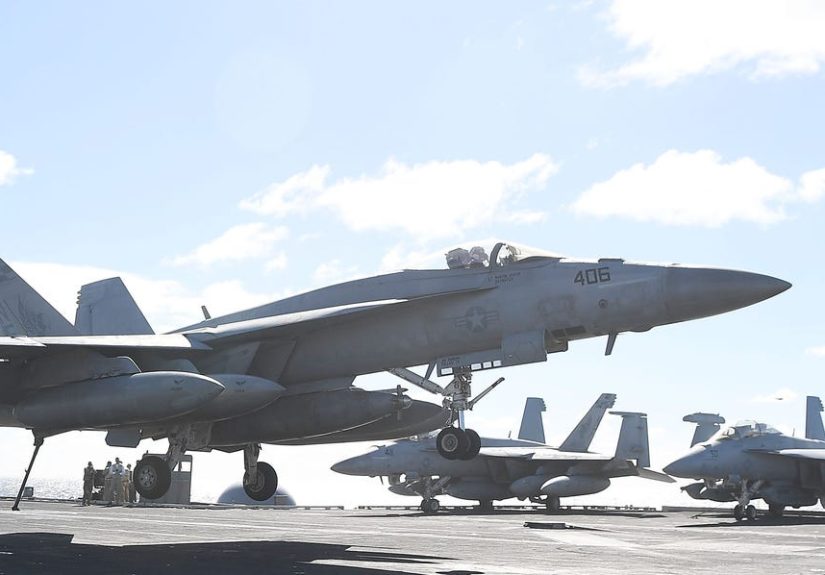
Carrier flight operations are one of the most demanding forms of aviation on the planet. Jets launch from a moving deck, recover to a moving deck, and do it in all kinds of conditions with tight timing. Every inch of deck space matters, every hand signal matters, and every maintenance delay can ripple through the sortie plan.
Launch and Recovery Basics
On older carriers, steam catapults provide the launch force. On Ford-class carriers, EMALS uses electromagnetic energy to launch aircraft. Recovery involves arresting wires (and on Ford-class ships, AAG handling the stopping forces through a different system than legacy gear).
This is not just “tech for tech’s sake.” Launch and recovery systems shape aircraft compatibility, maintenance demands, sortie pace, and how smoothly the flight deck can sustain operations over time.
The Flight Deck Is a System, Not a Parking Lot
It is easy to focus only on catapults and arresting gear, but flight operations also depend on deck choreography, ordnance movement, fueling, aircraft maintenance, crew endurance, and command decisions. A carrier’s real capability is not the number of jets on board it is how effectively the ship can generate and sustain sorties across time.
That is why terms like sortie generation rate, reliability, maintainability, and deck cycle timing show up so often in technical discussions. They sound dry, but they are basically the difference between “looks powerful in a photo” and “delivers combat power on schedule.”
Carrier Strike Groups: The Carrier Never Works Alone
The carrier may get the headlines, but the carrier strike group (CSG) makes the whole thing work. A carrier without escorts, logistics, and integrated command support would be like showing up to a championship game wearing one cleat and carrying only the highlight reel.
A modern CSG typically includes:
- The aircraft carrier (the aviation hub and flagship)
- Surface escorts for air defense, missile defense, and anti-submarine warfare
- Subsurface support (often attack submarines, depending on mission/tasking)
- Logistics support ships to keep the force fueled and supplied
- The carrier air wing, which brings strike fighters, helicopters, electronic warfare, and support aircraft
This combined force is why carriers still matter in a contested world. The ship is important, but the operational value comes from the networked team around it.
The Big Debates About US Navy Aircraft Carriers
You cannot write a serious article about U.S. aircraft carriers without addressing the arguments against them. The debates are real, and they are not just internet hot takes.
1) Cost and Opportunity Cost
Carriers are expensive to build, operate, maintain, modernize, and crew. Critics argue that the same money could fund more submarines, missiles, unmanned systems, or distributed naval forces. Supporters counter that no combination of smaller platforms yet replicates the full range of carrier capabilities especially organic tactical aviation at sea with sustained operations.
2) Vulnerability in the Missile Age
Anti-ship ballistic missiles, long-range cruise missiles, submarines, and surveillance networks have all intensified questions about carrier survivability in high-end conflict. This is a legitimate concern. But it also oversimplifies the problem when people talk as if a carrier sails alone with a giant “please target me” sign.
In reality, survivability depends on the whole force: escorts, air wing tactics, emissions control, deception, layered defense, distance, tempo, and operational planning. The discussion should not be “invincible vs. obsolete.” It should be “how do carriers operate differently in a more dangerous environment?”
3) Readiness and Maintenance Timing
Carrier force structure is also a scheduling puzzle. Maintenance delays, shipyard constraints, and delivery timing can affect how many carriers are available for deployment at any given moment. That is one reason carrier debates often include shipyard capacity and industrial base discussions, not just strategy.
The transition from Nimitz-class ships to Ford-class ships makes this even more complicated. New ships must arrive on time, older ships need major overhauls, and the Navy has to balance readiness today with modernization for tomorrow. Easy on paper, hard in real life.
The Future of US Navy Aircraft Carriers
The future is not “carriers or everything else.” It is more likely carriers plus a changing ecosystem: unmanned systems, longer-range weapons, evolving air wings, improved sensors, more distributed maritime operations, and hard choices about budgets and shipbuilding schedules.
The Ford class is central to that future because it is designed with more electrical capacity and modernization potential than older ships. At the same time, future effectiveness will depend on continued progress in system reliability, integration, and operational testing not just construction milestones.
Additional Ford-class carriers are in various stages of construction or planning, and each ship should benefit from lessons learned from earlier hulls. That is usually how naval programs work: the first ship teaches difficult lessons, later ships absorb them, and the fleet gradually gets better.
So yes, the U.S. Navy aircraft carrier remains a giant symbol of American sea power. But it is also something more interesting: a moving test case for how legacy strength and next-generation warfare must coexist.
Experiences Related to US Navy Aircraft Carriers (Extended Section)
Even if you never serve on one, a U.S. Navy aircraft carrier tends to leave a strong impression the moment you see it in person. Photos do not prepare you for scale. From the pier, the hull rises like a steel city block that decided to float. The island looks smaller than expected until you realize it is still several stories tall, packed with sensors, antennas, and watchstanders. People often say, “I knew it was big, but I did not know it was that big,” which is probably the most common honest reaction in carrier history.
For visitors touring a museum carrier or a public-access event, the experience is usually a mix of awe and confusion. Awe, because the flight deck is vast and windswept. Confusion, because once you go below deck, it becomes a maze of ladders, passageways, berthing spaces, machinery, ready rooms, and compartments that all seem to connect through one hatch you somehow missed. It is the kind of place where you can be standing inside a warship with thousands of people aboard and still feel like you accidentally walked into the world’s most complicated hallway.
Sailors describe carrier life very differently less “wow,” more “workflow.” The ship is a workplace that runs all day and all night. Time is measured in watches, maintenance tasks, meal lines, flight operations, drills, and announcements over the 1MC. During busy periods, the rhythm can be relentless. There is pride in being part of something huge and important, but there is also the reality of long days, tight spaces, noise, and the constant demand to do your job safely.
Aviation crews experience the carrier in another way entirely: as a place where precision matters more than comfort. Flight deck operations are loud, fast, and heavily choreographed. Color-coded jerseys, hand signals, safety checks, and timing are not just traditions they are survival tools. People watching flight ops for the first time often focus on the jets (fair), but veterans will tell you the deck crews are the hidden stars. They make the impossible look routine, which is usually how you know something is very hard.
There is also an emotional side to carrier experience that does not show up in hardware debates. Families seeing a homecoming. Sailors standing watch at sunrise with nothing but ocean around them. The odd comfort of ship routines. The stress before inspections. The relief after a successful evolution. The pride of seeing the ship pull into port with a mission completed. Whether someone supports carriers strategically or questions their cost, it is hard to ignore the human effort required to keep one operating.
That human experience is one reason carriers remain such powerful symbols in American culture. They are engineering marvels, yes but they are also communities at sea. A carrier is built from steel and reactors and cables, but it runs on training, teamwork, repetition, and trust. And if you ever stand on a flight deck and feel the wind, the noise, and the scale all at once, you understand why discussions about U.S. Navy aircraft carriers are never just about ships.
Conclusion
US Navy aircraft carriers are still among the most capable and debated military platforms in the world. They combine strategic presence, airpower, and mobility in a way no other naval system fully replicates. At the same time, they sit at the center of difficult questions about cost, survivability, readiness, and future warfare.
The smartest way to understand carriers is to skip the extremes. They are neither magic nor obsolete. They are powerful tools with real limits, evolving technology, and a massive operational ecosystem behind them. And that is exactly why they remain so important to watch.