Table of Contents >> Show >> Hide
- Why Wheel Thrown Splatter Plates Are Having a Moment
- What Are Wheel Thrown Splatter Plates?
- The Beauty of the Wheel: Why the Form Matters
- The Splatter Effect: Controlled Chaos in Ceramic Form
- Popular Styles of Wheel Thrown Splatter Plates
- How Wheel Thrown Splatter Plates Are Made
- Are Wheel Thrown Splatter Plates Food Safe?
- How to Style Wheel Thrown Splatter Plates at Home
- Why Handmade Splatter Plates Cost More
- How to Care for Wheel Thrown Splatter Plates
- of Personal Experience With Wheel Thrown Splatter Plates
- Conclusion: A Plate With Personality
Why Wheel Thrown Splatter Plates Are Having a Moment
Wheel thrown splatter plates are the kind of tableware that can make a Tuesday sandwich feel like it was plated by someone with a gallery opening and a very relaxed attitude toward lunch. They combine two things people love about handmade ceramics: the quiet discipline of the pottery wheel and the energetic, slightly rebellious look of splattered color. One part precision, one part happy accident, these plates sit beautifully between functional dinnerware and small-batch art.
Unlike factory-made plates that look as if they were copied and pasted by a very efficient robot, wheel thrown splatter plates carry evidence of the maker’s hand. The curve of the rim, the lift of the foot ring, the thickness of the wall, and the pattern of every dot, dash, and splash are all slightly different. That is the charm. A good splatter plate does not scream, “I am perfect.” It says, “I was made by a person, fired in a kiln, and I am ready for pasta.”
For shoppers, collectors, home cooks, and pottery lovers, these plates offer more than decoration. They tell a story about craft, timing, clay, glaze chemistry, and the beautiful unpredictability of ceramics. Whether you are setting a modern farmhouse table, building an eclectic dinnerware collection, or trying to understand why handmade plates cost more than a drive-through combo meal, wheel thrown splatter plates deserve a closer look.
What Are Wheel Thrown Splatter Plates?
Wheel thrown splatter plates are ceramic plates formed on a potter’s wheel and decorated with splashed, flicked, dotted, sprayed, or spattered glaze or underglaze. The phrase “wheel thrown” refers to the making process: a potter centers clay on a spinning wheel, opens the form, compresses the base, shapes the rim, and later trims the underside. The word “splatter” describes the surface treatment, where color is applied in loose, lively marks rather than painted in neat lines.
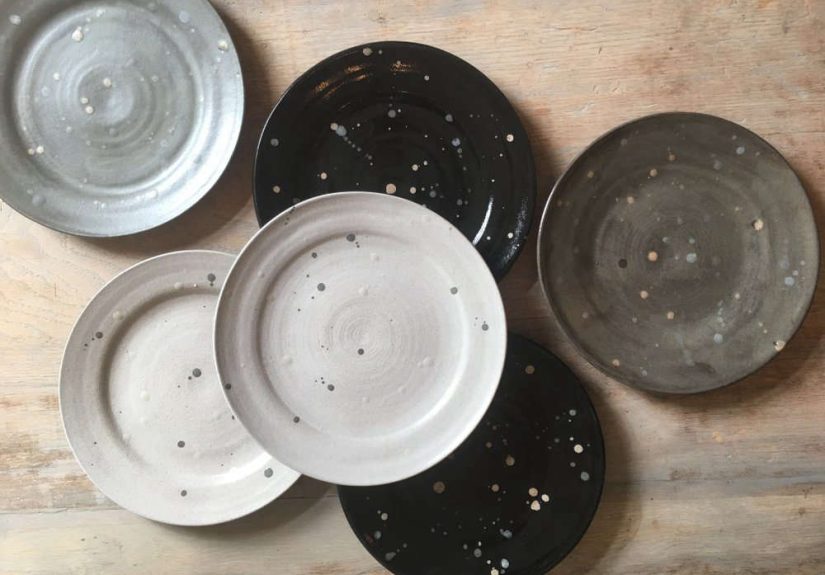
The result can be playful, minimalist, rustic, elegant, or wildly expressive. A white stoneware plate with cobalt blue speckles may feel coastal and classic. A black clay plate with ivory splatter can look modern and dramatic. A warm beige plate with terracotta, mustard, and green marks can feel like it belongs in a sunny kitchen where someone always has soup simmering.
These plates are commonly made from stoneware, porcelain, or earthenware, though stoneware is especially popular for everyday use because it can be durable, dense, and practical when properly fired. The splatter decoration may be applied before bisque firing, after bisque firing, under a clear glaze, over a base glaze, or as part of a layered glaze process. Each method creates a different visual effect and texture.
The Beauty of the Wheel: Why the Form Matters
A plate looks simple until you try to make one. Then it becomes a flat little drama with opinions. Plates must be wide enough to serve food, low enough to stack, strong enough to survive daily handling, and balanced enough not to wobble like a nervous shopping cart wheel.
Centering and Compressing the Clay
The first step is centering the clay on the wheel. For plates, this is especially important because even a small wobble can become obvious once the form is stretched wide. After the clay is centered, the potter opens it and compresses the floor. Compression helps strengthen the plate and reduces the chance of cracking in the center during drying or firing. This is one of those unglamorous steps that separates a reliable dinner plate from a decorative frisbee.
Creating the Rim
The rim gives a plate its personality. A low, soft rim feels casual and contemporary. A raised rim makes the plate more useful for saucy dishes. A slightly altered or wavy rim adds movement and emphasizes the handmade character. On splatter plates, the rim also frames the decoration. A crisp edge can make wild splashes look intentional, while a loose rim can make the whole piece feel relaxed and painterly.
Trimming the Foot Ring
Once the plate reaches a leather-hard stage, the potter flips it over and trims the underside. The foot ring lifts the plate from the table, gives it visual lightness, and helps it sit evenly. A well-trimmed foot ring is one of those details many people do not notice right away, but they feel it. The plate stacks better, feels better in the hand, and looks more finished.
The Splatter Effect: Controlled Chaos in Ceramic Form
Splatter decoration has a long history in pottery, including antique spatterware and spongeware traditions. Today’s wheel thrown splatter plates borrow from that energetic language while giving it a modern twist. Instead of aiming for machine-perfect repetition, the maker uses motion, distance, brush stiffness, glaze thickness, and color contrast to create marks that feel spontaneous but balanced.
Common Splatter Techniques
Potters use several methods to create splatter effects. A loaded brush can be flicked with the finger. A toothbrush can create tiny, mist-like speckles. A squeeze bottle can produce bolder droplets. A stiff-bristle brush can create directional spray. Some artists layer multiple colors, while others rely on one strong contrast, such as blue on white or black on cream.
The trick is knowing when to stop. Splatter decoration can go from “artistically energetic” to “paint incident in a kindergarten classroom” surprisingly fast. The best plates usually have rhythm: dense areas, quiet areas, small dots, larger marks, and enough breathing room for the clay and glaze to show through.
Underglaze vs. Glaze Splatter
Underglaze splatter is often applied before the final glaze coat. It gives the artist more control and usually creates clean, graphic marks under a transparent glaze. Glaze splatter, on the other hand, may melt, move, soften, or interact with the base glaze during firing. This can create beautiful depth, but it also invites unpredictability. In ceramics, unpredictability is either magic or a problem, depending on whether it happens to your favorite piece.
Why No Two Plates Are Exactly Alike
Even when a potter uses the same clay, same glaze, same brush, and same kiln schedule, splatter plates vary. The angle of the wrist, the moisture of the glaze, the absorbency of the bisque, the kiln atmosphere, and the position of the plate in the firing can all influence the finished surface. That variability is not a flaw. It is the point. Each plate becomes part of a family, not a clone army.
Popular Styles of Wheel Thrown Splatter Plates
Classic Blue and White Splatter Plates
Blue and white splatter plates are timeless. They nod to traditional ceramic decoration while still feeling fresh in modern kitchens. Cobalt blue, navy, or soft denim tones work beautifully over white or pale stoneware. These plates pair well with coastal interiors, farmhouse tables, and minimalist kitchens that need just enough pattern to avoid looking like a catalog page took itself too seriously.
Black and White Modern Splatter Plates
Black and white splatter plates feel bold, graphic, and contemporary. They look especially good with matte black flatware, linen napkins, and food with color: roasted carrots, green salads, tomato pasta, citrus desserts. A black splatter on white glaze can feel like ink. White splatter over dark clay can feel like stars. Either way, dinner gets a small upgrade without requiring anyone to pronounce “deconstructed foam.”
Earth-Tone Stoneware Splatter Plates
Earth-tone splatter plates are warm and organic. Think sand, clay, cream, rust, olive, charcoal, and soft brown. These pieces blend easily with handmade mugs, wooden serving boards, woven placemats, and casual family meals. They are also forgiving in daily use because their patterns naturally disguise small marks and utensil wear better than plain glossy white plates.
Colorful Confetti Splatter Plates
For maximalists, colorful splatter plates bring pure joy. Pink, yellow, green, orange, and turquoise marks can make a breakfast table look instantly cheerful. These plates work well as accent pieces, dessert plates, or part of a mixed dinnerware set. They are also excellent for people who believe life is too short for beige everything.
How Wheel Thrown Splatter Plates Are Made
Step 1: Choosing the Clay Body
The clay body determines the feel and performance of the finished plate. Stoneware is popular for functional dinnerware because it can be sturdy and suitable for daily use when properly vitrified. Porcelain offers a refined, bright surface but can be more demanding to throw and dry. Earthenware can produce beautiful color and warmth, though it generally requires careful glaze selection and firing for functional use.
Step 2: Throwing the Plate
The potter weighs the clay, centers it, opens it into a wide disk, and compresses the floor. The rim is shaped last, often with careful pressure from fingers, ribs, or sponges. Because plates are wide and shallow, they can slump, crack, or warp if rushed. Patience is not optional. It is basically another pottery tool.
Step 3: Drying Slowly and Evenly
Drying is where many plates reveal their true personality, and sometimes that personality is “potato chip.” Uneven drying can cause warping, cracking, or lifting edges. Many potters dry plates slowly under plastic, on absorbent boards, or with careful airflow. The goal is to let moisture leave the piece evenly from rim to center.
Step 4: Trimming and Smoothing
When the plate is leather-hard, it is trimmed upside down. The potter refines the foot ring, removes extra weight, and smooths the bottom. This stage affects both function and beauty. A plate that is too heavy can feel clunky; one that is too thin may be fragile. The sweet spot is a plate that feels substantial but not like it was designed for weight training.
Step 5: Bisque Firing
The first firing, called bisque firing, turns dry clay into a porous ceramic form. Bisque ware is stronger than raw clay but still absorbent, which makes it ready for glazing and decoration.
Step 6: Applying the Splatter Decoration
After bisque firing, the artist may apply underglaze, glaze, or stains in a splatter pattern. The plate may receive one color or several. Some makers splatter only the rim, while others cover the entire surface. Some leave the center quiet so food remains the star. Others treat the plate like a canvas and let the splatter run wild.
Step 7: Glaze Firing
The final glaze firing melts the glaze materials into a glassy or satin surface. This is where the plate becomes functional, finished, and sometimes surprising. Colors can deepen, speckles can soften, and glazes can interact in ways that even experienced potters greet with either delight or dramatic silence.
Are Wheel Thrown Splatter Plates Food Safe?
Wheel thrown splatter plates can be food safe, but the answer depends on the clay, glaze, firing temperature, and final surface. A plate intended for food should use appropriate materials, be fired correctly, and have a stable glaze surface. Smooth, properly matured glazes are generally preferred for dinnerware because they are easier to clean and less likely to trap food particles.
When buying handmade splatter plates, look for clear information from the maker. Ask whether the plates are food safe, dishwasher safe, microwave safe, and suitable for acidic foods. A responsible ceramic artist should be comfortable explaining the intended use of the piece. If a plate is marked decorative only, believe it. Decorative only does not mean “decorative unless the dip looks really good.”
What to Check Before Buying
Check for a smooth eating surface, stable glaze, no sharp texture where food will sit, and no visible cracks in the glaze. Crazing, which looks like tiny crackle lines, may be intentional in decorative ceramics, but it is not always ideal for functional dinnerware. Also check the foot ring. It should be smooth enough that it will not scratch your table.
Microwave and Dishwasher Use
Some handmade plates are microwave and dishwasher safe, while others are best washed by hand. Metallic lusters, certain decorative finishes, and some clay bodies may not be microwave friendly. Even when dishwasher use is technically acceptable, hand washing can extend the life of handmade ceramics. Think of it as spa treatment for your plates, minus the cucumber water.
How to Style Wheel Thrown Splatter Plates at Home
Use Them as Everyday Dinner Plates
The best handmade dinnerware is not locked away for imaginary guests who may or may not appreciate your taste. Wheel thrown splatter plates are wonderful for everyday meals because they bring art into ordinary routines. Toast, salad, noodles, roasted vegetables, cookies, and leftover pizza all look better on a plate with character.
Mix Them With Solid Dinnerware
If a full set of splatter plates feels too bold, mix them with solid plates and bowls. A stack of plain white plates with splatter salad plates can look curated without becoming chaotic. Earth-tone splatter plates also pair beautifully with neutral stoneware bowls.
Create a Gallery Wall
Some splatter plates are too beautiful to hide in a cabinet. A small wall arrangement in a kitchen or dining room can turn functional ceramics into art. Choose plates with related colors but different splatter patterns for a collected look.
Use One as a Serving Piece
A large wheel thrown splatter plate can serve fruit, cheese, pastries, or appetizers. Because the pattern is already expressive, even simple foods look intentional. Put grapes and crackers on a splatter plate and suddenly you are not snacking; you are hosting.
Why Handmade Splatter Plates Cost More
Handmade ceramics cost more because they take time, skill, equipment, materials, and risk. A single plate may pass through the artist’s hands dozens of times: weighing clay, wedging, throwing, drying, trimming, smoothing, bisque firing, decorating, glazing, loading the kiln, glaze firing, sanding the foot, inspecting, photographing, packing, and shipping. At several points, the plate can crack, warp, stick to the kiln shelf, or emerge from the firing with a glaze result that politely says, “Not today.”
When you buy wheel thrown splatter plates, you are not just buying something to hold dinner. You are paying for design judgment, material knowledge, firing experience, studio labor, and the individuality of the finished piece. Compared with mass-produced dinnerware, handmade plates may vary slightly in size or shape. That variation is not poor quality; it is evidence of process.
How to Care for Wheel Thrown Splatter Plates
To keep wheel thrown splatter plates looking their best, avoid sudden temperature changes. Do not take a cold plate from the refrigerator and place it directly into a hot oven unless the maker specifically says it is oven safe. Avoid dropping heavy utensils on the surface, and stack plates carefully with felt or paper separators if the glaze is delicate.
For cleaning, use a soft sponge and mild dish soap. If the maker says the plate is dishwasher safe, place it securely so it does not knock against other dishes. For stubborn marks, a gentle baking soda paste can sometimes help, but avoid harsh abrasives unless the maker recommends them. Handmade ceramics are sturdy, but they are not immortal. Treat them like useful art, not like the plastic plate from a picnic set that has seen things.
of Personal Experience With Wheel Thrown Splatter Plates
The first time you use a wheel thrown splatter plate, you may notice something odd: food looks more thoughtful. A piece of toast with butter suddenly seems styled. A pile of scrambled eggs looks like it had a creative director. Even a lonely cookie feels less alone. That is the small magic of handmade plates. They do not change the food, exactly, but they change the way you pay attention to it.
In a studio setting, making splatter plates is both satisfying and humbling. Throwing the plate itself requires calm hands. You cannot bully clay into becoming a good plate. If you push too hard, the rim flares. If you leave too much water in the center, the floor weakens. If you rush drying, the plate may warp just enough to rock on the table forever, like it is trying to start a conversation. The process teaches patience in a very direct way. Clay does not care about your schedule.
The splatter stage is where the mood changes. After all the careful measuring, compressing, trimming, and smoothing, suddenly there is color on a brush and permission to loosen up. This is the fun part, but it is also where restraint matters. The best splatter plates often come from a balance between intention and accident. You decide the palette, the direction, the density, and the placement. Then gravity, glaze thickness, and wrist movement join the meeting without being invited.
One of the most enjoyable experiences is making a small batch of plates that belong together without matching exactly. Maybe each plate has the same ivory base glaze and blue splatter, but one has a denser rim, another has a quieter center, and another has a few dramatic dots that look like they arrived late but confidently. When stacked, they feel cohesive. When spread across a dinner table, they feel alive.
Using these plates at home also changes how people interact with the table. Guests pick them up, turn them over, ask who made them, and notice the foot ring or the glaze variation. Handmade plates invite conversation in a way plain dinnerware rarely does. Nobody has ever paused dinner to say, “Tell me more about this identical white plate from aisle seven.” But a splatter plate? That plate has stories.
There is also a practical joy in watching a handmade plate become part of daily life. It may start as a special object, reserved for guests or carefully placed on an open shelf. Then one morning it holds toast. Later it holds pasta. Eventually it becomes the plate everyone reaches for first. That is the highest compliment for functional pottery. It is not just admired; it is used.
Wheel thrown splatter plates remind us that ordinary objects can be expressive. They prove that a dinner plate does not have to be silent, flat, and forgettable. It can carry movement, humor, color, and human touch. It can be imperfect in the best possible way. And if it makes leftovers look fancy, honestly, that is a public service.
Conclusion: A Plate With Personality
Wheel thrown splatter plates bring together craftsmanship, history, function, and visual joy. Their appeal comes from contrast: controlled wheel-thrown form meets loose, expressive decoration. They can be rustic or refined, subtle or bold, traditional or modern. Most importantly, they make everyday meals feel more personal.
Whether you are buying your first handmade plate, building a full dinnerware set, decorating a kitchen wall, or learning pottery yourself, splatter plates offer a wonderful entry point into the world of functional ceramics. They are useful, beautiful, and just unpredictable enough to keep things interesting. In a world full of identical objects, a wheel thrown splatter plate is a cheerful reminder that the human hand still matters.